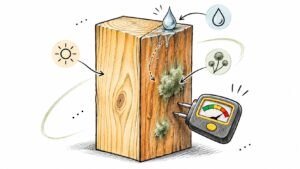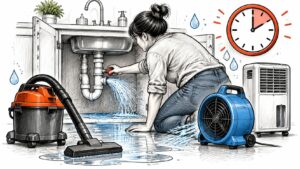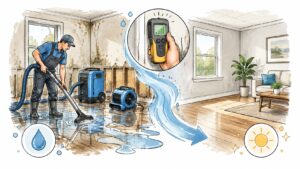
A storm rolls through Georgetown, rain finds a weak point near the roof, and the attic looks dry again by the next afternoon. Or a supply-line leak behind a kitchen wall stops before anyone notices, leaving only a faint stain and a room that feels slightly musty. Weeks later, the question remains: is the insulation still doing its job, or is hidden moisture steadily damaging the wall?
Insulation water damage is difficult because much of it happens where you can't see it. Insulation may be behind drywall, above a ceiling, under a floor, or around ductwork. The right response isn't automatically “remove everything,” but it also isn't “the surface looks dry, so it must be fine.” Material type, water source, saturation, exposure time, contamination, and the assembly's ability to dry all matter.
Why Wet Insulation Is a Bigger Problem Than It Looks
A homeowner may notice a small ceiling mark after a Central Texas storm, wipe it clean, and assume the problem is over. The roof leak may have stopped, but water can still be sitting in the insulation above the ceiling or against the roof sheathing. A slow plumbing leak creates the same confusion. The visible drywall may show only a narrow stain while the cavity contains a much larger wet area.
That hidden moisture creates two separate problems. First, wet insulation can lose thermal resistance, so the ceiling, wall, or floor no longer slows heat transfer as it should. Second, damp insulation can keep framing, sheathing, fasteners, drywall, and finishes wet, increasing the risk of secondary deterioration.
Think sponge versus raincoat
Absorbent insulation behaves more like a sponge. Cellulose can take on water, clump, settle, and remain damp inside a cavity. Some fibrous products may look nearly dry at the surface while moisture remains deeper in the material. Once compressed or contaminated, they may not return to their original condition.
Moisture-tolerant foam is closer to a raincoat. That doesn't mean every foam assembly is automatically safe. Water can collect behind foam, enter at joints, remain against framing, or reach adjacent materials. The foam itself may survive while the enclosure around it does not.
Practical rule: Don't decide whether insulation can stay based only on the material's reputation. Check the actual assembly, water category, exposure time, and verified moisture condition.
A clean supply-line leak affecting accessible insulation is a different situation from floodwater entering a closed wall. Sewage or groundwater exposure changes the sanitation question even when the insulation appears physically intact. The goal is a defensible decision, not a blanket rule.
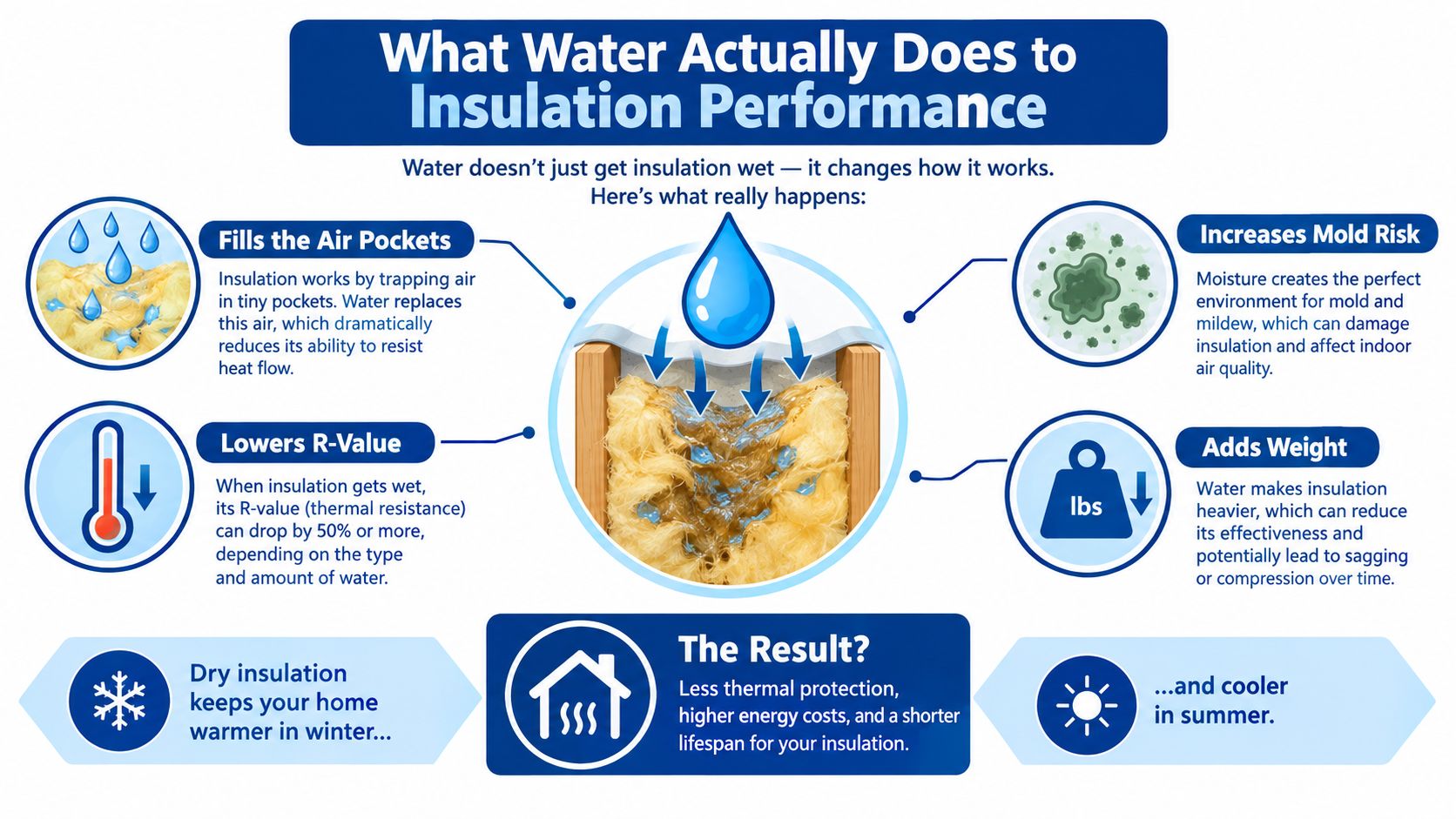
What Water Actually Does to Insulation Performance
Insulation works largely by trapping air or another gas in a structure that slows heat movement. Liquid water displaces that trapped air, which is why moisture can reduce performance even before the insulation looks ruined. A comparative review of roof-insulation research found that, when wet, fewer than half of the materials examined retained even 50% of their original R-value. The review identified moisture effects on roof insulation as material-dependent, with XPS among the better-performing products under moisture exposure.
The sponge analogy helps explain what happens. A dry sponge has air-filled spaces, but water occupies those spaces when the sponge becomes saturated. Fibrous insulation can behave similarly. A batt that isn't dripping may still have enough moisture to transfer heat more readily, sag, clump, or lose contact with the surrounding framing.
The performance cascade
Moisture can also increase insulation thermal conductivity. ASHRAE-related technical guidance reports that approximately 13.6% moisture by weight has been associated with conductivity increases of up to 312%, while some open-cell insulation products showed a 23% increase from only 1% added moisture by weight. These figures come from technical guidance on moisture and insulation conductivity, and they shouldn't be treated as a prediction for every home or product.
The practical effects can include:
- More heat transfer: Heating and cooling systems work against a less effective thermal barrier.
- Colder interior surfaces: A wet or uneven assembly can create areas where condensation persists.
- Metal corrosion: Moisture can reach fasteners, hangers, ducts, and other embedded components.
- Material deterioration: Paper facings, wood framing, sheathing, and finishes may remain vulnerable while the insulation is still damp.
Why touch isn't a moisture test
A room can feel dry while the wall cavity remains wet. Drywall may dry on its painted face while its paper backing, insulation, and framing hold moisture behind it. Air movement across a surface can also create a false sense of completion without removing water from concealed materials.
That is why “it looks fine” doesn't answer the restoration question. A proper assessment maps moisture in the visible materials and checks the cavity, framing, and insulation before anyone closes the assembly.
How to Identify Water Damage by Insulation Type
Different insulation materials respond to water differently, so identification should come before removal. Look for changes in shape, texture, odor, staining, and position, but don't rely on visual inspection alone. A moisture meter, infrared camera, and carefully selected cavity inspection can reveal conditions that a flashlight misses.
Fiberglass batts
Fiberglass itself is relatively resistant to water, but the batt can still sag, stain, separate, or lose its fit between studs. Paper or foil facings may retain moisture, and debris or contaminated water can make the assembly unsuitable for reuse. An accessible batt affected by a clean leak may be a drying candidate if it can be thoroughly dried and remains intact.
Cellulose
Cellulose behaves like the sponge in this guide. Water can cause clumping, settling, compression, and loss of coverage, especially in wall cavities and attics. Because it is absorbent, contaminated cellulose presents a stronger removal case than a clean, quickly addressed exposure.
Mineral wool
Mineral wool is less absorbent than cellulose and can sometimes be evaluated for drying after a clean-water event. It still needs inspection. Water trapped against the surrounding framing or sheathing may create the actual problem even when the fibers appear stable.
Spray foam and rigid foam boards
Closed-cell spray foam and rigid foam products such as XPS are more moisture-tolerant than absorbent fibrous insulation. That doesn't make them a permanent barrier against every leak. Inspect edges, seams, penetrations, sheathing, and framing for trapped water. Open-cell spray foam can retain moisture differently from closed-cell products, so the specific product and installation matter.
For homeowners documenting a loss, moisture meter reading guidance can help explain why instrument readings matter alongside photographs.
| Insulation Type | Absorbency | Warning Signs | Typical Verdict |
|---|---|---|---|
| Fiberglass batts | Lower in the glass fibers, higher in facings and surrounding debris | Sagging, staining, gaps, damp facing, odor | Dry in place may be possible after clean water if fully accessible and verifiably dry |
| Cellulose | High | Clumping, settling, compression, persistent dampness | Often remove when saturated, contaminated, or unable to dry completely |
| Mineral wool | Relatively moisture-tolerant | Damp cavity, staining, retained water at edges | Evaluate for drying after clean exposure |
| Open-cell spray foam | More moisture-permeable | Persistent dampness, wet sheathing, odor | Inspect carefully before deciding |
| Closed-cell spray foam or XPS | More moisture-tolerant | Water behind, around, or beneath the foam | May remain if intact and the assembly is demonstrably dry |
A homeowner can photograph visible conditions and identify the likely material. Opening a wall becomes more reasonable when readings remain high, odor persists, insulation has settled, or water reached a concealed cavity.
Health and Structural Risks of Leaving Wet Insulation in Place
Time matters because wet building materials become harder to manage when they stay wet. Guidance cited in an indoor-air-quality assessment on moisture and mold says susceptible materials may support mold growth when indoor relative humidity exceeds 70%. EPA and ACGIH guidance cited in that assessment recommends using airflow and heat to dry porous materials within 24–48 hours of becoming wet.
That window isn't a guarantee that mold will appear at a precise moment, and missing it doesn't prove that remediation is necessary. It does mean the first day or two should be treated as an active drying period, not a waiting period.
Moisture inside the structure
Wood needs special attention before enclosure. Building-science field research classified wall sheathing moisture contents of 20–28% as risky and levels above 28% as very high risk. The same research recorded cellulose-insulated walls with sheathing moisture above 30%, while open-cell spray-foam walls measured approximately 18–25% during monitoring. Those readings demonstrate why surface appearance isn't a reliable endpoint.
Potential consequences include:
- Microbial growth: Damp insulation, paper, dust, and wood can provide susceptible materials with the moisture they need.
- Odor: A musty smell may persist when moisture remains in a closed cavity.
- Sheathing and framing deterioration: Repeated wetting can damage wood components and finishes.
- Occupant discomfort: Mold and dampness can aggravate concerns for people with allergies or asthma.
- Hidden spread: Water can move along framing and keep nearby materials wet after the original leak stops.
If removal will disturb older insulation, drywall, flooring, or adhesive materials, ask whether asbestos testing is appropriate before work begins. The safest plan considers not only mold and water, but also the age and condition of adjacent building materials.
When to Dry and When to Replace Wet Insulation
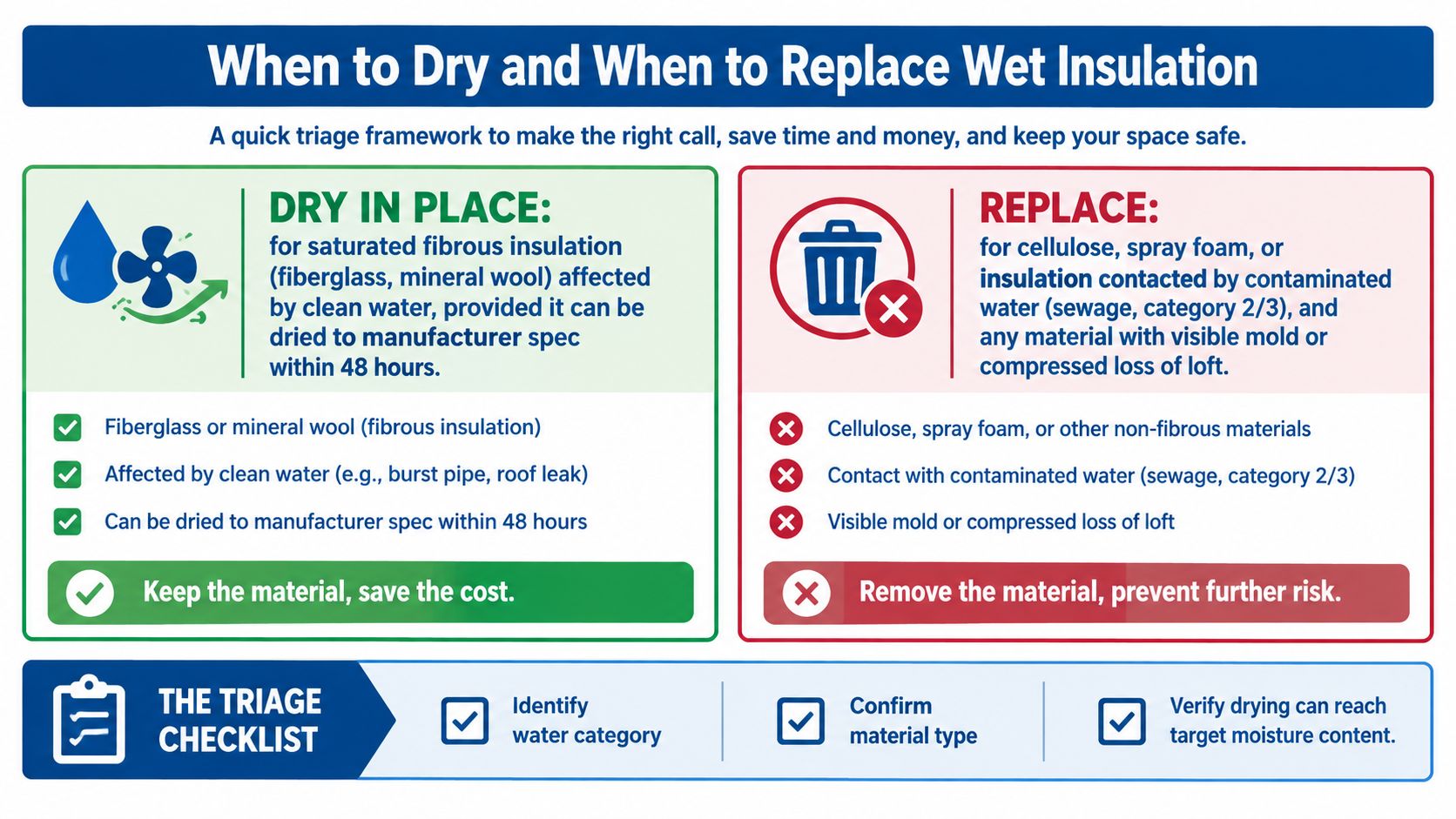
Wet insulation doesn't always require the same answer. FEMA guidance distinguishes between material types and exposure: saturated fibrous wall insulation, including fiberglass, mineral wool, cellulose, and wood fiberboard, should be completely removed when saturated by floodwater, while foam-plastic insulation may remain and dry in place. The FEMA restoration guidance supports a material-by-material decision rather than one universal rule.
Cross the material with the water
Start with the source. A clean supply-line leak that reaches accessible fiberglass is not equivalent to sewage backup entering a closed cellulose wall. Water category, saturation depth, duration, contamination, compression, and access all change the recommendation.
A useful triage sequence is:
- Identify the source: Determine whether the water came from a supply line, appliance, roof, groundwater, flood, drain, or sewage system.
- Name the material: Separate fiberglass, mineral wool, cellulose, open-cell foam, closed-cell foam, and rigid foam.
- Check the exposure: Record where the water reached, how long the material was wet, and whether it was saturated.
- Assess access: Ask whether airflow, extraction, and dehumidification can reach the insulation and adjacent framing.
- Verify drying: Do not close the cavity until readings show that the insulation and structure have dried adequately for the material and assembly.
The contrarian point: Replacing intact foam that has been inspected and verified dry can be premature. Leaving contaminated, absorbent insulation in place because it “might dry” is the opposite mistake.
Cellulose and other absorbent products deserve particular caution after sewage, groundwater, or flood exposure. Fiberglass recommendations can differ when the water is clean, the material remains intact, and drying is demonstrably successful. Internal HVAC duct insulation is a separate case. EPA guidance says wet or moldy internal duct insulation can't be effectively cleaned and should be removed and replaced, as described in EPA moisture-control guidance for schools.
Before reconstruction, the decision record should state the material, water source, contamination condition, moisture readings, drying method, and reason for keeping or removing the insulation.
The Mitigation and Remediation Process Step by Step
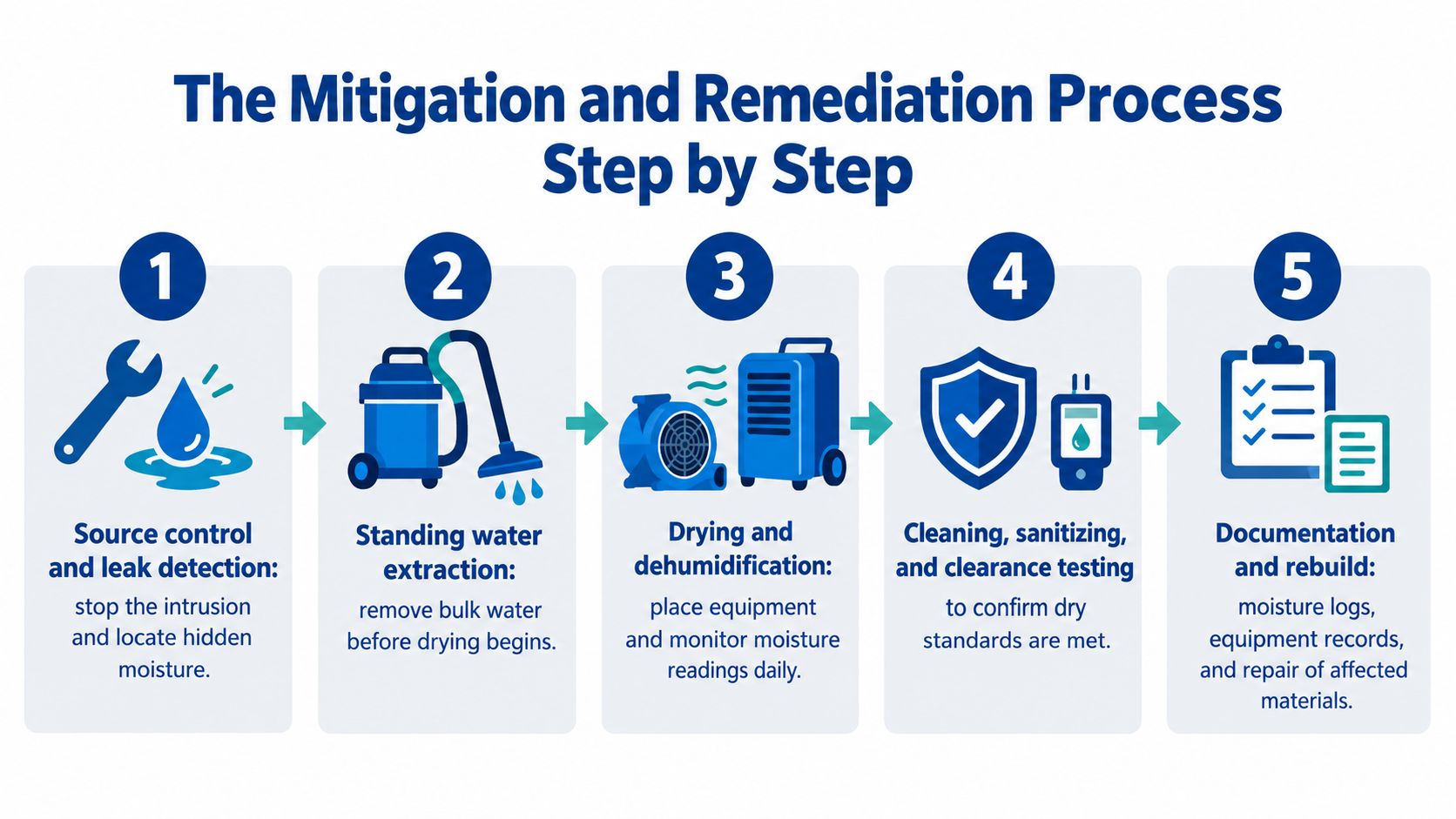
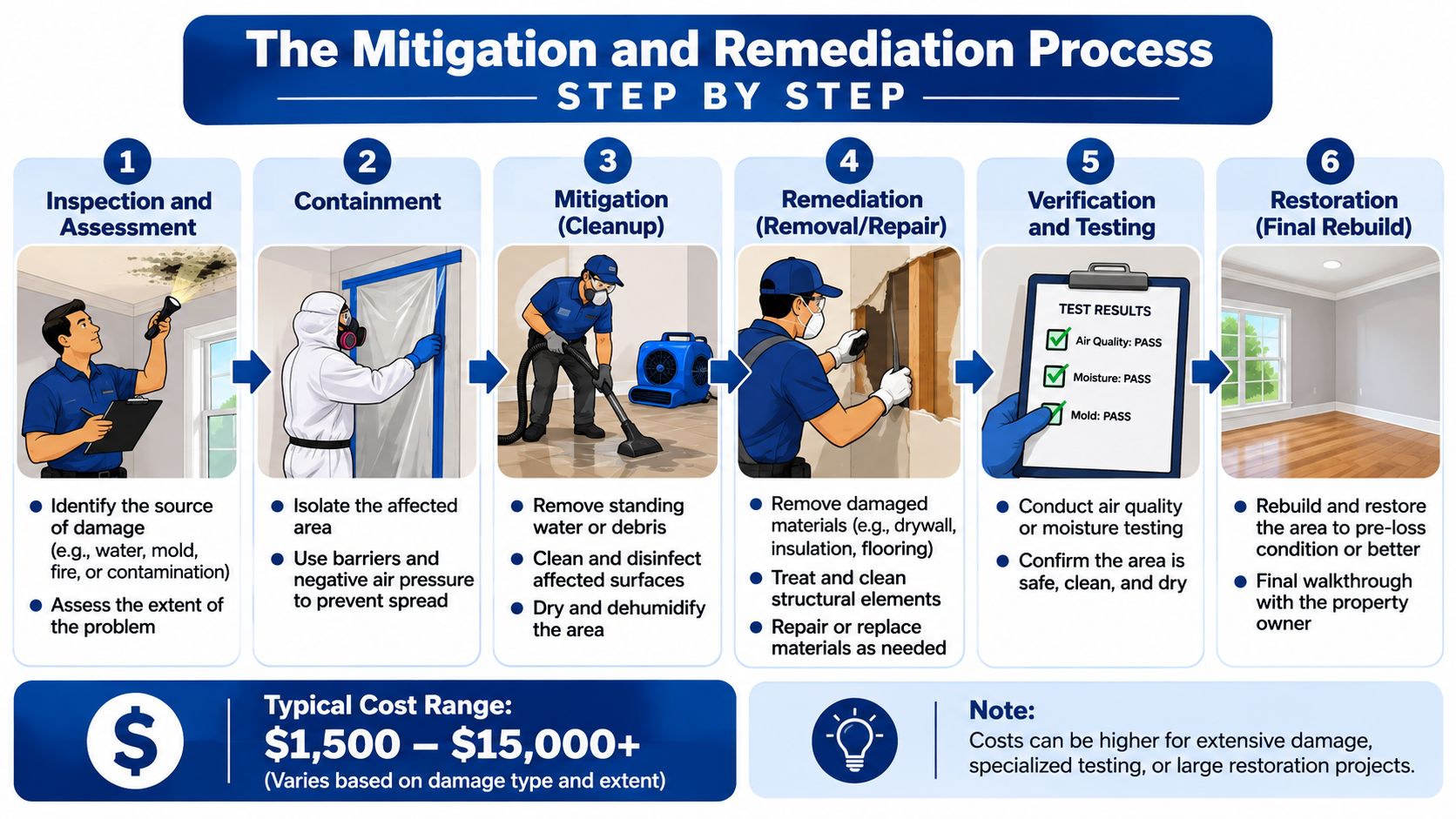
Professional work begins with source control. The leak must be stopped or isolated, whether that requires a plumber, roof repair, appliance shutoff, or another trade. Extraction follows, because fans and dehumidifiers work better after standing water and bulk moisture have been removed.
Assessment before demolition
Technicians map affected areas with moisture meters and compare readings with unaffected portions of the building. They inspect ceilings, walls, floors, framing, sheathing, insulation, and HVAC components. If the wet zone can't be reached from an existing opening, targeted cavity access may be needed rather than broad demolition.
The next stage uses controlled air movement and dehumidification. Equipment placement should support drying at the insulation and framing, not just make the room feel comfortable. Technicians monitor readings during the process and adjust the setup when moisture remains in a cavity.
Structural drying in Central Texas involves more than placing a fan beside a wet wall. It requires a drying plan, documented readings, and a decision about when the assembly is ready to close.
Cleaning, verification, and rebuild
Contaminated water may require sanitation, controlled removal, protective equipment, and disposal procedures. Suspected mold can call for containment and appropriate testing, while older materials may warrant asbestos testing before disturbance. Deodorization should follow moisture correction, because fragrance doesn't solve a wet cavity.
The final phase is verification and reconstruction. A responsible record includes moisture readings, equipment use, material decisions, photographs, and the conditions documented before drywall, insulation, trim, or flooring returns.
Homeowners can stop a source safely, take photographs, move belongings away from water, and request an inspection. Cavity drying, contaminated-material handling, and final verification are where professional equipment and training become important. In Georgetown and Austin, RestoTek TX provides inspection, extraction, structural drying, microbial prevention, and reconstruction, with 24/7 response and a family-operated team led by Joan and Josh Garza.
Insurance Documentation and Central Texas Next Steps
Insurance decisions depend on a clear record of what happened and what the property looked like before mitigation changed the scene. Photograph the source, visible staining, affected rooms, insulation, framing, flooring, and contents. Save communications, invoices, material descriptions, moisture readings, and the drying log.
The record should identify:
- Water source and category: Note whether the loss involved a supply line, storm, flood, drain, or sewage.
- Material condition: Describe staining, saturation, settling, compression, odor, and visible microbial growth.
- Moisture evidence: Keep dated readings and notes about where instruments were used.
- Mitigation actions: Record extraction, equipment placement, cavity access, cleaning, and disposal.
- Reconstruction timing: Document readings and inspection results before walls or ceilings are closed.
Central Texas storms and flash flooding can affect many properties at once, so prompt local assessment matters. Start with a practical first response: stop the source if safe, document before removing materials, contact your insurer, arrange a no-cost inspection and estimate, and begin appropriate drying without waiting for the structure to deteriorate. RestoTek TX's progress documentation process can help property owners organize the evidence needed during restoration.
Insulation water damage is manageable when you treat it as a material-specific inspection problem. Don't panic, but don't wait for a hidden cavity to prove itself through odor, damaged framing, or a larger repair.
RestoTek TX can inspect the loss, identify affected insulation and framing, extract water, provide structural drying, and coordinate microbial prevention or reconstruction in Georgetown and Austin. Visit RestoTek TX to request help with a water-damage assessment and documented next steps.