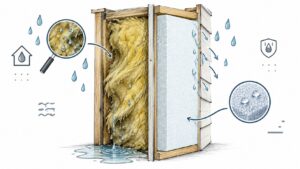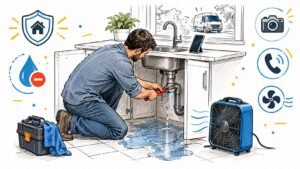
You open the door and find water pooled around the legs of your dining table. The sofa cushions are soaked through, a drawer won't open, and the finish on a cabinet has turned cloudy white. The visible damage is alarming, but the clock matters more than the appearance. Water keeps moving into end grain, joints, cushion foam, and composite cores after the surface seems merely damp.
Water damage to furniture calls for triage, not frantic cleaning. The right decision depends on the water source, the material, how thoroughly it's saturated, and whether you can document the condition before moving or discarding anything. The first 48 hours are especially important because the EPA's guidance on drying wet furnishings emphasizes prompt drying, generally within 24–48 hours, to reduce mold risk.
The First Hour After Water Hits Your Furniture
A cabinet stands in ankle-deep water, its doors still closed and its finish only slightly cloudy. The damage you can see is rarely the full problem. Moisture may already be moving through end grain, dowels, glued joints, cushion foam, and composite panels.
The first hour determines whether you preserve a salvageable piece or turn a manageable incident into a larger loss. The IICRC's Applied Structural Drying framework emphasizes prompt extraction, air movement, and dehumidification, but equipment comes after a safe assessment. Identify whether the water is clean, contaminated, electrically hazardous, or still entering the room.
Practical rule: Treat each wet item according to its material and construction, not as part of one cleanup pile.
Check the places that hold water out of sight:
- Furniture feet and bases: Wet flooring can wick moisture upward into the bottom edge.
- End grain and joints: These areas absorb water quickly and often dry slowly.
- Cushions and foam: A dry-feeling cover can hide saturated interior foam.
- Drawers and doors: Swelling can jam them while dampness remains inside.
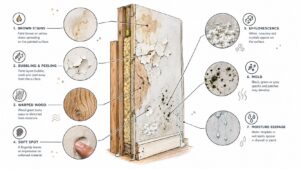
- Veneers and finishes: Clouding, lifting, or blistering may indicate moisture beneath the surface.
Do not drag a heavy cabinet across wet flooring. The movement can spread contamination, force water into the base, and stress swollen joints. If the area is safe, lift or support the piece, separate it from standing water, and keep it stable. A distorted frame can fail when moved carelessly.
Use this first-24-hours water damage checklist to organize the first-day response. The immediate goal is not cosmetic recovery. Stop further absorption, preserve the item's condition as evidence, and create drying conditions that reach the interior without causing veneer separation, cracking, or additional swelling.
Furniture can remain a structural and financial problem after a room looks clean. A flood-recovery study from the University of California, Irvine, summarized in this insurance guide, reported widespread damage to household goods among surveyed households, with some owners reporting poorer condition years later. Photograph the damage before disposal or major cleaning, because missing documentation can weaken an insurance claim when the visible water is gone.
Immediate Steps to Take Before Drying Begins
Water damage decisions can go wrong before drying starts. Work in order: make the room safe, identify the water, document the condition, separate removable parts, then raise the furniture from the wet floor.
Make the room safe
From a dry, safe location, shut off power to nearby outlets, lamps, and floor-level electrical equipment. Never step into standing water to reach a breaker or unplug an appliance. If you cannot confirm that the area is electrically safe, leave it undisturbed and call a qualified professional.
Find the source before handling the furniture. A supply-line leak is different from a washing-machine discharge, toilet backup, or floodwater event. Water classification affects salvage decisions, cleaning methods, protective equipment, and whether porous furniture can remain indoors.
Photograph before touching
Photograph every item from the front, back, sides, top, and underside where possible. Capture waterlines on legs, baseboards, flooring, and walls, along with swelling, staining, lifted veneer, detached trim, rust, and upholstery damage.
Do not wipe, clean, discard, or move anything unless leaving it in place creates a safety risk. Start with wide room photographs, then create an inventory listing each item's description, location, approximate age, purchase records, appraisal, and available receipts. This record can matter after the visible water is gone, especially when an insurer needs to distinguish pre-existing wear from new damage.
Separate the components
Remove cushions, pillows, drawers, shelves, hardware, and other detachable parts. Stand cushions on edge with space between them so air can reach more of the surface. Open swollen drawers only if they move without force. Forcing them can tear joinery or split the cabinet.
Raise furniture from wet flooring with stable supports that will not stain the legs or tip the piece. Plastic sheeting under the supports can reduce contact with the floor, but do not seal wet furniture inside plastic. Trapped humidity keeps moisture against the material and slows drying.
| Water Category | Source Examples | Furniture Handling | PPE Required |
|---|---|---|---|
| Clean water | Supply-line leak or broken pipe before contamination | Isolate, document, extract, and assess porous materials promptly | Gloves and protective footwear |
| Gray water | Appliance discharge or water containing cleaning agents | Limit contact, isolate porous contents, and use controlled cleaning | Waterproof gloves, eye protection, and protective footwear |
| Black water | Sewage backup or floodwater with heavy contamination | Treat porous furniture as a contamination concern and seek professional assessment | Waterproof gloves, eye protection, protective clothing, and respiratory protection as appropriate |
Avoid heat guns, hair dryers, and direct sunlight as substitutes for controlled drying. They can dry the surface while the core remains wet, stressing finishes, veneers, and joints. Use extraction, airflow, and dehumidification in a controlled sequence, while safe handling and accurate documentation come first.
How Different Furniture Materials Respond to Water
Furniture materials fail according to their structure, not the amount of water present. A clean-water exposure that may be worth restoring on solid hardwood can justify replacement when it reaches swollen MDF or contaminated upholstery. The right decision depends on how quickly the material absorbed water, whether its structure changed, and whether the water was contaminated.
Solid hardwood
Solid wood absorbs moisture unevenly. End grain, joints, screw holes, and unfinished undersides take it in quickly, while sealed faces can look normal. Expansion then binds drawers, shifts doors, loosens joints, and warps panels. A frame with firm joints and limited exposure may be salvageable. Deep staining, failed joinery, or prolonged saturation makes restoration less predictable and more expensive.
Veneer, particleboard, and MDF
Engineered wood has less tolerance for saturation. Particleboard and MDF depend on compressed fibers and resin binders that can swell, crumble, or delaminate. Once an edge expands and loses its profile, sanding removes material but does not rebuild the crushed core. Superficial dampness may justify drying and evaluation. A swollen base, shelf, or cabinet core usually supports replacement.
Thin veneer creates a separate risk. The veneer may wrinkle or release from its substrate even when the visible surface seems only damp. Treat bubbling, lifted edges, and soft panels as structural warning signs rather than cosmetic defects.
Upholstery and foam
Upholstery conceals water. Fabric, batting, foam, webbing, and springs retain moisture at different rates, so a dry-feeling cover does not confirm a dry cushion. Household fans may move air across the surface while water remains trapped inside. Quick extraction after clean-water exposure can make some pieces serviceable. Gray or black water in foam and fabric creates a much more difficult salvage decision because cleaning may not remove contamination from every layer.
Leather
Leather may stiffen, discolor, lose its finish, or develop odor when water carries dyes and tannins through the hide. Do not scrub wet leather or apply household oils. Let it dry under controlled conditions, then use a treatment compatible with its finish and leather type.
Antiques and heirlooms
Antiques combine moisture-sensitive materials with fragile construction. Hide glue can soften, inlay can loosen, and old finishes can craze or separate. Avoid aggressive drying, stripping, or refinishing until a conservator or qualified restorer examines the piece. Document its condition first, including close images of joints, finish changes, swelling, and any existing damage.
The National Park Service conservation guidance for wooden objects advises gradual drying for wooden furniture, with relative humidity moving toward about 55% over days and the drop limited to around 10% per day. That reduces the risk of cracking, warping, and finish failure. Porous upholstery follows a different priority: hidden saturation and contamination can make prompt professional extraction more important than a slow household drying attempt.
Drying Wood Furniture the Right Way
A wet hardwood table can look dry by evening while its joints and core remain saturated. Wood furniture needs controlled drying, not more airflow. Upholstery, sealed laminate, solid hardwood, and engineered board each respond differently to moisture, temperature, and air movement.
Solid wood exchanges moisture with the surrounding air. If the outer surface dries much faster than the interior, it shrinks around a swollen core. That stress can cause checking, split joints, warped panels, or finish failure. Mold risk also rises when wet wood remains in a warm, humid room, so drying must control both the furniture and its environment.
Match the method to the construction
For solid hardwood, use moderate air movement with dehumidification. Do not aim a high-velocity fan at one face and assume the job is finished. Remove standing water with absorbent towels or suitable extraction equipment. Open doors and drawers slightly only when they move without force, then let moisture leave gradually.
Veneered MDF and particleboard require a different judgment. Once the core visibly swells, drying may limit further exposure but cannot restore crushed fibers or reverse delamination. A sealed laminate usually tolerates more direct airflow than unfinished hardwood, but water can remain trapped at its edges, seams, and hardware openings.
Antiques need restraint. Keep them away from heat, direct sun, and abrupt humidity changes. Do not sand, reglue, refinish, or apply surface conditioner until readings show that the piece has stabilized. Early cosmetic work can conceal movement and make later repairs harder.
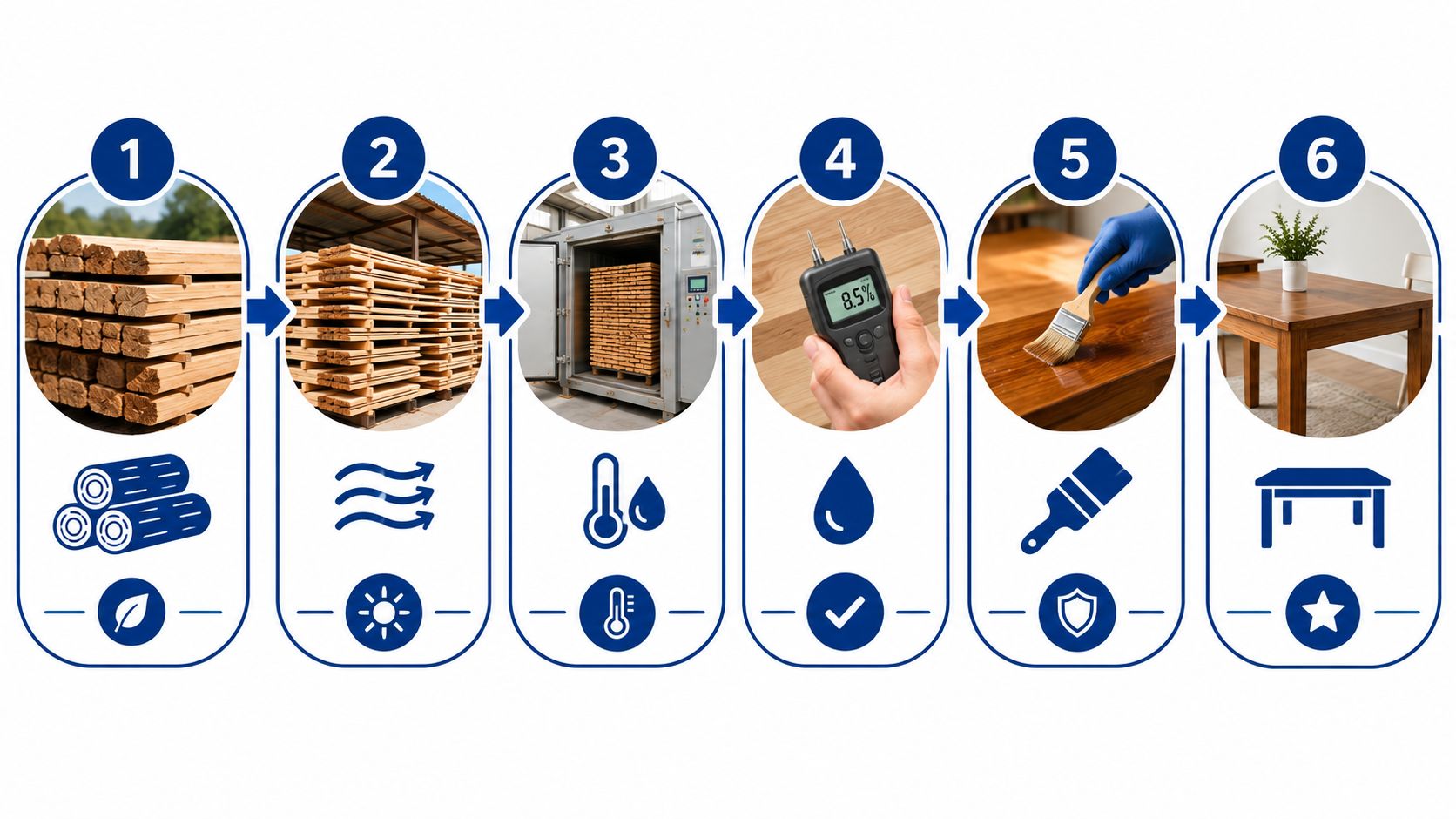
Measure instead of guessing
Touch is a poor moisture test. A surface may feel dry while water remains inside a cushion, board, joint, or veneer substrate. Use a suitable moisture meter and compare each reading with an unaffected area made from the same or similar material. The moisture-meter guidance for interpreting readings explains how to read those comparisons. The target is not the lowest possible number. It is a reading consistent with a dry reference under stable room conditions.
Record readings, locations, and times. That log helps show whether the furniture is drying and gives an adjuster evidence of the process. Fans move moisture off surfaces, but they do not remove it from thick furniture. A dehumidifier lowers the room's moisture load while directed air supports evaporation. Avoid heat guns and direct sunlight, and postpone sanding or refinishing until the furniture reaches equilibrium.
Restore or Replace Making the Triage Call
Use four questions for every item:
- What kind of water touched it?
- How deep did the water travel?
- Can the material retain its structure?
- Does restoration make financial and practical sense?
A clean-water event affecting the exterior of a solid-wood table may justify drying and later refinishing. The same exposure affecting a pressed-wood bookshelf with swollen edges usually doesn't. If gray or black water reached porous fabric, foam, or engineered wood, contamination can outweigh the item's resale or sentimental value.
| Water Category | Material Type | Saturation Level | Recommended Action |
|---|---|---|---|
| Clean water | Solid hardwood | Surface or limited joint exposure | Extract, dry gradually, measure, then assess repairs |
| Clean water | Upholstery and foam | Deep saturation | Isolate, extract, and obtain a professional salvage assessment |
| Gray water | Particleboard or MDF | Any visible swelling | Replacement is generally more realistic than structural restoration |
| Black water | Fabric, foam, or engineered wood | Any meaningful exposure | Treat as a contamination and replacement concern |
| Clean water | Antique wood or heirloom | Deep or uncertain saturation | Stabilize without refinishing and call a qualified conservator or restorer |
The honest replacement threshold: If pressed wood has swollen at edges, joints, or fastener points, cosmetic repair won't restore its original strength.
Sentimental value changes the process, not the material behavior. A family table may deserve conservation even when ordinary retail furniture doesn't. Photograph it, preserve loose parts, keep the piece stable, and obtain an itemized restoration opinion before authorizing irreversible work.
The German insurance source Alliance Adjustment's water-damage claim guidance describes roughly 1.1 million water-damage claims in Germany each year, with total losses exceeding €3 billion. It also identifies small incidents of €500 to €1,600, more serious losses of €3,000 to €5,000, and severe multi-floor events exceeding €30,000. Those figures aren't a valuation for your furniture, but they illustrate why a careful restore-or-replace decision matters when contents damage becomes part of a larger claim.
Mold Odors and What Insurance Actually Needs
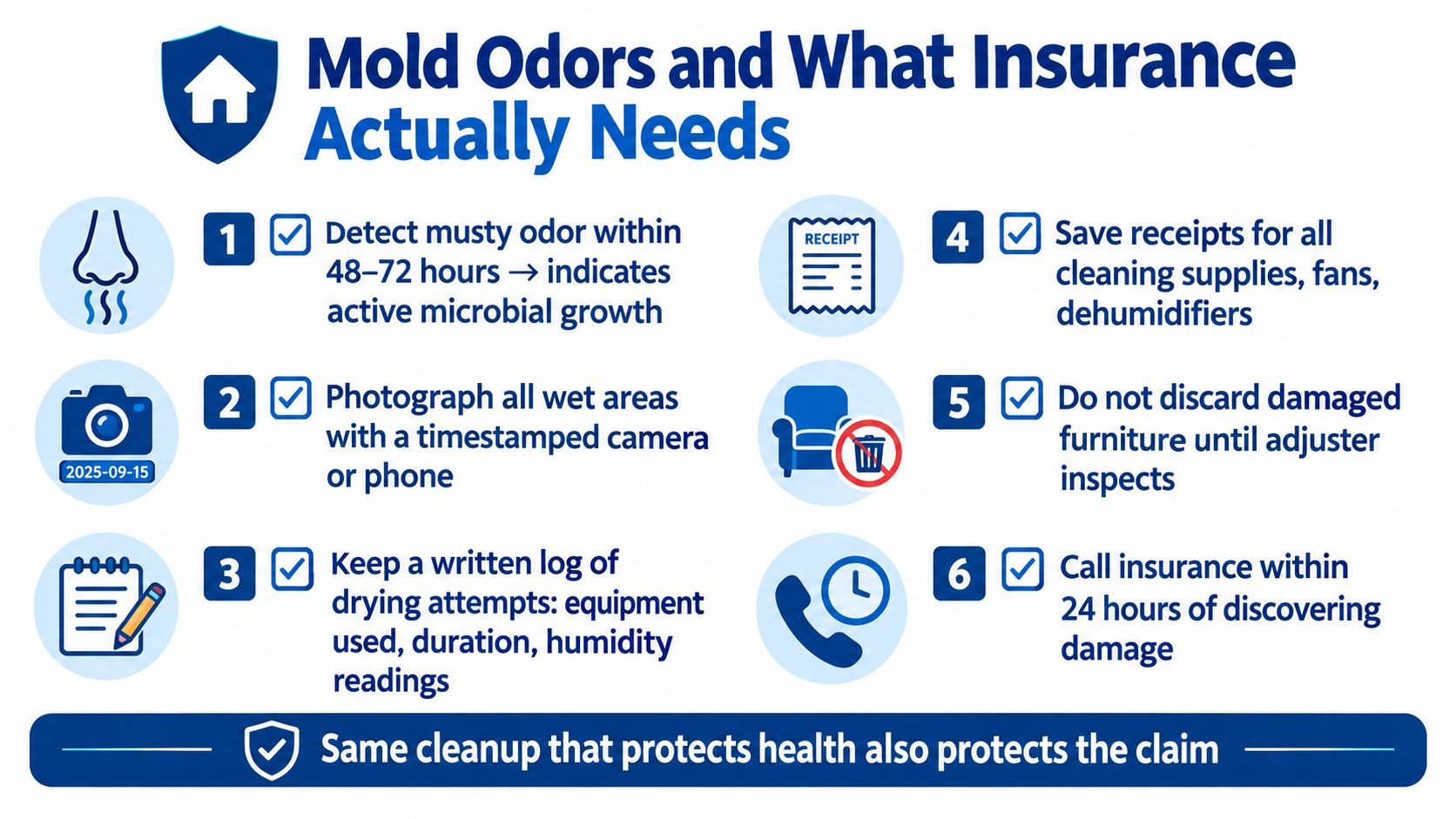
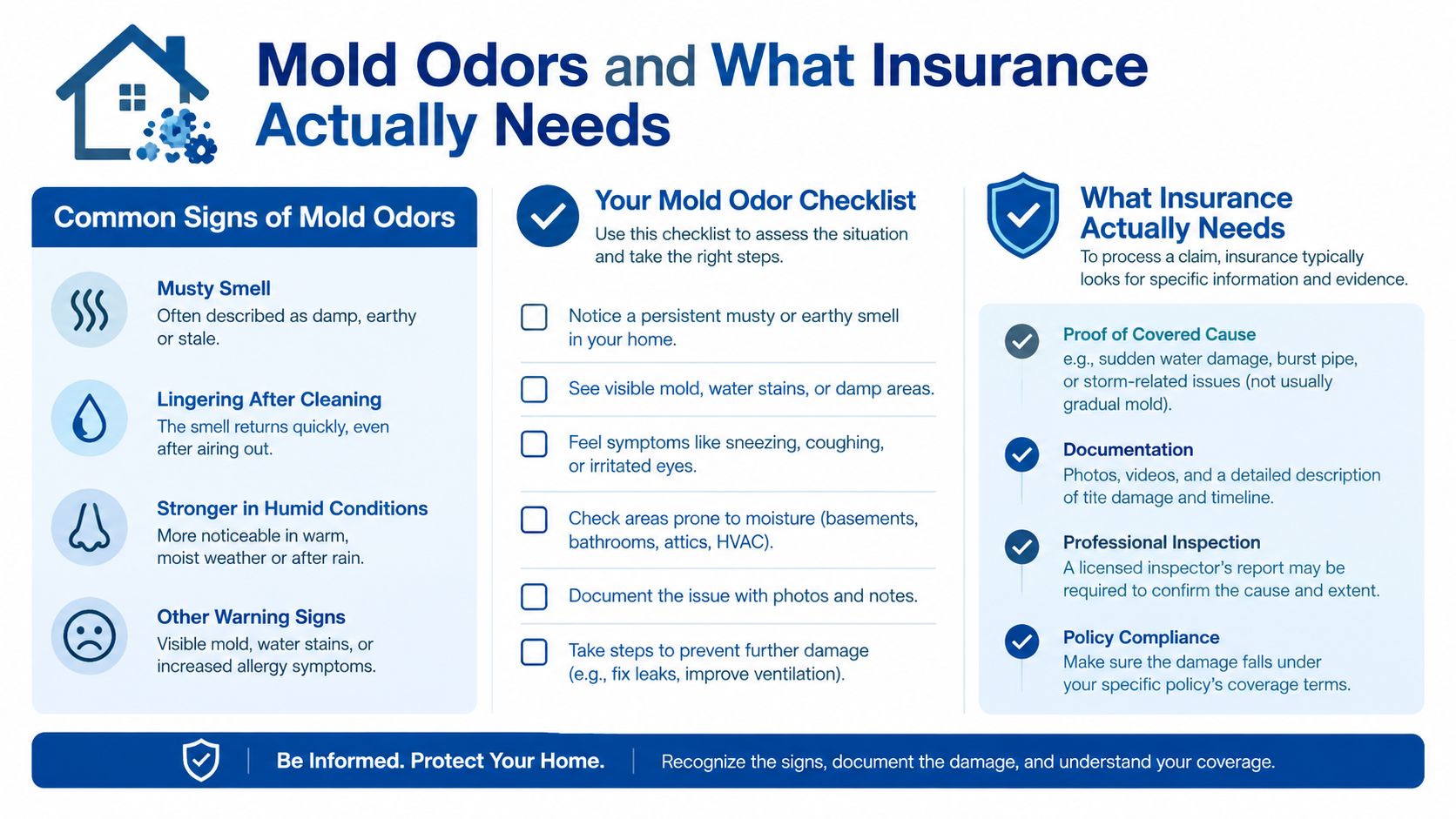
A musty smell isn't just an unpleasant cleanup detail. If odor appears after the furniture has remained damp, it can indicate microbial activity inside areas you can't inspect easily. The critical distinction is between deodorizing a surface and removing the moisture or contamination source inside foam, padding, joints, or composite board.
The same records that help a technician control the loss also help establish what happened for an insurer. Before cleanup, document the furniture from every accessible side, record the waterline, and photograph the surrounding room. Then keep an inventory that identifies each item, its condition, approximate age, purchase documentation, and replacement or repair estimate.
Build a defensible contents file
Save:
- Timestamped photographs: Include wide room views and close-ups of swelling, stains, delamination, and waterlines.
- A daily drying log: Record equipment used, operating periods, room conditions, and moisture readings.
- Receipts and valuations: Keep purchase receipts, appraisals, comparable replacement information, and repair estimates.
- Disposal records: Don't discard damaged furniture before the adjuster or their representative has had a reasonable opportunity to inspect it.
- Communication history: Retain claim numbers, emails, inspection appointments, and written instructions.
The quiet documentation mistake is throwing away a damaged sofa, cabinet, or table before photographing it and before the adjuster sees it. Once the item is gone, it becomes harder to prove the extent of damage, pre-loss condition, age, or replacement value. Insurance guidance from For The Public Adjusters on water-damage documentation specifically emphasizes photographs, inventory details, moisture readings, and drying logs.
For visible mold, heavily contaminated materials, or persistent odor, isolate the item and avoid brushing spores through the room. Sanitizing a sealed wood surface may address the exterior, but it won't solve contamination inside upholstery or a swollen composite core. Use the mold-prevention steps after water damage to coordinate ventilation, moisture control, and professional assessment without destroying claim evidence.
When to Call a Restoration Professional
Call a restoration professional when gray or black water has soaked porous furniture, when cushions are saturated through, or when you can't disassemble the item enough to inspect its interior. Professional assessment also makes sense for deep black staining in solid wood, delaminated particleboard, persistent odor, visible microbial growth, valuable antiques, and claims where the contents loss is significant relative to the policy deductible.
Ask direct questions before work begins:
- Credentials: Does the technician hold relevant IICRC training or certification for water-damage restoration?
- Equipment: Will the crew bring commercial extraction, air movement, and dehumidification equipment?
- Measurement: Will they record moisture readings from the affected item and an unaffected reference?
- Scope: Will you receive a written scope of work that separates drying, cleaning, restoration, and replacement?
- Documentation: Will the company provide photos, daily drying logs, and itemized estimates?
- Insurance: Can the company provide proof of general liability insurance?
A restorer and a refinisher aren't interchangeable. A refinisher repairs appearance, coatings, and cosmetic wood defects after the item is stable. A restorer handles extraction, controlled drying, contamination concerns, moisture measurement, and structural evaluation first. Calling a refinisher while the furniture is still wet can lock in the wrong repair plan.
RestoTek TX provides inspection, extraction, structural drying, microbial prevention, deodorization, and reconstruction for water-loss events in Georgetown, Austin, and surrounding Central Texas communities. Request written records even when the technician believes an item is salvageable. Those records can guide the repair and support the insurance file.
If water has reached your furniture, contact RestoTek TX for an assessment that separates salvageable materials from honest replacement decisions. Their team can document the loss, remove water, measure hidden moisture, and coordinate drying and restoration for homes in Georgetown, Austin, and nearby Central Texas communities.