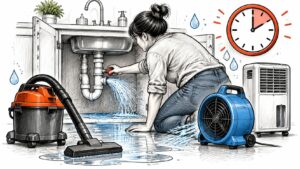
You've just finished a shower in your Georgetown home, and the water is still sitting around your ankles. You wait, hoping it will drain, but the level rises instead. Then you notice a faint sewer odor, hear a toilet gurgle, or see water appear in a nearby fixture.
A bathtub backed up can be a simple hair-and-soap obstruction, but it can also be the first visible sign of a blocked branch line, private sewer lateral, or overwhelmed public sewer system. The right response starts with containment and diagnosis, not repeated drain cleaner. Water that reaches flooring, baseboards, drywall, cabinets, or porous belongings can create a restoration problem even after the tub finally empties.
That Sinking Feeling When the Water Rises
The first few minutes usually feel harmless. You pull the stopper, watch the water swirl, and expect the tub to clear. Instead, the surface stays still. A second shower may push the level higher, and what looked like a slow drain can quickly become water across the bathroom floor.
That's where a plumbing annoyance becomes a water intrusion event. Bathwater can move beneath trim, into vanity toe-kicks, along subfloor edges, and through gaps around flooring. If the water includes wastewater, the concern is greater because porous materials may be contaminated rather than merely damp.
Practical rule: Treat rising water as a containment problem first and a clog problem second.
The scale of household plumbing losses shows why early attention matters. The U.S. Environmental Protection Agency's leak guidance estimates that the average household's leaks account for more than 9,300 gallons of wasted water annually. That figure isn't specific to bathtub backups, but it illustrates how small plumbing failures can accumulate into substantial water exposure.
What may be happening below the surface
A local obstruction near the stopper or trap often affects only the bathtub. A downstream blockage can affect several fixtures, forcing water to seek the lowest available drain. A damaged pipe or rain-stressed sewer system can create a similar symptom, especially during intense Central Texas weather.
The visible waterline also doesn't tell you how far moisture traveled. Flooring can conceal seepage, and drywall can absorb water above the level you see. Rubbing the floor dry may improve appearances without addressing moisture inside the assembly.
For now, avoid guessing. Stop water use, keep people and pets away from the affected area, and determine whether other fixtures are involved. That quick assessment can prevent a local overflow from becoming a larger cleanup and reconstruction project.
Your First Response to Contain the Water
Professionals begin by limiting additional water, protecting occupants, and preserving information about the loss. You can take the same approach before anyone arrives.
Follow these steps immediately
-
Stop all water use. Don't flush toilets, run sinks, start laundry, use the dishwasher, or take another shower until you know whether the blockage is isolated. If the problem involves a shared line, additional discharge can push more water into the tub or another low fixture.
-
Keep people and pets out. Suspected wastewater may contain pathogens. Don't walk through it barefoot, and don't allow children or animals to investigate. If the water may be contaminated, avoid direct contact and leave cleanup to people equipped to handle it safely.
-
Move removable belongings. Take rugs, bathmats, baskets, toiletries, and low furniture out of the room if you can do so without stepping into contaminated water. Set clean items on a dry surface away from the affected area.
-
Limit migration. Use old towels at the bathroom doorway to slow spread, but don't treat towels as a substitute for extraction. If water has reached electrical outlets, powered equipment, or wiring, stay clear and arrange for safe electrical assessment.
-
Locate the water shutoff if continued supply is contributing to the event. RestoTek TX provides a guide to finding your water shut-off valve for homeowners who aren't sure where to look.
Check the fixtures without creating more water
From a dry, safe position, check nearby toilets, sinks, showers, and floor drains. A backup limited to one tub is more consistent with a fixture or nearby branch obstruction. If toilets or sinks also rise, drain slowly, or respond when the tub drains, the problem likely sits farther downstream. Guidance on suspected sewage backup health risks emphasizes checking whether the issue is isolated before treating it like a simple clog.
Take photographs of the waterline, affected materials, and each involved fixture. Note the time you noticed the problem, whether rainfall was occurring, and whether neighbors report similar issues. Those details can help a plumber, utility, restoration team, or insurer determine the next step.
Simple DIY Methods to Clear the Drain Safely
DIY work makes sense only when the water is clean, the backup is limited to the tub, and no other fixture shows symptoms. If you see sewage, notice widespread backup, or smell persistent wastewater, stop experimenting and call for professional help.
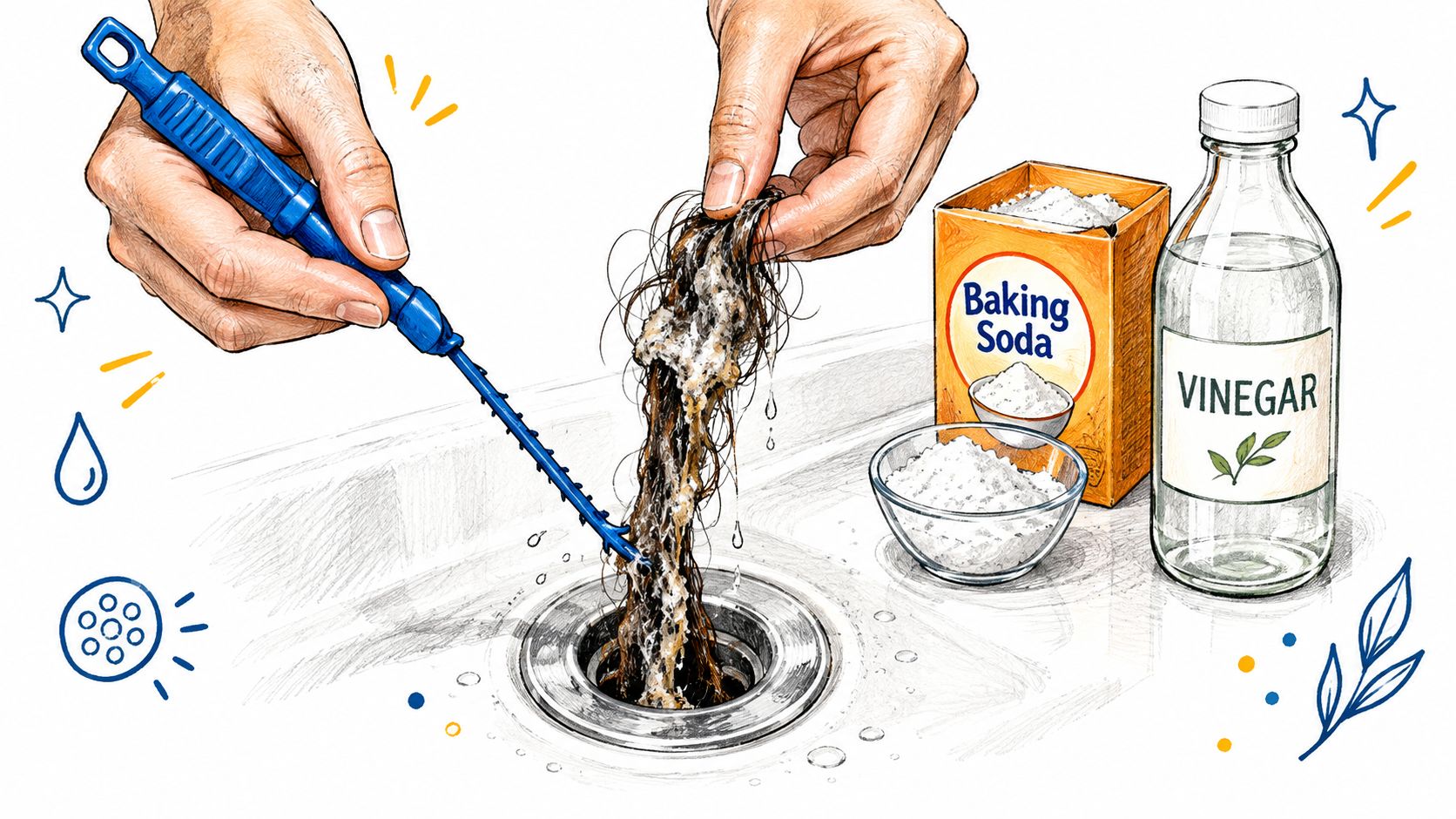
Start with the least aggressive option. Remove the stopper or strainer according to its design, then inspect the opening with a flashlight. Hair, soap residue, and debris often collect just below the surface. Pull material out with needle-nose pliers or a plastic drain-cleaning strip, and avoid pushing the obstruction farther into the pipe.
Try gentle methods before mechanical force
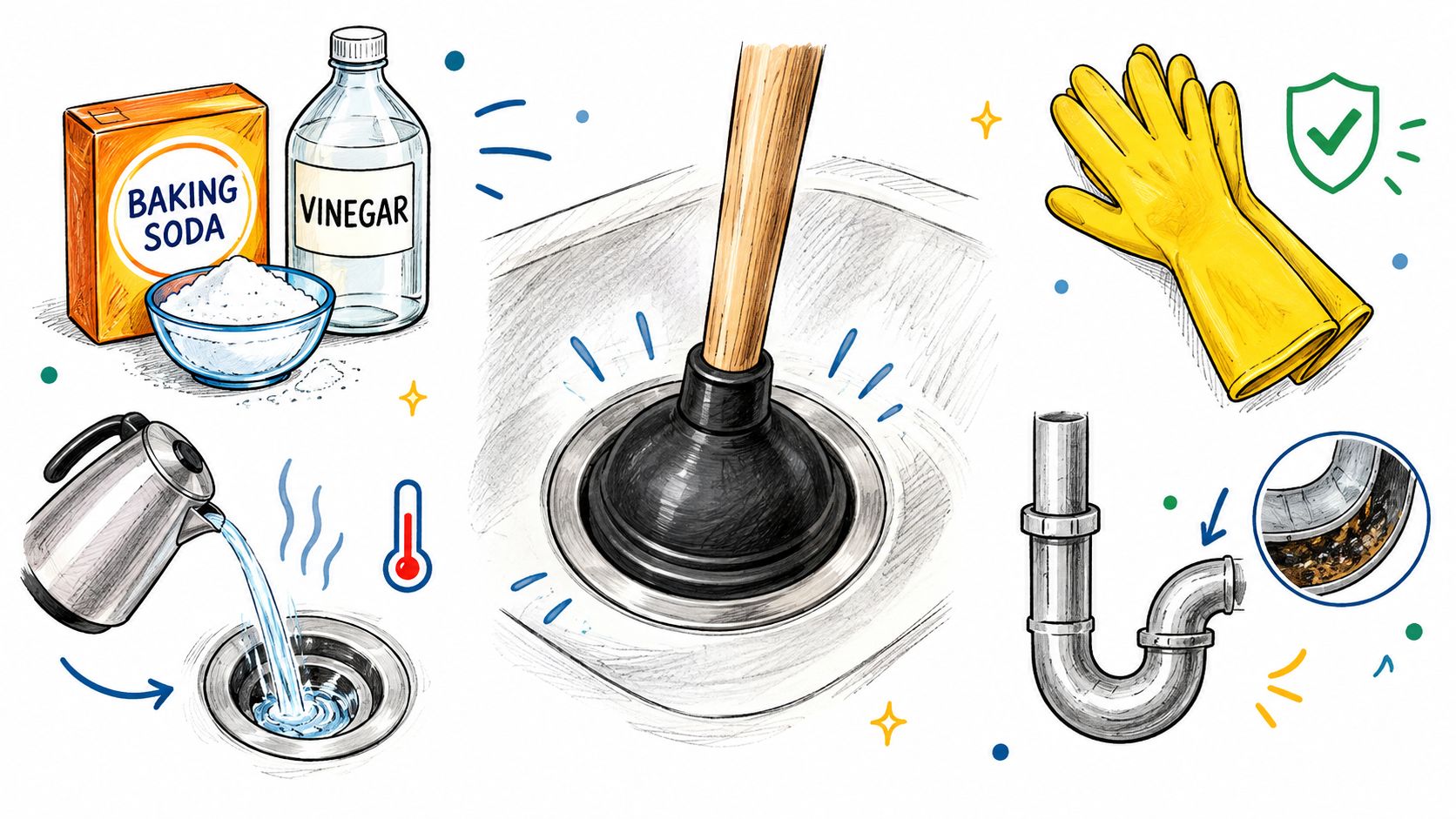
A baking soda and vinegar treatment may loosen light surface residue, but it won't repair a collapsed pipe or clear a deep main-line obstruction. Remove as much standing water as possible, add baking soda to the drain, and follow with vinegar. Let the reaction work briefly, then flush with hot water if the tub is draining and the plumbing is appropriate for that treatment.
Don't combine household products. Never pour vinegar into a drain that already contains chemical cleaner, and don't use this method when you don't know what has been added previously. Chemical reactions can create heat, fumes, or splashing liquid.
A plunger is usually the most useful next step for a localized tub clog. Use a flat cup plunger designed to seal over a drain, not a toilet flange plunger. Add enough water to cover the rubber cup, then place the plunger over the drain.
Create a proper seal
Bathtubs have an overflow opening, and air escaping through it weakens the pressure you need. Cover the overflow plate with a wet cloth or a firmly held piece of plastic. If the tub has a separate drain opening and overflow, seal the opening carefully without damaging the finish.
Pump the plunger with controlled strokes rather than violent force. Start gently to protect older connections, then increase pressure only if the seal holds. Lift the plunger after several strokes and check whether the water moves. If the level changes but the tub immediately slows again, debris may have shifted without leaving the line.
Stop if the water rises in another fixture, if foul water appears, or if the plunger produces no meaningful change. Repeated attempts can spread contaminated water and make the eventual inspection more difficult.
Skip harsh chemical drain treatments
Chemical drain cleaners are a poor choice when the cause is unknown. They may not reach a blockage in a shared line, can remain in the plumbing, and create an exposure hazard for anyone who later opens the trap or uses mechanical equipment. They can also damage finishes or vulnerable plumbing components.
The goal isn't just to make the tub empty once. It's to clear the correct obstruction without creating a more dangerous or expensive problem.
Using a Drain Snake Without Damaging Your Pipes
A hand auger is the final reasonable DIY step for a clean, isolated tub clog. Choose a small manual drain snake with a flexible cable and a handle. Avoid starting with a powered machine. Motorized equipment can force a cable around a bend, scratch the tub surface, damage older cast-iron plumbing, or snag on a deteriorated pipe.
Protect the finish before inserting anything. Remove the drain cover, place a cloth around the opening, and keep the cable aligned with the drain rather than dragging it across the enamel or acrylic surface.
Work slowly and feel the obstruction
Feed the cable into the drain while turning the handle gradually. When you feel resistance, don't ram the tool forward. Rotate gently to let the tip engage the material, then pull back slightly and advance again. The objective is to hook or break up a nearby obstruction, not to force the cable deep into an unknown line.
Withdraw the cable slowly and clean it as it comes out. Look for hair, fibrous material, or residue. Reassemble the drain cover and test with a small amount of water only if no other fixture is affected and the water appears clean.
Stop when the tool stops telling you what's happening. Resistance, repeated failure, or a cable that won't retract can indicate a deeper obstruction or a damaged line.
Don't use a household vacuum on contaminated water, and don't snake a line that may contain chemical cleaner without disclosing that fact to the technician. A professional needs to know what's in the pipe before using mechanical equipment.
Homes with older or unusual plumbing deserve extra caution. If you're concerned about Kitec piping and why it can be an issue, avoid aggressive DIY pressure and arrange an inspection. Once a hand auger fails, the next step may involve a cleanout, camera inspection, sectional equipment, or pipe repair. That's plumbing work, not a reason to keep forcing a tool through the tub drain.
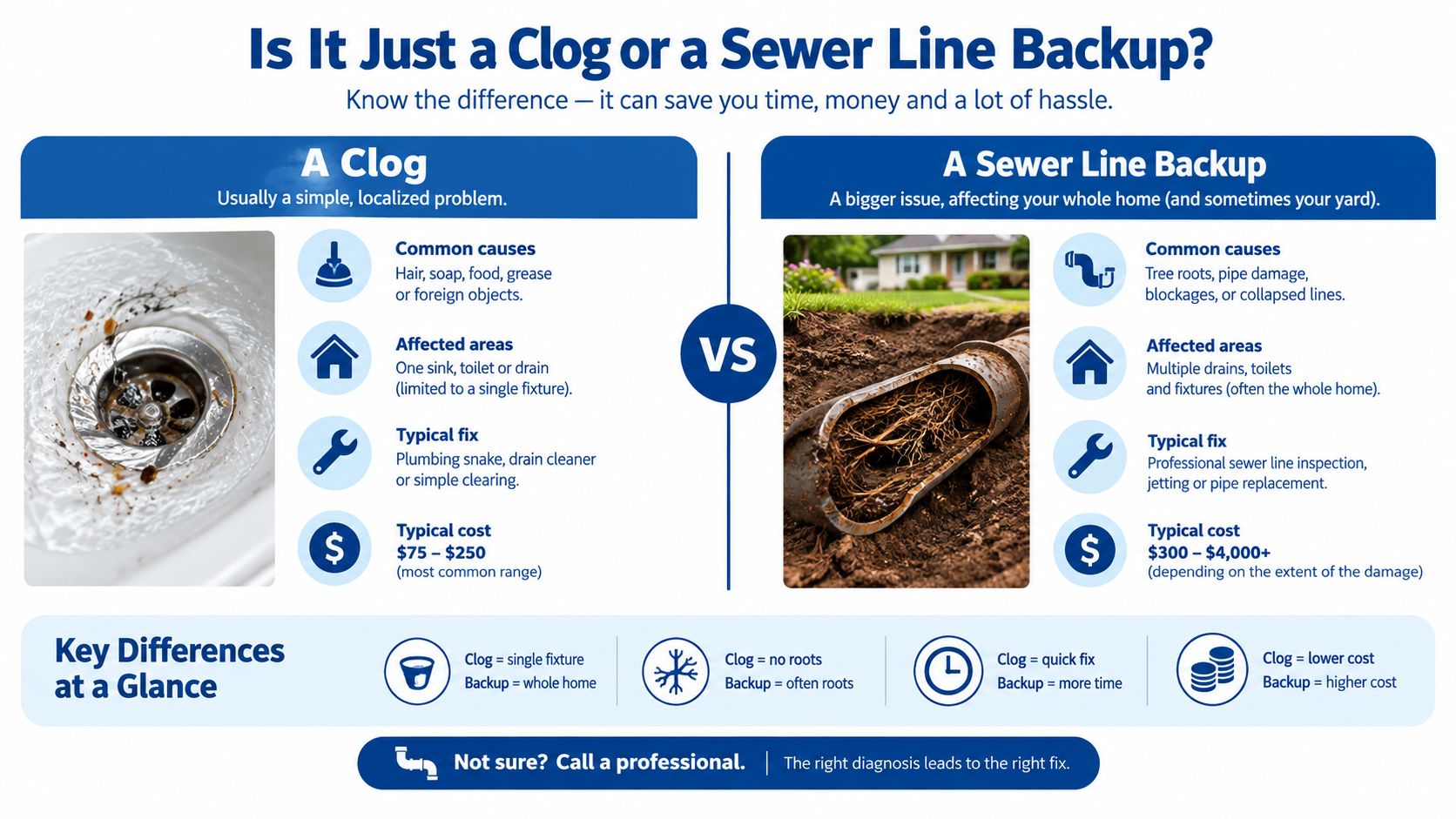
Is It Just a Clog or a Sewer Line Backup
The most important diagnostic question is whether the tub is the only fixture affected. A hair clog usually creates a local drainage problem. A shared-line obstruction changes the behavior of several fixtures because wastewater can't move past the blockage.
Watch for these patterns:
- The toilet gurgles when the tub drains. Air and wastewater may be moving through a restricted shared line.
- Several fixtures drain slowly. Sinks, showers, toilets, and floor drains that respond together point away from a stopper-level problem.
- Water rises in another low fixture. Backup appearing at a shower or floor drain suggests the obstruction is farther downstream.
- Odor comes from multiple drains. A persistent wastewater smell across the home deserves more than a drain-cleaning attempt.
- The problem follows rainfall. Heavy rain can stress public systems and expose weaknesses in private laterals or connections.
Read the symptoms as a system
Suppose the tub drains slowly and the toilet gurgles. You plunge the tub, and the water briefly improves, but the same symptoms return when a sink runs. That pattern suggests the tub wasn't the actual source. The obstruction may sit in a branch, the home's private lateral, or farther along the public sewer route.
Austin's official code-compliance resources warn residents to stop water use and avoid contact with water that may be contaminated. The same precautions make sense for Georgetown homeowners facing a suspected wastewater event.
Possible causes include accumulated grease or wipes, root intrusion, damaged or aging pipe, a blocked cleanout, or a sewer system affected by intense rainfall. You don't need to identify the exact cause from inside the bathroom. You do need to recognize when a chemical cleaner cannot solve the problem.
Document responsibility before disturbing the scene
Record the time, rainfall conditions, affected fixtures, water level, odors, and photos. Ask nearby neighbors whether they have similar symptoms. If multiple properties are affected, contact the relevant utility while arranging a licensed plumbing assessment.
The boundary between a private line and a public main can affect who investigates the source and how cleanup proceeds. Don't assume the utility is responsible, and don't assume the homeowner is responsible. A professional assessment can help identify where the obstruction sits.
For a suspected wastewater event, review practical guidance on sewage backup cleanup costs without treating any general estimate as a promise for your property. Insurance coverage also depends on policy language and may require a sewer-backup endorsement, so notify your insurer promptly and preserve photographs, receipts, and professional findings.
Who to Call A Plumber or a Restoration Pro
A plumber and a restoration professional solve different parts of the same emergency. The plumber investigates the line, clears the obstruction, repairs damaged plumbing, and determines whether the issue sits at the fixture, branch, private lateral, cleanout, or public connection.
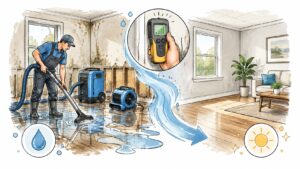
A restoration team addresses what the water did to the building. That work can include moisture mapping, standing-water extraction, controlled drying, removal of unsalvageable porous materials, odor treatment, microbial prevention, and documentation for insurance discussions.

Don't wait for visible mold
The CDC's guidance for indoor water exposure advises homeowners to clean up and dry wet areas within 24 to 48 hours whenever possible. If a home and its contents remain wet beyond that window, occupants should assume mold may be present. Carpet, padding, drywall, upholstered items, wallpaper, insulation, paper products, and other materials that can't be thoroughly cleaned and dried may need removal.
That window isn't a guarantee or a safety cutoff. Mold can develop earlier, and hidden moisture can remain after the bathroom floor looks dry. Technicians may need moisture meters, targeted access to wall or floor assemblies, air movement, and dehumidification to verify that affected materials are drying.
A sensible escalation plan
Call a plumber promptly when multiple fixtures back up, the toilet gurgles, wastewater appears, the problem returns after plunging, or the cleanout is affected. Call a restoration professional when water has reached flooring, drywall, cabinetry, insulation, contents, or concealed spaces, especially if the water may be contaminated.
Photograph conditions before moving items, keep a record of calls and invoices, and don't discard damaged materials before documenting them unless safety requires immediate removal. RestoTek TX provides inspection, extraction, structural drying, microbial prevention, deodorization, and reconstruction support for water-loss events in Georgetown, Austin, and surrounding Central Texas communities.
If your bathtub backed up, RestoTek TX can help assess the affected area, coordinate the plumbing response, extract water, and dry hidden moisture before secondary damage develops. Visit RestoTek TX to request guidance for a bathtub overflow, sewer backup, or related water damage emergency.