A sewage backup usually starts with confusion, not clarity. You flush a toilet, hear a drain gurgle, and then see dark water spreading across the floor. In Georgetown or Austin, that moment quickly turns into a second worry: what is this going to cost?
The bill is hard to predict because homeowners often get shown one cleanup number while the actual job includes several different parts. Extraction is one part. Disposal is another. Drying, demolition, odor treatment, and the plumbing diagnosis that finds the actual blockage can all show up as separate line items. That's why two homes with what looks like the same mess can end up with very different invoices.
Introduction to Sewage Backup Cleanup Cost
A typical homeowner calls while standing in wet shoes, trying to decide what matters first: stopping the water, saving belongings, or calling insurance. The honest answer is that all three matter, but the order matters even more. If sewage entered the home, the event is no longer just “water damage” in the casual sense. It becomes a contamination problem.
That distinction explains why the sewage backup cleanup cost is often much higher than people expect. A simple overflow from clean water can sometimes be dried and saved. Sewage is different. It brings contamination that changes how crews extract water, what materials they remove, how they bag waste, and how they disinfect and dry the structure afterward.
Practical rule: If the water came from a drain, toilet, or sewer line and contains waste, treat it as a contamination event first and a drying project second.
Homeowners also get tripped up by one common assumption: that the cleanup quote includes the fix for the pipe problem. Often, it doesn't. One contractor may price the mitigation work. A plumber may price the sewer line diagnosis and repair separately. If you don't separate those categories in your mind, the final invoice can feel like it doubled halfway through the job.
Understanding Sewage Backup Cleanup Cost Basics
Homeowners usually expect one price for one problem. Sewage loss rarely works that way.
A better way to read the cost is to split the job into two buckets. The first bucket is cleanup of the contaminated area. The second bucket is everything needed to confirm the source, stop it from happening again, and document that the structure is safe to dry and rebuild. National guides often blend those charges together. That is why a quote can look confusing until each line item is separated.
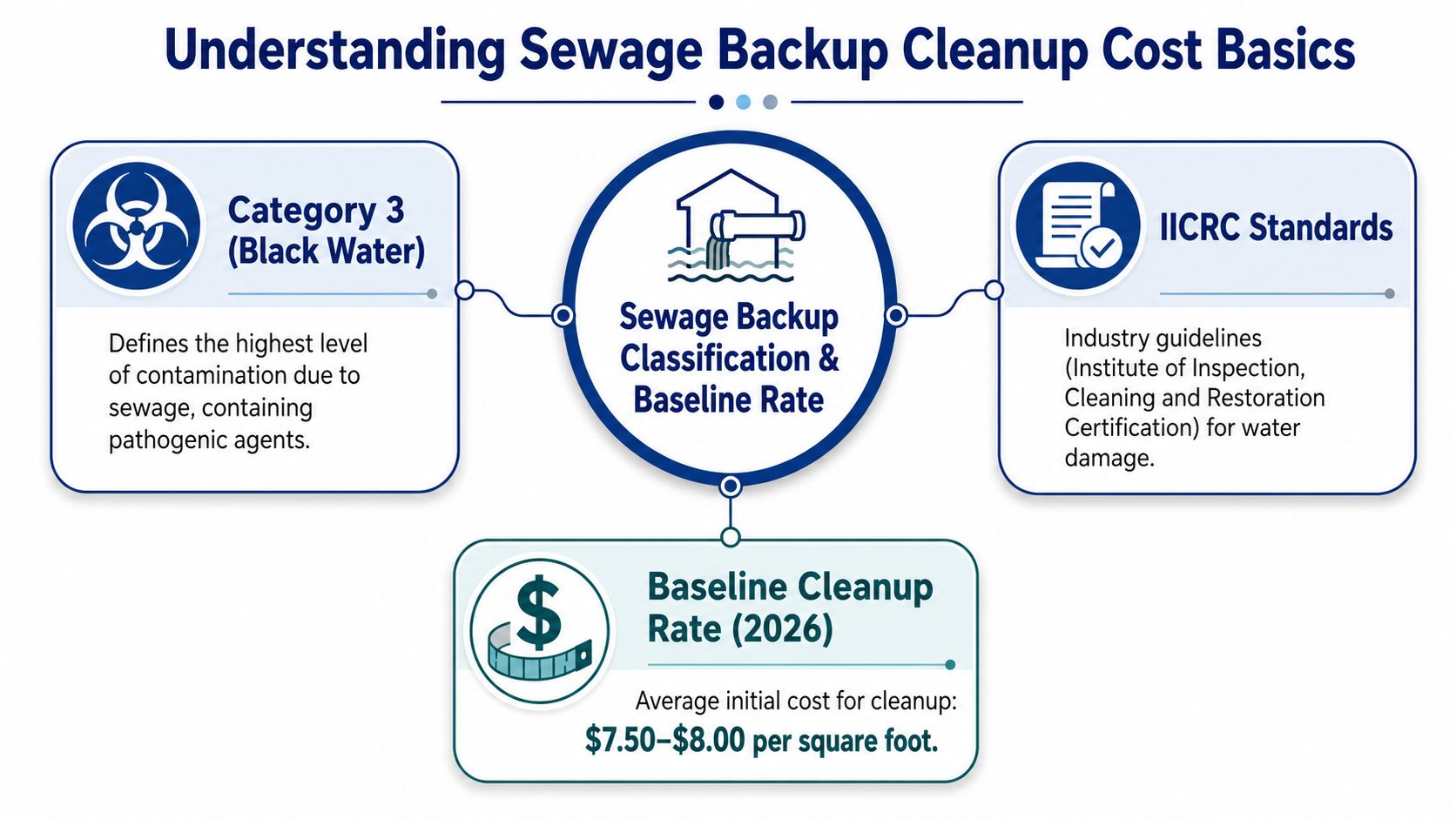
Under IICRC S500, sewage is treated as Category 3 water. That label matters because it changes the rules of what can be saved. Carpet pad, insulation, base trim, and lower drywall often act like a sponge that also traps contamination. In many homes, removing those materials is safer and more predictable than trying to clean them in place.
A hospital triage comparison helps here. The first goal is to remove what is actively unsafe. The second goal is to clean and dry what can still be restored. That is why the visible puddle on the floor is only part of the bill. The harder part is often the hidden moisture and contamination that moved under flooring edges, into wall cavities, or behind cabinets.
What the baseline price usually includes
The starting quote for sewage cleanup usually covers labor and equipment tied directly to mitigation, such as:
- extracting contaminated water
- setting containment to limit spread
- removing affected porous materials
- cleaning and applying antimicrobial products to structural surfaces
- placing air movers and dehumidifiers
- bagging and disposing of contaminated debris
That list still leaves out charges that many homeowners assume are included.
The hidden line items that change the real total
Microbial remediation is often priced separately from basic water extraction because it involves more than drying. Crews may need extra cleaning passes, HEPA vacuuming, odor treatment, and documentation showing contaminated materials were removed correctly.
Plumbing diagnostics are also commonly separate. A camera inspection, drain clearing, hydro jetting, or sewer line location test answers a different question than cleanup. Cleanup deals with the mess inside the home. Diagnostics deal with why it happened.
In Georgetown and Austin, that separation matters because response conditions vary by home type and utility layout. A slab-on-grade house with one affected bathroom can be simpler to scope than a home where sewage traveled across multiple connected rooms before anyone noticed. Emergency after-hours dispatch can also add cost, especially if crews need to arrive immediately to extract sewage before it wicks farther into finishes.
If you want a rough frame of reference before calling for help, a water damage repair cost calculator for Texas homes can help you compare mitigation categories, though sewage losses still need a contamination-specific inspection.
The clearest estimate separates cleanup, microbial treatment, drying, plumbing diagnosis, and rebuild items into distinct lines. That format helps you see which charges address health risk, which charges address the failed drain or sewer line, and which charges belong to reconstruction later.
Key Factors Driving Sewage Backup Cleanup Cost
Invoices make more sense when you read them as a chain of tasks, not one single service. Below are the cost drivers that usually matter most.
Extraction and contaminated removal
The first job is physical removal of sewage and sludge. Crews use pumps, extraction units, mops, and containment materials to stop the spread. Then they remove contaminated porous items that can't be safely restored. In sewage work, that often means carpet pad, sections of drywall, insulation, and other absorbent materials.
This is the part homeowners often underestimate because the visible puddle may be small while contamination underneath flooring or behind wall bases is not.
Microbial treatment and structural drying
After the gross contamination is removed, the structure still has to be cleaned and dried. That includes antimicrobial application, deodorization, and the use of air movers and dehumidifiers to bring materials back to acceptable dry standards. If moisture stays trapped, odor and secondary damage can continue even after the floor “looks dry.”
A cleanup estimate that seems higher than expected may be reflecting that hidden labor, not just the obvious mess.
Plumbing diagnostics and line repair
The root cause matters as much as the cleanup. A stoppage in one short section of line is very different from a damaged buried service line. According to HomeGuide's sewage cleanup cost breakdown, professional camera inspections cost $125 to $500, and pipe replacement runs $50 to $250+ per linear foot. That same source notes that the length of damaged service line and the need for excavation heavily drive the total cost.
Think of the sewer line like a clogged artery. You can deal with the symptom at the surface, but if nobody checks where the blockage sits, the backup can return. Camera inspections help locate the problem before a crew starts digging or opening finishes unnecessarily.
For homeowners trying to compare broad water-loss scenarios, a water damage repair cost calculator for Texas properties can help frame how mitigation and repair categories differ, even though sewage events carry stricter contamination rules.
Disposal and rebuild
Contaminated debris doesn't leave the house like normal remodeling trash. It must be bagged, handled, and disposed of under stricter conditions. Then comes rebuild work if finishes were removed. New drywall, paint, trim, flooring, and fixture resets can turn a mitigation project into a larger restoration project.
A useful way to read your estimate is to sort it into two buckets:
| Cost bucket | What it usually includes |
|---|---|
| Cleanup and mitigation | Extraction, demolition of contaminated porous materials, sanitization, drying, odor treatment |
| Root-cause and restoration | Camera inspection, drain clearing, pipe repair, excavation, reconstruction of removed finishes |
Typical Price Ranges by Severity and Affected Areas
A homeowner in Georgetown may see sewage only around one toilet and assume the bill will stay small. Then the crew lifts the baseboards, checks the vanity kick space, and finds contamination under flooring that carried farther than the visible puddle. That is why sewage backup cleanup cost has to be sorted by both severity and affected materials, not just by how bad the room looks at first glance.
How severity changes the bill
Severity works like a three-part test.
First, how far did contamination spread? Second, what materials absorbed it? Third, how much access work is needed to clean and dry the structure safely? A small bathroom backup on tile is one kind of job. The same backup that reaches drywall, laminate flooring, cabinets, and adjacent hallways becomes a different project because labor, demolition, disposal, drying, and microbial treatment all expand.
That last item confuses homeowners often. Cleanup is only one line of the estimate. The total can also include after-hours emergency response, contamination control, specialty disposal, odor treatment, plumbing diagnostics, and later reconstruction.
Typical price ranges by event size
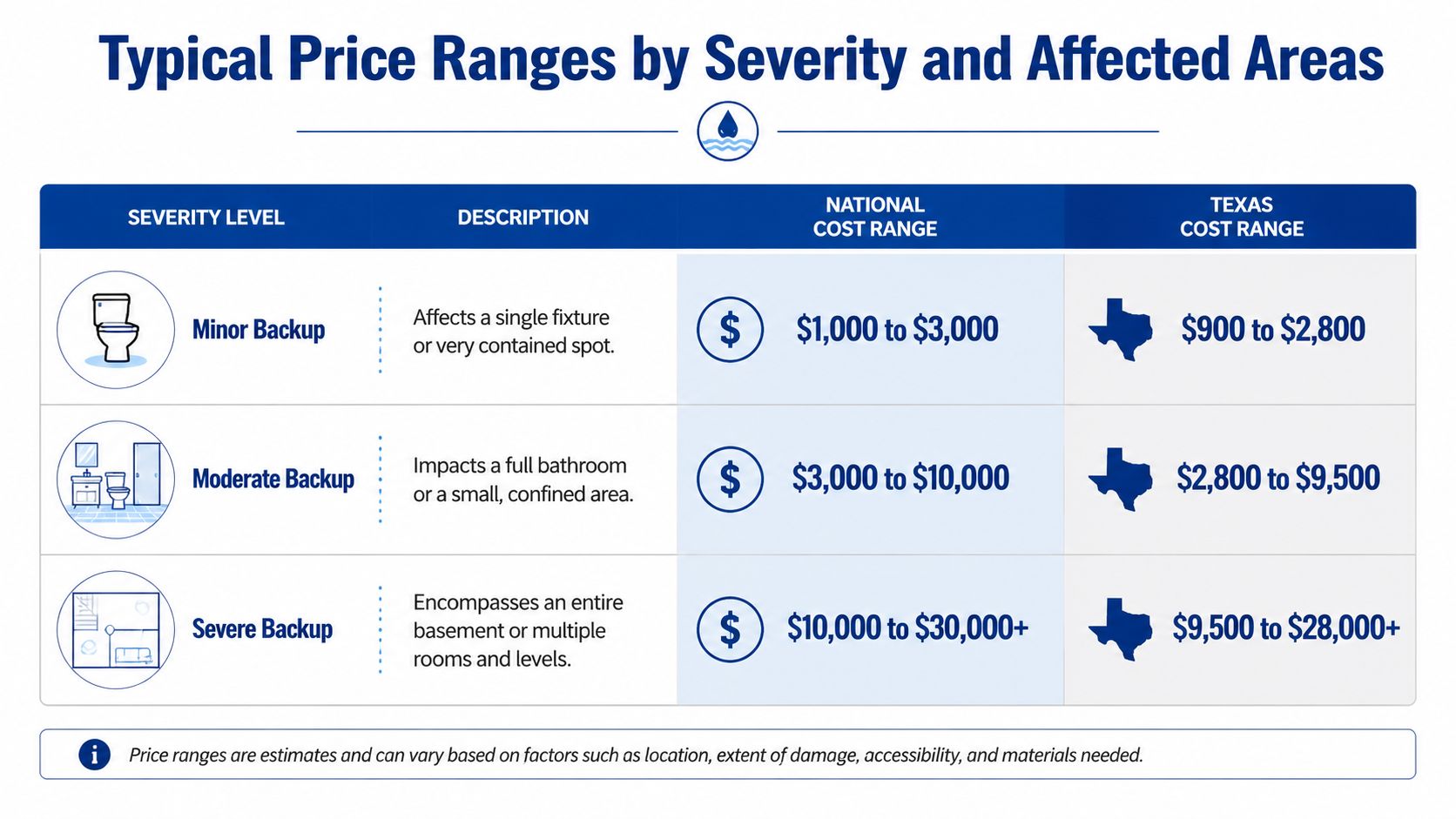
A minor event usually means a contained fixture overflow or a small affected area with limited material removal. These jobs often stay toward the lower end of the residential cleanup range discussed earlier, especially if the backup is caught quickly and remains on non-porous surfaces.
A moderate event often includes one bathroom, part of a hallway, or a nearby room where sewage traveled under flooring edges or into absorbent finishes. This is the tier where hidden costs start showing up. A puddle that looks manageable can still require removal of baseboards, drywall cuts, antimicrobial cleaning, drying equipment for several days, and moisture checks before rebuild begins.
A severe event usually involves multiple rooms, major finish removal, long drying time, or a root-cause problem that turns the loss into both a cleanup job and a plumbing problem. In practice, these are the projects that can climb well past the middle of the normal residential range, especially if the line failure requires excavation or if the contamination reached HVAC-adjacent spaces, crawlspaces, or large sections of flooring.
Affected area matters, but material type matters more
Homeowners often ask for a square-foot price. That sounds simple, but sewage losses do not behave like basic carpet cleaning.
One hundred square feet of sealed tile may require extraction, sanitation, and drying. That same one hundred square feet of laminate over particleboard, plus wet base cabinets and drywall, can require demolition and disposal before true cleaning even starts. Area still matters, but material category often changes the cost faster than floor size alone.
Here is a practical way to read the range:
| Severity level | What the area often looks like | What usually drives the cost |
|---|---|---|
| Minor | One fixture area or small contained zone | Extraction, sanitation, limited demolition, short drying period |
| Moderate | One room or connected surfaces beyond the visible spill | Removal of porous materials, microbial remediation, odor control, monitoring visits |
| Severe | Multiple rooms, spread under finishes, or backup tied to line failure | Larger demolition scope, specialty drying, repeated cleaning, plumbing diagnostics, possible excavation, later rebuild |
Why local invoices in Georgetown or Austin can differ from national guides
National articles often lump everything into one broad cleanup number. Local projects in Georgetown and Austin are usually easier to understand when you separate the invoice into line items.
For example, an emergency weekend response may cost more than a scheduled daytime visit. A home on slab with suspected under-floor spread may need more moisture mapping and demolition than a simpler surface cleanup. If the backup source is unclear, the plumber may add a camera inspection or drain clearing charge that sits outside the mitigation scope. If contamination affected drywall or insulation, microbial remediation and debris handling can become major parts of the total even before reconstruction begins.
This is also where insurance confusion starts. A homeowner may compare a cleanup estimate to a claim expectation without realizing the estimate may not include the pipe repair, excavation, or rebuild. If you want a clearer view of how claim categories are often separated, this guide on a Texas home insurance water damage claim can help you review cleanup versus repair scope.
The middle tier is where estimates change fastest
Minor and severe cases are usually easier to recognize. The hard calls sit in the middle.
A bathroom backup that stayed on tile may remain a contained cleanup. The same event becomes more expensive quickly if sewage passed under trim, wicked into drywall, soaked vanity toe-kicks, or entered an adjacent bedroom closet. Homeowners see one room. The crew has to price the full contamination path.
That is the safest way to interpret this section. The visible mess is the starting point. The actual cost comes from the full footprint of contaminated materials, the hidden access needed to clean them, and the separate plumbing or reconstruction work that may follow.
Insurance Coverage and DIY vs Professional Tradeoffs
Insurance questions usually start with one sentence: “Will my policy cover this?” The more useful question is narrower: “Will it cover cleanup, and will it also cover the pipe repair that caused the backup?” Those are often not the same claim category.
According to this sewage cleanup cost and hidden plumbing repair breakdown, most cleanup quotes exclude the plumbing repair needed to fix the root cause. That additional work can add $150 to $25,000+ beyond cleanup, with full sewer line replacements reaching $25,000 and section replacements running $50 to $250+ per linear foot.
Where insurance confusion usually happens
A mitigation contractor may document extraction, demolition, drying, and sanitation. A plumber may later identify a collapsed section of line or a repair that requires excavation. Homeowners sometimes assume the first estimate covered the second problem.
If you're sorting claim language, this guide to a home insurance water damage claim in Texas can help you think through documentation and scope questions before you sign off on work.
DIY versus professional cleanup
DIY usually sounds cheaper at the start because the homeowner sees standing water and thinks in terms of pumps, towels, and disinfectant. But sewage losses aren't just wet-floor problems. They involve contamination control, removal decisions for porous materials, moisture tracking, and documentation.
Here's a practical comparison:
- DIY may help with immediate protection: moving unaffected items, isolating the area, and documenting damage can reduce further loss.
- Professional work is usually the safer choice for contaminated materials: crews know what must be removed, how to prevent cross-contamination, and how to document drying and sanitation.
- DIY can backfire if it delays proper demolition: if sewage remains in carpet pad, drywall, or insulation, homeowners may end up paying for larger replacement later.
If you can't verify where the contamination stopped, you probably can't safely define the cleanup boundary on your own.
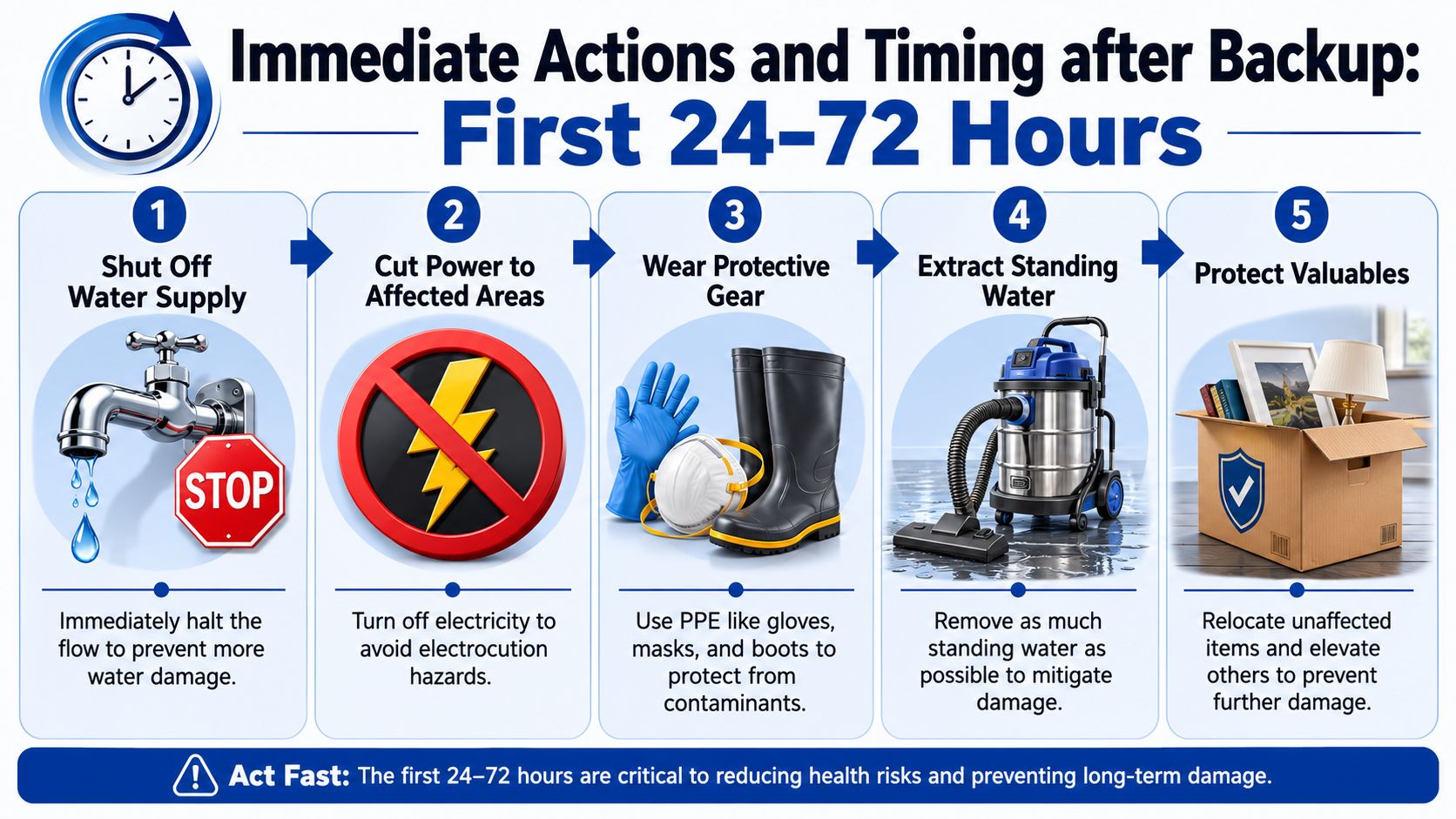
Immediate Actions and Timing after Backup
A sewer backup at 10 p.m. creates two problems at once. There is the mess you can see on the floor, and there is the contamination moving into carpet pad, baseboards, drywall, and the plumbing system that caused the overflow in the first place. That timing matters for cost because every hour affects how much material can be cleaned, how much must be removed, and whether you also need separate charges for microbial treatment and plumbing diagnostics.
First hour
Start with personal safety and source control. Stop using toilets, sinks, showers, dishwashers, and washing machines that may feed the blocked line. If contaminated water is near outlets or appliances, shut off power to that area only if you can do it from a dry, safe location.
Keep children, pets, and anyone without protective gear out of the affected area.
Then document what happened before the scene changes. Take photos of the overflow point, the rooms affected, visible debris, and any damaged contents. That early record helps with claim discussions, but it also helps contractors separate cleanup charges from later line items such as drywall removal, antimicrobial work, odor treatment, and camera scoping of the sewer line.
First 24 hours
Your goal in the first day is containment. Sewage works like spilled ink in fabric. It rarely stays inside the neat outline you first noticed. It can wick under flooring, soak trim, and spread on shoes into clean rooms.
Move unaffected items out of nearby spaces if you can do so without walking through contamination and spreading it farther. Close doors, use towels only as temporary thresholds if needed, and avoid running fans from the dirty area toward clean parts of the house. For a local step-by-step response plan, review what to do in the first 24 hours after water damage in Georgetown and Austin.
This is also the point when hidden cost categories start to separate. Cleanup crews may handle extraction, controlled demolition, and disinfection. A plumber may need to diagnose whether the cause is a grease blockage, root intrusion, a belly in the line, or a break under the slab or yard. In Georgetown and Austin, after-hours dispatch, weekend response, and emergency plumbing diagnostics can change the total bill even before reconstruction begins.
The next two to three days
Professional crews usually work in stages. First comes extraction and contaminated material removal. Then drying, sanitation, and moisture checks. If the backup affected porous materials, those materials often need removal rather than surface cleaning, which is one reason a small-looking overflow can turn into a larger invoice.
Homeowners often get confused here because "cleanup" sounds like one task. In practice, it can be several line items billed separately:
- Emergency response and extraction: getting the water and waste out fast.
- Containment and protective setup: keeping contamination from reaching clean areas.
- Removal of unsalvageable materials: carpet pad, drywall, insulation, baseboards, or cabinets if affected.
- Microbial remediation measures: sanitation, odor control, and treatment of contaminated surfaces.
- Drying and monitoring: equipment and follow-up checks until materials reach acceptable moisture levels.
- Plumbing diagnostics: locating the actual cause so the backup does not happen again.
That separation matters for budgeting. National guides often lump these steps together. Local invoices in Georgetown and Austin usually break them apart, especially when an emergency callout is followed by plumbing investigation and then reconstruction.
Use this simple order of operations if a backup happens:
- Stop added flow: quit using fixtures tied to the sewer line.
- Reduce shock risk: keep clear of wet electrical hazards.
- Block access: keep people and pets out of the area.
- Photograph everything early: capture both the spread and the source area.
- Protect clean belongings: remove nearby items that have not been contaminated.
- Call qualified help quickly: faster containment usually means a smaller remediation zone.
Fast response does not promise a low bill. It does improve the odds that you pay for a controlled cleanup instead of cleanup, larger demolition, odor correction, and a second round of repairs later.
Local Emergency Response and RestoTek TX Services
For Georgetown and Austin homeowners, local response matters because sewer backups rarely happen at a convenient time. A team that can inspect, extract, dry, and rebuild under one roof usually creates a clearer process than handing the loss from company to company.
RestoTek TX serves Georgetown, Austin, and nearby Central Texas communities with 24/7 emergency response for floods, overflows, and backups. The company is family-operated by Joan and Josh Garza and handles the full cycle from inspection and mitigation through structural drying, microbial prevention, and reconstruction. That end-to-end approach is useful when a backup involves both contamination control and finish repair, or when hidden moisture and odor issues need continued follow-up after the initial extraction work.
For homeowners dealing with flash-flood conditions, line backups, or after-hours losses, local familiarity with Central Texas conditions can make the response more practical and less fragmented.
Conclusion and Next Steps
Understanding any sewage backup cleanup cost reveals that the visible mess is only one part of the bill. Cleanup, contaminated material removal, drying, disposal, plumbing diagnostics, and root-cause repair each belong on their own line. If you separate those pieces, estimates become easier to compare and surprise costs become easier to spot.
Before approving work, ask for three things: a clear mitigation scope, a separate plumbing diagnosis, and a rebuild outline if demolition is likely. That simple approach helps Georgetown and Austin homeowners make faster, safer decisions under pressure.
If you're dealing with a backup right now and need help sorting mitigation, drying, microbial prevention, and reconstruction, RestoTek TX offers no-cost estimates and 24/7 emergency response for Georgetown, Austin, and surrounding Central Texas communities.