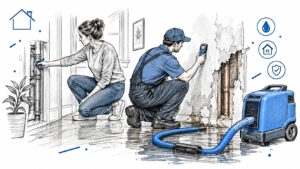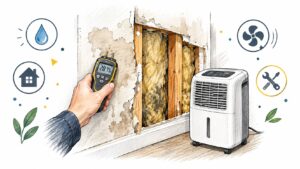
Water on the floor changes the mood of a house fast. One minute you're dealing with a normal Tuesday. The next, you're staring at a soaked hallway, a dripping ceiling, or baseboards already starting to swell, and you're trying to decide what matters most right now.
In Austin, that scramble usually starts with something familiar. A failed water heater in the garage. An AC drain line that backed up while nobody was home. A supply line under a sink that let go overnight. Sometimes it's storm-driven intrusion after hard Central Texas rain. Whatever the source, the first decisions you make can either contain the loss or make the cleanup much harder.
That Sinking Feeling When You Discover Water Damage
A lot of homeowners remember the exact moment. You step out of bed and your sock lands in cold water. You open the laundry room and find a supply line spraying. You come home after work and see bubbling paint below the upstairs bathroom.
That first reaction is usually the same. Panic, then questions. Is this dangerous? Is it covered? Do I need to leave the house? Can I clean this up myself?
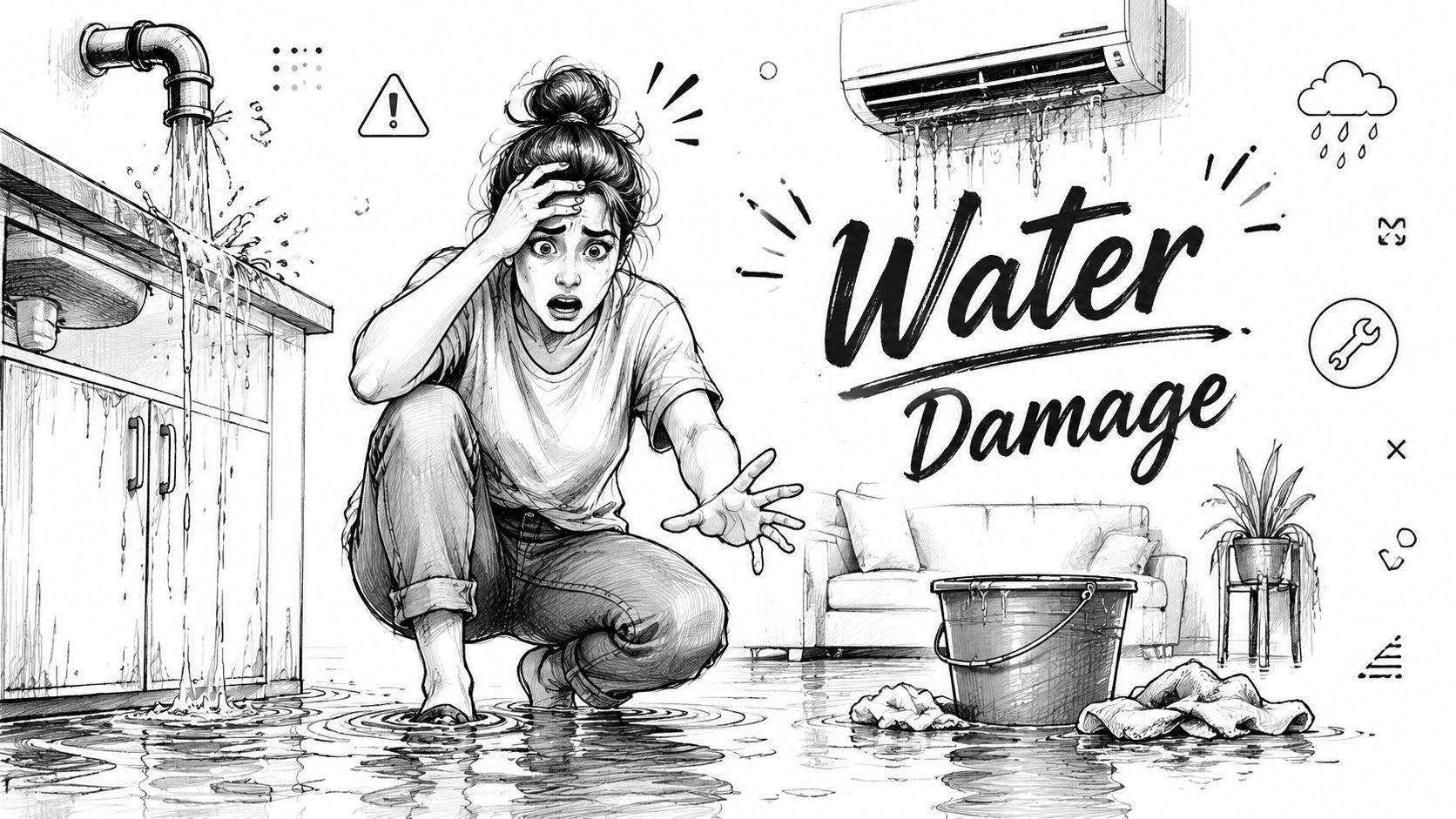
The good news is that water damage doesn't have to turn into a full rebuild if you move quickly and make smart calls early. The bad news is that waiting usually costs more. Within 24 to 48 hours, moisture can move into carpet, drywall, and insulation, weakening materials and starting mold colonization. Early intervention can reduce restoration costs by 30 to 50 percent, according to this Austin-focused legal industry summary on hidden water damage response.
What makes Austin homes tricky
Central Texas homes often hide water in places owners don't check right away. Behind baseboards. Under floating floors. Inside wall cavities near bathrooms, kitchens, and HVAC lines. A room can look "not that bad" while the subfloor and lower drywall are still holding moisture.
That mismatch is what catches people. Surface water looks manageable, so they grab towels and fans and assume they're ahead of it. Meanwhile, the underlying problem is spreading where they can't see it.
Practical rule: If water touched drywall, flooring, cabinets, or insulation, treat it as a structural drying problem, not just a cleanup problem.
A calm, methodical response is what works. Shut down the source. Protect safety. Document everything. Get a real moisture assessment. That's the path that gives you the best shot at limiting damage, shortening repairs, and keeping the insurance side from becoming a second headache.
Your First 24 Hours What to Do Immediately
The first day isn't the time for perfect decisions. It's the time for safe ones.
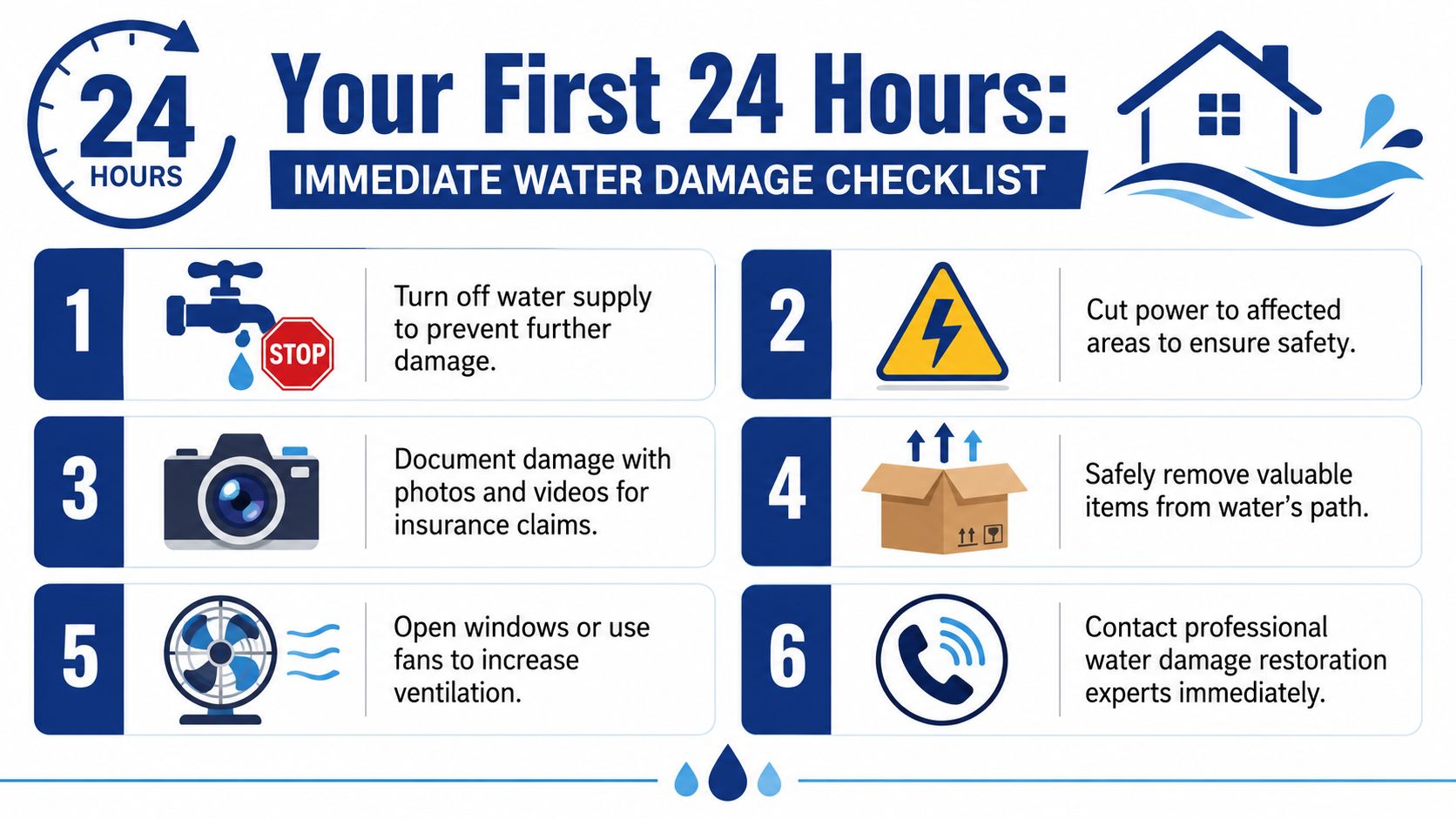
Start with this checklist and keep moving in order.
Safety comes before cleanup
- Stop the water source. If it's a plumbing leak, shut off the local valve if you can. If you can't, use the main shutoff.
- Cut power to wet areas if it's safe to do so. Don't walk into standing water to reach a panel or outlet.
- Keep people and pets out of affected rooms. Wet tile, wood, and laminate become slip hazards fast.
If the water came from sewage, floodwater, or anything contaminated, don't start handling soaked materials with bare hands and don't run HVAC through the affected area unless a professional has cleared it.
Protect the claim while you protect the house
A lot of people make an honest mistake here. They rush into cleanup before they create a record.
Do this first:
- Photograph the source if it's visible, such as a failed supply line, overflowing fixture, or ceiling stain.
- Take wide shots of each room before furniture gets moved.
- Capture close-ups of wet flooring, swollen trim, damaged drywall, and affected contents.
- Video the path of damage from one area to the next.
If you want a more detailed homeowner action list, this Central Texas water damage first-steps guide is a useful companion.
What you can do safely
Some owner actions help. Some make the loss harder to document and dry correctly.
Helpful steps
- Move valuables and paper items first. Photos, electronics, medication, and important documents should come out before furniture.
- Lift furniture legs off wet flooring. Use blocks, foil, or other barriers if available.
- Promote airflow where it's safe. Open interior doors and use fans only if there's no electrical hazard and no contaminated water involved.
- Remove loose rugs. They trap moisture against finished flooring.
What usually doesn't work
- Household fans alone. They move air, but they don't verify drying and they don't solve hidden moisture.
- Waiting for it to "air out." That delay is where secondary damage starts.
- Throwing away materials too early. Once debris is gone, you've removed part of the claim evidence.
If you're calling a restoration company, ask one question right away: "Will you document moisture readings, equipment placement, and final drying verification for my insurance file?"
That single question tells you a lot about how they handle the job.
The Professional Restoration Process Explained
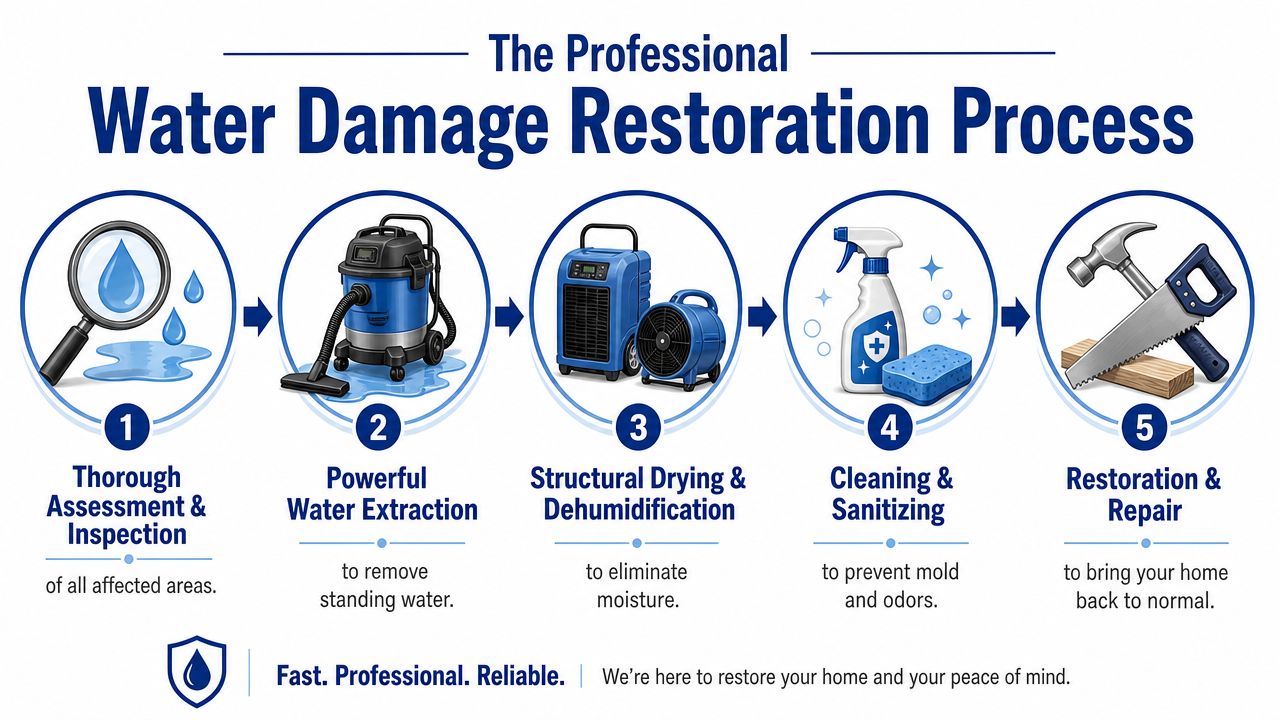
Good Austin water damage restoration follows a sequence. The process resembles medical care for a building. First you diagnose. Then you stabilize. Then you dry, clean, and rebuild only what needs rebuilding.
Inspection and water extraction
The first phase is finding the full footprint of the loss. Not just what looks wet.
Technicians use moisture meters and often thermal imaging to identify where water migrated. That can include lower wall cavities, under cabinets, behind tub surrounds, and beneath flooring systems. Precisely identifying water migration allows a professional to differentiate between a contained leak and a spread loss.
Once the scope is mapped, crews remove standing water with extraction equipment. Fast extraction matters because drying doesn't really begin until bulk water is gone. If carpet pad, insulation, or damaged drywall are trapping moisture, controlled demolition may be necessary to expose wet assemblies.
Drying and dehumidification
This is the part homeowners often underestimate. Drying isn't "set up some fans and come back later."
Professional structural drying must be verified with psychrometric calculations and moisture meters, not sight or touch. The ANSI/IICRC S500 Standard requires technicians to monitor materials until they reach target dryness levels, such as 12 to 15 percent for wood, using industrial dehumidifiers and high-velocity air movers as outlined by the IICRC standards organization.
In practice, that means the crew should be tracking readings, adjusting equipment, and checking whether the environment is moving moisture out of the structure.
Dry materials don't just look dry. They test dry.
Cleaning, sanitizing, and reconstruction
After drying, the job shifts from mitigation to restoration. What happens next depends on the source water and what materials were affected.
For a clean supply-line leak, cleaning may be straightforward. For gray water or black water losses, sanitizing is more involved and material removal may be much broader because contamination changes what can be saved.
Typical post-drying work can include:
- Cleaning and antimicrobial treatment in affected cavities and surfaces where appropriate
- Odor control if wet materials sat long enough to create musty conditions
- Drywall replacement after cuts were made for access or removal
- Cabinet, trim, and flooring repair where salvage isn't possible
- Paint and finish work to return the area to pre-loss condition
What good process looks like on site
You should expect more than equipment drop-off.
A professional crew should be able to show you:
- The affected-area map
- What materials are being monitored
- Why certain materials can stay or need removal
- How often readings are being checked
- What the dry standard is for your structure
One provider that handles this full cycle in Central Texas is RestoTek TX, which offers inspection, mitigation, structural drying, microbial prevention, and reconstruction under one roof. That matters because handoffs between separate vendors often create delays, confusion, and missing documentation.
Understanding Austin Water Damage Costs and Timelines
You walk into the kitchen, hear the floor give a little under your shoe, and your first thought is usually the right one. How bad is this going to get, and what is it going to cost me to fix?
In Austin, those answers depend less on the room size and more on three things. What kind of water got in, how long materials stayed wet, and how much of the job is drying versus actual rebuild work.
What drives cost in a real Austin water loss
A small clean-water supply line leak that is found early is usually a drying and repair job. A dishwasher overflow that sat overnight, a slab leak that wicked into walls, or stormwater that came in around a door can turn into demolition, sanitation, and reconstruction fast.
The biggest cost drivers are usually:
- Category of water. Cleaner water is cheaper to handle than sewage or outside floodwater.
- Material type. Tile over slab behaves very differently than engineered wood, laminate, baseboards, cabinets, and insulation.
- How far the moisture traveled. Water rarely stops where you first see it.
- Access needed to dry properly. Removing toe kicks, drilling wall cavities, or making drywall flood cuts adds labor but can prevent hidden damage later.
- Rebuild scope. Drying may take days. Putting the house back together can take much longer.
That last point is where homeowners often get caught off guard. The mitigation invoice and the reconstruction invoice are often two different parts of the same loss.
Why two jobs that look similar can be priced very differently
I see this all the time in Central Texas. Two homeowners both say, "It's just one room," but one room has wet laminate and swollen baseboards, while the other has moisture under cabinets, in adjacent walls, and under the flooring run into the hallway.
Austin homes also bring some local complications. Pier-and-beam homes can trap moisture in crawlspaces. Slab homes can hide migration under flooring. During humid stretches, drying can take more equipment control than homeowners expect. During a hot summer, an air conditioner issue can add moisture problems and slow progress at the same time.
Costs also rise when the water source is contaminated. Gray or black water losses usually require broader material removal because some porous materials should not be dried and left in place.
If you want a practical breakdown of the variables that affect pricing, this Austin home water damage repair cost guide is a useful starting point.
Typical line items that change the budget
Instead of focusing on one average number, look at the parts of the job that move the price:
| Cost Factor | Why It Changes the Price |
|---|---|
| Extraction and setup | Larger affected areas need more labor and more equipment |
| Demolition | Wet drywall, insulation, cabinets, and flooring may need removal for access or safety |
| Drying time | Longer drying means more monitoring visits and more days of equipment |
| Cleaning and sanitation | Contaminated losses require stricter handling and treatment |
| Reconstruction | Trim, drywall, paint, flooring, and cabinetry can easily outpace the drying cost |
| Documentation | Detailed moisture logs, photos, and drying verification take time, but they help support the claim file |
That documentation line matters more than people realize. A contractor who cannot produce moisture readings, affected-area notes, and final drying verification may leave you with a weak insurance file even if the physical work was done.
How long water damage usually takes
Homeowners usually hear "three to five days of drying" and assume the whole job will be wrapped up that week. Sometimes it is. Often it is not.
Drying is only one phase. The full timeline depends on how quickly mitigation started, whether materials can be saved, and whether replacement materials are in stock. Cabinets, flooring transitions, countertop detachment, and paint matching often add more time than the drying itself.
A straightforward loss with limited demolition may move from mitigation to repairs fairly quickly. A larger loss that affects multiple rooms, custom cabinets, wood flooring, or contaminated materials can stretch much longer.
A good contractor should give you two timelines, not one:
- Estimated drying timeline
- Estimated restoration and rebuild timeline
Those are different schedules with different moving parts.
How to avoid costly timeline mistakes
The expensive mistakes in Austin are usually not dramatic. They are quiet delays.
Waiting two or three days to authorize drying. Assuming the visible wet spot is the whole loss. Choosing the lowest bid without asking how the company verifies dry standard. Skipping paperwork because the insurer "can figure it out later."
The safer approach is simple. Ask what materials are wet, what can be saved, what must be removed, how dry standard will be verified, and what records you will receive for the claim. That last part protects both your house and your reimbursement.
Navigating Insurance Claims and Essential Documentation
Insurance companies don't approve water damage claims because a contractor says the house was wet. They approve claims based on documentation.
Many homeowners are often blindsided. The restoration company may say they'll "help with insurance," but unless they produce the right records, that promise doesn't protect you much.
The documents you should ask for
An estimated 30 percent of water damage claims are initially denied due to insufficient documentation, including missing moisture mapping or post-drying verification logs, according to this Austin documentation gap summary.
If you're hiring a restoration contractor, ask for these items specifically:
- Initial moisture map. This should show where wet materials were identified, not just where water was visible.
- Photo documentation before work starts. Wide shots and close-ups of the source, affected rooms, and damaged materials.
- Thermal images when used. Especially helpful for hidden moisture behind walls, ceilings, and flooring transitions.
- Daily moisture logs. Readings from moisture meters and notes showing whether materials are progressing toward dry standard.
- Psychrometric records. The drying environment matters. Good files document the conditions being managed during structural drying.
- Equipment log. What dehumidifiers and air movers were placed, where they were placed, and when adjustments were made.
- Demolition authorization and material notes. If drywall, insulation, pad, or cabinetry were removed, the file should show why.
- Final drying verification report. This is one of the most important closeout documents. It should confirm that affected materials reached dry standard.
A simple claim-protection checklist
When speaking with your contractor or adjuster, use this short checklist:
- Ask what will be documented on day one.
- Ask how often moisture readings will be updated.
- Ask for copies, not just verbal summaries.
- Ask how final drying will be verified before rebuild begins.
- Keep your own phone photos even if the contractor is documenting too.
If a company can't explain its moisture logs in plain language, that usually means the documentation process isn't strong enough.
The point isn't to become your own adjuster. It's to make sure the file shows the logic of the job from first inspection through final drying.
How to Choose the Right Austin Restoration Contractor
A low estimate can be tempting when your house is upside down. But water damage work isn't just about price. You're hiring someone to make moisture decisions that affect flooring, framing, cabinets, drywall, indoor air quality, and your insurance file.
The better way to vet a contractor is to listen for how they think.
Questions that separate solid contractors from shaky ones
Ask these before work starts:
- How do you determine the scope of wet materials? You want to hear moisture meters, mapping, and a clear inspection process.
- How do you verify drying is complete? If the answer is visual only, keep looking.
- Do you handle only mitigation, or can you manage reconstruction too? The more handoffs, the more chances for delays and gaps.
- Who handles communication with the adjuster? Someone should own that process, even if you remain the policyholder contact.
- What happens if the damage spreads beyond the original estimate? Good contractors document changes instead of improvising them.
What matters in Central Texas
Austin homes deal with a mix of plumbing failures, slab-related moisture issues, storm intrusion, and HVAC-related leaks. Local experience matters because drying decisions aren't made in a vacuum. Crews need to understand how homes here are built, where moisture commonly hides, and how quickly a small leak can turn into a wall-cavity problem.
Look for these traits:
- IICRC-based process knowledge so the drying plan isn't guesswork
- 24/7 emergency availability because timing changes scope
- End-to-end capability from extraction through rebuild
- Clear documentation habits for claims and owner records
- Comfort with longer projects when structural involvement is discovered
That last point matters more than people think. In Austin, even a contained commercial water loss can take two to three weeks when handled promptly, and more complex losses can extend for months, as noted earlier from the Austin restoration timeline guidance. A contractor who only excels at the first few days may not be the right fit for the whole job.
Red flags worth paying attention to
A few warning signs usually tell the story early:
- They promise a firm final price before moisture mapping is complete
- They minimize hidden moisture without instrument readings
- They talk about "drying it out" but not documenting it
- They outsource every phase to a different company
- They pressure you to skip insurer communication and "just trust us"
You want a contractor who can explain trade-offs clearly. Save the flooring or remove it. Open the wall now or monitor first. Run targeted drying or remove the assembly. Those are judgment calls, and good contractors make them transparently.
Why Austin Homeowners Trust RestoTek TX
When water hits a house, the winning approach is simple. Act fast, dry scientifically, and document everything well enough that nobody has to guess later what happened or why certain work was necessary.
That combination is harder to find than it should be. Some companies are strong on emergency response but weak on communication. Others are fine at cleanup but don't manage reconstruction, which leaves homeowners coordinating the next phase themselves.
RestoTek TX fits the kind of service model that works well for stressful losses in Austin. The company is family-operated by Joan and Josh Garza, offers 24/7 response, and manages the full cycle from inspection and mitigation through structural drying, microbial prevention, and reconstruction. For homeowners, that means fewer handoffs and a clearer line of communication while the property moves from emergency work back to normal living conditions.
A full-service local contractor is especially useful when the job changes shape midstream. That's common in water losses. What starts as a visible leak can turn into cabinet removal, wall drying, flooring decisions, and finish repairs once the moisture mapping is complete.
If you want background on the company's approach to mitigation for homes and businesses, this RestoTek TX water damage mitigation overview gives a practical picture of the services involved.
The main thing to remember is this. Good Austin water damage restoration isn't just about removing water. It's about making defensible decisions, keeping the structure on a real dry standard, and giving the homeowner a clean record of the work.
If you're dealing with active water damage in Austin or Georgetown, RestoTek TX can help with inspection, extraction, structural drying, documentation, and reconstruction. Reach out for 24/7 emergency response or request a no-cost estimate before hidden moisture turns a manageable loss into a larger repair.