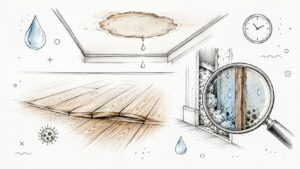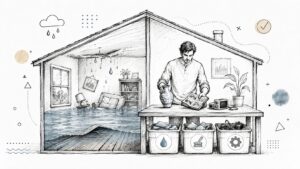
Water damage restoration costs about $3,864 on average, and most homeowners land in the $1,383 to $6,378 range when the job is limited to standard mitigation and repair scope, though the final bill can swing much lower or much higher depending on the water category and how far the damage spread (HomeAdvisor water damage cost guide). If the water is contaminated or the damage reaches hidden cavities, flooring systems, or multiple rooms, the number on the first estimate often isn't the number that matters most.
If you're reading this right after finding wet flooring, a stained ceiling, or water creeping under baseboards, you probably want one answer: what is this going to cost me? In Central Texas, that question gets more complicated fast because many homes have layered flooring, insulated wall cavities, and HVAC-driven airflow that carries moisture farther than people expect.
The hard part is that homeowners often use “repair” to mean the whole project. The trade doesn't. A real water-loss job usually has two stages. First comes mitigation, which means stopping the source, extracting water, drying the structure, and preventing microbial growth. Then comes reconstruction, which means putting the house back together.
That difference is where a lot of confusion starts, and where a lot of surprise costs show up later.
What Is the Real Cost of Home Water Damage Repair
A wet floor in the laundry room can turn into a drywall, baseboard, insulation, and flooring claim before the day is over. A ceiling leak can look cosmetic from below while the attic side is still saturated. That's why the full home water damage repair cost isn't just about what you can see when you first walk into the room.
The national average gives you a starting point, not a reliable bid. Angi's 2026 data puts average water damage restoration at $3,864, with a range from $450 for minor incidents to $16,000 for extensive structural failures, and mitigation pricing typically falls between $3.00 and $7.50 per square foot depending on the water category (Angi 2026 water damage restoration cost data). That's useful, but it still doesn't answer what your house will cost.
What changes the price in the field
Three things usually decide where a job lands:
- What kind of water entered the home: Clean water from a supply line is treated differently than gray water from an appliance overflow or black water from sewage or outside flooding.
- How much material got wet: Tile may survive. Pad under carpet may not. Drywall can sometimes be dried, but insulation behind it often changes that decision.
- What has to happen after drying: If a contractor only prices extraction and fans, that estimate may leave out demolition, mold-related work, and rebuild.
Practical rule: Ask every contractor whether the number covers mitigation only, or mitigation plus reconstruction.
What homeowners in Central Texas should expect
In this region, the biggest misses usually come from hidden moisture and the rebuild phase. People see a wet plank floor and budget for floor replacement. They don't always budget for subfloor drying, cabinet toe-kick removal, insulation removal, texture matching, repainting, or odor treatment.
A credible estimate should separate the emergency work from the build-back work. If it doesn't, you're not really comparing bids. You're comparing guesses.
Understanding Water Damage Categories and Classes
Water damage pricing starts with two different labels professionals use on site: category and class. They sound similar, but they answer different questions.
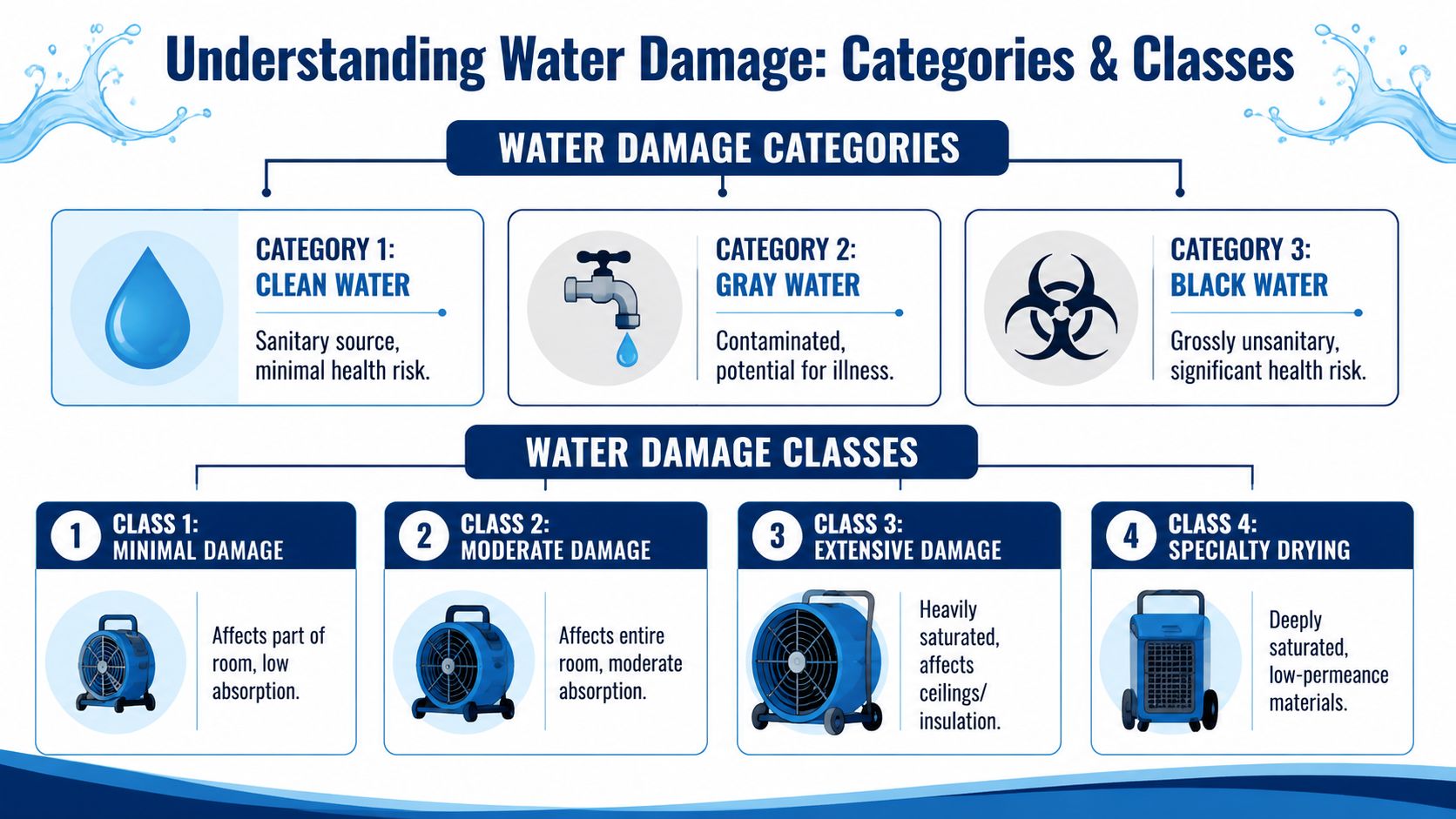
Category tells you how contaminated the water is. Class describes how far the water has spread and the extent to which materials absorbed it. One affects safety protocols. The other affects drying strategy.
Water categories and why they drive cost
Think of the categories like this.
Category 1 is close to tap water. A broken supply line or clean sink overflow usually starts here. It still damages materials, but the health risk is lower if the water is handled quickly.
Category 2 is gray water. This is water from sources like appliance discharge or other water that carries contaminants. It raises the cleanup standard because crews have to think about sanitation, not just drying.
Category 3 is black water. Sewage backups and many storm-related intrusions fall here. This is the most hazardous category, and it's where demolition, sanitation, odor control, and protective handling requirements expand quickly.
Angi's 2026 data reflects that jump in scope. Professional mitigation averages $3.00 to $7.50 per square foot, with Category 1 at about $3.50, Category 2 at about $5.25, and Category 3 at about $7.50 per square foot because the work moves from extraction and drying into sanitation and hazard-control procedures (Angi category-based mitigation pricing).
Water classes and why they affect drying time
Class tells you how much of the structure drank in the water.
| Class | What it usually means in the house | Typical impact on scope |
|---|---|---|
| Class 1 | Small area, low absorption | Limited drying zone |
| Class 2 | Entire room or larger section affected | More material monitoring |
| Class 3 | Heavy saturation, often walls, insulation, ceilings | Aggressive drying and more removal |
| Class 4 | Deep saturation in dense or low-permeance materials | Specialty drying methods |
A small clean-water leak can still become expensive if it's a higher class loss. Water under hardwood, inside wall cavities, or inside insulation is harder to remove than water sitting on tile.
Category usually decides the sanitation burden. Class usually decides the drying burden.
Why homeowners should care about these labels
These aren't technical labels for paperwork only. They explain why one estimate says “dry in place” and another includes tear-out. They also explain why two homes with similar square footage can have very different totals.
If a contractor can't clearly tell you the water category and the drying class, it's hard to trust the rest of the estimate.
A Detailed Breakdown of Water Damage Repair Costs
Most homeowners don't get surprised by the extraction bill. They get surprised by everything that follows it. The full home water damage repair cost usually comes from stacked phases of work, not one big line item.
A minor loss may stop at drying and a few finish repairs. A more involved job keeps moving through demolition, microbial prevention, material testing, and reconstruction. That's why an online average can feel disconnected from the proposal in front of you.
Mitigation versus reconstruction
Mitigation is emergency and stabilization work. It includes water extraction, moisture mapping, structural drying, dehumidification, selective demolition, and treatment aimed at preventing secondary damage.
Reconstruction starts after the structure reaches dry standards. That phase may include drywall replacement, insulation, trim, cabinets, flooring, texture, paint, and finish carpentry. If you want to see what build-back work typically involves, this overview of reconstruction and rebuild services shows the type of post-drying work many homeowners forget to price at the beginning.
Where the number usually grows
Reset Restoration notes that independent estimates often place average restoration in the $2,000 to $6,000 range, but those figures often don't separate mold remediation, which can add $15 to $30 per square foot or $1,500 to $15,000+ total if secondary work is required (Reset Restoration on water damage and mold-related costs). That's one of the biggest gaps between a headline number and a real invoice.
Here's a practical way to read a scope:
- Extraction and removal: This is the first urgent labor. The cost rises with standing water depth, room count, and whether contents have to be moved first.
- Structural drying: This is often the hidden center of the bill. Crews place air movers and dehumidifiers, then return to monitor moisture in framing, drywall, subfloors, and trim.
- Selective demolition: Wet pad, swollen baseboards, damaged drywall sections, or insulation may need removal so the structure can dry correctly.
- Microbial prevention and mold-related work: This line grows quickly when the water is contaminated or when moisture sat long enough to create odor or visible growth concerns.
- Reconstruction: This is the part homeowners mentally count as “repair,” but it only starts after the house is dry.
Estimated Water Damage Repair Costs by Service 2026
| Service Component | Typical Cost Range | Key Factors |
|---|---|---|
| Mitigation and restoration scope | $2,000 to $6,000 | Extent of water spread, demolition needs, whether the estimate covers only dry-out or more (Reset Restoration cost ranges) |
| Mold remediation | $15 to $30 per square foot | Affected area size, contamination level, containment requirements (Reset Restoration mold remediation costs) |
| Mold remediation total project range | $1,500 to $15,000+ | Whether growth is localized or tied to larger hidden moisture issues (Reset Restoration total mold-related costs) |
Hidden cost drivers most guides skip
Not every job has these, but they're common reasons estimates change after work begins.
Structural drying behind finished surfaces
The floor may look almost dry while the subfloor still holds moisture. The wall may look untouched while insulation inside the cavity is wet. Drying those assemblies can require extra equipment placement, additional monitoring visits, and sometimes removal of materials that looked salvageable on day one.
Testing and safety compliance
Older homes can trigger extra steps before demolition. If suspect materials are present, asbestos testing may be required before crews open walls or remove flooring layers. That doesn't happen on every job, but when it does, it affects both cost and timeline.
Odor control and microbial prevention
A house can be visibly dry and still smell wrong. That usually means some combination of contaminated material, trapped moisture, or porous finishes holding onto the event. Deodorization and prevention work are often separate from cosmetic repair, and they should be treated that way in the estimate.
A low estimate isn't a bargain if it skips the work that prevents the second loss.
What a solid estimate should include
A useful estimate doesn't just give a total. It shows scope.
Look for these details:
- The source and category of water
- Affected rooms and materials
- What gets dried in place versus removed
- Whether mold-related work is included or excluded
- Whether reconstruction is included, deferred, or quoted separately
That level of detail makes it much easier to compare one contractor's proposal to another.
Navigating Insurance Claims for Water Damage
Insurance questions usually start before the floor is even dry. Homeowners want to know whether they should call the carrier first, whether the damage is covered, and whether the claim is worth opening.
The financial stakes are real. The Insurance Information Institute's 2021 figure for the average insurance claim from water damage and freezing events was $12,514, and broader cost examples show severe damage at $7,500 to $15,000 or more, while complete home restoration after major flooding can exceed $100,000 (Flume Water summary of III claim data and restoration ranges).
What to do first
Start with documentation before cleanup changes the scene.
- Take photos and video immediately: Get wide shots of each room and close shots of damaged flooring, walls, cabinets, contents, and the source if visible.
- Stop the source if it's safe: Shut off the fixture, appliance supply, or main water line if needed.
- Protect the property from further damage: Move loose contents, lift furniture off wet flooring, and keep people away from unsafe areas.
- Notify your insurer promptly: Delays can complicate the claim, especially if the carrier argues the damage worsened after discovery.
If you need a practical checklist for the first few hours, this guide on what to do immediately after water damage in your Central Texas home lays out the order of operations.
What is often covered and what often isn't
Most homeowners policies commonly respond to sudden and accidental water losses, such as a burst pipe or an appliance failure. Claims become harder when the issue looks like long-term neglect, repeated seepage, or deferred maintenance.
Flooding from outside the home is often treated differently from an indoor plumbing loss. Sewer backup can also depend on endorsements and policy language. That's why it's risky to rely on assumptions from a neighbor's claim or an old policy summary.
Don't argue your claim from memory. Read the policy wording and compare it to the actual source of loss.
What helps the claim move cleaner
Insurance adjusters need evidence and scope, not just a story. The strongest files usually include:
| Claim item | Why it matters |
|---|---|
| Photos and video from day one | Shows cause, spread, and condition before demolition |
| A clear mitigation scope | Documents what was done to prevent further damage |
| Moisture readings and drying notes | Helps justify work beyond what was visible |
| Itemized reconstruction scope | Distinguishes emergency work from build-back |
A professional restoration contractor often becomes useful here because they can document moisture spread, material conditions, and drying progress in a format the claim side can use.
When homeowners get tripped up
Some people wait too long to call because they're hoping it will dry on its own. Others start tearing out materials before they've documented the loss. Another common problem is getting one total number from a contractor with no separation between mitigation and rebuild. That makes insurer review harder and can create disputes over what was emergency work versus elective finish replacement.
The cleaner your paper trail, the easier it is to defend the claim.
DIY vs Professional Restoration Which Is Right for You
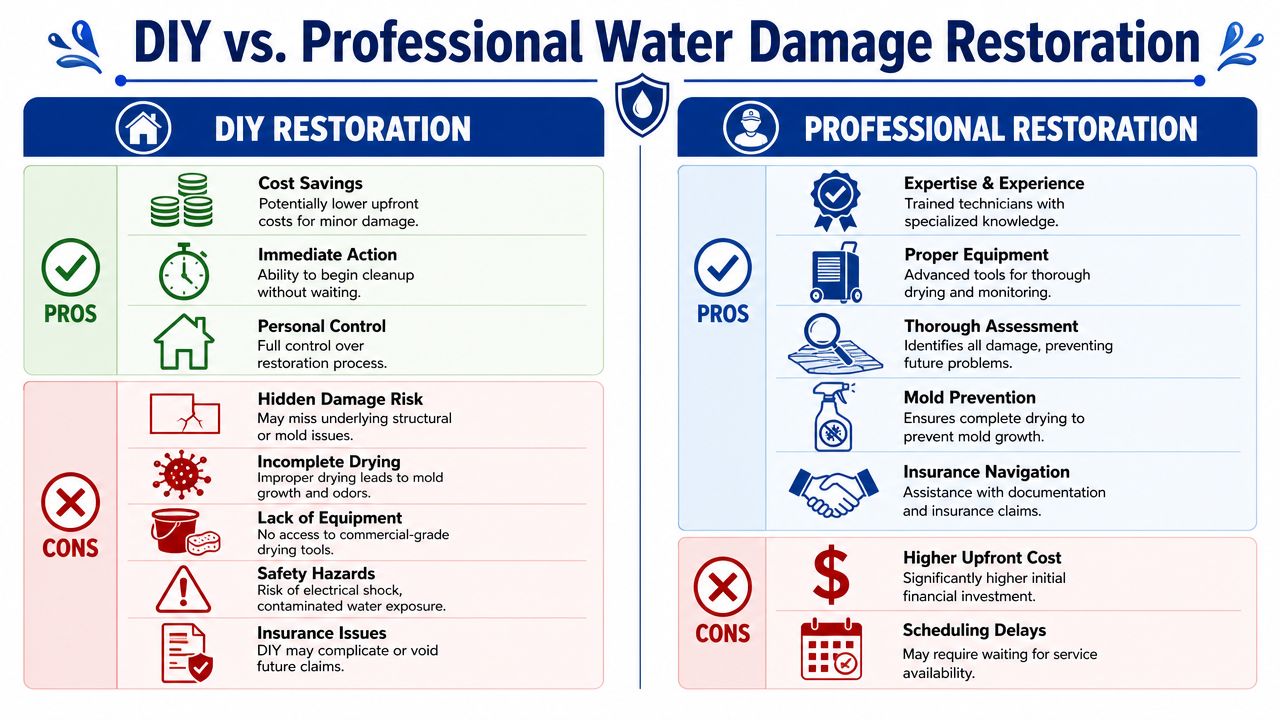
DIY water cleanup makes sense in some narrow situations. If you spilled clean water, caught it immediately, and the moisture stayed on a hard surface with no sign it moved into walls or under flooring, basic cleanup may be reasonable.
Most real losses aren't that clean.
Where DIY can work
There are small incidents a homeowner can handle well:
- A fresh, contained clean-water spill: You can remove surface water, run ventilation, and watch for lingering moisture.
- A non-porous area with no spread: Tile or sealed surfaces are different from pad, drywall, or wood-based materials.
- No contamination concerns: Once the source involves gray or black water, the risk changes.
That said, even simple losses need honest judgment. If water traveled under baseboards, into cabinets, or through a shared wall, the job probably moved out of DIY territory.
Where DIY usually fails
Industry guidance warns that without tools like moisture meters and thermal imaging, hidden spread is often underestimated, and incomplete drying can leave residual moisture that later drives mold growth and structural deterioration (Michaelis on hidden moisture and incomplete drying). This is the part homeowners can't reliably judge with touch or sight.
A room can feel dry and still be wet where it counts.
Common misses include:
- Subfloor moisture under flooring
- Wet insulation behind drywall
- Moisture inside cabinet bases
- Water migration into adjacent rooms through wall cavities
- Persistent odor from material that was never fully dried or removed
Side-by-side decision view
| Situation | DIY may be reasonable | Professional help is the safer choice |
|---|---|---|
| Small clean-water spill on hard surface | Yes | If moisture spread beyond surface |
| Gray or black water event | No | Yes |
| Water under flooring or inside walls | No | Yes |
| Insurance claim likely | Sometimes, but risky | Usually better documentation |
| Concern about odor or mold | No | Yes |
If you can't confirm the structure is dry with instruments, you're making a guess, not a decision.
What professionals actually add
The value isn't just stronger fans. It's process.
A professional crew checks where water traveled, not just where it pooled. They monitor moisture over time instead of assuming day-one extraction solved the problem. They also know when drying in place is realistic and when removal is the cheaper long-term choice.
In Central Texas, that matters because warm conditions and enclosed assemblies can hold enough residual moisture to create a second problem after the visible one seems over. One local option, RestoTek TX, provides the full chain from inspection and drying through microbial prevention and rebuild, which is the kind of end-to-end scope homeowners should compare against when evaluating providers.
Getting an Accurate Water Damage Estimate in Central Texas
An accurate estimate starts on site, not over the phone. No honest contractor can price hidden wall moisture, contaminated insulation, subfloor saturation, or reconstruction scope from two photos and a room size.
That matters even more in Central Texas. Heavy rain events, slab-on-grade construction, layered finish materials, and fast-changing indoor humidity can all affect how far water traveled and what has to be opened to dry the structure correctly.
Here's what the start of a real assessment should look like.
What a local estimate should include
A serious inspection should identify the source, determine the water category, map the affected materials, and separate urgent mitigation from later reconstruction. If the home has signs of older layered materials or questionable demolition conditions, the estimator should also flag whether additional testing may be needed before tear-out begins.
You should expect answers to these questions:
- What materials are wet right now
- Which items can be dried in place
- What needs removal to reach dry standards
- Is microbial prevention included
- Is reconstruction part of this estimate or a separate scope
A proper water damage inspection and assessment should also document safety conditions and help clarify what belongs in the insurance file.
What works when you need a real number quickly
The fastest way to get to a useful estimate is to gather clean information before the inspector arrives.
- Take current photos before moving too much
- Write down when you first noticed the loss
- Note the source if you know it
- List rooms affected, even if the damage seems minor
- Be honest about how long materials may have been wet
That last point matters. Homeowners sometimes understate the timeline because they're worried about coverage. In practice, an inaccurate timeline usually creates more problems than it solves because the drying scope and contamination risk have to match real conditions.
What doesn't work
Phone quotes don't work well for anything beyond the most obvious small loss. Neither does comparing only the bottom-line number from two estimates that define “repair” differently.
One contractor may be pricing extraction only. Another may be pricing drying, selective demo, deodorization, and rebuild. The cheaper one may not be cheaper at all. It may just be incomplete.
A local team with emergency response capability is often the better fit because they can inspect quickly, start mitigation when needed, and carry the file through to the rebuild instead of handing you off between separate vendors. That continuity usually makes communication easier for the homeowner and clearer for the adjuster.
If you're in Georgetown, Austin, or nearby Central Texas communities and need to know the cost rather than the internet average, the next step is simple. Get an on-site assessment before hidden moisture turns into a larger reconstruction project.
If water has entered your home, RestoTek TX can inspect the damage, identify the source and scope, and provide a no-cost estimate for mitigation, drying, and rebuild work in Georgetown, Austin, and surrounding Central Texas areas.