At 2 a.m. in Georgetown, a toilet backs up and dark water spreads across the bathroom floor. Or storm runoff presses against a slab until it finds the threshold. The odor is immediate, the water may contain visible waste, and your first reaction is usually the correct one: close the door, step away, and keep everyone out.
That situation may involve Category 3 water damage, the highest contamination classification used in professional restoration. The Institute of Inspection, Cleaning and Restoration Certification, or IICRC, defines Category 3 water as grossly contaminated water that can contain pathogenic, toxigenic, or other harmful agents and cause significant adverse reactions if contacted or consumed. The classification includes sewage, waste-line backflows beyond a trap, seawater flooding, rising river or stream water, and contaminated wind-driven rain from major storms. (IICRC weather-related position statement)
The volume of water matters, but contamination matters more. Once water is classified as Category 3, it changes what you can safely touch, what must be contained, which porous materials may require removal, and how the loss should be documented for insurance.
When the Worst Kind of Water Enters Your Home
A sewage backup doesn't need to fill the house to create a serious problem. Water may seep from a floor drain, spread under a vanity, or collect along the wall behind a toilet. In Central Texas, heavy rain can also overwhelm drainage systems and push contaminated water through plumbing fixtures or low points in a home.
Floodwater creates a different scene but the same concern. Runoff from a creek, river, or floodway can carry soil, animal waste, pesticides, fuel residue, and other contaminants before it reaches your living room. The water may look like ordinary muddy runoff, but appearance can't tell you whether it contains harmful organisms or toxic substances.
Practical rule: If sewage, floodwater, or contaminated stormwater has entered the home, treat it as unsafe until a qualified professional classifies it.
The IICRC's definition focuses on the source and contamination profile, not how deep the water is. Category 3 water can contain pathogenic, toxigenic, or other harmful agents, and the IICRC specifically includes sewage, waste-line backflows beyond any trap, seawater flooding, rising water from rivers or streams, and contaminated wind-driven rain associated with hurricanes or tropical storms. (IICRC Category 3 definition)
That classification drives every later decision. A small contaminated overflow may require stricter controls than a larger clean supply-line leak. Don't let a dry-looking surface, a short waterline, or a familiar odor convince you that the cleanup is routine.
Your job in the first hour is limited and clear: protect people, avoid contact, preserve evidence, stop additional damage only when you can do so safely, and call a qualified restoration team. The moment black water crosses the threshold, mops and household fans stop being a solution.
What Category 3 Water Damage Means
The ANSI/IICRC S500 framework separates water losses into three contamination categories. Category 3, the grossly contaminated class, requires the strictest controls for worker protection, containment, material removal, and loss documentation. These standards give restoration professionals a shared basis for those decisions. (IICRC standards information)
The three categories are not interchangeable
Category 1 usually comes from a sanitary supply source, such as a broken water line before the water contacts contaminants. Rapid extraction and controlled drying may be appropriate when the water remains clean.
Category 2 contains significant contamination that may cause illness through swallowing or contact. Appliance discharges and some sump-related losses can fall into this category. Source, contact time, and affected materials determine whether the condition stays in Category 2.
Category 3 is the highest contamination tier. It includes sewage, waste-line backflow beyond a trap, environmental flooding, and other grossly contaminated water. EPA-linked flood guidance described by the IICRC identifies pathogens and toxins as possible hazards, with examples that include sewage and flooding from seas, rivers, or lakes. (EPA-linked flood guidance described by the IICRC)
A room's appearance does not set its category. The source and what the water contacted do.
Why the classification changes the work
A Central Texas flash flood, sewer surcharge after intense rain, or hurricane-driven stormwater intrusion can leave different visible conditions. Each requires source identification, occupant protection, controlled access, contamination assessment, and documentation before crews decide what stays and what goes.
Top-down water intrusion and wind-driven rain do not automatically qualify as Category 3. The IICRC says classification requires inspection and information gathering to establish whether gross contamination exists. (IICRC weather-related guidance on classification)
That decision affects insurance records and demolition scope. A documented Category 3 loss may require removal of porous materials that could remain in place after a cleaner loss. Until the source and contamination are verified, keep the area isolated and do not treat questionable water as routine. Professionals determine which materials can be dried, which must be removed, and what containment the work requires.
First Hour Do's and Don'ts Before Help Arrives
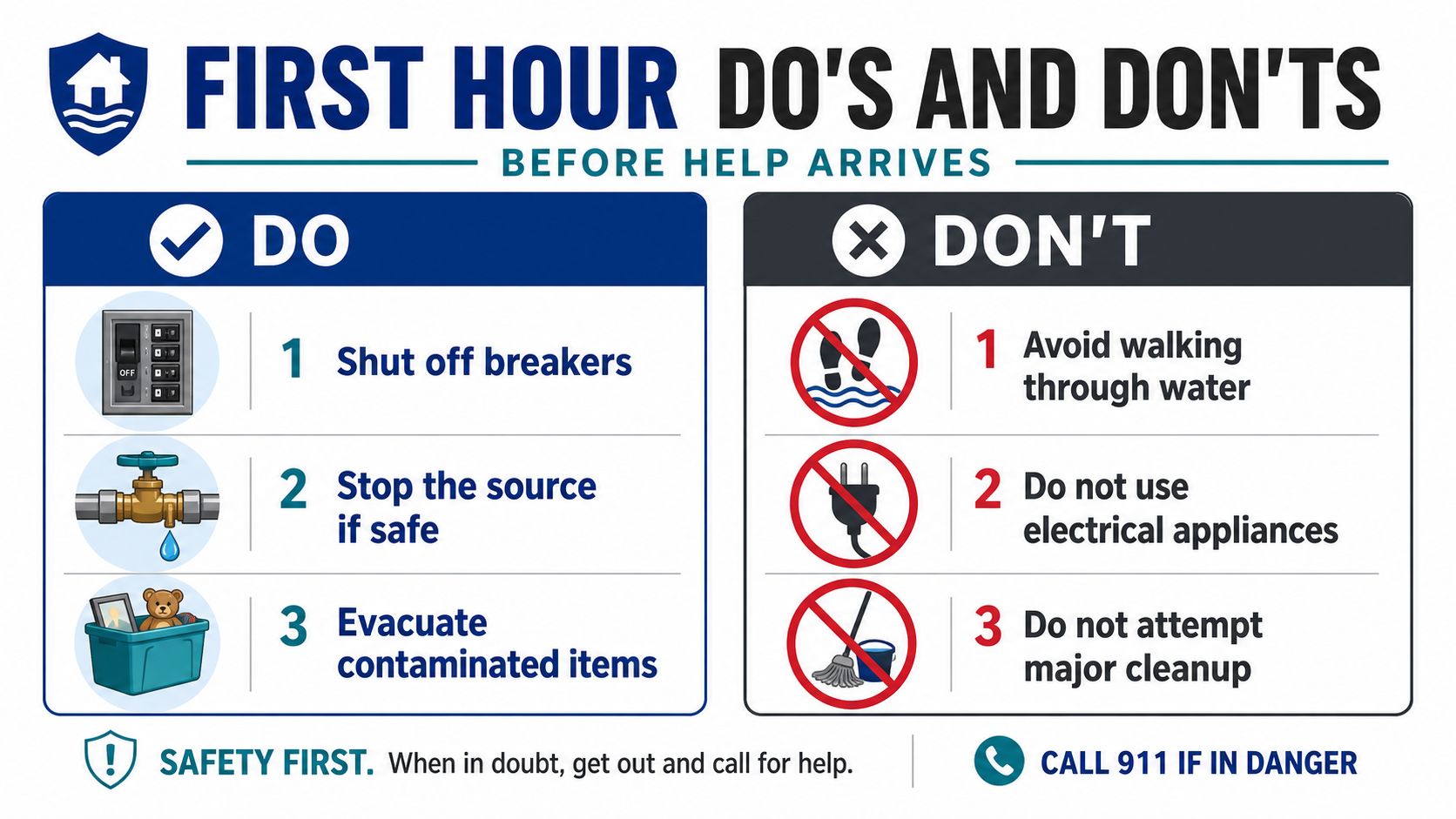
A sewer backup after intense rain, a Central Texas flash flood, or hurricane-driven rain can turn the first hour into a contamination-control problem. Your priorities are simple: keep people out, avoid electrical contact, preserve evidence, and get a Category 3 response started. Do not try to make the home look clean before help arrives.
Do these things
Protect electricity: Shut off breakers serving the affected area only from dry ground and only if the panel and route are safe. Water can conceal energized wiring. Leave the panel alone if you would need to stand in contaminated water or touch wet surfaces.
Stop the source safely: Close a fixture valve or the main valve when you can reach it without entering sewage or floodwater. If the source is a sewer surcharge or storm intrusion, focus on isolation rather than chasing the water.
Document before moving anything: From a doorway or other dry position, photograph and record the source, waterline, affected rooms, flooring, walls, contents, and visible waste. Those images help establish contamination, demolition scope, and the insurance record.
Remove people and pets: Keep children, pets, older adults, and immunocompromised occupants away. Close doors if you can do so without contact, and keep contaminated clothing and footwear out of clean areas.
Call an emergency restoration contractor: Request a crew experienced with Category 3 losses. Confirm that the response will address classification, controlled access, containment, extraction, documentation, and the materials that may require removal.
Don't cross the line
Do not wade through dark or black water. Its color is not a safety test. It may contain sewage, floodborne pathogens, toxigenic agents, sharp debris, unstable flooring, or electrical hazards beneath the surface.
Leave appliances and portable equipment off. A household vacuum, fan, washer, or dehumidifier can expose you to shock and move contaminated moisture or particles into clean rooms.
Do not lift carpet, insulation, or soaked contents. A saturated porous item can drip gross contamination across the home. Handling it also transfers pathogens to hands, clothing, and footwear.
Skip the spray-and-scrub approach. Household disinfectant cannot establish a safe Category 3 work area or replace controlled extraction, disposal, cleaning, and structural drying.
Do not place contaminated porous contents in a regular trash bin. Set them aside without handling them further and let the remediation crew determine packaging, removal, and disposal requirements.
For a broader first-response checklist, see what to do immediately after water damage in your Central Texas home.
How Professionals Remediate Category 3 Damage
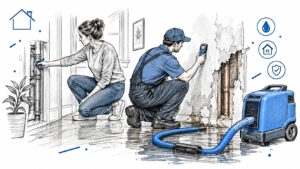
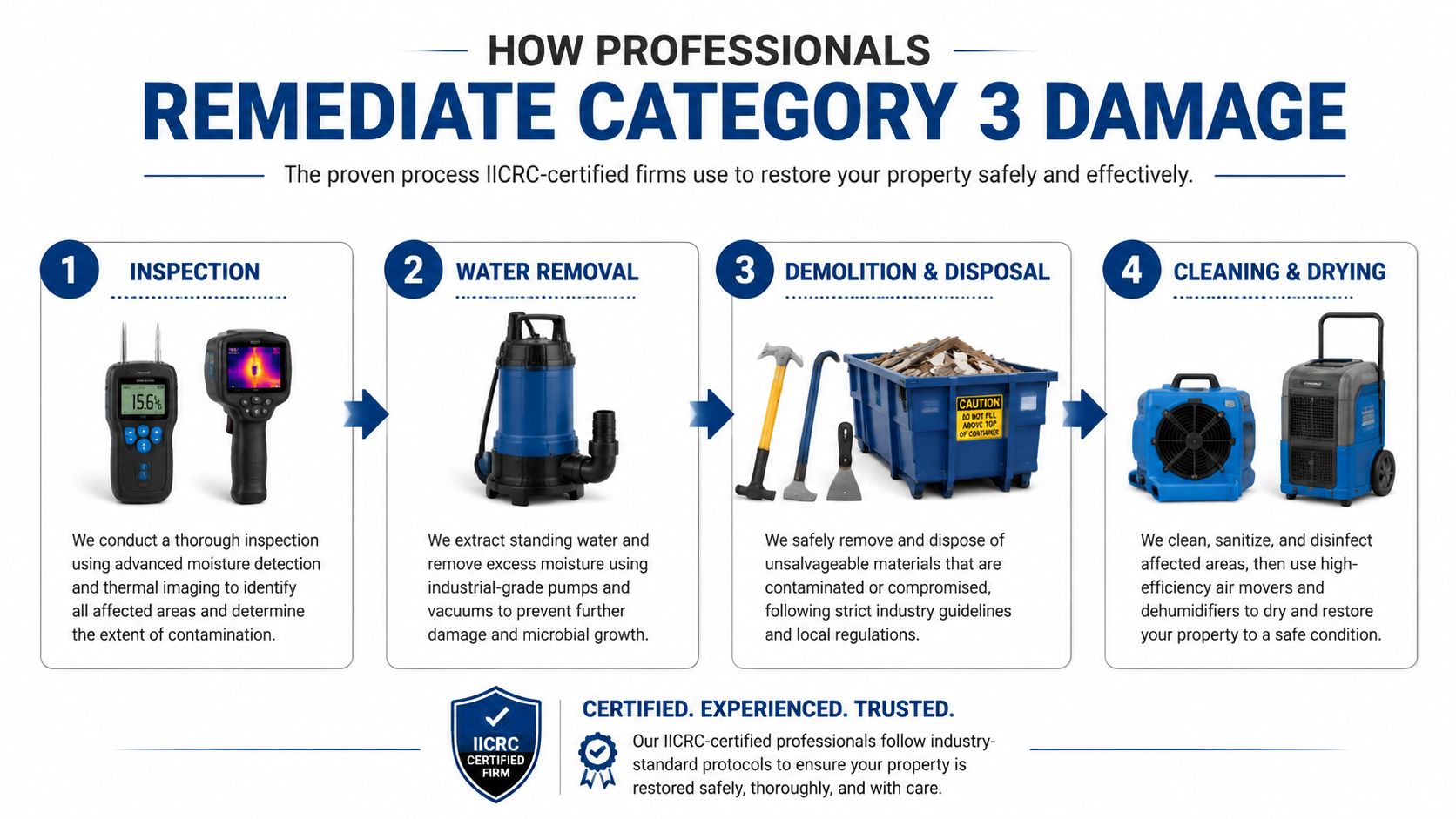
Professional remediation is a controlled sequence, not a faster version of household cleaning. The crew first determines what happened, where the water traveled, what materials absorbed it, and which areas must be isolated.
Inspection comes before extraction
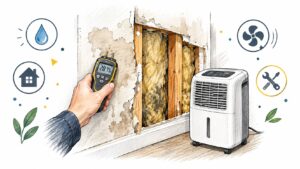
Technicians inspect the source and affected assemblies, then use moisture meters and thermal imaging to locate wet materials that aren't visible from the room. They may use ATP surface testing or other investigative methods to help evaluate contamination and establish a defensible scope.
The inspection should produce a room-by-room record. It should identify the water category, affected materials, visible waterlines, concealed moisture, contents requiring handling, and conditions that could change the work.
Containment protects the rest of the home
Category 3 work commonly requires controlled access and containment. Air scrubbers with HEPA filtration and negative pressure help keep contaminated particles and odors from migrating into occupied areas while demolition and extraction take place.
The crew then removes standing water with professional extraction equipment. The objective isn't just to make the floor appear dry. Technicians must address moisture under flooring, inside wall cavities, beneath cabinets, and in other locations where trapped water can support microbial growth.
Demolition is based on contamination, not appearance
Porous materials that absorb Category 3 water often can't be reliably cleaned throughout their depth. Depending on the assembly, the scope may include affected drywall, carpet and pad, insulation, ceiling materials, lower cabinetry, and other absorbent contents.
Non-porous materials may be cleaned, disinfected, and evaluated for salvage when their condition permits. Framing and other structural components aren't automatically discarded, but they must be cleaned and dried under controlled conditions.
After removal, technicians clean affected surfaces, apply appropriate antimicrobial treatments where indicated, and dry the structure with monitored air movement and dehumidification. Moisture mapping and repeat readings verify progress rather than relying on touch.
The project ends with documented verification and, when required by the scope or claim, post-remediation clearance testing. Reconstruction follows only after the structure is acceptably clean and dry. The final record should include the inspection, extraction, demolition, drying, contents decisions, and completion documentation.
Health Risks and Why Porous Materials Must Go
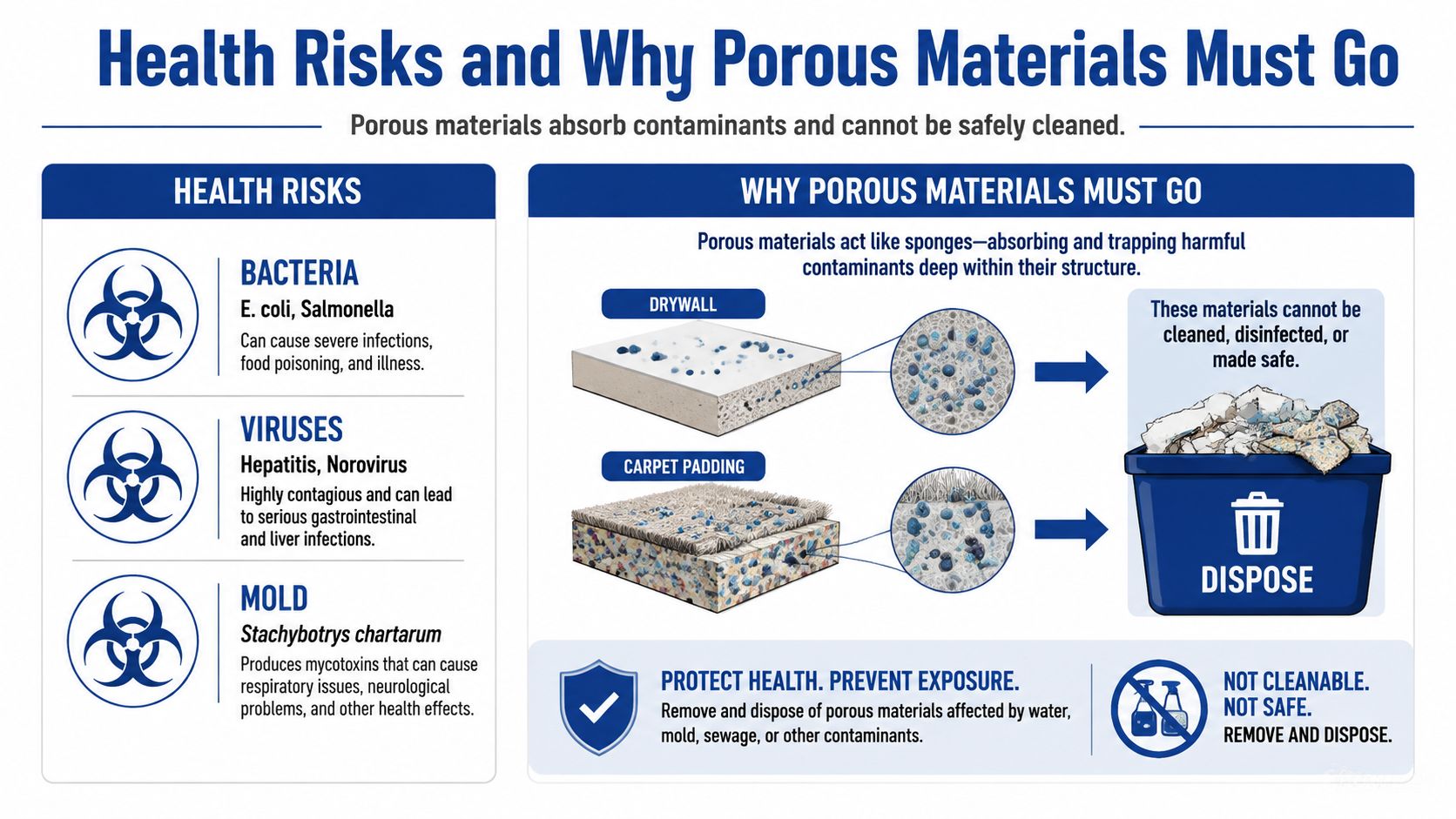
Category 3 water carries more than bacteria. The IICRC definition includes pathogenic, toxigenic, and other harmful agents, while trace regulated or hazardous materials, such as pesticides and toxic organic substances, can expand the risk beyond microbes. IICRC contamination definition and risk profile
Treat black water as a contamination event, not household grime. Direct contact, splashing, contaminated footwear, and careless handling can transfer hazards from the affected room to clean floors, door handles, furniture, and belongings. During a Central Texas flash flood, sewer backup, or hurricane-driven rain event, keep children, pets, older adults, and immunocompromised residents away from the area.
Absorbent materials hold contamination
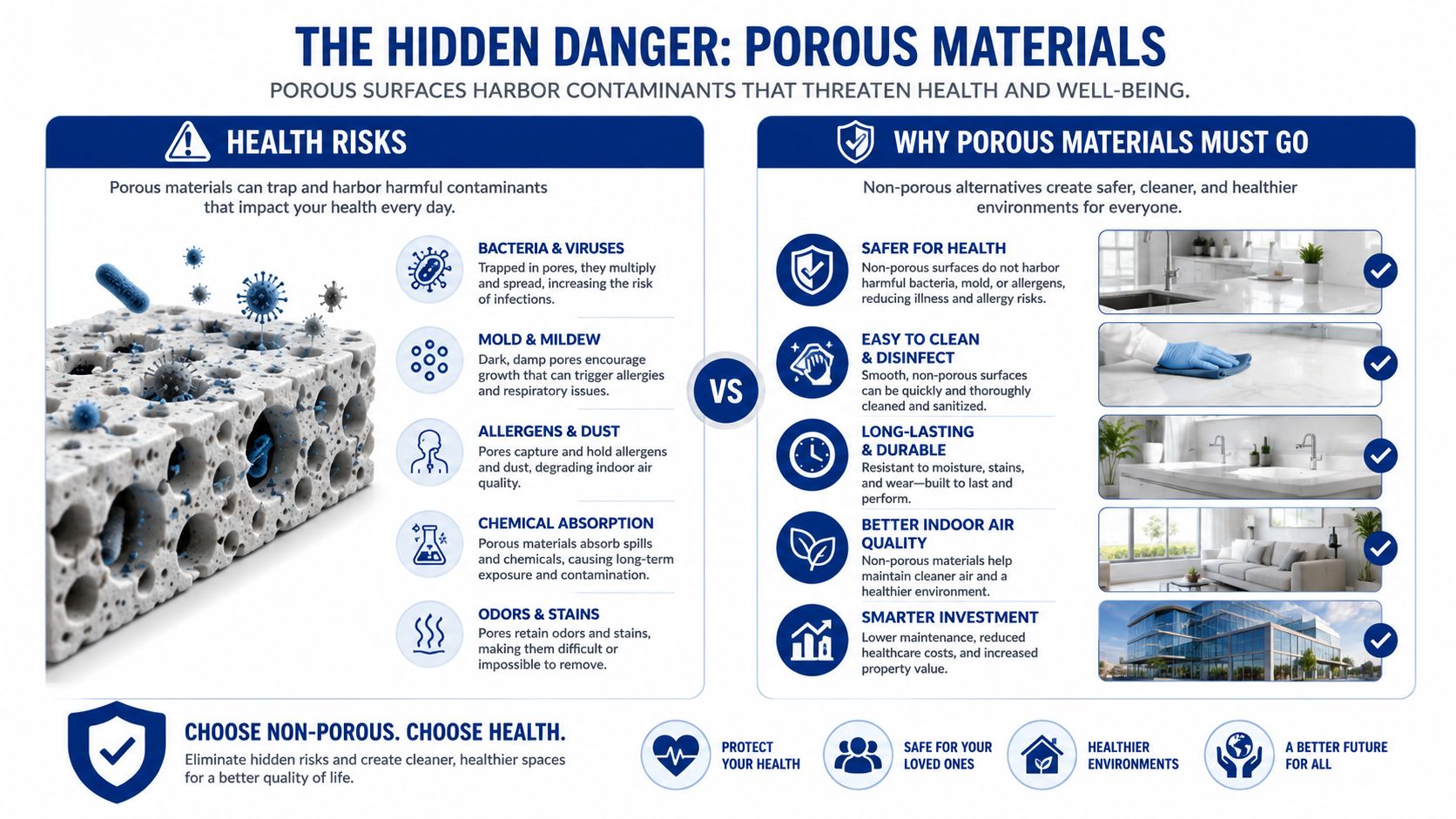
Carpet, padding, drywall, insulation, upholstered furniture, and some ceiling materials pull contaminated water into fibers, paper facings, backing, seams, and cavities. Surface cleaning cannot verify what remains inside those layers.
Appearance is a poor safety test. Drywall may look clean while the wall cavity remains contaminated. Carpet may look acceptable after extraction even when the pad holds sewage and organic residue. Record these conditions for the claim, then let the restoration team determine the removal boundary.
Cleaning and removal are different decisions
Certain finished metals, hard plastics, and sealed components can often be cleaned and disinfected if they remain structurally sound. Absorbent materials require a stricter decision: can the item be cleaned to a verifiable condition, or does contamination extend beyond what can be inspected?
For Category 3 losses, removal is often the safer choice for affected porous assemblies. Do not touch, move, or salvage contaminated contents during the first hour unless directed by the response team. Keep the area isolated until professionals assess it and release it for normal use. This protects occupants and gives the adjuster a clear basis for the demolition scope.
Insurance Documentation That Holds a Claim Together
A Category 3 claim needs a clear record from discovery through completion. Start before cleanup changes the scene, but never delay emergency safety work just to collect perfect photographs.
Capture the loss before materials move
From a safe location, document the source, waterline, affected rooms, visible contamination, damaged contents, and entry points. Write down when you discovered the loss, when you shut off a valve or breaker, when you contacted the carrier, and when each contractor arrived.
Save every relevant receipt. That includes emergency mitigation, temporary lodging, contents handling, disposal, replacement purchases, and authorized repairs. Ask the restoration contractor for the moisture map, equipment records, readings, photographs, itemized scope, and completion documentation.
Insurance treatment depends on the policy and the source. Sewer backup and external floodwater may be subject to exclusions, separate endorsements, or different limits. Your declarations page and policy wording matter more than assumptions about what “water damage” includes.
| Document | Category 1 Loss | Category 3 Loss |
|---|---|---|
| Source photos | Show the broken supply line or clean-water source. | Show sewage, floodwater, stormwater path, or other contamination source. |
| Room and contents record | Photograph affected finishes and belongings. | Photograph waterlines, visible waste, contaminated contents, and restricted areas before removal. |
| Contractor scope | Record extraction, drying, and repairs. | Record classification, containment, extraction, demolition, disposal, cleaning, and verification. |
| Moisture documentation | Preserve readings and drying progress. | Preserve moisture mapping for cavities and assemblies, plus readings supporting the demolition and drying decisions. |
| Completion file | Keep drying and repair completion records. | Keep completion records and any clearance or post-remediation testing documentation. |
Don't authorize broad demolition without asking how the work will be documented and whether your policy requires carrier approval. You can also use this resource on filing a home insurance water damage claim to organize the conversation with your adjuster.
Insurance reporting can also group mold within broader water-damage categories instead of tracking it as a separate claim type, which makes claim frequency and severity harder for homeowners to interpret. (Water damage and mold insurance claims guide)
Why DIY Cleanup Stops at the Containment Line
A mop and bucket can help after a sanitary supply-line leak. They are the wrong tools once sewage, flash-flood water, or hurricane-driven rain has carried contamination indoors. Category 3 water can soil surfaces, contents, footwear, tools, and air pathways. The immediate priority is preventing that contamination from reaching clean rooms and occupied areas.
Household cleaners do not provide a remediation plan. A Shop-Vac can remove standing water, but it cannot isolate contaminated air, establish negative pressure, or show whether moisture remains inside a wall cavity. Household fans create another risk by moving droplets, odors, and particles before the source and work boundaries are understood.
The equipment gap matters
The difference becomes clear at the containment line. Professionals combine protective equipment with controlled access. Gloves, protective clothing, eye protection, and respiratory controls are selected for the conditions, while barriers, air scrubbers, controlled entry, and negative-pressure systems for home remediation keep contaminated air from migrating through the home.
They also measure before they open assemblies and measure again as work progresses. Moisture meters and thermal imaging help locate concealed moisture, while documented readings support decisions about extraction, drying, and completion.
Commercial pumps, air movement equipment, and dehumidification must be sized and operated for the structure, not switched on in the wettest room. Waste handling requires sealed packaging, controlled removal routes, and disposal procedures that keep residue out of clean areas.
A homeowner can protect the scene, keep people away, and stop an accessible source from a safe, dry position. Do not enter contaminated water near energized equipment, carry wet contents through clean rooms, or run fans across an uncontained loss.
The hard boundary is simple: Once Category 3 is confirmed, containment, demolition, and drying belong to trained professionals.
Instrument readings are the difference between visible improvement and verified progress. A wall may feel dry while its cavity remains wet, and flooring may feel normal while moisture persists below the surface. Those hidden conditions affect the scope, documentation, and later repair cost.
DIY is reasonable only for a limited clean-water loss where the source is sanitary and materials can be dried safely. After sewage or contaminated floodwater enters, call a qualified restoration crew and preserve the scene for proper classification and insurance records.
Central Texas Conditions and Emergency Response
Central Texas homeowners face several routes to a Category 3 loss. Flash flooding can push river, creek, or lake water into a home. Heavy storm systems can overwhelm municipal sewers and force wastewater through floor drains, toilets, or other low openings. Older plumbing and difficult shutoff locations can make source control more hazardous, especially when the electrical system is nearby.
The origin changes, but the first response doesn't. Keep occupants out, avoid contact, protect electricity from a safe position, document the scene, and request a professional classification.
The local scenarios look different on arrival
A Georgetown home near a low-lying drainage path may receive muddy surface water through a garage, door, or foundation opening. An Austin property may experience a backup after rain overloads a sewer connection. Wind-driven rain can enter through the building envelope during a major storm, but the IICRC says that top-down water ingress isn't automatically Category 3. The crew must inspect the source and determine whether contamination is present.
That distinction affects demolition and insurance paperwork. It also prevents the opposite mistake, treating contaminated water as clean because it entered from above instead of through a drain.
What a proper emergency call should produce
When you call a 24/7 restoration line, expect the response to begin with questions about the source, electrical safety, occupants, access, and affected rooms. On site, a qualified team should classify the water, establish safe boundaries, identify moisture, begin appropriate extraction, and create a documented record for the claim.
Ask who will handle contents, how porous materials will be evaluated, where waste will go, how drying will be verified, and what documentation you'll receive. A local provider such as RestoTek TX offers inspection, extraction, structural drying, microbial prevention, and reconstruction services for properties in Georgetown, Austin, and surrounding Central Texas communities, with emergency response for floods, overflows, and backups.
Don't wait for daylight when sewage or contaminated floodwater is inside. Black water doesn't become safer because the house is quiet, and delaying containment can complicate both the building and the claim.
If Category 3 water has entered your Georgetown, Austin, or surrounding Central Texas property, contact RestoTek TX for 24/7 inspection, extraction, containment, structural drying, and reconstruction support. Keep everyone out of the affected area, avoid touching the water, and call now so the source and contamination class can be assessed safely.