
You notice it in a way that feels too small to matter, a faint brown ring on a bedroom ceiling, a baseboard that's just a little loose, a floor that feels soft where it used to feel solid. In a Georgetown home, that's often the moment the question hits, what does water damage look like when it's not a puddle in the middle of the room? The answer is usually a pattern, a stain, a swell, a smell, and a surface that's telling you water has already moved through the building.
Water damage rarely shows up as a dramatic flood first. It usually shows up as evidence. That means color changes, shape changes, texture changes, and odors that linger after the visible moisture is gone. The visible clue is often only the top layer of a bigger problem, because water tends to travel into wall cavities, under flooring, and into insulation before a homeowner ever sees a wet spot.
If you're staring at a stain right now, the useful shift is simple, stop asking whether there's still water sitting there and start asking where water has already been. That mindset helps you read the room like a restorer does, not by panic, but by pattern. For a local example of that hidden-behind-the-surface problem, see signs of hidden water damage in a Georgetown home.
The First Signs You Notice in a Georgetown Home
A Georgetown homeowner usually does not find water damage because a bucket is overflowing in the middle of the floor. It starts smaller than that, with a yellow, beige, or brown stain, paint lifting at an edge, or a ceiling spot that looks more like a coffee ring than a leak. That first clue matters because water intrusion often hides before surfaces fail, and discoloration on a wall or ceiling can be the earliest visible warning.
A musty odor is often the clue people notice later, or not at all until they open a closet, bathroom vanity, or bedroom door and catch it. In a lot of homes, the smell shows up before the structure looks damaged, because damp drywall, wood, or insulation can hold moisture long after the surface has dried. The stain and the smell may arrive together, even if the leak started hours or days earlier.
Read the sign, not just the spot
A ceiling stain under an upstairs bath usually points to plumbing, while a soft patch near the bottom of a wall often means water moved down behind drywall. A baseboard pulling away from the wall is a stronger clue than a tiny mark, because the material has already taken on moisture and changed shape. That is the home telling you the problem has moved past the cosmetic stage.
Practical rule: when the appearance changes, assume the material behind it has changed too.
The visible mark is usually the edge of the problem, not the whole problem. Central Texas homes are especially prone to hidden moisture after flash flooding, slab leaks, and HVAC pan failures, and the outside of the wall may look minor while the cavity behind it stays wet. The next step is to trace the clue back to the source before the stain spreads, the odor deepens, or the affected material starts breaking down. For a closer look at what that hidden damage can mean, see signs of hidden water damage in your Georgetown home.
Visible Damage on Common Building Materials
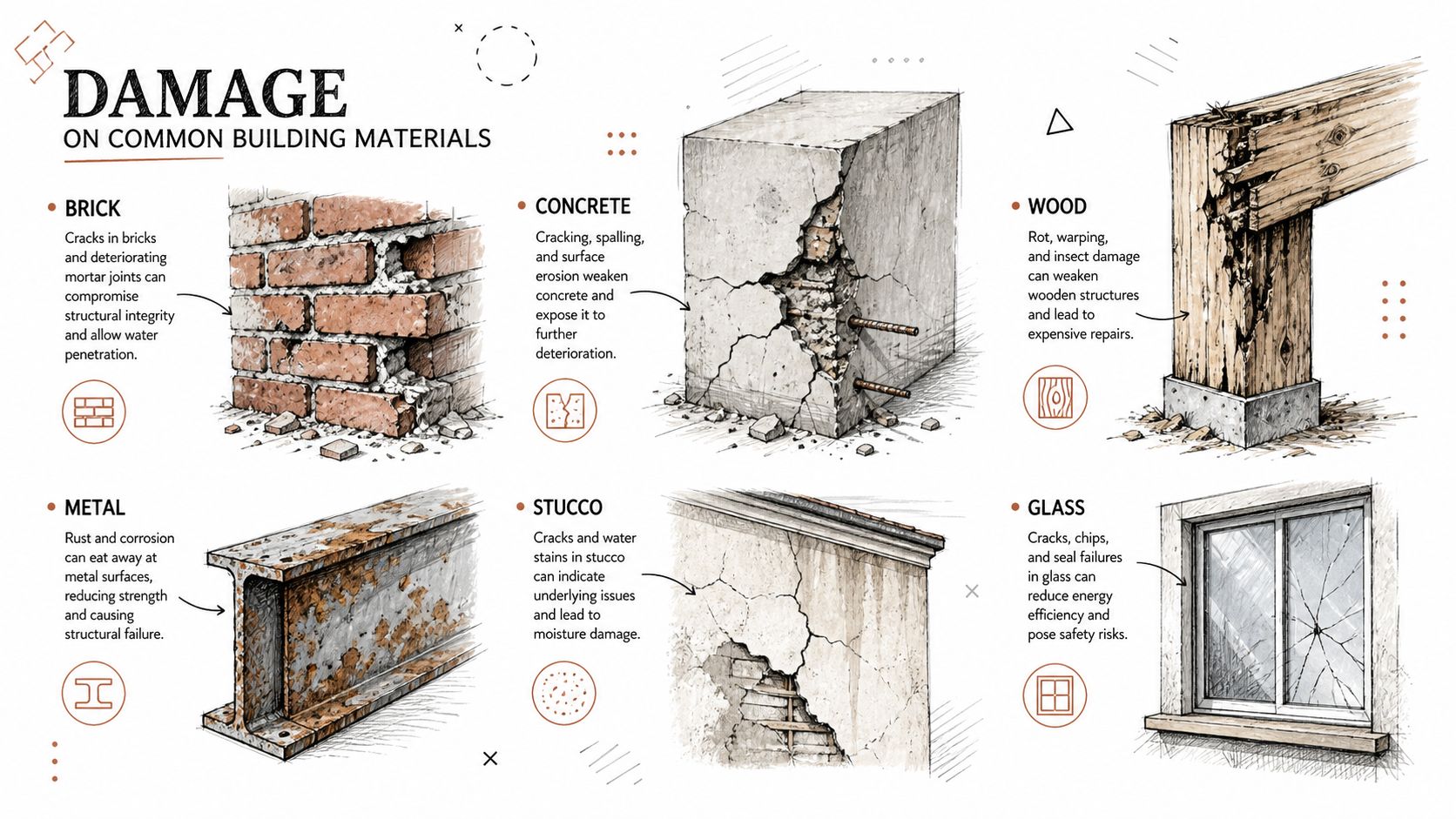
Water damage looks different on each material, and that's where homeowners get misled. Drywall may bubble, peel, soften, or sag. Ceiling texture can stain first, then blister later. Painted trim often swells at the joint, and stained wood can cup, warp, or separate at the seams. These are not random cosmetic issues, they're material responses to moisture.
Room by room, surface by surface
On hardwood, water often shows up as crowning or cupping, where the boards stop lying flat. On laminate, edges can swell and seams can separate. Tile grout may darken or crumble, especially if moisture keeps moving below the surface. In kitchens and bathrooms, MDF cabinet toe-kicks and sink bases are common failure points because they absorb water fast and lose shape.
HVAC equipment deserves a close look too. A drip pan that's rusted, a supply line with staining, or growth inside an air handler cabinet often means the unit has been leaking or overflowing for a while. The visible sign may be a ceiling spot below the system, but the actual wet area can be inside the cabinet or the chase.
Here's the quick material check I use when I walk a home:
- Drywall and ceilings: look for staining, bubbling paint, soft spots, or a seam that opens.
- Wood trim and cabinets: watch for swelling, peeling finish, and joints that no longer line up.
- Floors: check for buckling, cupping, lifted edges, or a spongy feel underfoot.
- Tile and grout: note dark grout lines, loose tiles, or discoloration that returns after cleaning.
- HVAC areas: inspect drip pans, nearby drywall, and the underside of the air handler for rust or residue.
That visual checklist works because each material fails differently. Once a surface looks or feels out of character, the question becomes how far the moisture has traveled, not whether it's there.
Classes and Categories That Explain Severity
Professionals don't judge water damage by stain size alone. They sort it by extent and by water category, because a small visible spot can hide a large drying job, and a bigger wet area can still be less dangerous if the water is clean and contained. The four-class framework used in restoration separates whether the damage affects part of a room, a full room, multiple rooms, or low-permeance materials like hardwood, masonry, or concrete CHES water damage presentation.
Why the class matters more than the stain
Class 1 usually means limited damage in part of a single room. Class 2 reaches an entire room and can climb into the walls. Class 3 spreads through multiple surfaces or rooms. Class 4 is the hard one, because moisture has moved into dense or low-permeance materials that dry slowly and require much more control.
That's why the visible footprint can fool you. A small ring on a ceiling can still be technically serious if moisture has migrated into framing, flooring, or plaster. The same is true in reverse, a large wet area on carpet may dry out more predictably if the rest of the structure stayed dry. Technicians don't guess at that. They use moisture meters, hygrometers, and infrared imaging to find concealed saturation and track whether materials have returned to an acceptable dry standard.
The water source also changes the response:
- Clean water usually comes from supply lines, sinks, or rain intrusion before contamination.
- Gray water has picked up contaminants from use.
- Black water involves sewage, floodwater, or other heavily contaminated sources.
A stain tells you where to look. The category tells you how careful to be.
That's the practical difference. Two homes can look similar on the outside and need very different work inside. One may need drying and monitoring, the other may need removal, containment, and replacement because the material can't be safely saved.
Odors, Mold, and the 24 to 48 Hour Clock
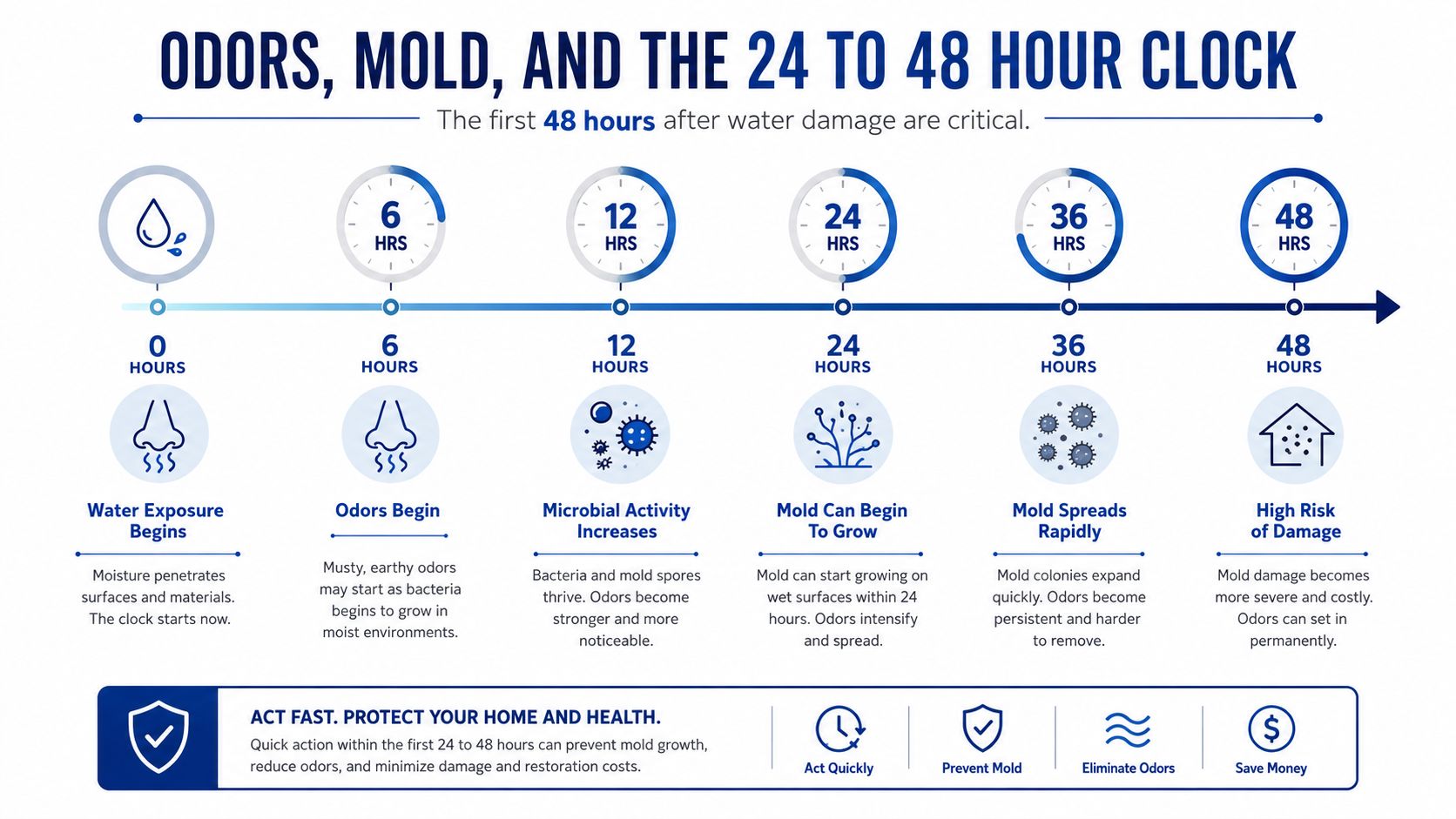
A homeowner often notices the smell before the stain turns obvious. That happens because moisture changes what is happening inside drywall, trim, carpet pad, or insulation long before the surface looks worse. The mold timeline matters because damp materials that are not dried fast enough can support visible growth in roughly 24 to 48 hours. A timeline graphic showing how mold and odors develop within 48 hours of water damage in a home. In a Georgetown home, that clock matters after a flash flood, a slab leak, or an HVAC condensation pan failure because the water often sits where you cannot see it.
What the odor is actually telling you
A musty odor usually means damp porous material is holding moisture and starting to change biologically. You can wipe the visible spot and still leave wet drywall paper, insulation, or underlayment behind the surface. That is why the smell often stays after surface cleaning. In Central Texas homes, the source can be under a cabinet after a supply line leak, behind baseboards after wind-driven rain, or in a hallway ceiling where an AC pan overflowed and soaked the cavity above.
By the time you can see speckling, greenish film, or dark growth on a closet wall or behind a baseboard, the problem has moved past simple drying. The visible mold is not the same thing as the original water damage. It is a sign that moisture stayed long enough for microbial growth to begin. In homes with infants, older residents, or anyone with breathing concerns, leave the room and avoid disturbing the material.
How long it takes for water damage to become mold is the question people ask after they have already cleaned the puddle. The better move is to treat odor as an early alarm, not a cleanup problem. If the smell remains after the visible water is gone, the structure still needs attention.
The practical point is simple. Water damage and mold growth share the same moisture problem, just on different timelines. If the materials stay damp, the smell gets stronger, the surface condition gets worse, and the repair gets bigger.
Look Alikes That Fool Most Homeowners
Not every stain is active water damage, and not every dry-looking surface is truly dry. That's where people waste time, because the look-alikes can mimic the authentic thing. Smoke staining, settling cracks, condensation at HVAC registers, and old framing bleed-through can all leave marks that resemble a leak.
Read the pattern, not just the color
A repeated leak usually leaves expanding or concentric stain rings. A one-time spill tends to look more uniform and tends not to return after it dries. A stain that lines up with a bathroom above, or with a supply run in the wall, deserves more suspicion than a random mark in the middle of a ceiling. A baseboard that separates from the wall is often more meaningful than the stain itself, because the material has already changed.
Humidity can also create false confidence. Hardwood can cup from ambient moisture, especially in a home where the HVAC is struggling, and that can look like water damage even when the source is mostly indoor moisture. The reverse problem is worse, though. A wall can look fine while hidden moisture moves behind it, into insulation or under flooring, where visual inspection won't catch it.
If the material looks fine but smells wrong, inspect anyway.
The strongest habit is to ask what changed, where it changed, and whether it changed again after drying. Those three questions separate a cosmetic issue from an active leak faster than staring at the stain ever will. Surface appearance is useful, but it's not proof of dryness.
What to Do in the First Hour After You Spot It
The first hour is for triage, not heroics. Start by stopping the source if it's safe. Shut off the fixture valve, the appliance supply, or the main water line if the leak is active and you know where it is. Then move fast on hazards, because water and electricity don't belong in the same room.
A practical first-hour checklist
- Cut the source if you can do it safely: stop the fixture, appliance, or main line that's feeding the leak.
- Protect people first: avoid standing water near outlets, cords, and panels.
- Move dry items out of the wet zone: rugs, paper goods, electronics, and furniture pads can wick moisture fast.
- Document before cleanup: take wide shots, close-ups, and short video of the room as found.
- Begin simple drying only if the area is safe: mop standing water, open interior doors, and move air through the space without spreading debris.
Do not rip up wet carpet aggressively, and don't open windows just because air movement sounds helpful. In humid Central Texas weather, that can slow drying instead of helping it. Don't spray biocides on visibly moldy porous material without protection either. If the material is already colonized, the safer move is often removal and controlled drying, not surface treatment.
If the loss is more than a small clean-water spill, a professional inspection should happen quickly. What to do immediately after water damage in your Central Texas home is the right search only after you've already stopped the source and protected the space. The practical target is the same one I give homeowners in the field, get drying equipment on site as soon as possible, because the longer materials stay wet, the narrower your options become.
Documentation That Protects an Insurance Claim
Insurance adjusters don't just want to know that water entered the home. They want to see the path from wet to dry. That starts with photos taken before cleanup, not after the room has been straightened. Wide shots show scope, close-ups show material damage, and video helps establish what was wet, what was running, and what was still active.
What to capture before anything gets moved
Photograph the room from each corner, then move in close on the stain, the warped material, the baseboard, and the source if it's visible. If you can safely record a short walkthrough video, do that too. It helps show the relationship between the damaged area and the rest of the home.
A moisture map and drying log are even more useful when a restoration company gets involved. Those records show where moisture was found, what materials were affected, and whether the structure returned to an acceptable dry standard. That matters because visual dryness alone doesn't certify that the home is dry enough behind the surface.
If the source is a plumbing failure, the claim path often looks different from a weather loss, so note that clearly in your documentation. A burst supply line, a leaking appliance, and storm-driven intrusion don't behave the same way, and adjusters need the facts spelled out plainly. Clean paperwork doesn't fix damage, but it prevents a lot of arguments later.
When to Call RestoTek TX and What Happens Next
Call tonight if water is still active, if a ceiling is sagging, if sewage is involved, if you can already see mold, or if the area clearly can't be dried in a day or two. Those are the moments when waiting turns a manageable loss into a larger structural job. Central Texas flash floods, slab leaks, and HVAC pan failures don't respect business hours, and delayed drying usually makes the scope worse.
RestoTek TX handles the work in one chain, inspection and assessment, water extraction, structural drying with dehumidification and air movement, leak detection, microbial prevention, and reconstruction. That single-provider approach matters when the damage crosses from cleanup into repair, because the same team can document the loss, dry the structure, and rebuild what was removed. For Georgetown and Austin homeowners, that kind of continuity is often the difference between a drawn-out disruption and a straight path back to normal.
A local team also understands how fast Central Texas conditions can change after heavy rain. A ceiling stain, a wet slab edge, or a pan leak may look simple at first glance, but the hidden moisture behind it can keep spreading until someone measures it and starts the right drying plan. If that's the situation in your home, call before the smell deepens or the drywall starts to fail.
If you're seeing staining, swelling, a musty smell, or a ceiling spot that keeps changing, RestoTek TX can inspect the loss, extract standing water, dry the structure, and handle reconstruction under one roof. Visit RestoTek TX to request help for a Georgetown or Austin water-damage emergency, especially if the leak is active or the room still doesn't feel dry.