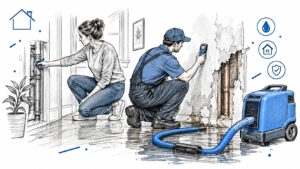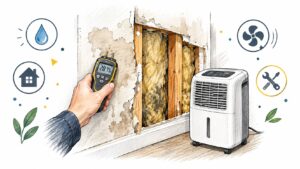
If you're standing in your hallway while a crew tapes plastic over a doorway and starts up a loud machine, it's normal to wonder whether all that setup is really necessary. In a Central Texas home, that usually means water damage, mold, or sometimes older materials that need to be handled with care. The strange part is often the noise, the sealed room, and the feeling that the house has suddenly turned into a job site.
What you're seeing is negative pressure containment. The crew is trying to control where air moves so dust, spores, or other contaminants stay in the work zone instead of drifting into the rooms you still live in. It can look intense, but the purpose is simple, keep the mess in one place and protect the rest of the house.
Why Your Remediation Crew Seals Off the Room
A homeowner in Georgetown usually notices the setup before they fully understand the damage. A pipe bursts under a sink, drywall gets soft, or a musty smell lingers after standing water is gone. Then the crew arrives with rolls of plastic, taped seams, and a machine that sounds like a steady shop fan running in the next room.
That isn't theater. It's the first layer of containment, and it's there because disturbed building materials don't stay politely where they started. Once drywall, insulation, or flooring gets opened up, particles can move with ordinary air currents, especially when doors open and close or when the HVAC is still pulling air through the home.
The setup is meant to make the damaged room behave like its own controlled zone. Air is drawn into that space instead of pushed out, so anything airborne gets directed toward filtration and exhaust instead of into the hallway. In plain terms, the crew is building a one-way street for air.
Practical rule: if a remediation area is set up correctly, the air should move from the cleaner part of the house into the work area, not the other way around.
That's why the plastic sheeting, taped seams, and machine noise matter. They're not signs that the crew is making the job bigger than it needs to be. They're signs that they're trying to keep the problem from becoming a whole-house problem.
How Negative Pressure Systems Actually Work
Think of a negative pressure room like a sealed jar with a pump pulling air out of it. As air leaves, fresh air wants to rush in through any available gap. What doesn't happen is just as important, the contents don't get forced outward unless the seal fails.
The pressure difference is small on purpose
For room-containment work, the target is usually a small but measurable pressure offset, not a dramatic vacuum. Guidance based on CDC and ASHRAE principles calls for at least 2.5 Pa, or 0.01 in. w.g., negative pressure relative to the corridor, along with 12 air changes per hour in new or existing rooms and direct exhaust outdoors rather than recirculation, according to the referenced engineering guidance on negative pressure systems. That tiny offset is enough because airflow follows pressure, not appearances, and even a slight inward pull helps keep contaminated air from escaping when the setup is stable. See the containment guidance for the pressure target and exhaust expectations in the room-control approach used for airborne infection isolation and similar spaces, which relies on a stable differential and continuous monitoring (engineering guidance on negative pressure systems).
The key idea is that negative pressure systems don't need to suck the room inward like a vacuum cleaner. They just need to pull a little more air out than they supply. That imbalance creates the direction of flow that containment depends on.
Why homeowners hear fans, not silence
The machine you hear is doing two jobs at once. It's moving air and filtering that air before it leaves the containment zone. In a good setup, air enters the room through controlled paths, passes through the work area, and gets pulled through filtration and exhaust.
Air follows the easiest path out of the room only if you let it. Good containment removes those easy paths.
That's why a door gap, a tear in plastic, or an open return grille can matter more than the size of the machine. The system works best when the barrier, the exhaust unit, and the airflow path all match each other.
What the crew is trying to prove
A contractor isn't just trying to make the room look sealed. They're trying to prove that the pressure relationship stays stable while people move around, materials get removed, and doors open. In remediation, that's the difference between a setup that looks right and one that protects the rest of the house.
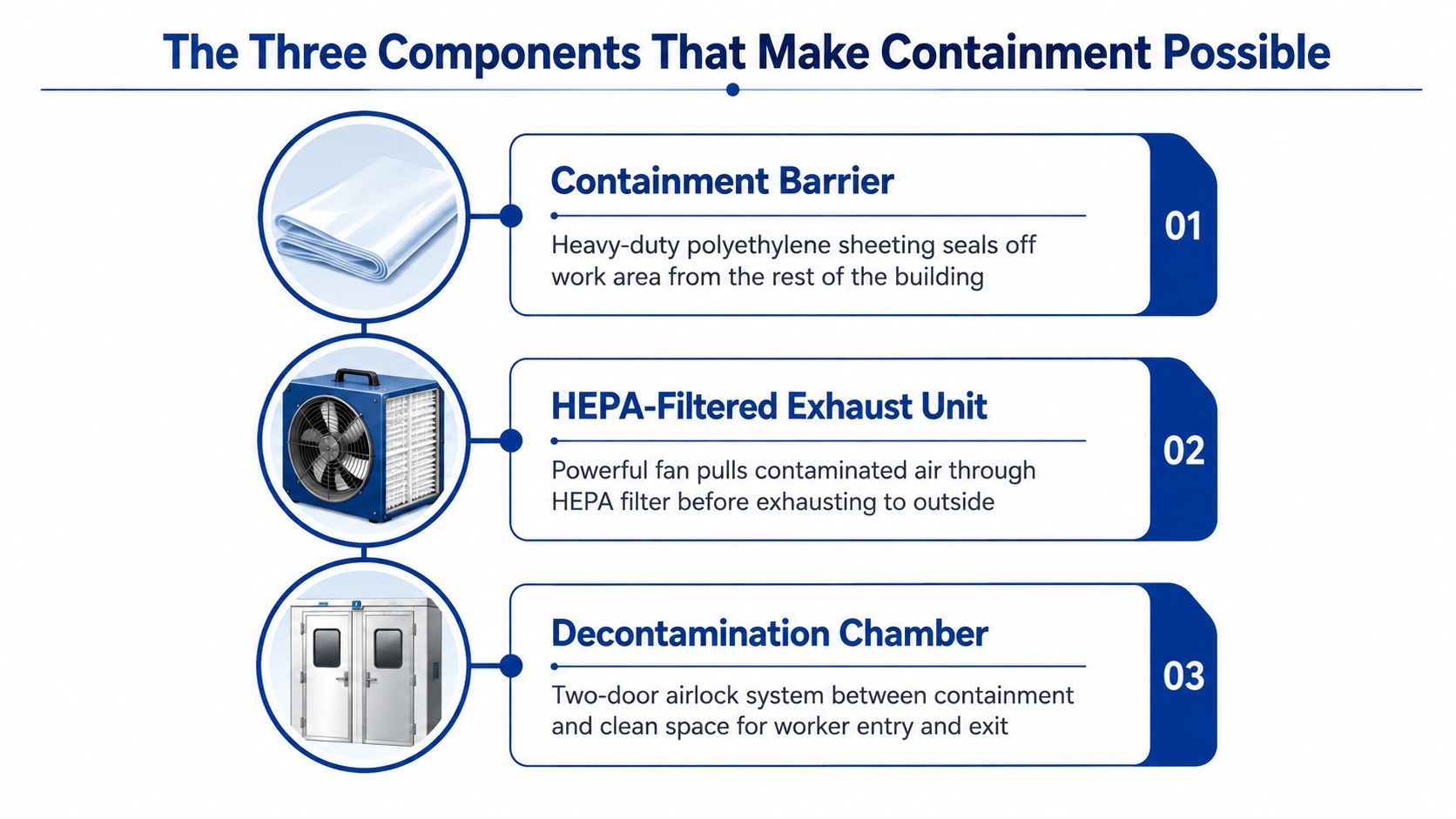
The Three Components That Make Containment Possible
A working containment setup usually has three visible parts. If you know what each one does, the whole job site makes a lot more sense.
Barrier, scrubber, and monitoring
The containment barrier is the plastic and taped sealing you see around the work zone. It's usually heavy-duty polyethylene sheeting, zip walls, and sealed doorways that turn an ordinary room into a controlled work area. If you can spot a line where the plastic meets the floor, ceiling, or wall, that's the crew trying to stop uncontrolled airflow.
The HEPA-filtered exhaust unit, often called an air scrubber or negative air machine, is the loud box with a fan and filter. It pulls air from the containment area, pushes it through filtration, and exhausts the filtered air outside. In a water-damage or mold job, this is one of the pieces that tells you the contractor is trying to manage both dust and airborne debris instead of just cleaning up what you can see.
The third part is the monitoring equipment. A manometer or pressure gauge confirms the pressure differential is still doing its job. A machine can be on and the room can still fail containment if the barrier leaks or if the airflow isn't balanced.
What you notice on site
Homeowners usually ask why the room has to be so closed off if the work is already happening inside it. The answer is simple. Once demolition starts, the work zone becomes the source, and the goal is to keep the source from spreading.
A contractor should be able to point to each part of the setup and tell you what it's doing. If they can't explain where the air is leaving, how it's being filtered, or how they're checking pressure, that's a warning sign.
A useful starting point
If you want a plain-language look at the tools used during mold work, this guide on what professionals use for mold remediation helps connect the equipment to the job itself.
Good containment is visible, audible, and measurable. You should see the barriers, hear the equipment, and know someone is checking the pressure.
Negative Pressure in Water, Mold, and Asbestos Remediation
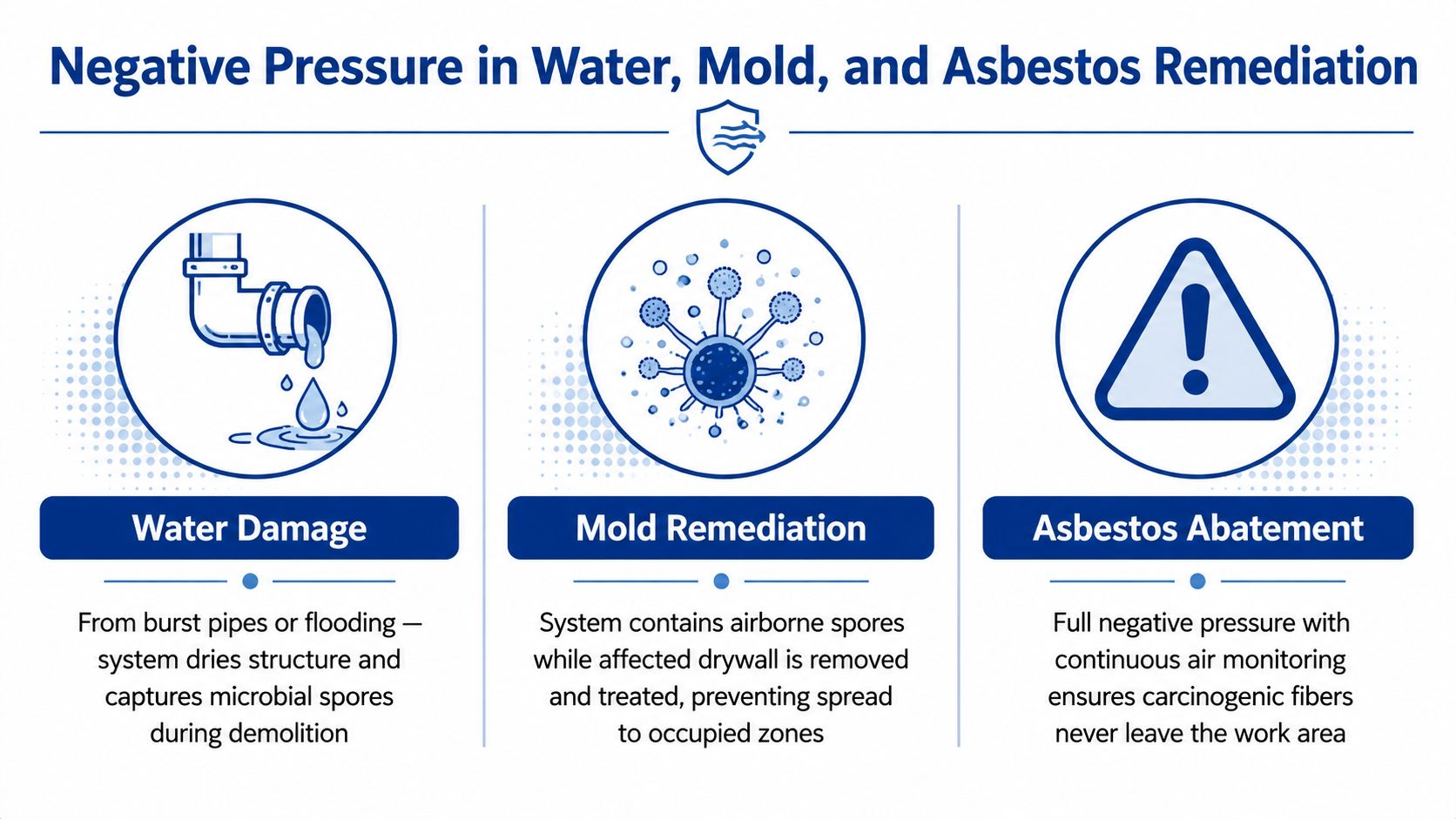
Water, mold, and asbestos all use the same basic idea, but the setup changes with the risk. The job gets stricter as the hazard gets harder to control.
Water damage
With a burst pipe or flood loss, the immediate goal is to stop moisture from spreading and keep disturbed debris from moving through the house. The crew may be drying framing, removing wet drywall, and running containment so dust and any microbial material stay inside the work zone. The room may sound busier than a standard repair because drying equipment and air movers are often part of the same response.
Mold remediation
Mold work usually feels more restrictive to a homeowner because the material is already a contamination concern. Negative pressure helps keep spores from migrating while affected drywall or other porous materials are removed. Doors stay controlled, the plastic stays sealed, and the equipment often runs continuously while the affected area is being cleaned and treated.
Asbestos abatement
Asbestos is different because the risk is tied to fibers that must be handled under tighter controls. The containment is usually more rigid, the monitoring more serious, and access is more limited. For homes in older Austin and Georgetown neighborhoods, that can mean the contractor treats the work area like a highly controlled zone rather than a simple repair room.
The engineering idea behind deeper containment in industrial settings is similar. When vacuum is used for material transport, the operating range can be much stronger, often around -0.02 MPa to -0.08 MPa, with capacities from 100 kg/h to 6000 kg/h and transport distances up to 30 m horizontally and 10 m vertically, according to the cited industrial conveying reference (industrial negative-pressure conveying data). That's a very different application from a home, but it shows the same principle. More suction can improve movement and pickup, yet it also raises filtration and energy demands, which is why the system has to be matched to the material and the space.
Signs Your Property Needs Containment and What to Expect
A homeowner doesn't need to be a contractor to spot the situations where containment is likely. A few clues usually tell the story before the estimate even starts.
What should make you ask for a containment plan
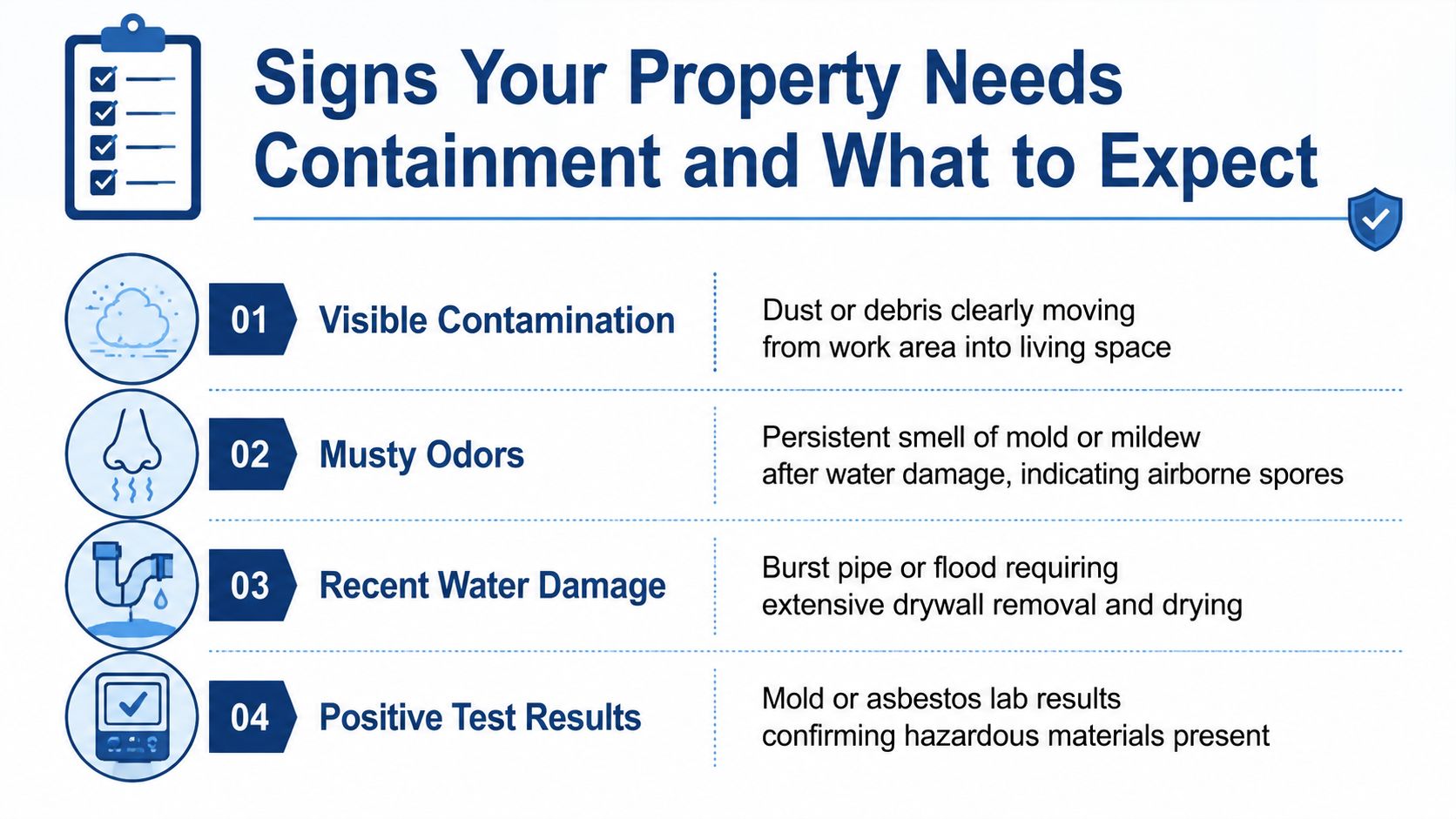
- Visible contamination: Dust, debris, or mold clearly moving beyond the damaged room means the work area isn't naturally self-contained.
- Musty odors: A persistent smell after water extraction often means moisture or microbial activity is still present.
- Known hazardous materials: If renovation will disturb older materials that may contain asbestos, containment should be part of the conversation from the start.
- Multiple affected rooms: When water intrusion reaches connected spaces or HVAC-linked areas, the odds of spread go up fast.
Homeowners also run into confusion about whether a room is “bad enough” for containment. The answer isn't about drama, it's about whether the work is likely to send airborne material into spaces you still use.
What a professional contractor should do
A solid contractor starts with inspection, then explains the containment plan in plain language. You should hear how the room will be sealed, where the air will go, and how they'll document the job for insurance or records. If the answer is vague, that's a problem.
The referenced ASHE guidance also points out that negative-pressure setups can be built in different ways, including exhaust to the corridor, outside, or return, and that temporary conversions became common during COVID-19, which showed how quickly a room can be repurposed without guaranteeing stable real-world performance (ASHE negative-pressure rooms guidance). For a homeowner, the practical lesson is simple. A contractor shouldn't just say “it's under negative pressure.” They should be able to show how they know it's still working.
What to ask before work starts
- How will you verify the pressure stays negative?
- Where will the exhaust air go?
- What changes if someone has to enter the room during work?
If the contractor can answer those questions without stumbling, you're probably dealing with someone who understands containment as a system, not just a fan and a sheet of plastic.
Central Texas Climate Challenges for Containment Systems
Central Texas puts extra stress on remediation work because the weather doesn't stay polite. Humidity can hang around after a loss, flash flooding can add sudden moisture to a home, and summer heat can make a building breathe differently than it does in milder regions. That affects how long a containment setup has to run and how carefully it has to be sealed.
Why local conditions change the work
In Georgetown and Austin, a water event can turn into a mold problem faster than a homeowner expects if materials stay damp. That's why local crews pay close attention to drying, air movement, and the condition of adjacent rooms, especially when the home has open floor plans or HVAC-connected spaces. A setup that would be acceptable in a drier climate may need more attention here because the environment gives moisture fewer reasons to leave.
The practical side of that is boring in the best way. It means the contractor chooses dehumidification and containment with the local climate in mind, not just with a generic handbook. If you want a deeper look at how drying ties into the region's conditions, see the guide on structural drying in Central Texas.
What homeowners usually notice
You may hear equipment running longer than you expected. You may see more sealed openings than you thought were necessary. You may also be told to limit access while drying or demolition continues.
That isn't overprotection. It's a response to how quickly heat and humidity can turn a localized problem into a wider one. Local experience matters because the right containment in Central Texas has to handle the house and the weather at the same time.
Common Misconceptions About Negative Pressure Safety
A machine humming in the hallway does not mean the room is safe. Homeowners often assume the equipment itself is the protection, but the protection comes from how the job is set up, sealed, and monitored. If the plastic barrier leaks, the door is propped open too long, or airflow is not being checked, contaminants can still move out of the work zone.
The medical term negative pressure ventilation also causes confusion because it sounds close to remediation containment, yet the two uses serve different purposes. In medical settings, the focus is respiratory support, and the literature notes complications such as lack of upper-airway protection and aspiration risk, while remediation containment is meant to reduce airborne spread in a work area (negative pressure ventilation and related clinical discussion). The shared phrase can make the idea sound more complicated than it is, but the job-site version is about keeping disturbed dust, mold, or debris from drifting into the rest of the home.
What you should watch for is simple: a sealed barrier, directed airflow, and verified pressure working together. If a contractor cannot explain how each part is being handled, the setup is incomplete, no matter how much equipment is running.
For homeowners who want confidence after a loss, air verification matters. If you are unsure whether something stayed airborne or moved beyond the work zone, a separate air quality testing conversation can help confirm what is happening instead of relying on guesswork.
Negative pressure is a useful tool when it is designed, checked, and maintained the right way. It is not magic, and it is not automatic. When you see it done properly, you are looking at a system built to keep a messy cleanup from spreading into a larger problem.
If you're dealing with water damage, mold concerns, or a containment question in Georgetown or Austin, RestoTek TX can inspect the problem, explain the setup, and handle the drying, remediation, and repair work from start to finish. Visit RestoTek TX to request help from a local team that understands Central Texas homes and the containment process that protects them.