Rain is hammering the house. You hear water where you shouldn't hear water. By the time you reach the basement or lower level, the floor is wet, storage boxes are soaking through, and the sump pump that usually handles the problem is silent, humming uselessly, or running without lowering the water.
That moment feels bigger than it should. It's not just cleanup. It's carpet, drywall, trim, family keepsakes, and the question every homeowner asks right away: how bad is this going to get?
A failed sump pump turns a hidden system into an urgent problem fast. In Austin and Georgetown, that stress hits harder because heavy rain can arrive quickly, drainage conditions change from property to property, and a lot of homes never get a warning before water starts showing up where it doesn't belong. The good news is that sump pump failure usually isn't random. It tends to follow patterns you can spot, respond to, and prevent.
That Sinking Feeling When Your Basement Floods
Most homeowners don't think much about their sump pump when it's working. It sits in the pit, does its job, and stays out of sight. Then one storm exposes how much you've been relying on a single machine.
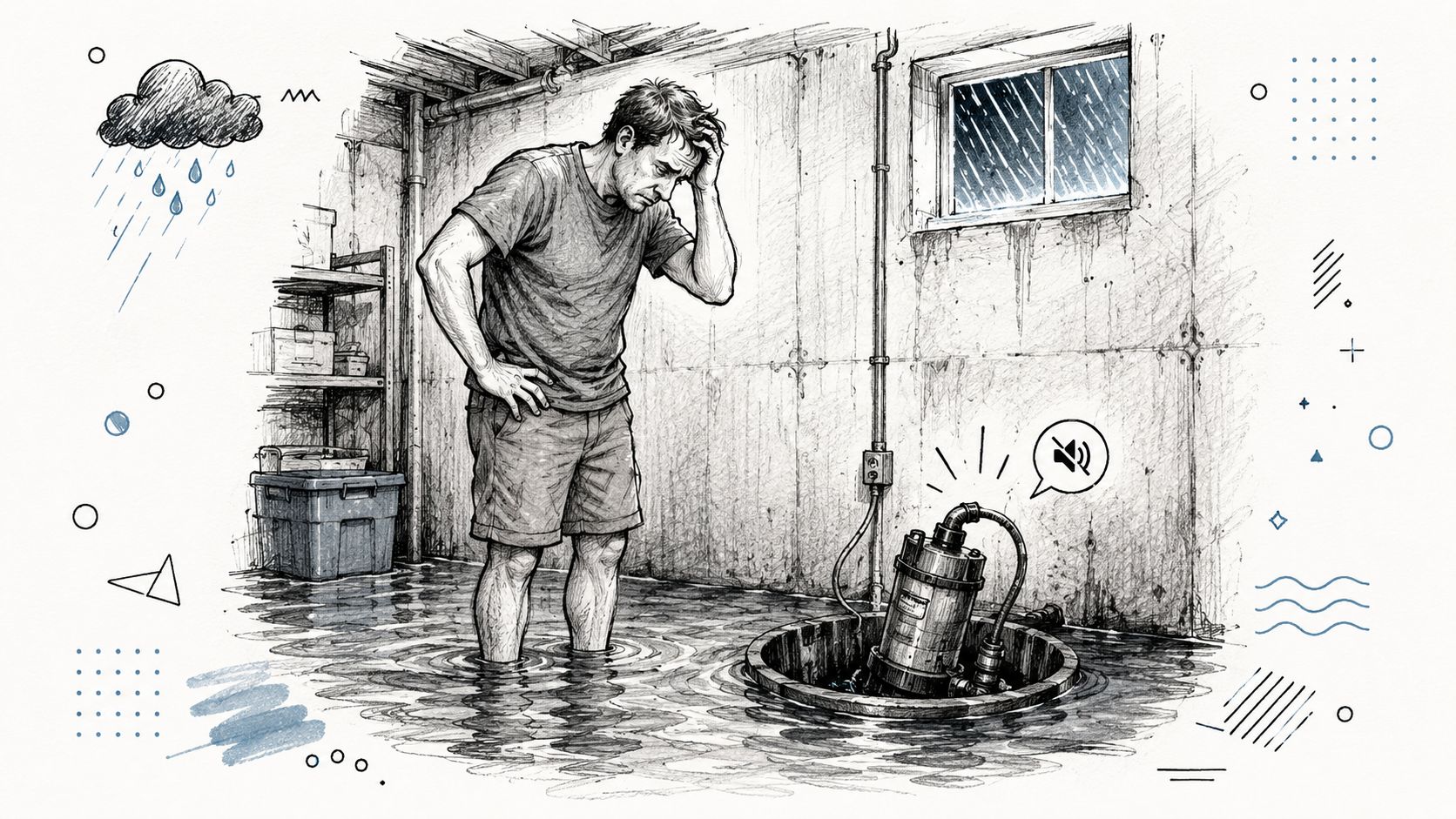
In real homes, the first signs are rarely dramatic. You notice a damp smell. A corner of the room looks darker than usual. The pump sounds different, or it doesn't come on at all during a storm when you know it should. Then the water line creeps wider across the floor.
That's when people lose time. They stop to figure out whether it's a plumbing leak, groundwater intrusion, or just a little overflow they can handle later. Meanwhile, building materials start absorbing moisture, cardboard collapses, and anything touching the floor becomes part of the loss.
Why this feels so overwhelming
A sump pump problem creates two emergencies at once. The first is the water you can see. The second is the moisture you can't, inside wall cavities, under flooring, around baseboards, and in the air itself.
Practical rule: Treat sump pump failure as a water intrusion event, not just a broken appliance.
That mindset matters. If you only focus on the pump, you can miss the damage spreading through the room. If you only focus on mopping up the floor, you can miss the reason the water is still entering.
What helps right away
The homeowners who recover best usually do three things early:
- They slow down enough to think safely. Electricity and standing water are a dangerous mix.
- They identify whether the water is still rising. Active intrusion changes your next step.
- They move quickly on drying and mitigation. Delays turn a manageable cleanup into a much larger restoration job.
If you're dealing with sump pump failure right now, the goal isn't to become a pump technician in one night. The goal is to protect people first, limit damage second, and make sound decisions about what you can handle and what needs professional attention.
Recognizing the Red Flags of Sump Pump Failure
Most pumps don't fail without warning. They usually leave clues in the sound they make, how often they run, or what the pit looks like during wet weather. Catching those clues early is the difference between a service call on a dry day and a flooded cleanup during a storm.
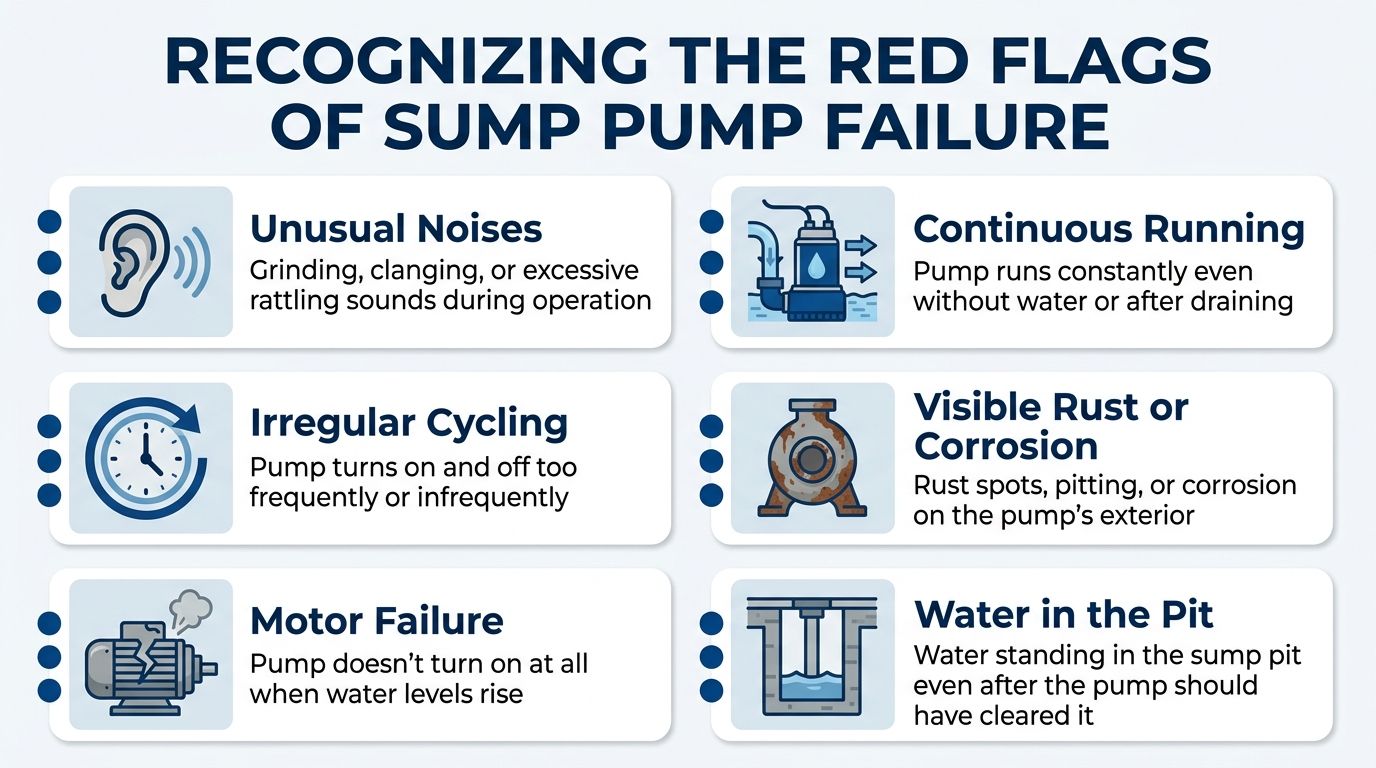
Listen to the pump, not just the storm
A healthy sump pump has a fairly predictable sound. It turns on, moves water, and shuts off. Trouble starts when the sound changes.
- Grinding or rattling noises often point to debris in the pump or worn internal parts.
- A loud hum with no pumping can mean the motor has power but the impeller isn't moving water.
- Clanging or vibration may signal that the pump has shifted, a component is loose, or the unit is straining.
If the sound is new, pay attention. Pumps don't usually get louder or rougher for no reason.
Watch for behavior that doesn't make sense
The next set of warnings comes from how the pump cycles.
A pump that turns on and off too often is telling you something is off. That may be a float issue, a discharge problem, or a pump that isn't matched well to the setup. On the other side, a pump that never activates during a heavy rain is just as concerning. If the pit has water and the pump stays idle, treat that as a failure condition until proven otherwise.
If the pump runs but the water level doesn't drop, don't assume it's “keeping up.” Assume it's losing the fight.
Check what you can actually see
A quick visual inspection tells you a lot. Look into the sump pit with a flashlight. You're not trying to diagnose every part. You're looking for obvious signs that the system is stressed.
- Standing water in the pit after the pump should have cleared it suggests poor pumping, blockage, or a discharge issue.
- Rust or corrosion on the pump housing can indicate age, wear, or moisture where it shouldn't be.
- Sediment, gravel, or debris in the pit can interfere with moving parts and shorten the pump's life.
- A float that looks pinned, tangled, or obstructed may not rise and fall freely.
If you're also trying to determine whether the moisture is strictly a sump issue or part of a wider hidden-water problem, it helps to understand how professional leak detection works in real homes.
One simple homeowner test
If conditions are safe and there's no standing water around energized equipment, pour water into the pit and watch what happens. A healthy system should activate, pump, and stop appropriately. If it hesitates, runs continuously, fails to turn on, or leaves water behind, you've confirmed that the problem needs attention.
Don't keep repeating the test if the pump is struggling. Repeated operation on a failing unit can push a weak system into a full breakdown.
The Real Reasons Your Sump Pump Gives Up
Sump pump failure usually comes down to three buckets. Power problems, mechanical breakdowns, and installation or sizing mistakes. Once you understand those categories, the failures stop looking mysterious.
Power loss is the biggest vulnerability
In Central Texas, storms don't always arrive neatly. Heavy rain, lightning, and utility interruptions can stack on top of each other. That matters because approximately 40% of all sump pump failures are caused by power outages, making electrical reliability the most critical factor in preventing basement flooding, according to AAA Standard Services on common sump pump failure causes.
That's why a pump can be perfectly healthy and still fail at the exact worst moment. The motor needs electricity. When the grid drops, the pump stops. If water keeps entering the pit, the basin fills, overflows, and the lower part of the home starts taking on water.
A tripped breaker can create the same outcome. So can a loose plug, a GFCI issue, or an extension-cord setup that was never meant to support a sump pump in the first place.
Mechanical wear is usually slow until it isn't
Mechanical failure often progresses gradually over time. The pump still works, but it works harder, louder, or less consistently.
Here are the common patterns:
- A stuck float switch acts a lot like a toilet float that won't trigger correctly. If it sticks down, the pump won't start. If it sticks up, the pump may run too long.
- A clogged impeller is like a blender jammed with ice. The motor tries to spin, but debris interferes with movement and performance.
- Overheating is a major mechanical failure path. A pump can overheat when it runs continuously because of a stuck float, a clogged impeller, or a blocked discharge line. McElroy's notes that overheating is the primary cause of mechanical sump pump failure and ties it directly to poor maintenance and debris buildup in the basin in its overview of what to check when a sump pump fails.
A pump that runs nonstop isn't “working extra hard for you.” It may be damaging itself in real time.
Sediment is a frequent contributor. Dirt, gravel, and organic material settle into the pit, interfere with moving parts, and force the pump to strain. Homeowners often notice the symptom first, noise, heat, or erratic cycling, and only later discover the buildup that caused it.
Installation issues create problems from day one
Some systems fail because the pump itself isn't the only issue. The setup around it is wrong.
One major example is mismatch between the pump's Total Dynamic Head and the actual lift required. If the motor can't overcome the vertical rise and friction in the discharge line, water won't move the way the system was designed to. The issue gets worse when the discharge piping is too small. The SSMPA guide on understanding pumps and common pumping issues explains that undersized discharge pipe increases friction loss and can overload the pump.
Other installation-related trouble spots include:
- Discharge lines that clog or freeze
- Improperly placed check valves
- Pump basins with too much debris
- Units that are underpowered for the property's water load
For Austin and Georgetown homeowners, this matters because not every lower-level water problem is solved by replacing the same pump with the same model. If the system is badly configured, a new unit may fail in the same way as the old one.
Your Emergency Action Plan for a Failed Sump Pump
When a sump pump quits during active water intrusion, you need order, not guesswork. The first job is safety. The second is limiting damage. The third is deciding quickly whether this is still a homeowner task or a restoration event.
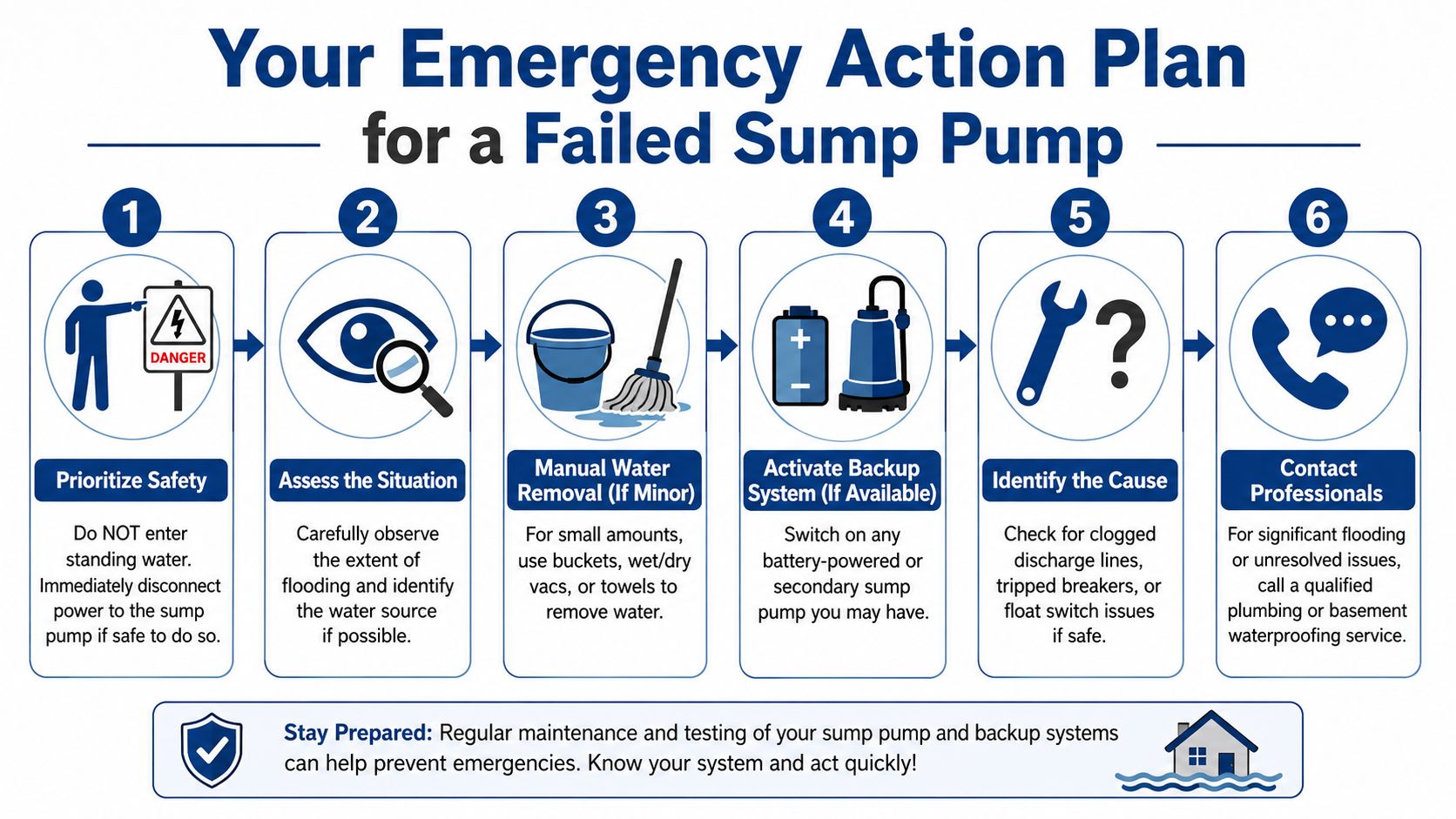
Step one is safety
If there's standing water near outlets, cords, appliances, or the pump itself, don't step into it casually. Water and electricity can injure or kill. If you can shut off power safely from a dry location, do that first. If you can't, stop and call for qualified help.
Wear boots if you must enter a damp area, but don't treat boots as electrical protection. They are not a substitute for de-energizing the space.
Standing water changes the job. What looks like cleanup can become an electrical hazard in seconds.
Triage the situation fast
Once the immediate safety risk is under control, answer three questions:
- Is water still entering the space?
- Is the water level rising, stable, or dropping?
- Is this isolated to the sump pit area, or has it spread into finishes and contents?
If the answer to the first question is yes, your priority is no longer just cleanup. It's active mitigation.
Move boxes, rugs, paper goods, electronics, and anything porous off the floor. Open the area up. Remove items from closets and corners where moisture gets trapped. If the flooding is minor and conditions are safe, you can use a wet/dry vacuum, towels, and buckets to remove accessible water.
Try only the troubleshooting that's low-risk
A few checks are reasonable if they can be done safely and without opening energized components:
- Check the plug and outlet if the area is dry and accessible.
- Look for a tripped breaker at the panel.
- Inspect the float to see whether it's visibly stuck.
- Check the discharge line termination outside if weather and access allow.
- Activate a backup unit if one is already installed.
Don't dismantle the pump in standing water. Don't keep forcing a motor to run if it's overheating, humming, or failing to move water.
Time matters more than most people realize
The biggest mistake after sump pump failure is waiting to see whether the area “dries on its own.” It usually doesn't dry evenly, and hidden moisture lingers well after the visible water is gone.
A practical benchmark comes from Paul Davis, which notes that mold amplification begins within 24–48 hours of standing water in its discussion of how long to wait after sump pump failure before calling a professional. That window is short enough that a delayed decision can create a second problem on top of the first.
For homeowners trying to make decisions under pressure, this guide to what to do in the first 24 hours after water damage in Georgetown and Austin is useful because the first-day response often determines how much material can be saved.
Know when DIY stops making sense
DIY is reasonable when the water is minor, the source is controlled, power risks are removed, and the affected area is limited to hard surfaces. Call a professional when:
- There's significant standing water
- Electrical safety is uncertain
- Water reached drywall, insulation, flooring, or cabinetry
- The pump failed during an active storm and can't keep up
- The problem keeps returning even after basic fixes
Repeated flooding, even with a pump that appears to run, often points to broader drainage or grading issues. That isn't a mop-and-fan problem. It needs diagnosis.
A Proactive Guide to Sump Pump Maintenance and Replacement
Most costly sump pump failures are easier to prevent than to clean up after. The right mindset is simple. Don't treat your sump pump like an appliance you notice only when it stops working. Treat it like a risk-control system that needs routine attention.
Replacement timing matters more than most homeowners think
A lot of homeowners keep an old pump in service because it still turns on. That's understandable, but it's not a great risk strategy. The average operational lifespan of a quality, professionally installed sump pump is between 7 and 10 years, and industry experts recommend replacing sump pumps every 7 to 10 years even if they appear to function, according to ARS on when it's time to replace a sump pump.
That recommendation makes sense in the field. Pumps don't usually fail on a calm, convenient afternoon. They fail during the conditions that stress them most. If a unit is aging, noisy, corroded, or inconsistent, replacing it before storm season is usually smarter than trying to squeeze one more year out of it.
What works and what doesn't
What works is boring, regular maintenance. What doesn't work is waiting for the first major rain to test a neglected system.
Good prevention usually includes:
- Keeping the pit clean so debris doesn't interfere with the float or impeller
- Testing pump activation under controlled conditions
- Checking the discharge path so water can leave the system
- Watching for age-related wear before failure becomes sudden
What doesn't work is assuming that because the pump ran last season, it's ready for this one.
Replace an aging pump on your schedule, not during a storm on the water's schedule.
Sump Pump Maintenance Checklist
| Frequency | Task | Why It's Important |
|---|---|---|
| Monthly during wet periods | Look into the pit for debris, sediment, or obvious obstruction | Debris can interfere with the float and reduce pumping performance |
| Quarterly | Test the pump by adding water to the pit and confirming it starts, pumps, and shuts off properly | Functional testing catches switch and activation problems before a storm |
| Quarterly | Inspect the power connection and confirm the pump is securely plugged into a proper outlet | Loose or interrupted power leaves a healthy pump unable to run |
| Seasonally | Check the discharge line and outdoor termination for blockage or restricted flow | Water has to exit freely or the pump will strain and may overheat |
| Seasonally | Clean the pit area and remove loose material around the basin | Sediment and gravel increase wear on internal components |
| Annually | Have the system inspected professionally, especially if it runs hard during storms | A trained inspection can catch wear, installation issues, and declining performance |
| At the age benchmark | Replace pumps approaching the recommended service life | Aging pumps are more likely to fail under peak demand |
A practical homeowner standard
If your pump is older, sounds rough, cycles strangely, or leaves you guessing during storms, stop thinking about whether it can survive one more season. Start thinking about whether you want to bet your floors, drywall, and stored belongings on it.
For Austin and Georgetown homes, that choice gets sharper during periods of heavy rain. A pump that is merely “still operating” isn't the same thing as a pump you should trust.
Call in the Experts for Your Georgetown and Austin Home
There's a point where sump pump failure stops being a maintenance issue and becomes a restoration issue. That threshold arrives when water is spreading beyond the pit area, when safety is uncertain, or when the same flooding keeps happening no matter how many small fixes you try.
In Austin and Georgetown, that call often comes during fast-moving weather. A homeowner may start with a simple assumption, the pump needs repair, and end up facing saturated baseboards, wet drywall, hidden cavity moisture, and a room that needs structured drying. That's why it helps to bring in professionals who can assess both the failed pump event and the damage it caused.

The insurance question homeowners often miss
One of the most frustrating parts of sump pump failure is finding out too late that coverage may not work the way you expected. PuroClean notes that standard homeowners policies often exclude sump pump damage unless the homeowner has a specific sump pump rider or sewer backup endorsement in its discussion of the insurance coverage gap tied to sump pump failure.
That means documentation matters. It also means early professional involvement can help clarify the extent of the loss, what needs immediate mitigation, and what records will support a claim conversation.
When local response makes a real difference
For homeowners in Central Texas, local experience matters because flood behavior, storm timing, and property drainage patterns vary widely. The right team should know how to handle extraction, drying, moisture tracking, microbial prevention, and rebuild coordination without making you juggle multiple vendors during a stressful week.
If you need to understand what trained responders do on site, this overview of a water damage restoration technician's role gives a clear picture.
The best time to call is when you realize the problem is beyond safe DIY, not after moisture has had extra time to move through the structure. Calm, fast action protects more of the home.
If your home in Georgetown, Austin, or a nearby Central Texas community is dealing with sump pump failure, RestoTek TX can help with emergency response, water extraction, structural drying, microbial prevention, and rebuild coordination. Joan and Josh Garza's family-operated team handles the full restoration cycle and helps homeowners move from immediate damage control to a stable, documented recovery plan.