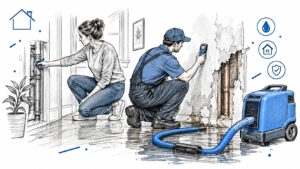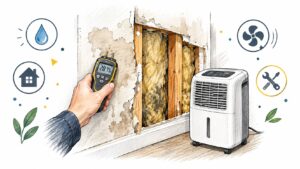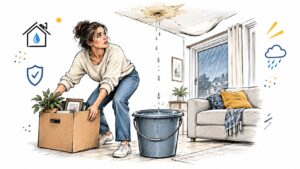
Water on the floor changes the mood in a house fast. One minute you're dealing with an ordinary day in Fort Lauderdale. The next, you're staring at soaked baseboards, warped flooring, a ceiling stain that wasn't there yesterday, or standing water after a storm band pushed through overnight.
That first wave of panic is normal. You start thinking about the drywall, the furniture, the electrical system, the smell, the insurance claim, and how bad the bill is going to be. Most homeowners also make the same mistake at this point. They either wait too long, or they treat all water damage like it's the same problem. In Fort Lauderdale, that mindset gets expensive.
Your Guide to Water Damage in Fort Lauderdale
A common Fort Lauderdale scenario goes like this. A homeowner gets home after work and finds water spreading from a failed supply line under the sink. Another wakes up after a storm and notices water pushing in near sliders, baseboards, or a low entry point. Someone else sees a small ceiling drip after heavy rain and assumes it's manageable until drywall starts sagging.
The details change, but the pattern doesn't. Water moves fast, soaks hidden spaces, and keeps causing damage after the visible puddles are gone.
What matters now is control. You need to stop the source if you can, protect people first, document everything, and understand what kind of restoration job you're facing. A burst pipe is one thing. Storm-driven flooding near the coast is another. Saltwater intrusion is in its own class.
The biggest early mistake isn't panic. It's underestimating what water is already doing behind walls, under flooring, and inside insulation.
If you need a simple starting point, use this water damage restoration checklist for homeowners to keep your next steps organized while you're making calls and protecting the property.
This guide is built for Fort Lauderdale conditions. That means hurricanes, roof leaks during hard rain, flood exposure, saltwater risks, and Florida insurance headaches. You need practical advice, not a generic article that treats a storm surge the same as an overflowing washing machine.
Your First Hour Critical Steps for Water Emergencies
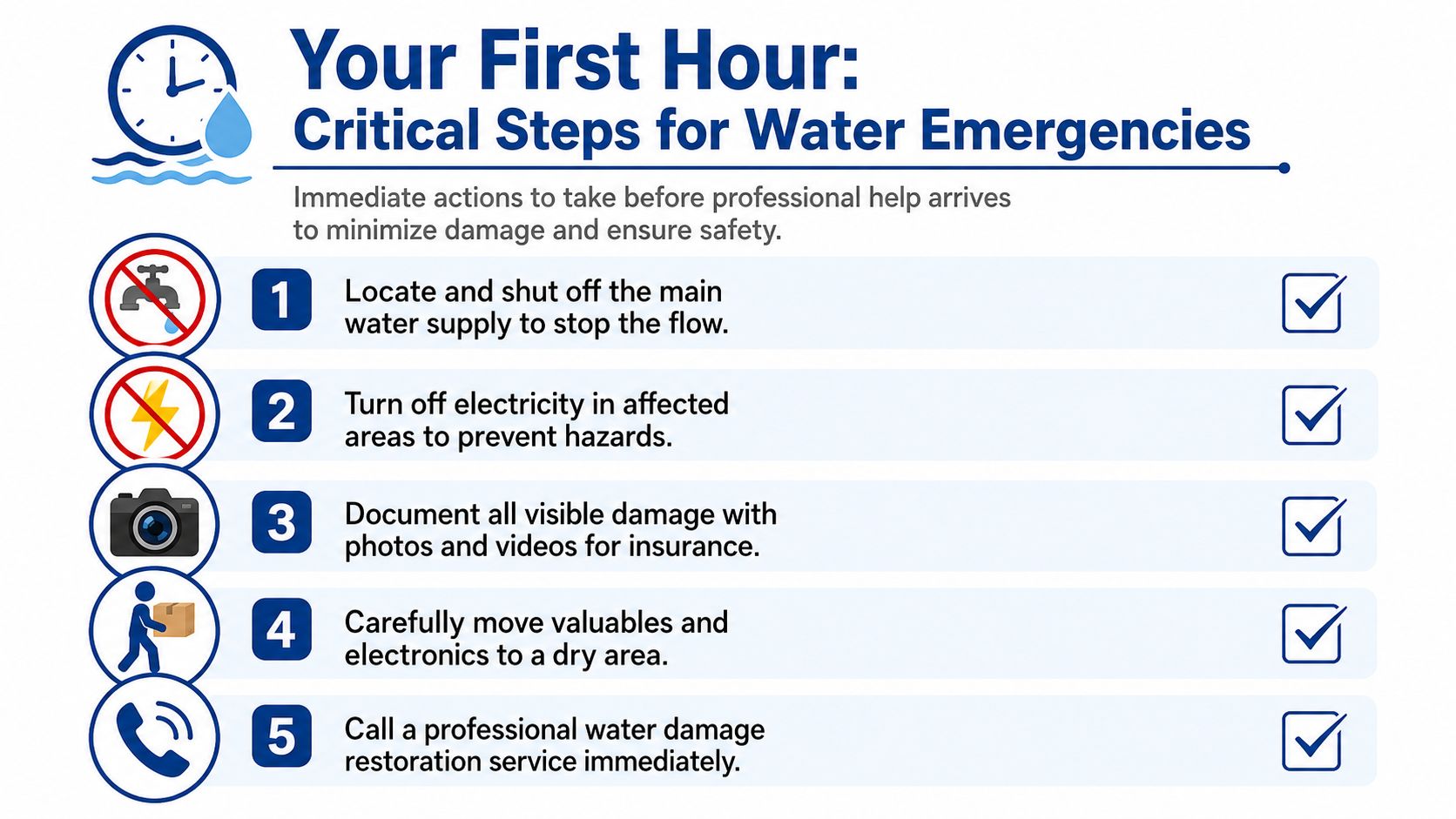
The first hour matters because it sets the ceiling for how bad this loss becomes. You can't complete restoration in that window, but you can stop the damage from spreading and avoid making the scene more dangerous.
What to do right away
Start with safety and source control.
- Shut off the water supply if the loss came from plumbing, an appliance line, or an interior fixture. If you don't know the exact local shutoff, use the main.
- Turn off power to affected areas if it's safe to reach the panel without stepping into wet zones. Water and energized circuits are a terrible combination.
- Move electronics, documents, rugs, and portable valuables to a dry area. Don't spend time saving low-value items before you protect the things that can't be replaced.
- Take photos and video before you disturb too much. Get wide shots of the room, then close-ups of flooring, walls, furniture, and the source if visible.
- Call a professional restoration company immediately. Fast response matters more than homeowners realize.
If you want a more detailed emergency sequence, this guide on what to do immediately after water damage in your home is a useful reference while you're triaging the situation.
What not to do
Homeowners often create secondary damage trying to help.
- Don't use a regular household vacuum on standing water. That's unsafe and ineffective.
- Don't walk into a room with a sagging ceiling. Wet drywall can fail without much warning.
- Don't leave wet fabrics, cushions, or papers stacked together. They trap moisture and get worse fast.
- Don't run HVAC equipment if floodwater or contaminated water may have affected the system. You can spread moisture and contaminants through the house.
- Don't assume clear-looking water is harmless. What matters is the source, not the appearance.
Your priority order
Use this sequence and don't overcomplicate it:
- Protect people
- Stop the water
- Cut electrical risk
- Document damage
- Remove valuables
- Get professionals moving
Practical rule: If you have to choose between cleanup and documentation, take the photos first. Wet materials can be removed later. Missing claim evidence is harder to fix.
Fort Lauderdale homeowners also need to think about weather exposure. If water came in during a storm, keep an eye on openings, roof issues, and any place wind-driven rain can keep feeding the problem.
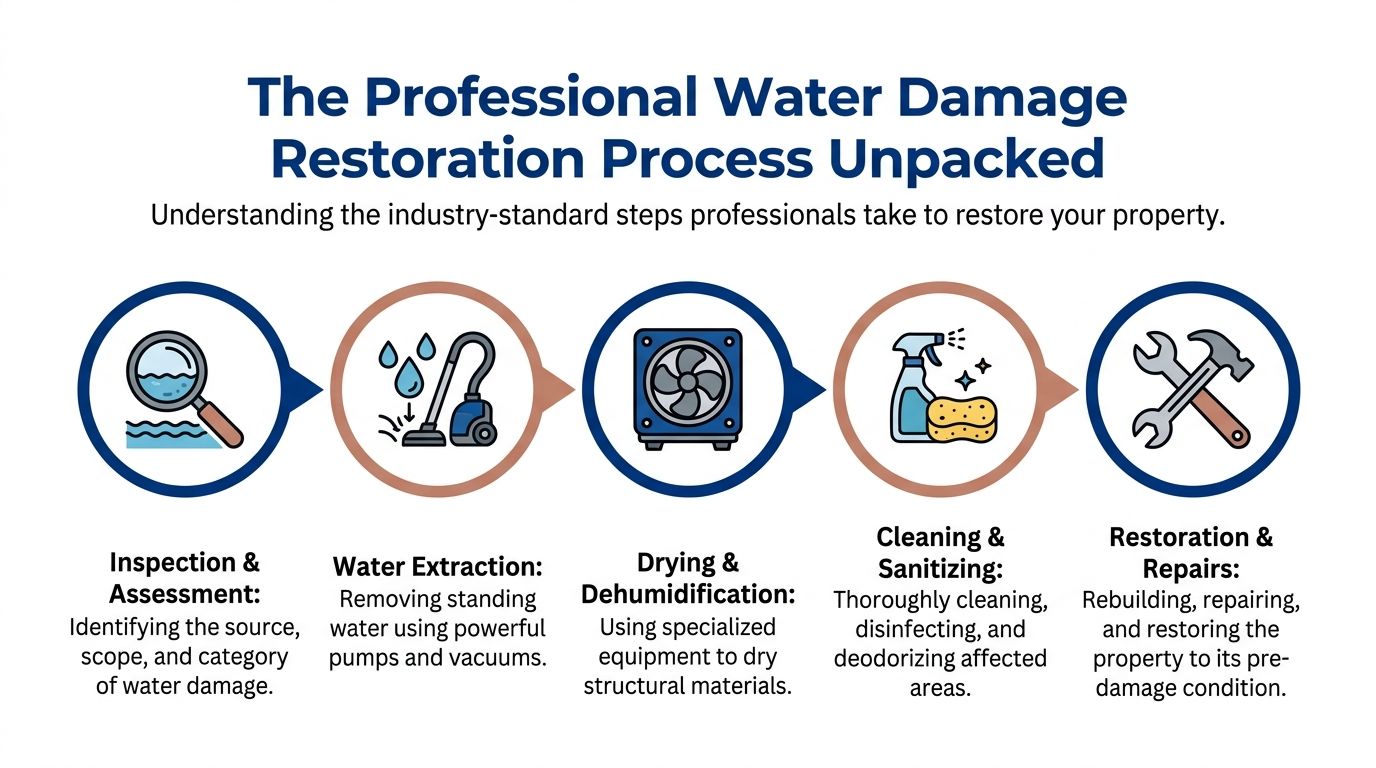
The Professional Water Damage Restoration Process Unpacked
Once a qualified crew arrives, the job should stop feeling chaotic. Good restoration work follows a clear sequence. If the company can't explain that sequence in plain English, that's a bad sign.
Inspection comes first
Professionals should identify three things immediately: the source, the spread, and the contamination level. That means checking visible damage, probing likely wet materials, and looking for migration into adjoining rooms, cabinets, wall cavities, and flooring assemblies.
This is also where competent crews separate cosmetic damage from structural or hidden moisture problems. A room that looks only "a little wet" can have soaked insulation, damp framing, and trapped moisture under flooring.
Water category decides the real scope
In Fort Lauderdale water damage restoration, the ANSI/IICRC S500 framework requires water losses to be classified as Category 1, Category 2, or Category 3, and that classification determines whether materials can be dried or need to be removed. Category 1 is clean water, Category 2 is gray water, and Category 3 is black water such as sewage or floodwater. Under that standard, Category 3 losses require full removal of porous materials because of microbial risk, as outlined in this Florida IICRC standards overview.
Here's the plain-English version:
| Water category | What it usually means | What often happens to materials |
|---|---|---|
| Category 1 | Sanitary source, such as a supply line | Some materials may be dried and saved if addressed fast |
| Category 2 | Contaminated water with more risk | Selective removal and antimicrobial treatment are often needed |
| Category 3 | Sewage, floodwater, or heavily contaminated water | Porous materials usually have to go |
A homeowner should care about this because it affects demolition, salvage decisions, health risk, and price.
Extraction and drying are separate jobs
Removing standing water isn't the same as drying the structure.
A professional team will usually extract bulk water first using pumps, weighted extraction tools, or commercial wet vac systems. Then they shift to drying with air movers, dehumidifiers, and moisture tracking equipment. The point isn't just to make the room feel dry. The point is to bring structural materials back to dry standards.
If a contractor says the floor looks dry and that's good enough, keep looking. Surface dry isn't structure dry.
Cleaning and controlled demolition
Once the crew understands the water category and moisture spread, they decide what can stay and what needs to be removed. That might include baseboards, sections of drywall, insulation, carpet pad, or damaged cabinetry.
Cleaning isn't cosmetic. It can involve antimicrobial treatment, odor treatment, and detailed wipe-down of salvageable surfaces. In contaminated losses, this part is essential.
Repair is the last phase
Restoration and reconstruction happen after mitigation and drying, not before. That's another place homeowners get misled. If someone wants to close walls before the structure is properly dry, they're setting you up for a second claim.
The full professional process in water damage restoration Fort Lauderdale should feel methodical. Assessment, classification, extraction, drying, cleaning, then repairs. In that order.
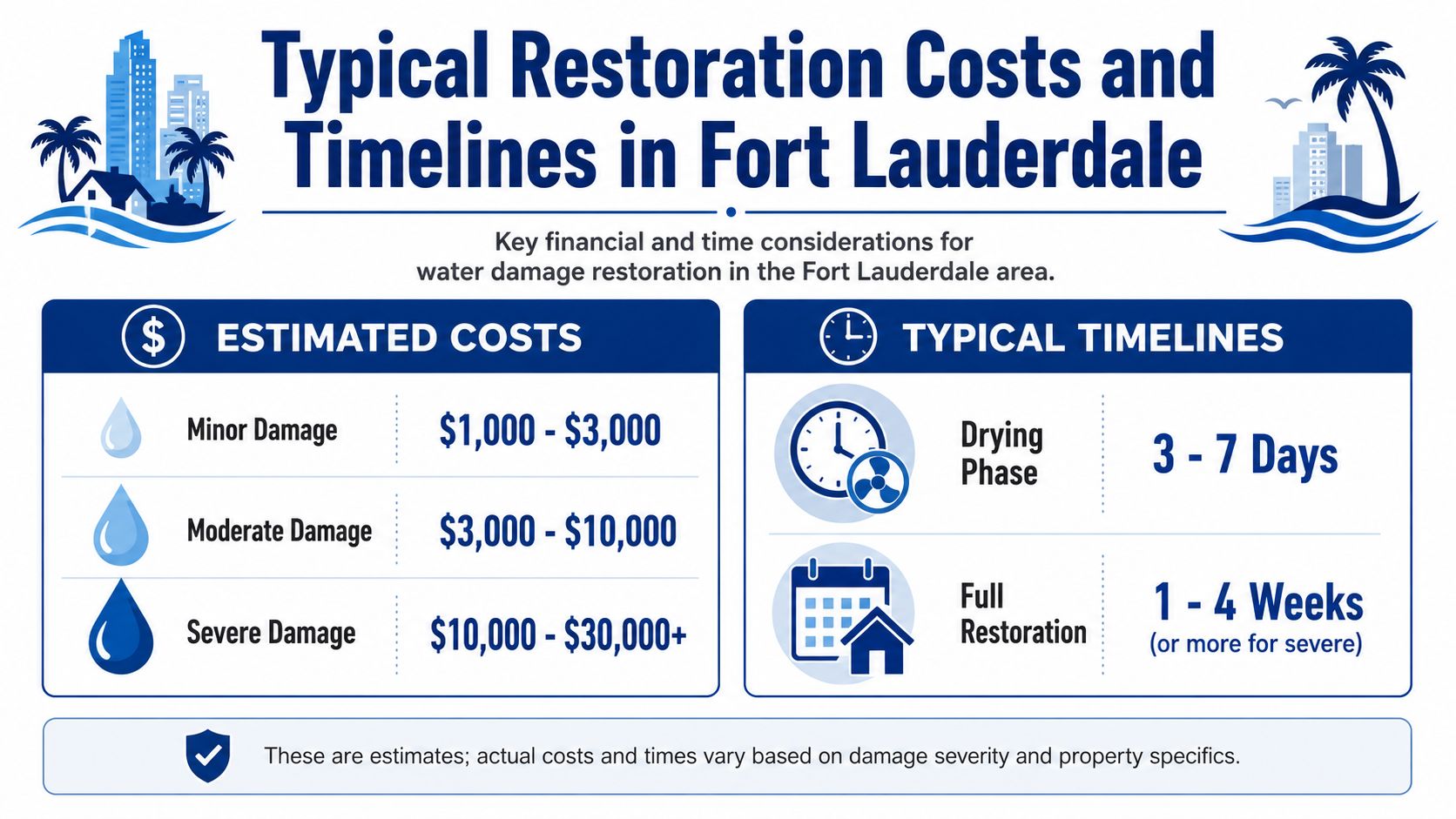
Typical Restoration Costs and Timelines in Fort Lauderdale
This is the question everyone asks first, even if they don't say it out loud. How bad is this going to cost me, and how long will my house be disrupted?
The honest answer is that Fort Lauderdale water losses vary wildly because the source, contamination level, and materials involved change everything. A small clean-water leak is one type of job. Hurricane-related flooding is a different financial category.
What Fort Lauderdale homeowners typically pay
According to this Fort Lauderdale water damage cost breakdown, the average total cost ranges from $3,000 to over $20,000, while severe storm flooding or hurricane-related damage can run from $15,000 to $50,000+. The same source states that standard repairs from burst pipes or appliance failures typically fall between $11,500 and $34,000, and complex projects involving saltwater contamination, HVAC damage, or extensive mold remediation can escalate to $28,000–$90,000+.
That source also breaks out some individual line items. Water extraction alone ranges from $1,000–$4,000, drying and dehumidification from $1,000–$3,000, and mold remediation from $500–$6,000 in the Fort Lauderdale market.
If you want a general framework for comparing categories of repair spending, this home water damage repair cost guide helps you think through where mitigation ends and rebuild costs begin.
Why one estimate is modest and another is brutal
Three factors usually drive the gap:
- Source of the water. A clean supply line loss is not priced like floodwater or sewage.
- Material saturation. Tile over concrete behaves differently than engineered wood, drywall, insulation, or built-in cabinets.
- Hidden spread. Water that ran under flooring, behind vanities, into closets, or through wall cavities costs more because it takes more labor and more demolition to reach.
A fourth factor matters a lot in Fort Lauderdale. Coastal exposure can complicate the loss even when the visible damage looks limited.
Timelines you should expect
The emergency response starts immediately once a crew is dispatched. After that, the job usually breaks into phases rather than one uninterrupted process.
| Phase | What happens |
|---|---|
| Emergency mitigation | Source control, extraction, safety steps, setup |
| Drying period | Equipment runs while technicians monitor moisture |
| Repair and rebuild | Drywall, flooring, paint, trim, cabinets, and related work |
For homeowners, the practical takeaway is simple. The water may be removed quickly, but the property isn't "back to normal" on the same schedule. Drying takes time. Rebuild takes longer. Storm losses and contaminated losses stretch the timeline even further because the scope is broader and more materials need to be replaced.
Cost reality: Waiting to call doesn't save money. In South Florida, delay often turns a manageable dry-out into demolition, decontamination, and reconstruction.
Navigating Water Damage Insurance Claims in Florida
Most Fort Lauderdale homeowners think the hard part is the drying job. Often it isn't. The harder part is getting paid correctly.
The biggest trap is assuming the contractor estimate and the insurance paperwork are the same thing. They are not. If you miss that distinction, your claim can stall or settle low even when the damage is real and well documented.
The proof of loss issue you can't ignore
Many Fort Lauderdale insurance claims are underpaid because homeowners don't understand the Proof of Loss requirement. Insurers often require this formal document with specific deadlines before releasing funds, and it's separate from the contractor's estimate. Relying only on the adjuster's numbers without that formal submission can lead to payment below the actual repair cost, as explained in this Fort Lauderdale emergency water cleanup and claims guide.
That matters because a restoration estimate tells you what the job may cost. A Proof of Loss is part of the claim process. One helps define scope. The other affects whether funds move.
What you should do from day one
If you want a fairer shot at full payment, treat the claim like evidence management.
- Photograph everything early. Don't just shoot the puddle. Get walls, flooring transitions, cabinets, furniture, exterior points of entry, and damaged contents.
- Keep a communication log. Names, dates, phone calls, emails, claim numbers, promises made, and documents sent.
- Save every invoice and work authorization. That includes mitigation, pack-out, temporary repairs, hotel stays if applicable, and moisture-related demolition.
- Request an independent contractor estimate. Do not rely exclusively on the adjuster's first number.
- Read every deadline notice from the insurer. Missing paperwork dates can do real damage to your claim.
A blunt opinion on adjuster numbers
Don't assume the first insurance estimate is complete. Sometimes it's reasonable. Sometimes it misses scope, omits materials, or undervalues what proper drying and reconstruction require.
That's why passive homeowners get hurt. They trust the process without verifying the paperwork. In Florida water losses, especially storm-related events, that's a mistake.
Your contractor's estimate is a pricing document. Your Proof of Loss is a claim document. Treating them like the same thing can cost you real money.
If the loss is large, contamination is involved, or the insurer's scope looks thin, slow down and review every line before signing off.
Fort Lauderdales Unique Risks Hurricanes and Saltwater
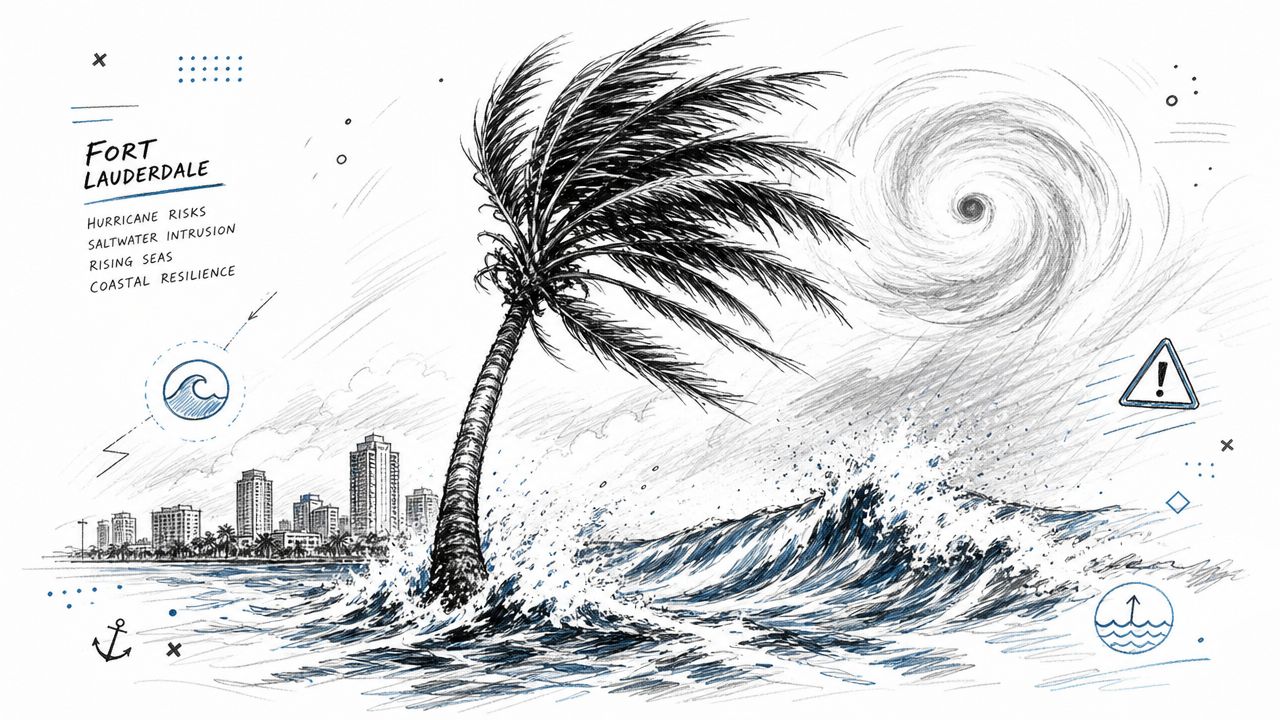
Generic water damage advice falls apart on the coast. Fort Lauderdale properties face wind-driven rain, storm surge, flood exposure, and saltwater intrusion. Those aren't small variations on the same problem. They change the entire restoration strategy.
Freshwater and saltwater are not the same loss
A lot of homeowners use the phrase "water damage" as if all water behaves the same. In coastal Fort Lauderdale, that thinking causes bad decisions.
According to this Fort Lauderdale saltwater restoration overview, saltwater intrusion from storm surge can push restoration costs into the $28,000–$90,000+ range. The reason is simple. Salt residue keeps attacking the property after visible moisture is gone. It can corrode structural metals and destroy HVAC systems long after drying, which forces more aggressive decontamination and replacement.
That is why a house affected by ocean-driven flooding can require far more removal than a house hit by interior freshwater from plumbing.
What changes after a storm surge
Saltwater jobs often require tougher decisions about salvage.
- Drywall and insulation may need broader removal because contamination and residue are harder to manage.
- HVAC components can become unreliable even if they appear operational at first.
- Metal framing, connectors, fasteners, and other structural elements may need longer-term monitoring because corrosion doesn't stop just because the room feels dry.
- Contents cleaning gets more selective. Some items can be restored. Many cannot.
Homeowners often get burned by low-end contractors. They dry the surface, spray a product, and call it finished. That approach is reckless in coastal flood losses.
Insurance and source of water
Fort Lauderdale homeowners also need to understand a basic policy reality. The source of the water can affect which policy applies and how the claim gets handled. Interior plumbing failures, roof leaks, rainfall intrusion, and surge-related flooding don't always fall into the same bucket.
You don't need to become a policy expert in a crisis. You do need to stop assuming your standard homeowners policy treats every water event the same way. Review the policy language, especially if your property sits in a flood-prone or coastal area, and ask direct questions instead of broad ones.
After a hurricane or surge event, ask two separate questions immediately. What is the contamination category, and which policy is expected to respond?
Local advice that actually matters
For water damage restoration Fort Lauderdale homeowners should be especially skeptical of "dry it and paint it" solutions after coastal storms. South Florida buildings take a beating from moisture, heat, and salt. Shortcuts don't stay hidden for long.
If you're near the coast and water entered from surge or ocean-driven flooding, assume the loss is more serious than it first appears. That's the safer assumption.
Choosing Your Restoration Partner and Final Steps
Once the emergency is stabilized, your next decision is who gets trusted with the property. Choose badly and you'll deal with missed moisture, insurance headaches, and repairs that don't hold up.
What to check before hiring
Use a short filter and stick to it.
- Certification and training. Ask if the company follows IICRC-based water restoration practices.
- Florida licensing and insurance. Verify they're properly credentialed for the work they're doing.
- Local response capability. A real local presence matters when weather events hit multiple neighborhoods at once.
- Emergency availability. Water losses don't wait for business hours.
- Clear scope explanation. They should tell you what can be dried, what must be removed, and why.
- Insurance documentation process. Ask how they document moisture, demolition decisions, and line-item scope for claim support.
- Saltwater experience. In Fort Lauderdale, this is not a niche question.
Questions worth asking on the first call
Don't ask only, "How fast can you get here?" Ask better questions.
What equipment will you likely bring? How do you determine whether drywall, insulation, or flooring can be saved? Have you handled storm surge or saltwater contamination before? Who documents the loss for insurance? What happens if they find hidden moisture after demo starts?
The right contractor won't sound irritated by those questions. They should welcome them.
A water loss feels overwhelming because everything hits at once. Safety, cleanup, money, disruption, and uncertainty. But the path forward is straightforward when you act quickly, understand the type of loss, document aggressively, and hire people who know Fort Lauderdale conditions instead of reciting generic cleanup scripts.
If you're dealing with an active leak, flood, or hidden moisture issue in Central Texas, RestoTek TX offers 24/7 help with inspection, water extraction, structural drying, microbial prevention, and reconstruction. Joan and Josh Garza and their team focus on practical guidance during stressful property losses, so homeowners in Georgetown and Austin can move from emergency response to full repair with one coordinated partner.