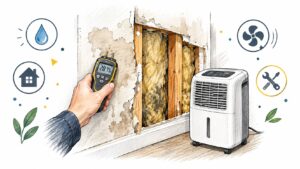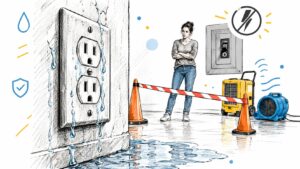
A supply line drips behind the refrigerator. A storm pushes water under a door threshold. By the time you notice, the vinyl still looks fine, which is exactly why vinyl flooring water damage catches so many homeowners off guard. The surface can look calm while moisture is already working below it.
That hidden problem matters because vinyl is usually sold as tough and water-resistant, but the floor system under it is still vulnerable. Once water slips through a seam, edge, appliance footprint, or damp slab, it can sit where you can't see it and start loosening the bond, stressing the locking system, or soaking the subfloor. Restoration guidance warns that prolonged exposure can still lead to warping, seam failure, and subfloor damage, so the question isn't just whether the top looks dry, it's where the water went and how long it stayed there. Vinyl flooring water-damage guidance
The good news is that you don't need to guess blindly. If you understand how vinyl fails, what to check first, and when repair makes sense versus replacement, you can make a smarter call fast. That speed matters because the best chance to save both the floor and the structure is to act before hidden moisture turns into a bigger repair.
Introduction When Water Finds Your Vinyl Floor
A Georgetown homeowner wakes up to a soft smell near the kitchen and a faint dark line by the dishwasher. The vinyl plank floor still feels firm underfoot, so it is easy to assume the mess stayed on top. Later, when a corner starts lifting and the baseboard feels damp, the issue becomes clear, water did not stop at the surface.
That confusion is common with vinyl flooring water damage because vinyl looks like one system on the outside, but it behaves like several layers working together. The wear layer may shrug off a spill, yet the seams, edges, and the floor underneath can still absorb trouble. Once moisture gets trapped below the planks, the damage often stays hidden until odor, lifting, or buckling gives it away.
Why the surface can fool you
Vinyl's reputation comes from everyday resilience. A splash from a mop bucket or a pet bowl usually does not faze it, which is why so many homeowners trust it in kitchens, baths, and laundry rooms. The trouble starts when the water is no longer a quick spill and becomes a leak, overflow, or storm intrusion.
A floor can look normal and still be carrying moisture underneath. That hidden layer behaves like a shallow pocket under the planks, where water can linger against the underlayment or subfloor even after the top feels dry. If the water keeps feeding that cavity, the problem shifts from a surface mess to a floor-system problem.
Practical rule: if the source kept feeding water, assume the floor system got more than the visible layer shows.
This guide shows how that hidden cavity forms under vinyl, why different water types change the outcome, and where the line sits between drying, partial salvage, and full replacement. It also explains what to document for insurance and when a restoration crew should take over. For a nearby first-response reference, this Central Texas water damage checklist can help you stay organized while the clock is still running.
Why Vinyl Is Surface Resistant But Not Truly Waterproof
Vinyl flooring handles day-to-day spills well at the surface, but the full floor system can still be vulnerable underneath. The top wear layer resists moisture like a rain jacket, while seams, edges, and the layer below can still let water work its way into hidden spaces.
Where water sneaks in
Water does not need a large opening. It can move through plank seams, along baseboards, around appliance footprints, or upward from a damp slab below. Once it gets past the visible surface, it can settle against the underlayment and subfloor, where it stays out of sight and takes much longer to dry. Water under vinyl plank flooring explained
That hidden wet cavity is why a quick visual check can miss the problem. The floor may feel dry to the touch while moisture remains underneath. In an adhesive-backed system, trapped water can weaken the bond and cause edges to lift. In a floating floor, the locking joints can begin to stress and separate as the planks move against one another.
Why tools matter more than your eyes
A visual inspection still matters, but it cannot tell the whole story. Moisture meters can show whether the flooring or subfloor is still holding water, and thermal imaging can reveal cooler, damp areas before any material comes up. Restoration work often begins with those tools because hidden moisture is easy to miss by sight alone.
A floor that looks clean and flat can still hide a problem underneath.
The phrase “waterproof vinyl” usually describes how the surface handles spills, not how the entire assembly behaves after water gets below it. That distinction matters because the floor, underlayment, and subfloor act together, almost like rooms in the same house. If water gets past one weak point, it can stay trapped where the eye cannot see it, and the repair decision changes with it.
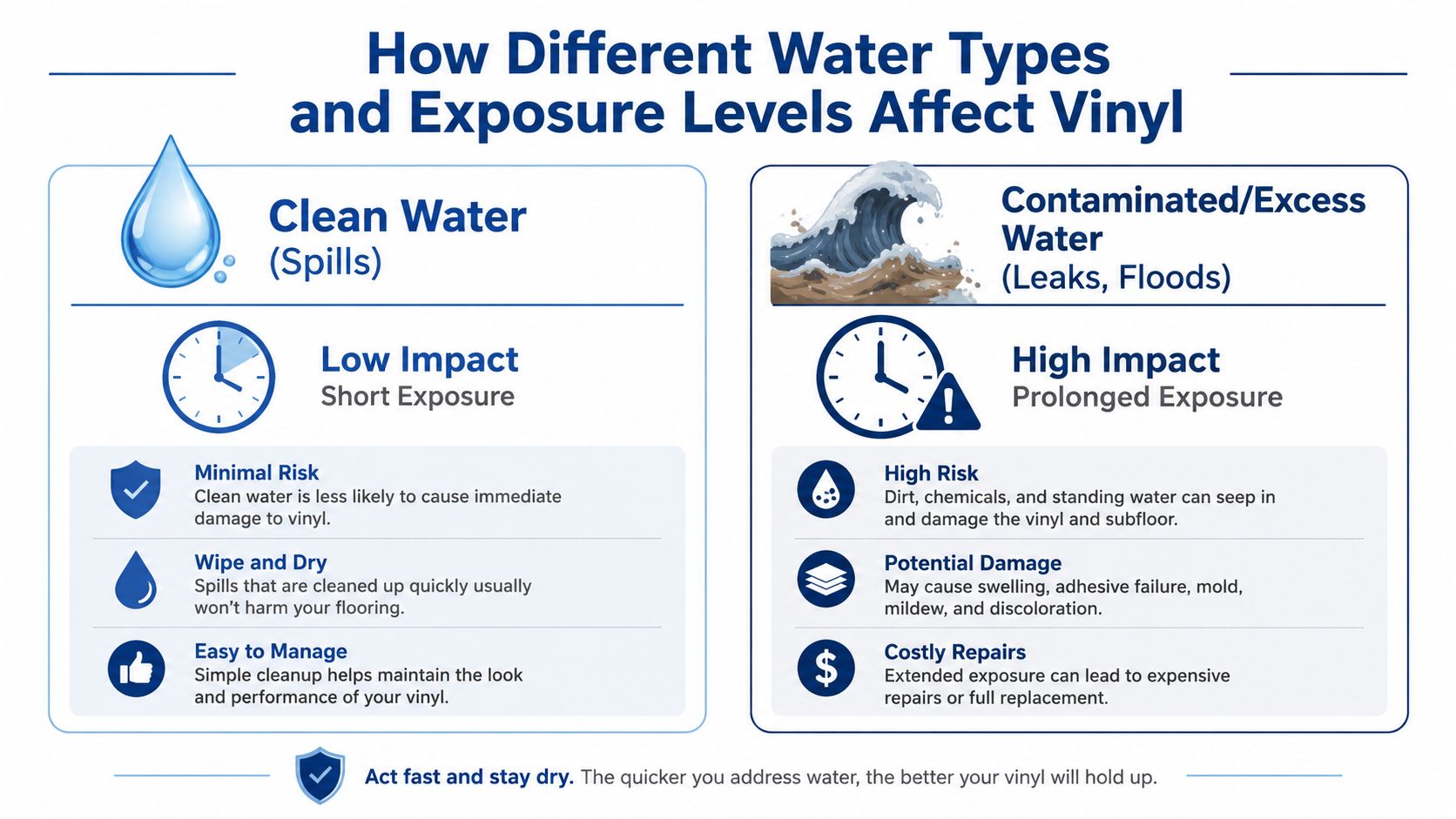
How Different Water Types and Exposure Levels Affect Vinyl
The type of water changes the risk more than many homeowners expect. A clean spill that gets wiped up right away is a very different situation from a dishwasher leak, sewer backup, or storm runoff. Time also changes the outcome, because the longer moisture stays in place, the more opportunity it has to move under the planks and into the subfloor.
Clean water versus contaminated water
A short clean-water event has the best chance of being salvaged, especially if the subfloor stayed dry. That is the most forgiving case because the water has not carried debris or contamination into the flooring system. ServiceMaster's guidance separates clean water under 24 hours from more serious contamination-heavy events, and it notes that Category 2 or 3 water such as dishwasher leaks, sewer backups, and storm runoff generally points toward full removal. ServiceMaster on vinyl salvage versus replacement
That line matters because clean water can sometimes be dried before it changes the flooring system much. Contaminated water brings a sanitation problem with it, and waiting does not reduce that risk.
When subfloors become the main failure point
The visible floor may be vinyl, but the failure often begins below it. Wet concrete, groundwater vapor, crawlspace humidity, and installation over a damp substrate are common sources of trouble, especially in slab homes. Once moisture gets beneath the flooring, it can lead to swelling, buckling, layer separation, mold, and odor.
Luxury vinyl plank improved everyday water tolerance, which is part of why so many homeowners chose it in the first place. That improvement did not remove the need for fast drying after a leak or flood. Time still matters because water under vinyl can stay hidden long after the surface looks normal.
A simple severity map
- Low concern: a small, clean spill that was found and dried quickly.
- Moderate concern: a leak that sat long enough to reach seams, edges, or a threshold.
- High concern: any contaminated water, multi-room event, or moisture that reached the subfloor.
That last category usually calls for help from a restoration professional, because the surface story and the hidden story are no longer the same.
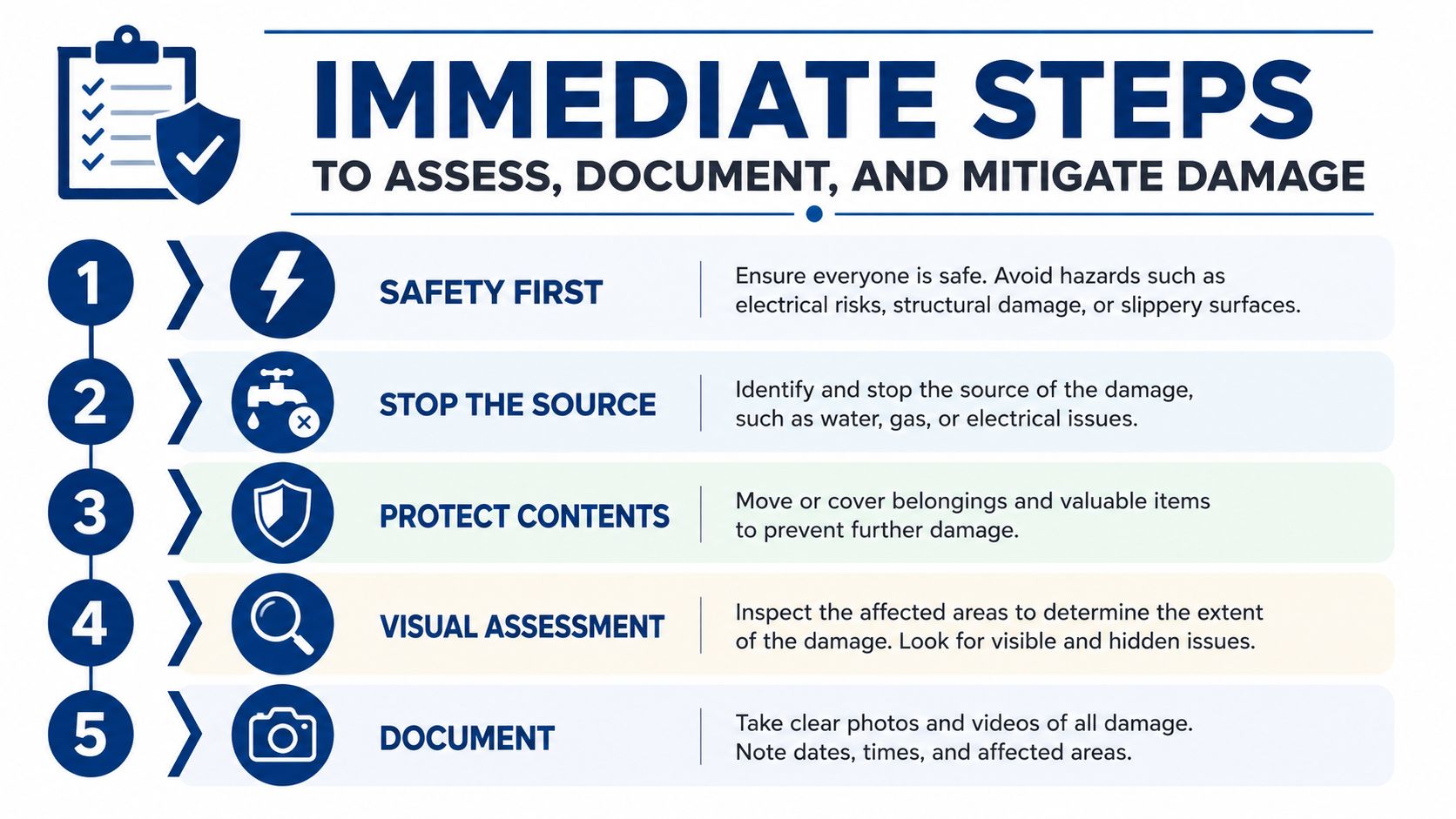
Immediate Steps to Assess Document and Mitigate Damage
Start with safety, not with pulling anything apart. If water is near outlets, appliances, or a breaker panel, keep people out of the area until the source is stopped and the space is safe to enter. Then shut off the leak if you can do that without putting yourself at risk.
The first clue is often at the edge of the room. Curled plank corners, opened seams, soft spots near cabinets, or a dark line along the baseboard usually mean moisture has moved under the vinyl, where the problem can spread in the hidden cavity below the surface. If the source is still active, stop that first, because drying while water is still entering the floor only stretches out the damage.
Take photos before anything is moved. Capture the floor, nearby walls, thresholds, and appliances, then write down when you noticed the leak and what you saw first. Those details help later if you need an insurance claim, especially when the top layer looks better than the underside.
Document before you disturb it. Once planks come up, the original pattern of water spread is harder to prove.
How to mitigate without making things worse
Pull back rugs and anything that traps moisture. Increase air movement, but do not cover the area with fresh flooring or heavy materials. If the vinyl is over a known wet area, the safer move is often to have it inspected before anything goes back down.
For a practical homeowner sequence that fits a Central Texas loss, this immediate water-damage guide is a useful companion. It follows the same logic restorers use, stop the source, protect contents, inspect the structure, and document the scene before cleanup changes it.
What not to do
- Don't trap the moisture: avoid putting rugs, mats, or furniture pads back too soon.
- Don't assume a dry surface means a dry floor: water can still be below the planks.
- Don't rush to glue or reset planks: reinstalling over damp material can lock in the problem.
The first hours are about control and evidence. If you handle those two things well, the repair decision becomes much clearer.
Repair or Replace How to Make the Right Call for Vinyl
The decision gets clearer when you stop judging the floor by the top layer alone. Vinyl can hide a lot at the surface, while the question sits underneath, in the plank system and the subfloor cavity below it. If those layers stayed clean, dry, and structurally sound, repair may still be reasonable. If water changed the shape, smell, or condition of any of those layers, replacement starts to make more sense.
When repair still has a chance
Repair is most realistic when the water was clean, the exposure was brief, and the subfloor stayed dry. In that situation, a localized section may be removed, dried, and put back or replaced without tearing out the whole room. That approach works best when the planks are still flat, the seams remain tight, and there is no lingering odor.
A small, isolated problem can sometimes stay a small problem. If the locking system or adhesive was affected only in one area, targeted replacement may work, but the floor still needs careful handling because one warped plank can stress the surrounding field. When the subfloor remains dry, the odds of a repairable outcome improve.
When replacement becomes the safer choice
Replacement becomes the stronger option when the water was contaminated, sat for a long time, or caused visible change in the floor system. Buckling, separation, lifted edges, and persistent odor are warning signs that water stayed long enough to affect more than the surface finish. Once moisture reaches the subfloor and spreads, a patch often leaves part of the problem behind.
Practical rule: if the subfloor is wet, the floor system is not cured just because the top looks normal.
That is why removal often starts at the damaged area and expands until the exposed structure can dry properly. As noted earlier, once moisture is found beneath vinyl, targeted removal plus structural drying of the exposed subfloor is usually required, and slab drying can take about 3 to 5 days under commercial air movement and dehumidification. Vinyl floor water-damage drying guidance
A side-by-side way to think about it
| Repair leans possible | Replacement leans safer |
|---|---|
| Clean water, brief exposure | Contaminated water, long exposure |
| Subfloor stayed dry | Moisture reached the subfloor |
| Flat planks, tight seams | Buckling, separation, lifted edges |
| No ongoing odor | Persistent odor or microbial concern |
If you are unsure which side you are on, the subfloor usually gives the answer. Once that layer has been affected, the job shifts from cosmetic flooring repair to structural drying and rebuild planning.
Drying Timelines Cost Factors and Central Texas Considerations
Drying time starts after the wet material is exposed, not after the first puddle was noticed. That's why a floor that looked “okay yesterday” can still need several days of active drying once the planks are lifted and the structure is opened. The hidden cavity under vinyl keeps the timeline moving even when the room seems calm.
What extends the drying job
The biggest variable is how much water reached the assembly and where it went. A small, localized spill dries very differently from water that spread under multiple rooms or ran into a slab edge. Containment needs, the amount of demolition, and how much reconstruction follows also shape the overall scope.
Homes in Georgetown and Austin often sit on slab-on-grade construction, which means moisture can be tied to concrete and slow to release. Heavy rain and flash flooding can complicate the picture further, especially when groundwater vapor or crawlspace humidity keeps feeding the problem. In those cases, natural drying by opening windows usually isn't enough.
What costs tend to depend on
Restoration pricing usually tracks the size of the affected area, the water category, the amount of removal needed, and whether drying equipment has to run in adjacent spaces. It also changes if cabinets, trim, or baseboards have to be pulled for access. Once the structure is open, the rebuild scope becomes a separate layer of work.
The middle of the process often looks like this: extraction, removal of affected vinyl, drying of the exposed subfloor, monitoring moisture readings, and then reconstruction. That sequence is similar whether the loss came from a leak, overflow, or storm intrusion. For a local overview of the structural side of the process, this Central Texas structural drying guide fits the same recovery logic.
Drying is not just about moving air. It's about removing hidden moisture from the layers you can't see.
If the floor is over concrete, the slab itself may need attention before anything new goes down. If the moisture sits in the structure, reinstalling vinyl too early can trap the next problem behind a fresh finish.
Insurance Claims and When to Call Professional Restoration in Georgetown and Austin
Insurance companies respond better to clear records than to general descriptions. Photos before removal, a timeline of when the leak started, moisture readings if you have them, and notes about what was cleaned or lifted all help show the scope of loss. If you can prove the floor was actively affected and not just cosmetically marked, your claim file is much stronger.
When a pro should step in
Call a restoration team when the event covers more than one room, when the water is contaminated, when the odor won't go away, or when you suspect moisture below the planks. Those are the situations where hidden damage becomes likely and cleanup alone won't solve it. A full-cycle provider can inspect, extract, dry, treat for microbial concerns, and rebuild the affected area.
RestoTek TX handles that full path for homes and properties in Georgetown and Austin, including inspection, water extraction, structural drying, microbial prevention, and reconstruction. If your claim is moving at the same time, their home insurance water-damage claim guide can help you think about documentation before the adjuster visit.
What to ask for next
- Ask for a moisture-based assessment: visual checks alone don't show what's under vinyl.
- Ask what needs removal now: delayed access can let hidden moisture spread.
- Ask how rebuild will be staged: a clear plan helps you compare estimates fairly.
If you're standing in a damp kitchen or hallway right now, don't wait for odor or buckling to tell you the story. Get the source stopped, document the scene, and bring in a team that can open the floor, dry the structure, and help you decide whether the planks can be saved or should be replaced.
RestoTek TX helps Georgetown and Austin homeowners handle water losses from the first inspection through structural drying and rebuild, which is exactly what vinyl floor damage often needs once moisture gets under the surface. If you're dealing with a leak, overflow, or hidden damp subfloor, visit RestoTek TX to request help and get the recovery process moving before secondary damage sets in.