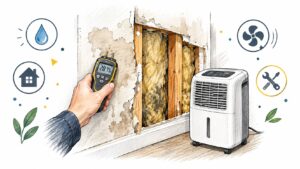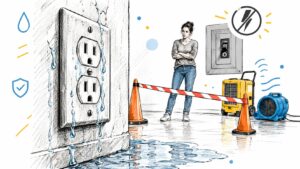
Water damage repair usually falls somewhere between $1,384 and $6,384, with a national average of $3,867 based on 2026 pricing benchmarks from Palm Building. That range is wide for a reason. The total price almost always comes down to whether you're paying only for mitigation first, or for both mitigation and the repairs that come afterward.
If you're reading this with wet baseboards, a warped floor, or a ceiling stain that suddenly got bigger, you're probably asking the same question every homeowner asks first. How bad is this, and what is it going to cost me?
The stressful part is that most price guides lump everything together. They give you one broad number and leave out the part that catches people off guard later. Drying the structure and stopping further damage is one phase. Putting the house back together is another. Those are billed differently, scoped differently, and often handled differently with insurance.
That distinction matters in Georgetown and Austin. In Central Texas, water losses don't always stay obvious. Moisture can move into wall cavities, under flooring, and into insulation long before a room looks seriously damaged. A homeowner may think the problem is a simple cleanup bill, then get surprised when the reconstruction estimate arrives days later.
A clear estimate starts by separating those two halves of the job. Once you understand that split, the water damage repair price makes a lot more sense.
Understanding Your Water Damage Repair Price
A homeowner wakes up to a wet kitchen, swollen baseboards, and water creeping into the next room. The first question is always the same. What is this going to cost?
The honest answer is that water damage repair price usually starts as two numbers, not one.
The first covers emergency mitigation. That includes extracting water, setting drying equipment, checking moisture levels, and taking steps to keep the damage from spreading. The second covers reconstruction if drywall, flooring, cabinets, trim, or paint cannot be saved and need to be rebuilt or replaced.
That split is the part many homeowners never get told upfront, and it is why the final bill can feel confusing.
Why broad price ranges lead to bad expectations
A lot of online guides give one general range and leave it there. In practice, restoration jobs are usually scoped in phases. As Hays + Sons explains in its 2026 cost discussion, homeowners often see mitigation priced separately from reconstruction, and those categories can be far apart in cost.
That difference changes the conversation. A drying crew may be able to stabilize the structure quickly, but the rebuild price depends on what materials were affected, what has to be removed, and what can match the existing finishes.
I tell homeowners to stop asking for one all-in number on the first call. Ask how much is for drying, and how much is for repair work that may be scoped after the structure is dry.
What homeowners should expect emotionally and financially
The early part of the job moves fast because it has to. Water keeps wicking into drywall, insulation, subfloors, and cabinets until the source is stopped and the area is dried under controlled conditions. If you want to see what that process involves, structural drying after water intrusion in Central Texas gives a clear picture of the work behind the first invoice.
That first invoice is often the one insurance pays the closest attention to, because mitigation is about preventing additional damage.
Reconstruction is different. Once materials are dry enough to inspect properly, the scope may expand. Cabinet boxes can swell. Laminate flooring can release at the seams. Drywall may test dry but still need cuts because of contamination or visible damage. Matching existing paint, trim profiles, or older flooring can also raise the price in ways a homeowner would not see on day one.
Here is the simplest way to read the bill:
| Part of the job | What it does | Why it shows up separately |
|---|---|---|
| Mitigation | Dries and stabilizes the property | It is emergency work aimed at stopping further damage |
| Reconstruction | Repairs or replaces damaged materials | It restores the home after the drying phase confirms what can and cannot be saved |
That framework is useful in a stressful moment. Instead of asking for one mystery total, ask which part of the estimate is for drying and which part is for rebuild.
Mitigation vs Reconstruction The Two Halves of Your Bill
A homeowner often feels the first wave of relief when the water is out, the drying equipment is running, and the house no longer smells wet. Then the second estimate shows up. That is usually the moment the pricing gets confusing.
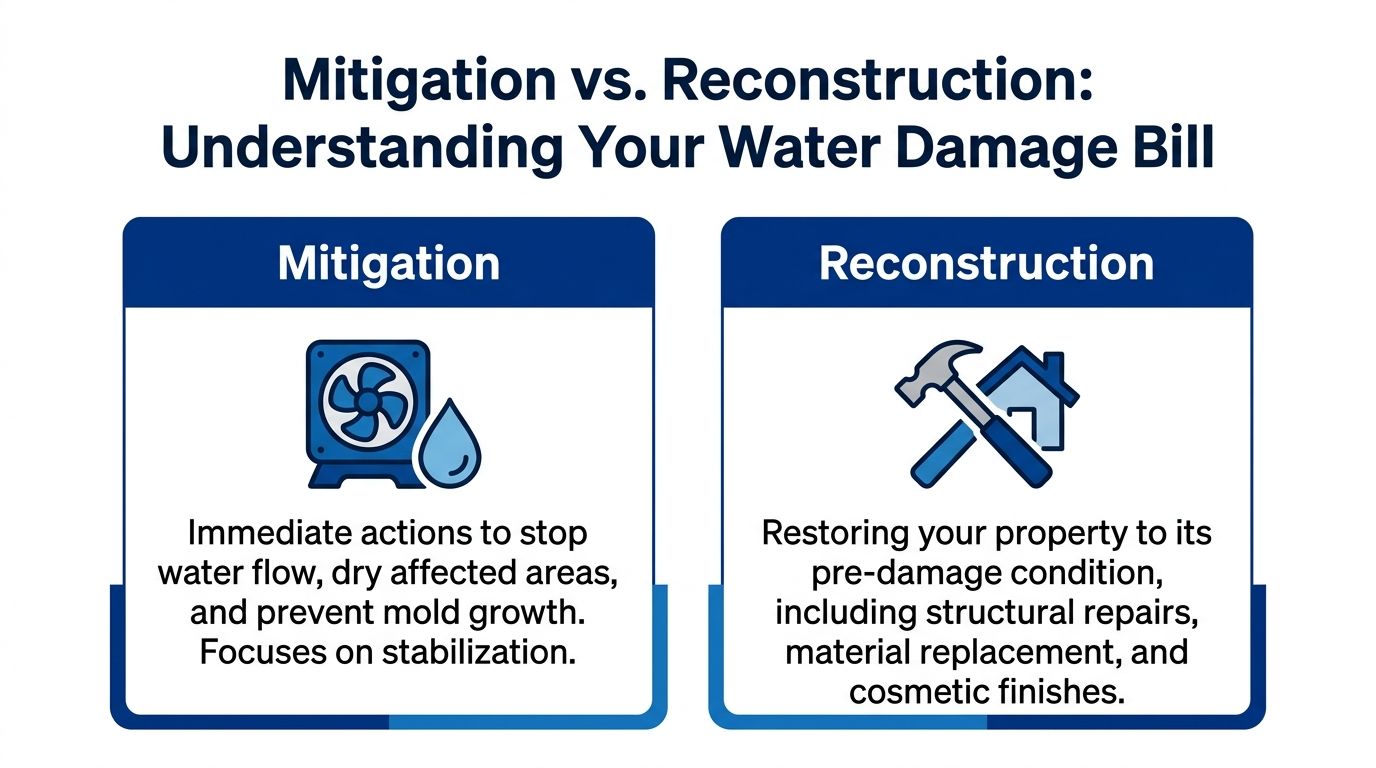
The reason is simple. Water damage work is usually split into two separate phases, and they answer two different problems. Mitigation is the emergency response that stops additional damage. Reconstruction is the repair work that puts the home back together after the structure is dry and the true scope is visible.
What mitigation includes
Mitigation starts once the source is stopped and the area is safe to enter. It usually covers water extraction, equipment setup, dehumidification, antimicrobial treatment when needed, and moisture checks over several days.
This part of the bill is about stabilization, not finish repair. Crews are trying to save as much of the structure as possible, document moisture conditions, and keep the loss from spreading into walls, flooring, insulation, or cabinets. Homeowners who want to see what that work looks like can review structural drying in Central Texas after water intrusion.
What reconstruction includes
Reconstruction starts after drying confirms what can stay and what has to go. That scope can include drywall replacement, texture, paint, baseboards, flooring, cabinet repairs, insulation, and finish carpentry.
Hidden costs frequently emerge, especially in older homes or rooms with matched finishes. A wall cut for drying may need patching and paint corner to corner for a clean blend. One damaged section of flooring may force a larger replacement if the product is discontinued or the material cannot be woven in cleanly. Cabinets are another common surprise. The face may look acceptable on day one, but swelling, delamination, or loss of alignment can show up after the material dries.
Drying makes the home stable. Reconstruction makes it livable again.
Side by side cost comparison
Here is the clearest way to read a water damage estimate:
| Phase | Typical services | What you are paying for |
|---|---|---|
| Mitigation | Water extraction, drying equipment, antimicrobial treatment, moisture monitoring | Emergency work that limits further damage and documents drying |
| Reconstruction | Drywall, flooring, paint, trim, cabinet repair, rebuild work | Labor and materials needed to restore the finished space |
Where homeowners get surprised
In practice, the first invoice is often tied to mitigation, and insurance may review that portion differently because it is aimed at preventing additional loss. The second invoice is reconstruction, which depends on what the drying phase uncovers and what materials can be restored.
That handoff needs to be explained early. A transparent contractor separates the drying scope from the rebuild scope before the first invoice goes out. That early conversation makes the water damage repair price easier to follow because the homeowner understands why the bill has two parts.
Key Factors That Drive Your Final Water Damage Price
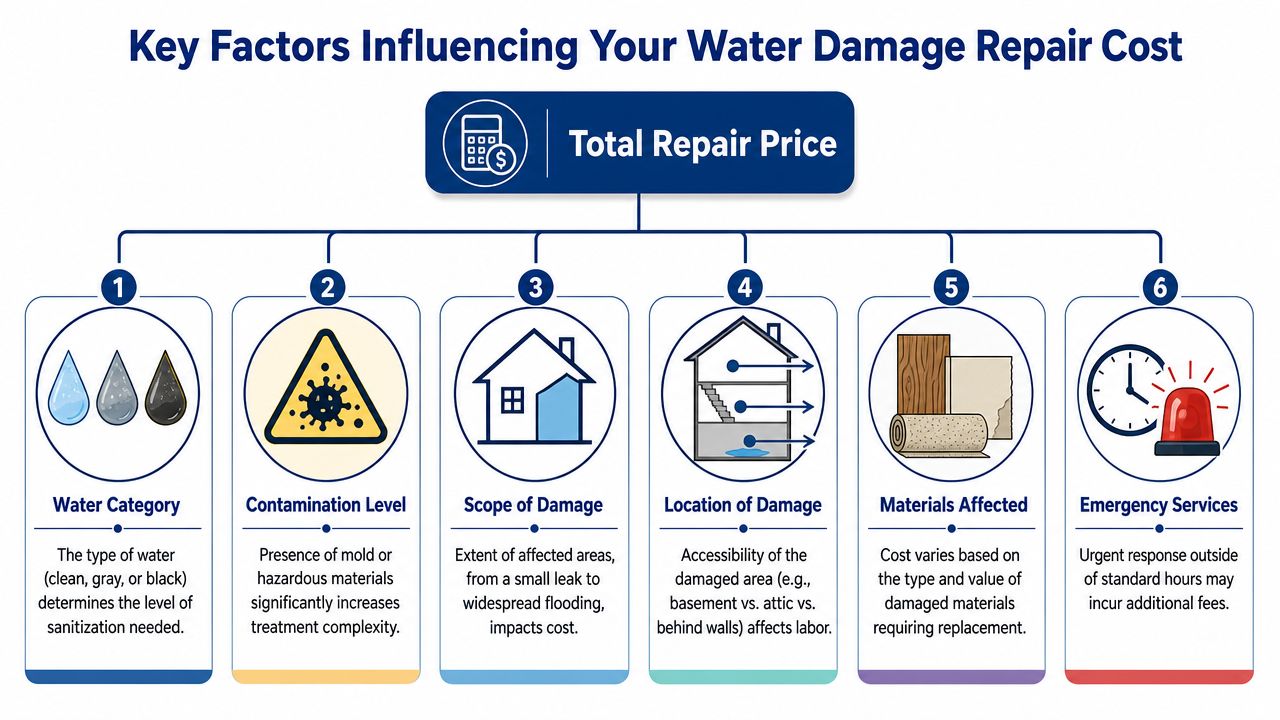
Two homes can have the same amount of visible water and end up with very different invoices. The difference usually comes from contamination, where the water traveled, and what materials it touched.
Water category changes everything
The biggest cost driver is the category of water involved. According to Homewyse's May 2026 water damage repair cost data, standard repair averages $20.58 to $37.63 per square foot, and Category 3 sewage backups routinely total $7,000 to $30,000+.
That jump makes sense in the field.
Clean water from a fresh supply line leak may allow more materials to be dried and preserved if crews respond quickly. A sewage backup is different. It usually requires containment, sanitization, removal of porous materials, and more extensive rebuild work because the issue isn't only moisture. It's contamination.
Materials and access shape labor
Water behaves differently on tile than it does in engineered wood, carpet pad, drywall, insulation, and cabinetry. Non-porous surfaces may clean up more easily. Porous materials absorb, wick, swell, and trap moisture where you can't see it.
Accessibility matters too. An open living room is one thing. A tight wall cavity behind cabinets, a shower-adjacent chase, or a cramped crawlspace takes more labor and often more demolition to inspect and dry correctly. When a homeowner wants to understand whether a hidden plumbing issue may be enlarging the affected area, it helps to review what leak detection services typically involve.
Scope grows when moisture is hidden
Visible damage isn't always the full scope. Water can run under underlayment, move along framing, and collect in insulation. A ceiling stain may represent a small localized issue, or it may point to a wider overhead migration path.
That is why experienced crews use moisture meters and thermal imaging as decision tools instead of relying on what the eye can see. The bill changes when technicians discover that the wet area extends beyond the obvious room boundary.
Field note: The cheapest-looking water loss often becomes the expensive one when nobody checks behind the first dry-looking wall.
Common factors that move the price up
Some variables affect nearly every estimate:
- Higher contamination: Clean water losses are usually simpler than gray or black water events because sanitation and disposal requirements change.
- More rooms involved: Damage that crosses from one room into adjoining areas usually expands both drying and repair scope.
- Sensitive materials: Hardwood, built-ins, insulation, drywall, and cabinets often require more careful decisions than tile or sealed concrete.
- Difficult access: Behind walls, beneath flooring, in attics, and inside cabinetry, labor gets slower and more technical.
- Hazard findings: If the project uncovers mold concerns or regulated materials, the process can require different handling before repairs continue.
Why estimates can change after day one
Homeowners sometimes worry when the initial estimate gets revised. Revisions aren't always a red flag. In restoration, they often reflect new information found after controlled demolition or moisture mapping.
A proper estimate should stay tied to observed conditions, not guesswork. If a crew opens a wet wall and finds saturation extending farther than expected, the scope should change. That's not upselling. That's documenting the actual condition of the structure.
The point isn't to chase the lowest starting number. It's to get an estimate grounded in the actual category of water, actual material loss, and actual repair needs.
How Insurance and Emergency Response Affect Your Cost
It is 10:30 at night, a supply line has let go under a sink, and water is already creeping into the next room. Homeowners often ask the same question in that moment. Do I pay for emergency service now, or wait until morning and deal with repairs later?
In many losses, that decision affects the final bill more than the first trip charge. Insurance may help with the drying side of the job, but the larger surprise usually shows up later when reconstruction starts and damaged materials have to be replaced.

What insurance usually responds to first
Carriers typically expect prompt mitigation. That means extraction, drying equipment, monitoring visits, moisture documentation, and steps taken to prevent the loss from spreading. Those services often align more closely with what insurance is set up to review and approve because they are tied to stopping further damage.
Reconstruction is a different conversation. Drywall, flooring, cabinets, trim, paint, and finish work can involve allowances, exclusions, depreciation, or scope disputes. That is where homeowners get caught off guard. They hear that the claim is covered, but what is covered first is often mitigation, not every repair decision that follows.
If you want a rough early reference before a site visit, a water damage repair cost calculator can help frame the likely range, but it should never replace a documented inspection.
Why after-hours response can save money
Water keeps moving until someone stops it, extracts it, and starts drying the structure. According to HomeGuide's water damage restoration cost data, costs rise sharply when a clean-water loss is left long enough to become more contaminated or to trigger mold and structural deterioration.
For this reason, after-hours service often makes financial sense even when the emergency visit feels expensive.
I have seen small overnight losses turn into flooring replacement, baseboard replacement, insulation removal, and extra drywall work because drying started too late. The labor bill for an urgent response is real. The rebuild bill after a delay is usually worse.
Where insurance and homeowner expectations separate
Homeowners usually want one clear number. Insurance claims rarely work that cleanly. The carrier may approve mitigation quickly because the goal is to stabilize the property, document conditions, and limit additional damage. Reconstruction can take longer because someone has to confirm what can be saved, what must be removed, and what the policy owes for replacement.
That gap creates confusion. A homeowner hears, "insurance is covering it," then learns that the drying invoice and the rebuild invoice are not the same thing, and they may not move through the claim at the same speed.
If water is still active, the least expensive time to act is usually right now.
Smart questions to ask right away
Ask direct questions early, before assumptions harden into frustration:
- What charges are mitigation: Get a clear list for extraction, equipment, monitoring, and moisture checks.
- What charges are reconstruction: Ask which repairs may follow after dry-down, demolition, and inspection.
- What is likely insurance-facing documentation: Photos, readings, daily logs, and notes should be part of the file.
- What decisions can wait: Paint colors and finish selections can usually wait. Active water, wet materials, and drying setup usually cannot.
- What could change after demolition: Hidden moisture behind cabinets, under flooring, or inside wall cavities can affect the repair scope later.
Fast action does not guarantee a low bill. It does give you a better chance of keeping a mitigation issue from becoming a much larger reconstruction problem.
Getting a Fair Estimate in Georgetown and Austin
A fair estimate should read like a scope of work, not a vague promise. If you're comparing contractors in Georgetown or Austin, ask for enough detail that you can tell what they're charging for and why.
What a strong estimate should include
A professional estimate usually needs clear line items, room-by-room scope, and a distinction between emergency drying and rebuild work. If demolition is expected, that should be visible. If monitoring visits are included, that should be visible too.
In Central Texas, humidity and storm conditions can complicate drying strategy, so the estimate should reflect the actual structure and moisture conditions, not a one-size-fits-all template.
Look for these basics:
- Defined affected areas: Rooms, assemblies, and materials should be identified clearly.
- Separate phases: Mitigation and reconstruction should not be blurred together.
- Documented assumptions: If hidden damage is possible, the estimate should say so.
- Insurance-ready support: Photos, readings, and notes should back up the scope.
For homeowners who want an early pricing reference before scheduling an inspection, RestoTek TX's water damage repair cost calculator is one example of a tool that provides Texas-focused price ranges.
Red flags worth paying attention to
Some warning signs show up fast. A contractor who gives a flat verbal number without seeing the site isn't giving you a real estimate. Neither is someone who refuses to break out drying from rebuild costs.
Another concern is pressure. You should feel urgency about stopping damage, not pressure to approve undefined reconstruction before anyone knows what can be saved.
Ask one simple question: "Can you show me which charges are for stabilization and which are for repairs?" A serious contractor should answer that cleanly.
How to compare bids without getting lost
Don't compare estimates by total alone. Compare them by scope. One contractor may include moisture monitoring, controlled demolition, and documentation. Another may show a lower number because those items are missing or only implied.
The best estimate isn't automatically the cheapest one. It's the one that tells you what work is being done, what assumptions are built in, and what conditions could change the final price.
Your Next Steps and How to Reduce Future Expenses
When homeowners feel overwhelmed, I usually bring the decision back to two questions. Are you dealing with a drying problem, a rebuild problem, or both? And how fast can the property be stabilized?
Those two answers shape most of the water damage repair price.
What to do right now if you've found water damage
Start with safety and control. Shut off the water source if you can identify it safely. If electricity is affected, don't enter standing water around energized areas. Document visible damage with photos, then call a qualified restoration contractor to inspect, extract, and dry the structure.
After that, keep your communication organized. Save invoices, notes, photos, and any moisture documentation. That record helps both the repair process and any insurance discussions.
A simple immediate checklist:
- Stop the source: Shut off the fixture, supply line, or main if it's safe.
- Protect people first: Keep family members and pets away from unsafe wet areas.
- Document conditions: Take photos before cleanup changes the scene.
- Start drying fast: Professional mitigation early usually preserves more materials.
- Ask for phase separation: Make sure the estimate distinguishes drying from reconstruction.
How to lower the chance of a bigger bill later
Prevention doesn't eliminate every water loss, but it does reduce the odds of a major claim. The Insurance Information Institute average claim figure cited by Flume Water shows $12,514 for water damage and freezing-related incidents, which is a strong reminder that small maintenance habits can protect you from very expensive problems.
The practical steps are simple. Know where your main shutoff is. Check appliance supply lines and shutoff valves. Look under sinks and around water heaters for slow leaks. Pay attention to musty odors, soft baseboards, and unexplained staining. Those early signs matter because water damage is cheaper to manage before it becomes a reconstruction project.
The decision that saves the most money
Most homeowners can't control when a pipe fails or an appliance overflows. They can control how quickly they respond and how clearly they understand the scope of work.
That is where the biggest savings usually come from. Not from guessing. Not from hoping it dries on its own. From getting the structure stabilized, documented, and evaluated before hidden moisture becomes a larger repair.
If you need help sorting out a current water loss in Georgetown or Austin, RestoTek TX handles inspection, mitigation, structural drying, and reconstruction with 24/7 response. Reach out if you want a clear estimate that separates emergency drying from repair work so you can understand the actual cost before the project moves forward.