You open the basement door the morning after a Central Texas downpour and see damp carpet, a wet floor drain, or a thin film of water spreading across the slab. It's unsettling, but the amount you can see doesn't tell you the whole story. The important questions are where the water came from, whether the space is safe to enter, and how far moisture has traveled into building materials.
The EPA recommends drying wet or damp materials within 24–48 hours to help prevent mold growth. That's a practical response window, not a guarantee against mold: hidden moisture, porous materials, and the conditions in the basement all matter. A basement that gets wet after rain needs more than a quick mop. You need to stay safe, identify the entry path, document the damage, and dry affected materials rather than just the visible floor.
Coming Downstairs to Water and What It Actually Means
A homeowner in Georgetown might find water tracking along the wall-floor joint, while someone in Austin sees a damp patch near a window well. Both discoveries follow heavy rain, but they don't necessarily have the same cause or call for the same repair. Water in a basement after rain can come from saturated ground pushing against the foundation, surface runoff gathering beside the house, or an indoor plumbing or drain problem that happened to coincide with the storm.
Treat the discovery as a decision point, not a reason to rush downstairs with a shop vacuum. The first priority is safety. Then note where water appears, what it looks or smells like, and whether it's still entering. Those clues help distinguish rainwater coming through the foundation from a pipe, appliance, or drain failure.
The EPA identifies basements as common places for mold because they can remain damp after leaks, seepage, or flooding. Below-grade materials also don't always dry as quickly as exposed surfaces. Carpet may look merely damp while moisture remains in the padding, subfloor, drywall, or stored belongings.
What matters in the first day or two
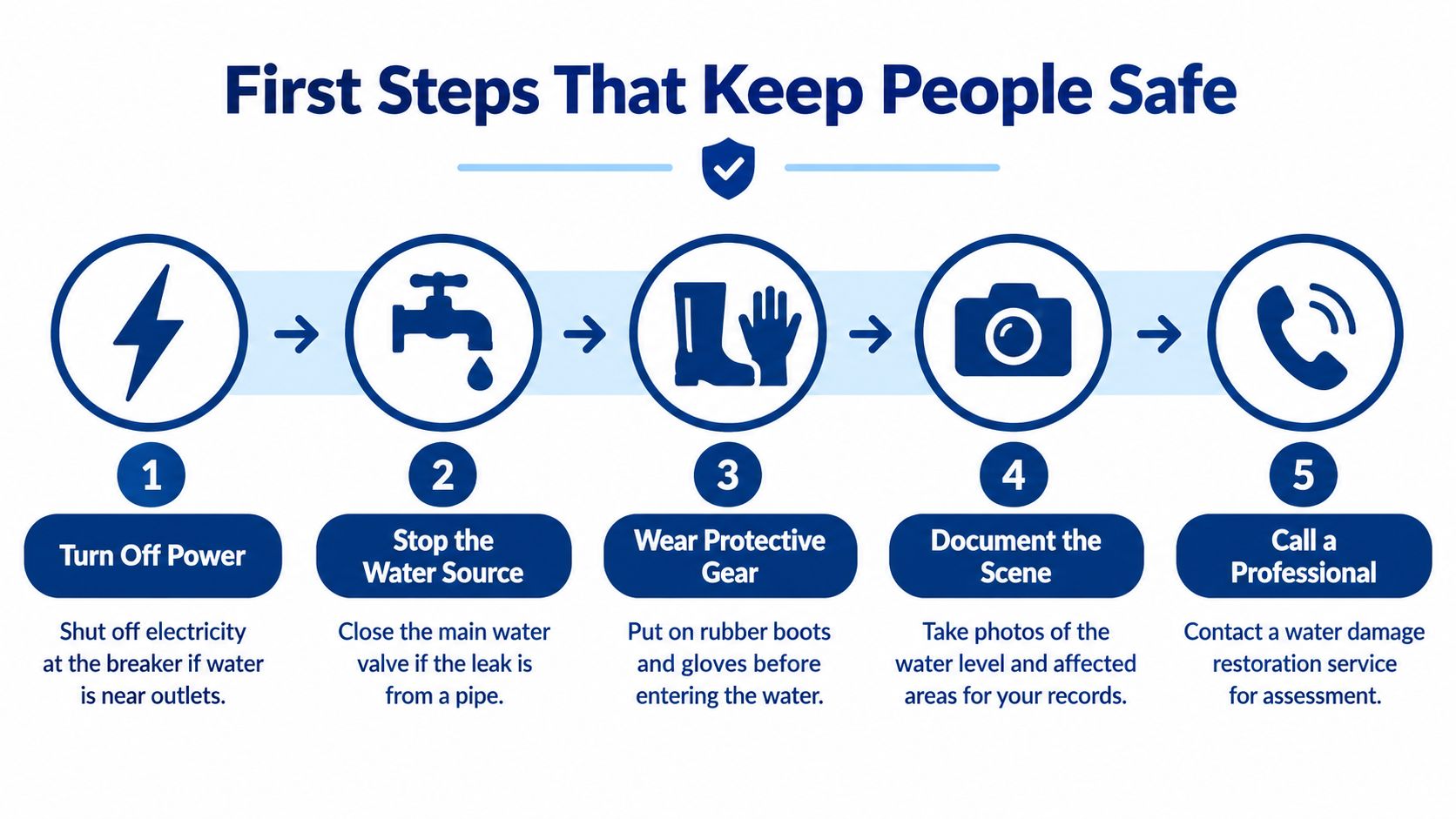
The next steps are straightforward, but the order matters: keep people out until electrical hazards are addressed, find the source, document conditions before removing evidence, and start appropriate extraction and drying. If water is still entering, cleanup alone won't solve the problem. If it's sewage-contaminated, ordinary household cleanup isn't enough.
Practical rule: A dry-looking surface isn't proof that the basement is dry. Check what water may have reached behind or beneath it.
The sections below distinguish common entry paths and explain which observations help you choose a response. You don't need to diagnose every building issue on your own. You do need to avoid making a hazardous situation worse or repairing the wrong problem.
First Steps That Keep People Safe
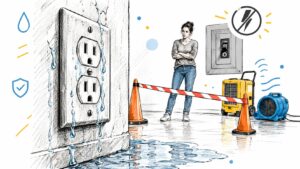
Stay out of a flooded basement until you know the electrical system can be safely isolated. Water can conceal outlets, cords, and damaged equipment. Don't step into standing water to reach a breaker, and don't operate a pump or wet vacuum from within a wet area. If you can't shut off power from a dry location, keep people away and call for qualified help.
FEMA advises having a licensed electrician inspect flooded circuits before power is restored. That inspection matters even when the water has receded, because wet electrical components may remain unsafe. The FEMA guidance on flooded basements also warns against rapidly pumping out a basement when external floodwater is pressing against its walls.
Don't drain against the foundation too quickly
Water in saturated soil pushes against basement walls and floors. That pressure, called hydrostatic pressure, can destabilize a structure if water is removed from the inside too quickly while the surrounding ground remains waterlogged. FEMA recommends initially lowering the basement water level by only about 2–3 feet, marking the level, then waiting overnight. If water rises again, wait another 24 hours before repeating the process.
This is not a reason to leave a dangerous space unaddressed. It's a caution against aggressive pumping when floodwater may be exerting pressure on the structure. Follow emergency guidance and get professional advice if walls appear to be moving, cracking, or bowing.
Treat contaminated water differently
Rainwater that enters through a foundation isn't automatically clean, and water from a floor drain may contain sewage. If water is discolored, has a sewage odor, or may have contacted wastewater, keep occupants and pets away. Don't treat it like a routine wet-floor cleanup. Contaminated water calls for protective measures, appropriate disinfection, and often professional assessment.
Ventilate only when it's safe and outdoor air conditions are suitable. In hot, humid weather, opening the basement to damp outdoor air may add moisture instead of helping it dry. Once electrical hazards are controlled, the water level is stable, and the space is safe to approach, start investigating the entry point.
Finding the Real Entry Point
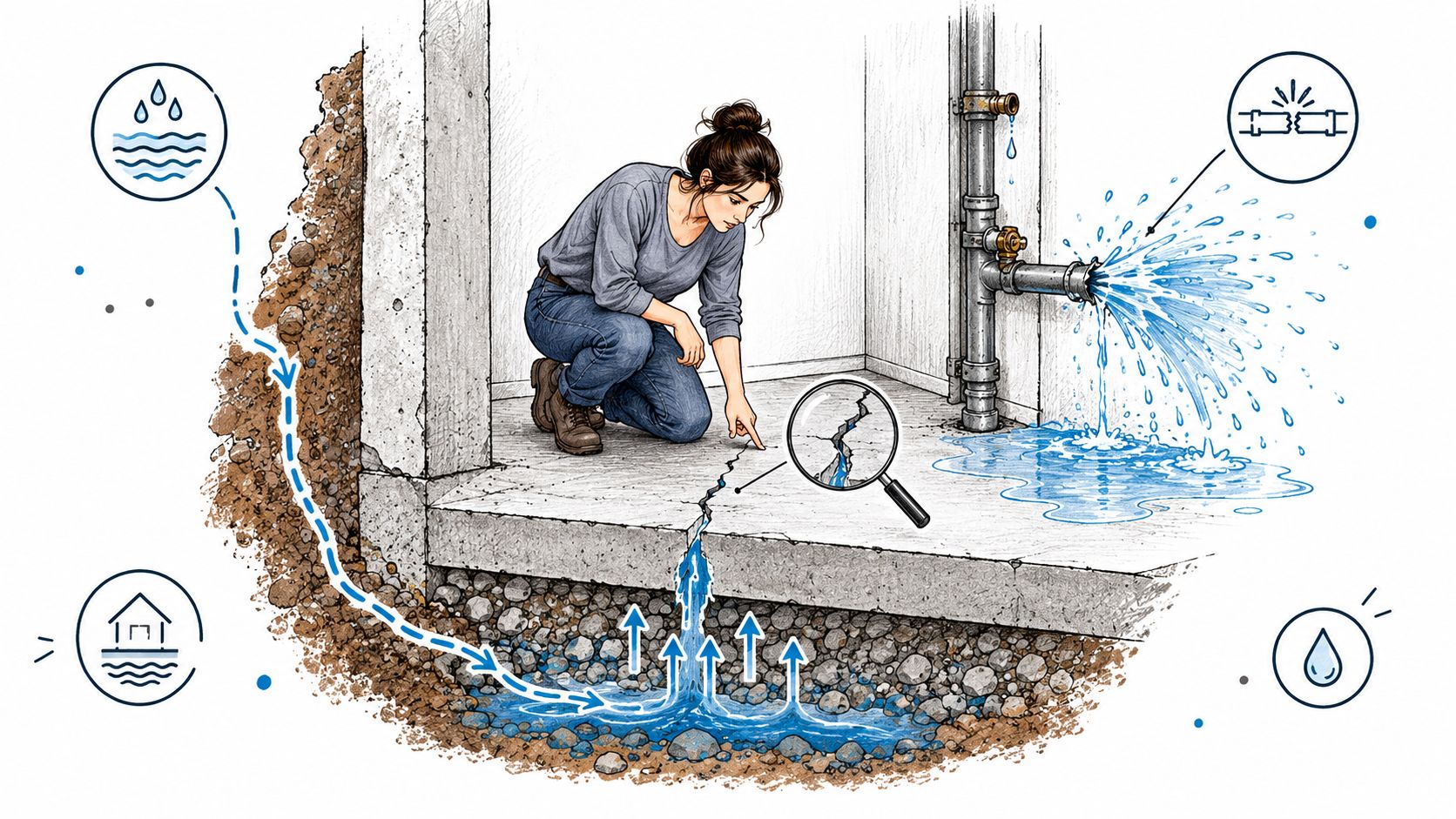
Look at the pattern before you move anything. A damp line along the wall-floor joint after heavy rain suggests ground pressure or seepage at the foundation. If water appears through a crack or joint, photograph the exact location and the stain pattern. That's different from a pipe leak, which may occur regardless of rain and may follow a plumbing line or appear beside a water heater or appliance.
Surface runoff often leaves clues outside. Check for standing water beside the foundation, soil or mulch washed away from a wall, gutters overflowing, or downspouts discharging near the house. If water appears along the same wall where runoff collects, the outside conditions may help explain what you see indoors. Record those conditions before clearing debris or moving damaged belongings.
Compare location, timing, and water appearance
Window wells are another possible route. If a well fills during a storm and water appears around the window frame or sill, inspect the well and its drain. A below-grade opening can collect runoff and pass it indoors when water builds up faster than it can drain.
Plumbing and equipment failures can imitate storm-related seepage. Look near water supply lines, the water heater and its pan, HVAC condensate lines, and floor drains. Consider whether the water appeared after the storm began or after an appliance ran. A leak that continues during dry weather points toward a different source than a damp line that appears with rain.
| Clue | What it may suggest |
|---|---|
| Dampness at the wall-floor joint after rain | Groundwater or foundation seepage |
| Wet soil or washout beside one wall | Runoff collecting near the foundation |
| Water around a basement window | A full or poorly draining window well |
| Wetness near equipment or plumbing | A supply, drain, or condensate problem |
A failed sump system can also allow water to accumulate. If the pump isn't operating as expected, note the water level in the pit and whether the discharge route appears blocked, but don't handle electrical equipment in a wet area. For signs that point toward a pump issue, review common sump-pump failure problems.
Before cleanup, photograph the waterline, entry point, stains, affected belongings, and exterior drainage conditions. These observations can help a restoration professional distinguish ground-up seepage from surface or plumbing intrusion.
Extraction and Structural Drying Priorities
Once the area is safe and the source is understood well enough to act, begin removing water and controlling moisture. The EPA's 24–48-hour drying benchmark is a reason to start promptly, not a promise that a room will be safe just because it looks dry by then. Extract standing water first. Wet carpet and padding may need removal if they can't be cleaned and dried effectively, and saturated porous materials may need to be discarded.
Drying works best as a combination of water extraction, dehumidification, and air movement. Fans move air across wet surfaces, but they don't remove moisture from the room. Without dehumidification, fans can circulate damp air without drying the materials that matter.
Verify the building materials, not just the floor
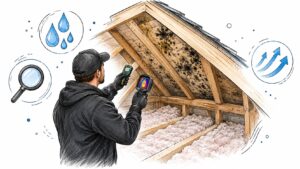
Use a moisture meter to check the floor, baseboards, drywall edges, and accessible wall cavities. If water reached carpet, check beneath it and assess the subfloor. A room can feel comfortable while insulation, framing, or materials behind a wall remain damp. Don't close up or repaint affected areas before hidden moisture has been checked.
Central Texas adds another consideration. The EPA's guide to mold and moisture cites ASHRAE guidance recommending indoor relative humidity below 60% in hot-humid regions such as Central Texas to reduce mold growth and surface condensation. That means a basement may need active dehumidification even when outside air feels like the obvious way to dry it.
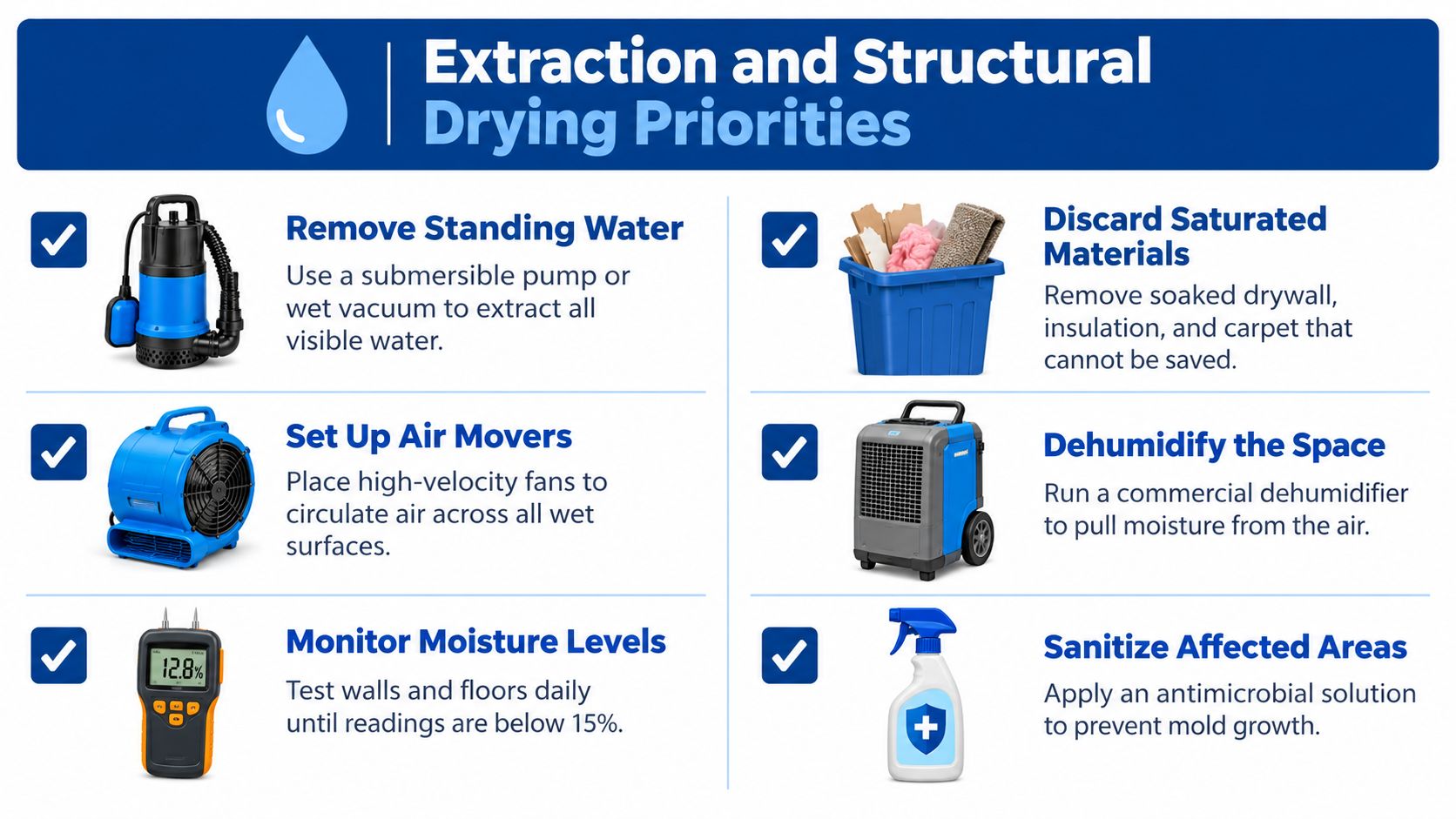
A practical drying routine should keep checking the places where moisture hides. Map the wet areas, run dehumidification and air movement as appropriate, and recheck materials until readings stabilize. If water reached cavities or extensive finished materials, an instrumented assessment can help establish what's wet and whether materials can be saved.
Fans alone aren't a drying plan. Neither is removing a visible puddle and assuming the structure is ready for repairs. RestoTek TX provides inspection, extraction, structural drying, microbial prevention, and reconstruction support for water-loss events in Georgetown, Austin, and nearby Central Texas communities.
Why a Dry-Looking Basement Is Not a Finished Basement
A homeowner pumps out the water, runs a fan, sees that the carpet feels dry, and puts the room back in use. Later, a musty smell or a dark mark at the bottom of the wall prompts another inspection. That sequence doesn't mean every basement will develop a problem. It does show why appearance alone can't confirm that drying is complete.
Drywall, insulation, and subflooring can hold moisture after the surface dries. Water may also return during the next storm if the entry point remains open or an exterior drainage problem hasn't been addressed. A sump pump that failed during one storm may seem irrelevant after the water is gone, until another rainfall tests it again.
Treat warning signs as useful information
A musty odor deserves investigation rather than deodorizing. It may point to lingering moisture in a cavity or behind stored items. Dark spots, visible growth, and repeated dampness also call for finding and addressing the moisture source instead of cleaning the surface and moving on.
Condensation can complicate the picture. Cool foundation walls may collect moisture when the basement air is humid, even if water isn't actively seeping through a crack. A moisture meter and observation of when dampness appears can help distinguish ongoing intrusion from condensation. If the same areas become wet after rain, check the exterior drainage and foundation path rather than assuming it's only humid air.
The EPA's flood guidance cautions that no visible puddles or low humidity doesn't prove the structure is dry. Materials that remain wet beyond the recommended drying window may need removal under appropriate mold-remediation procedures, rather than simple deodorizing.
A basement that dries on the surface but smells musty still needs an explanation.
After the next rainfall, recheck the locations that were wet and watch the sump pump through a full cycle if it's safe to do so. A recurring pattern is evidence to investigate, not bad luck to accept. For a more systematic check of hidden wet areas, moisture mapping can help show where drying needs to continue.
Documenting the Loss Before Permanent Repairs
Rain alone doesn't automatically make a basement loss a flood-insurance claim. The cause of the water and the policy terms matter. FEMA's National Flood Insurance Program defines a basement as an area below ground level on all sides and provides limited coverage there. Coverage generally focuses on foundation elements and essential equipment, such as furnaces, water heaters, electrical components, and sump pumps. Finished walls, floors, ceilings, and many personal belongings may be excluded or restricted under the applicable policy terms. Check the policy and speak with the insurer rather than assuming what's covered.
Before removing damaged materials, create a clear record, as long as doing so is safe. Photograph the whole room and then close-ups of the waterline, apparent entry points, affected flooring and walls, damaged equipment, and belongings. Capture the outdoor conditions too, including pooling, runoff routes, and the state of window wells or downspouts.
Keep the timeline and evidence together
Write down when the rain began, when you first noticed water, and whether water continued entering after the rainfall eased. Record any steps taken to shut off power, stop a leak, or start extraction. These details help an adjuster and restoration professional work from the same account.
Preserve damaged items until you've documented them and contacted your insurer for instructions, when it's safe and practical to do so. Don't delay urgent safety measures or necessary water removal just to protect evidence. The useful distinction is between immediate mitigation and permanent repairs: remove a hazard and prevent further damage, but document the source and affected materials before replacing finishes or sealing a suspected entry point.
For help understanding the steps involved in a claim, see this overview of the insurance claim process. Photos and notes won't decide coverage on their own, but they give the insurer and the restoration team a consistent record to evaluate.

When to Call a Restoration Professional
Call a plumber if water appears to be coming from a supply line, water heater, fixture, or drain. Keep away from submerged electrical components and have a licensed electrician assess flooded circuits before power is restored. Contact your insurer after documenting the scene, and follow its guidance on cleanup and repairs.
A restoration professional can help when water has reached finished materials, entered hidden cavities, or can't be safely extracted and dried with the equipment available. The EPA's 24–48-hour benchmark makes prompt action important, but don't wait for that window to pass before asking for help. Sewage-contaminated water, extensive damage, or uncertainty about safe access are also reasons to escalate.
RestoTek TX serves Georgetown, Austin, and surrounding Central Texas communities with water extraction, structural drying, microbial prevention, and reconstruction support. The company offers 24/7 emergency response for water-loss events, including floods, overflows, and backups.
Save this checklist: cut power from a safe location, identify the source, document the damage, begin safe extraction and dehumidification, and call for help if water reached finished materials or remains beyond a day.
If you have water in your basement after rain, RestoTek TX can assess the source, extract standing water, dry affected materials, and support repairs from mitigation through reconstruction. Contact RestoTek TX for help serving Georgetown, Austin, and nearby Central Texas communities.