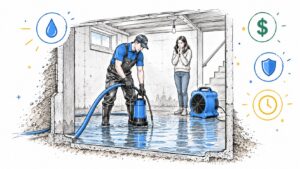
You walk downstairs, hit the last step, and stop. The floor is reflecting light. Boxes are wet. The smell is wrong. Maybe it was last night's storm in Georgetown. Maybe a line let go while you were asleep. Maybe the sump system failed and you didn't even know you had a problem until now.
That first minute is usually the worst part. People either freeze or rush in and start moving things. Both reactions are normal. Neither is the right first move.
A flooded basement is fixable if you handle it in the right order. Safety comes first. Then source control. Then documentation. Then drying, fast and correctly. In Central Texas, one of the biggest mistakes I see is people trying to solve the problem with speed alone. Speed matters, but so does method. Pumping too fast during a flash flood can damage the foundation. Drying only what you can see can leave wet wall cavities behind and set you up for mold.
Joan and Josh Garza at RestoTek TX work with homeowners in Austin and Georgetown through exactly this kind of situation, and the calm approach is always the same. Slow down just enough to make good decisions. Then move quickly on the actions that limit damage.
Your Basement Is Flooded What Now
Most homeowners find out the same way. You hear water where there shouldn't be water, or you walk down to grab something and see it already spreading across the slab. At that point, your brain jumps straight to ruined belongings, insurance, mold, and cost. That's understandable, but the next few actions matter more than the panic.
The right response is not to grab a mop first. It's to figure out whether the basement is safe to enter, whether the water is still coming in, and what kind of water you're dealing with. A burst supply line is one situation. Rising groundwater after a hard Texas rain is another. A sewage backup is a completely different category and changes everything about cleanup.
In real jobs, the homeowners who do best are not the ones who move fastest in every direction. They're the ones who follow a clean sequence and avoid the common mistakes.
First priority: Protect people before property. Wet drywall, soaked carpet, and damaged furniture can be replaced. You can't risk electrocution or exposure to contaminated water to save them.
If you're in Austin or Georgetown, local conditions matter. Central Texas storms can drive water into homes fast, and flood conditions around the property can create pressure outside the walls that changes how you remove water inside. That's why generic internet advice often falls short here.
Keep your focus narrow for the next hour:
- Make the area safe
- Stop the source if you can
- Record the damage before disturbing it
- Start the drying clock immediately
That's the framework for what to do when your basement floods. Everything else sits on top of those four moves.
Your First Moves Safety and Stopping the Source
A flooded basement can turn into an electrical injury, a contamination problem, or a structural problem in minutes. Handle those in that order.
If water may have reached outlets, appliances, extension cords, or the furnace, do not step into it. Shut off power only if you can reach the panel without entering standing water. If that is not possible, call the utility or an electrician and stay out.
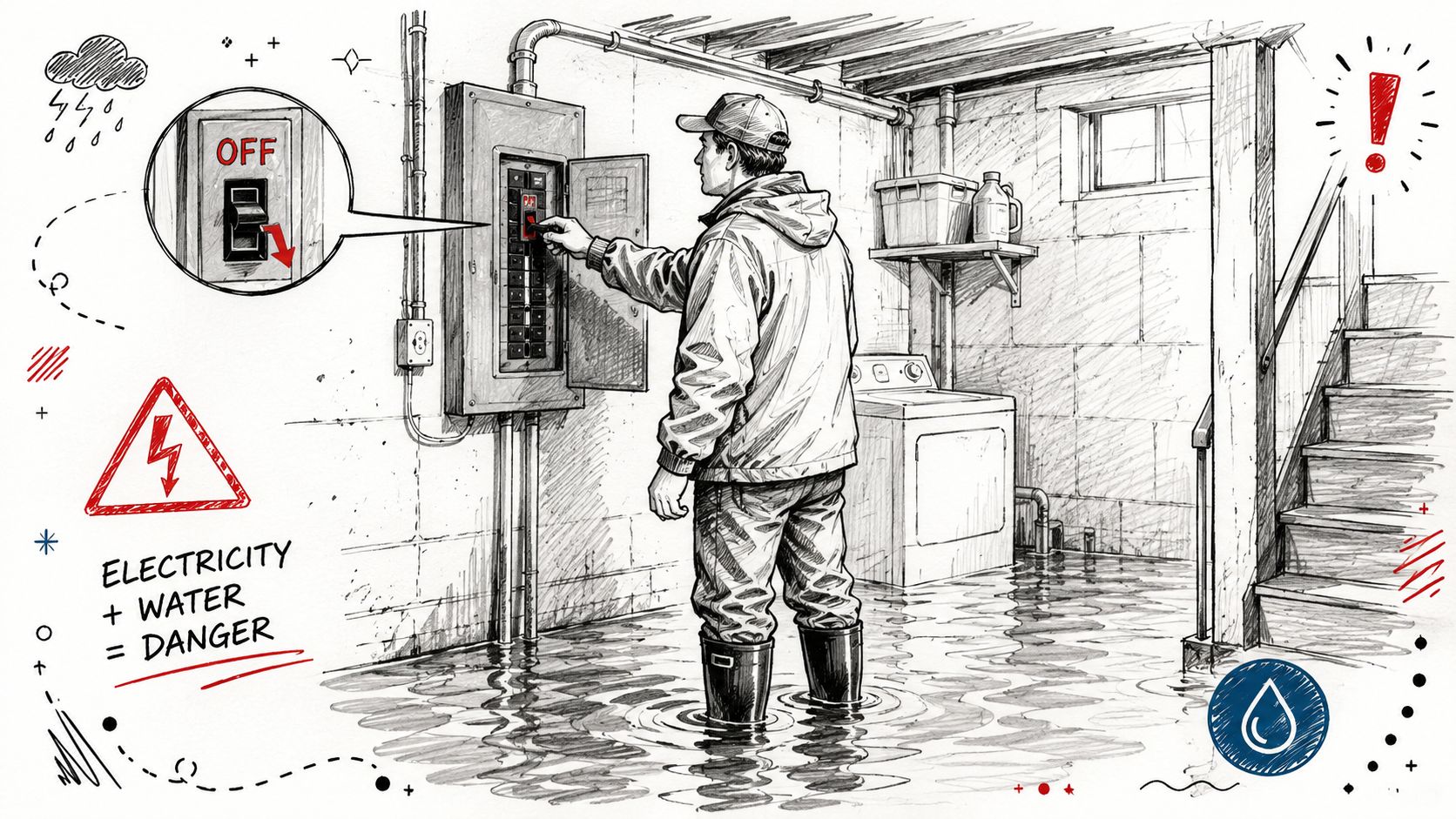
Start with a quick hazard check
Pause at the doorway or top of the stairs and read the room before you move anything.
- Water near electrical equipment such as freezers, laundry machines, outlets, or power strips.
- Water still rising or moving which usually means the source is active.
- Dark, cloudy, or foul-smelling water which points to contamination, not a simple clean-water leak.
- Fresh cracks, bowed walls, shifted framing, or popping sounds which can signal pressure against the foundation.
That last point matters in Central Texas. After a flash flood or long hard rain, water outside the foundation can build pressure fast. If your basement flooded from groundwater or surface runoff, pumping everything out too quickly can make that pressure difference worse. I have seen walls crack and floors heave because someone tried to empty the space in one push.
Find and stop the source
Once the power risk is controlled, identify the water source and act on that specific problem.
| Source of water | What to do right now | What mistake to avoid |
|---|---|---|
| Burst pipe or failed supply line | Shut off the nearest valve or the home main | Leaving wet walls and insulation in place because the leak has stopped |
| Appliance overflow or water heater leak | Turn off the appliance and isolate the feed line | Treating it like a surface spill when water has run under flooring or into drywall |
| Groundwater intrusion or storm runoff | Focus on safe entry, controlled removal, and exterior drainage if accessible | Pumping too fast during or right after a storm |
| Sewage backup or drain overflow | Keep people out and call a qualified restoration crew | Trying to clean and disinfect it with household products |
If you can stop a plumbing leak, do it immediately. If water is entering from outside, the job is stabilization. You may be able to redirect downspouts, clear a blocked drain, or move belongings to a drier area, but you usually cannot solve the whole problem until conditions outside improve.
Know when to stop DIY
The type of water decides the cleanup plan. Water from a supply line is one thing. Water that came up through a drain, crossed soil, or entered during a flood should be treated as contaminated from the start.
That means limited exposure, proper protective gear, and a lower threshold for calling in help. Boots and gloves are fine for a brief shutoff or inspection. They do not make sewage or floodwater safe to handle.
Use this rule in the first hour. If you cannot confirm the water is clean, if the depth makes safe access difficult, or if stormwater is pressing against the foundation, stop and bring in a restoration pro. Homeowners who also need to protect a payout should review how to document a water damage insurance claim properly before cleanup changes the scene.
Document Everything Your Insurance Claim Starts Now
Once the immediate danger is controlled, stop before you move a single box. Many homeowners accidentally weaken their own claim when they move items too soon. The scene needs to be recorded while it still shows the true scope of loss.

Take one slow walk-through video first. Keep the phone horizontal and narrate what you're seeing in plain language. Mention where the water appears to have entered, which rooms or areas are affected, and anything visibly damaged.
What to photograph before cleanup starts
Use your phone methodically. Don't just snap a few dramatic shots.
- Wide shots of the whole basement so the carrier can see extent, layout, and water spread.
- The water line on walls or posts because that helps establish depth.
- Damaged mechanicals and built-ins such as water heaters, furnaces, base cabinets, and laundry equipment.
- Close-ups of contents including furniture, storage bins, tools, electronics, and personal property.
- The source area if it's identifiable, such as a burst line, failed hose, or seepage point.
- Removed materials as they come out especially carpet, pad, baseboards, drywall, and insulation.
Build a simple claim file
Create one folder on your phone and one note with a running inventory. You don't need fancy software. You need a clean record.
Include:
- Date and time discovered
- What you observed first
- Who you called
- What emergency steps were taken
- A room-by-room item list
Contact your insurer early. A quick first notice of loss often makes the rest of the claim less chaotic. If you want a practical breakdown of how to organize the paperwork and conversations, RestoTek TX has a useful guide on handling a home insurance water damage claim.
The best documentation happens before cleanup changes the scene. Once the water is extracted and debris is moved, you can't recreate the original evidence.
Keep receipts too. Bags, gloves, rentals, temporary lodging if needed, and emergency mitigation expenses should all be tracked.
The Critical 48-Hour Window to Prevent Mold and Ruin
A flooded basement can look much better after the standing water is gone. That is exactly when many bad decisions get made.
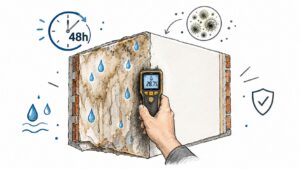
A critical challenge during the first 48 hours is moisture trapped in drywall, insulation, framing, subfloors, and wall cavities. Mold can begin growing within 24 to 48 hours after water exposure, and delays raise the odds of material loss and indoor air problems, as noted in this flooded basement restoration reference.

In Texas homes, especially after heavy rain or a flash flood, I see the same mistake over and over. A homeowner gets the visible water out, runs a few fans, and assumes the room is drying. Meanwhile, the lower drywall is wicking water upward and the insulation behind it is holding moisture like a sponge.
What actually needs to happen fast
For a small clean-water incident, quick extraction and aggressive airflow may be enough if the water never reached into wall cavities, insulation, or layered flooring.
Once water touches drywall, baseboards, insulation, or framing, surface drying is no longer the standard. The structure has to dry, not just the paint.
According to this technical flooded basement cleanup guide, successful drying depends on reducing wood moisture content below 19% and concrete below 4% within 24 to 48 hours. That same guidance explains why restoration crews use a pin-type moisture meter instead of relying on how the room looks or feels.
That distinction matters. Dry to the touch is not dry enough.
Drywall is often the make-or-break decision
Drywall fools people. The face can look normal while the bottom edge, backside, and stud cavity stay wet for days. If floodwater reached the wall, baseboards usually need to come off early so the lower cavity can be inspected and aired out.
In many losses, part of the drywall also needs to be removed. Expert restoration guidance indicates drywall exposed to water above 6 to 12 inches, or drywall with water wicked behind it, often needs removal, and the bottom 2 feet is frequently cut out to prevent hidden mold growth in the wall cavity, as shown in this restoration walkthrough video.
Homeowners hate hearing that on day one. I get it. Cutting out drywall feels expensive and premature. Leaving wet drywall in place is often what turns a manageable water loss into a mold job a few weeks later.
Mistakes that create the second disaster
These are the ones that cause trouble fast:
- Using household fans alone after water reached insulation, framing, or subfloor layers.
- Leaving wet baseboards and trim in place, which traps moisture at the wall bottom.
- Trying to save soaked insulation, even though it holds water and slows drying inside the cavity.
- Closing walls or reinstalling trim too early because the room smells better and the floor surface feels dry.
The trade-off is simple. Early demolition feels harsh, but targeted removal often reduces the total repair. Delayed removal usually spreads the damage into hidden spaces, raises the mold risk, and makes the rebuild larger.
If you want a practical walkthrough of the drying priorities after a loss, this guide on how to prevent mold after water damage is worth reading before you start putting materials back.
Drying comes before rebuilding
Do not reinstall insulation, trim, paneling, or drywall until the materials behind them are confirmed dry. In professional work, that means checking moisture levels, not guessing from appearance.
That one decision separates a cleanup that holds from one that fails after the basement seems normal again.
Georgetown and Austin Flood Risks What to Know
A lot of national advice says the same thing after a basement flood. Pump the water out as fast as possible. In Central Texas, that advice can be dangerous.
When heavy rain drives groundwater pressure up around the foundation, the water inside the basement may be helping balance pressure from the saturated soil outside. If you remove that interior water too fast, the outside pressure can push inward on the walls.

The mistake that can crack a foundation
FEMA explicitly warns that rapid pumping during a flood can cause basement walls to collapse or crack because the saturated soil outside pushes inward while the supportive water inside is removed. FEMA's recommended method is to pump down only 1 foot, wait 24 hours, and repeat the process so hydrostatic pressure can equalize safely, according to FEMA's basement flood mitigation guidance.
That advice feels backward when you're staring at a flooded basement. The first thought is to get all the water out immediately. Sometimes that instinct is right for an indoor plumbing leak. It is not automatically right during a regional rain event when the surrounding ground is saturated.
When staged pumping applies
This is especially relevant if:
- The flood followed intense rain and water appears to be entering through foundation walls or floor joints.
- The neighborhood is broadly affected and the ground outside is still soaked.
- Water returns after partial removal, suggesting pressure outside the structure is still high.
In those conditions, controlled removal protects the structure. Fast removal can turn a water-loss job into a structural repair job.
Don't assume every basement flood should be pumped dry in one pass. The source of the water changes the safe response.
Central Texas adds its own complications
Austin and Georgetown homeowners deal with hard rain events, runoff, and soils that don't always drain the way people expect. Water may move quickly across the surface, pool near the foundation, and exploit every weak point around penetrations, old cracks, or drainage failures.
That means local flood planning should include more than cleanup:
| Local condition | Why it matters indoors |
|---|---|
| Heavy storm runoff | Water can enter fast and keep entering after cleanup starts |
| Saturated soil around the home | Foundation pressure can make fast pumping risky |
| Repeated seepage history | Hidden materials may already be vulnerable from prior wetting |
If your basement flooded during a broad storm event, think structurally before you think cosmetically. Saving flooring means nothing if the wall system takes a hit during hurried pumping.
When to Stop DIY and Call a Restoration Pro
A lot of homeowners can handle a small, clean-water spill. A true basement flood is different. Once water gets into wall cavities, insulation, subfloors, or mechanical systems, the job stops being a cleanup problem and becomes a drying and rebuilding problem.
That line comes sooner than people expect.
If you are hauling out water, running a few box fans, and still do not know what is wet behind the walls or under the flooring, DIY has probably reached its limit. In Central Texas, that matters even more after a flash flood or broad storm event. Water may not be coming only from inside the room. It may still be pressing on the foundation from outside, and the wrong next move can make the loss worse.
Clear signs the job has outgrown DIY
Bring in a restoration professional if any of these are true:
- Water reached drywall, insulation, baseboards, or subfloor layers
- You suspect storm runoff, groundwater intrusion, or sewage contamination
- The basement stayed wet long enough that hidden saturation is likely
- You see warping, swelling, staining, or separation in finished materials
- HVAC equipment, outlets, appliances, or other building systems were affected
- Water keeps returning or the surrounding soil is still saturated
- You cannot tell what can stay and what needs to be removed
One mistake I see after Texas storm losses is homeowners trying to save every finished surface. That instinct is understandable, but wet drywall and insulation often need to be cut out so the assembly can dry. Leaving them in place can trap moisture in the wall cavity and turn a manageable water loss into a mold and reconstruction job.
What professionals do differently
Professional drying is measured, not guessed. The work starts with moisture mapping, checking where water traveled, how far it wicked, and which materials are still holding moisture even when the surface feels dry.
Then the plan gets more selective. Some materials can be dried in place. Others should be removed early because they will not dry reliably or they hide moisture where you cannot see it. That is the trade-off homeowners often miss. Tearing out a strip of drywall now can prevent a much larger demolition later.
Equipment matters too. Consumer fans can circulate air in the room. They do not create the same drying conditions as commercial air movers and dehumidifiers, and they do not confirm whether framing, sheathing, or subfloor layers are dry enough for rebuild. A qualified water damage restoration technician uses meters, drying equipment, and repeat inspections to verify progress instead of hoping the room dries on its own.
The cost of waiting
Waiting often feels cheaper. In flood work, it usually is not.
A delayed response gives moisture more time to move into framing, flooring layers, and closed cavities. That can increase demolition, extend drying time, complicate insurance documentation, and delay repairs. It also raises the odds that materials you could have saved on day one will need to be removed on day three.
According to this basement flooding cleanup cost and timing guide, professional extraction and structural drying for a standard flooded basement often costs $1,500 to $3,500, with drying taking several days with commercial equipment. Consumer-grade tools can take much longer and still leave hidden moisture behind.
That does not mean every basement flood needs a crew. A minor clean-water event in an unfinished space may still be manageable if you can remove the water, dry the materials fully, and verify that moisture did not spread into the structure. Once the water source is questionable, the materials are finished, or the drying path is unclear, call for help. In this kind of loss, verified drying protects the house better than optimistic drying.
If your basement is flooded in Georgetown or Austin, RestoTek TX can help you move from emergency response to verified drying and rebuild. Joan and Josh Garza's team handles inspection, extraction, structural drying, microbial prevention, and reconstruction support so the job does not stall halfway through. When the loss is active, the fastest way to protect the structure is to get a clear plan in place and start the right work immediately.