Standard home insurance covers plumbing leaks only when they're sudden and accidental, paying for the resulting water damage but usually not the broken pipe itself. A slow leak caused by corrosion, wear, or poor maintenance generally falls outside standard coverage.
You're standing in a Georgetown kitchen at six in the morning, barefoot in cold water, trying to remember where the main shutoff is. Maybe a washing-machine hose split overnight. Maybe a pipe burst behind the bathroom wall during a hard freeze. Either way, the policy question can wait only long enough to stop the water and protect the house.
The distinction matters because water losses are a major source of homeowners claims. Water damage accounts for nearly 25% of claims, with an average claim cost of $11,650, according to Nationwide's overview of plumbing coverage. The Insurance Information Institute figure cited there places water damage claims at 23.4% of homeowners and renters claims from 2016 through 2020.
Your claim has two separate questions:
- Was the leak sudden and accidental?
- What did the water damage, and what will it cost to repair?
A carrier may pay to replace soaked drywall, damaged flooring, and ruined belongings while refusing to pay for the failed hose, pipe, or fixture. That source-repair boundary is where many Texas homeowners lose money.
What a Texas Homeowner Needs to Know Right Now
At six in the morning after a February cold snap, a Georgetown homeowner may find water pooling around the water heater. The supply line has split, the garage floor is wet, and water has reached the wall shared with the laundry room. Standard home insurance generally covers resulting water damage when the event was sudden and accidental, but it rarely pays to replace the failed pipe or line itself. Progressive explains this distinction between covered resulting damage and the defective plumbing component.
Keep three points in mind before filing a claim.
The cause controls coverage, not the size
A small washing-machine hose can release enough water to soak the subfloor, wick into drywall, and swell baseboards. A larger leak may still be excluded if corrosion or neglected maintenance caused it gradually. The adjuster focuses on how the failure started, not how dramatic the puddle appeared.
A hose that separates suddenly creates a recognizable event. A pinhole leak that stains an Austin cabinet over time points toward a maintenance issue. Those details can lead to different coverage decisions.
Mitigation starts when you see the water
Your responsibility begins at discovery. Shut off the fixture or main supply, keep people away from electrical hazards, and take reasonable steps to prevent more damage. Washington's insurance guidance on leaks, water damage, and mold emphasizes separating sudden damage from gradual leakage and acting promptly.
Practical rule: Do not wait for an adjuster's callback before stopping active water or protecting unaffected rooms.
Drying records support the claim
Towels remove visible water, but they do not show what remains inside a wall, beneath flooring, or under cabinets. A professional crew can record moisture readings, affected materials, extraction, and structural drying. In an Austin or Georgetown home, that documentation gives the adjuster evidence for evaluating the scope instead of relying on appearances.
Call the insurer promptly. Then complete mitigation without delay. Opening the claim and controlling the damage are separate responsibilities, and the first hours can affect what the carrier approves.
How Insurers Actually Define a Plumbing Leak
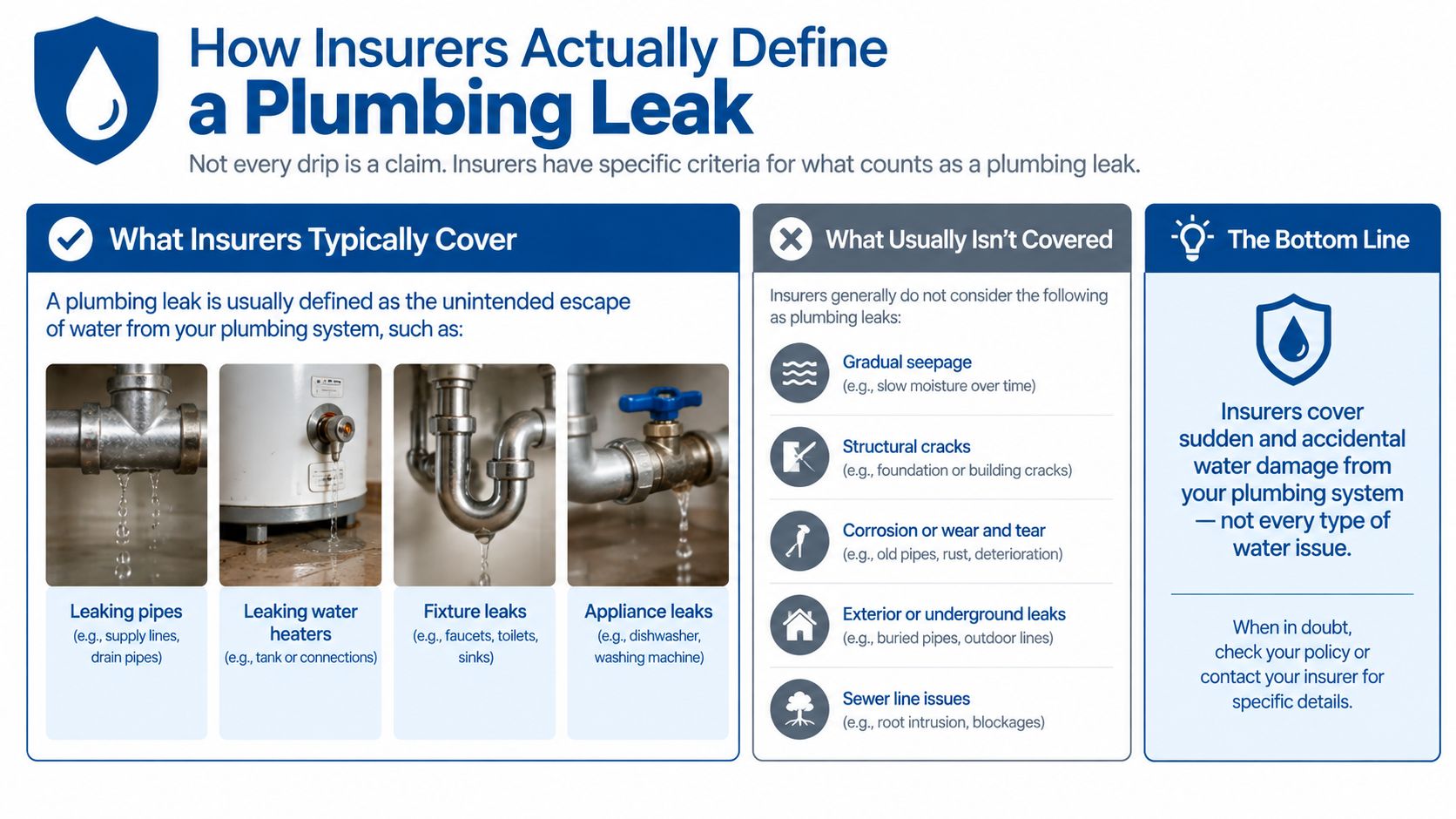
A Georgetown bathroom can flood after a supply line splits, while an Austin kitchen cabinet swells from a pinhole leak. Insurers treat those events differently because the cause and timeline matter more than the size of the puddle.
Policies usually separate plumbing losses into sudden and accidental discharge and gradual, ongoing leakage. A burst pipe behind a bathroom wall, a failed washing-machine hose, or an ice-related split during a cold night has an identifiable starting point. Corrosion, an aging supply line, or a worn connection may release water without a clear beginning.
A copper line beneath an Austin sink may leave a faint stain and slowly warp the cabinet base. That pattern supports seepage or deferred maintenance. A supply line that separates during a cold night, spreads water across the floor, and gets shut off promptly supports an abrupt-discharge position.
The distinction affects two separate decisions. The carrier may evaluate resulting damage from a sudden event while treating repair of the failed pipe, hose, or fixture as a maintenance expense. Gradual seepage, corrosion, and poor upkeep commonly create exclusions or disputes. Nationwide's plumbing coverage explanation describes this general boundary.
What the adjuster looks for
An adjuster examines the failed component, nearby staining, repair history, and the timeline you report. A clean break with fresh water spread supports a sudden event. Mineral buildup, rust, swollen cabinetry, repeated staining, and long-term dampness support a gradual-loss position.
Hidden sources require better proof. Professional leak detection guidance can help homeowners understand how technicians trace water behind walls, beneath flooring, or under cabinets before invasive access is authorized.
Describe facts, not guesses. State what you saw, when you saw it, what you shut off, and what changed afterward. Photographs, damaged components, moisture readings, and drying records can connect the physical evidence to your timeline, especially after a fast response in an Austin or Georgetown home.
What Your Policy Pays For and What It Does Not
A plumbing claim should be separated into source repair, resulting damage, and future prevention. Those costs are handled differently. A standard policy does not automatically pay for the failed pipe and everything it damaged.
A sudden leak may damage walls, floors, ceilings, cabinets, and personal property. Dwelling or contents coverage may address that resulting damage, subject to the policy's terms, limits, exclusions, and deductible. GEICO's explanation of plumbing coverage distinguishes the damaged building materials from the plumbing source. The failed pipe, hose, or fixture may remain the homeowner's expense even when the water damage qualifies for review.
A slab leak in an older Austin home shows the difference clearly. The homeowner may face a $12,000 repipe estimate alongside $40,000 in flooring, drywall, and cabinetry damage. Those figures illustrate the coverage boundary, not a guaranteed settlement. The repipe can remain out of pocket while the resulting damage is evaluated under the policy.
The three-bucket test
| Item | Typically Covered | Excluded or Endorsement Needed |
|---|---|---|
| Failed pipe, hose, or fixture | Usually not under standard plumbing-leak coverage | Repair or replacement often remains out of pocket |
| Walls, floors, ceilings, and affected structure | Often covered when a sudden accidental leak caused the damage | Exclusions, limits, deductible, or proof issues can change the result |
| Damaged personal belongings | May fall under personal-property coverage | Valuation, condition, limits, and exclusions apply |
| Temporary housing | May fall under Additional Living Expenses when a covered loss makes the home uninhabitable | Requires a covered loss and policy eligibility |
| Upgrades and prevention | Usually not covered as ordinary restoration | Endorsements or separate coverage may apply |
Additional Living Expenses can help when a Georgetown family must leave during drying and reconstruction. The carrier and policy control eligibility. Keep lodging, meals, laundry, and related receipts, and do not assume reimbursement before coverage is confirmed.
Mold caused by ignored moisture can create another coverage dispute. Upgrades that improve the home beyond its pre-loss condition face the same problem. In a Georgetown or Austin home, document the damaged materials separately from the failed plumbing component, then ask the adjuster to identify which coverage, exclusion, limit, or deductible applies to each part.
Why Claims Get Denied Over Maintenance Issues
A 22-year-old braided supply line under a Georgetown powder-room sink can turn a minor plumbing failure into a difficult claim. Corrosion, a slow drip, and a warped cabinet base show the water has been escaping over time. By discovery, the carrier may view the loss as neglected maintenance rather than a sudden accident.
The adjuster may examine the failed line, water bills, service records, photographs, and staining patterns. Repeated dampness, a gradual increase in damage, or an old repair can support “wear and tear,” “failure to maintain,” or “ongoing and progressive.” Those terms describe the carrier's position that the condition developed gradually and should have been corrected.
A freeze-burst PEX line creates a stronger accidental-loss record. After a cold night, the homeowner finds a fresh split, shuts off the supply, documents the break, and shows that exposed hose bibs were winterized. Coverage still depends on the policy and facts, but the cause and timing are easier to establish. The failed pipe itself may remain a repair bill, while the resulting water damage receives separate coverage review.
| Scenario | What Happened | Typical Claim Outcome |
|---|---|---|
| Corroded sink supply line | Slow drip leaves staining and cabinet damage | Resulting gradual damage may be denied |
| Split washing-machine hose | Abrupt discharge spreads water across flooring | Resulting sudden water damage is often evaluated for coverage |
| Freeze-burst interior pipe | Pipe ruptures during a cold event | Sudden damage may be covered, subject to policy terms |
| Repeated toilet-area seepage | Warning signs remain unrepaired | Maintenance exclusion becomes a serious issue |
The habits that change the evidence
Inspect visible connections, replace deteriorated hoses, respond to staining, and keep dated photographs after repairs. Track unexplained water-bill changes, cabinet swelling, musty odors, and soft flooring. These conditions help an adjuster decide whether the loss was sudden or progressive.
Keep the failed component. Do not discard a pipe or hose before the adjuster or authorized professional documents it. In Austin and Georgetown, fast extraction, drying records, and clear separation between source repair and resulting damage can support a cleaner claim file. Use this water-damage insurance claim guidance to organize the documentation and claim process.
Your First 72 Hours After Discovering a Leak
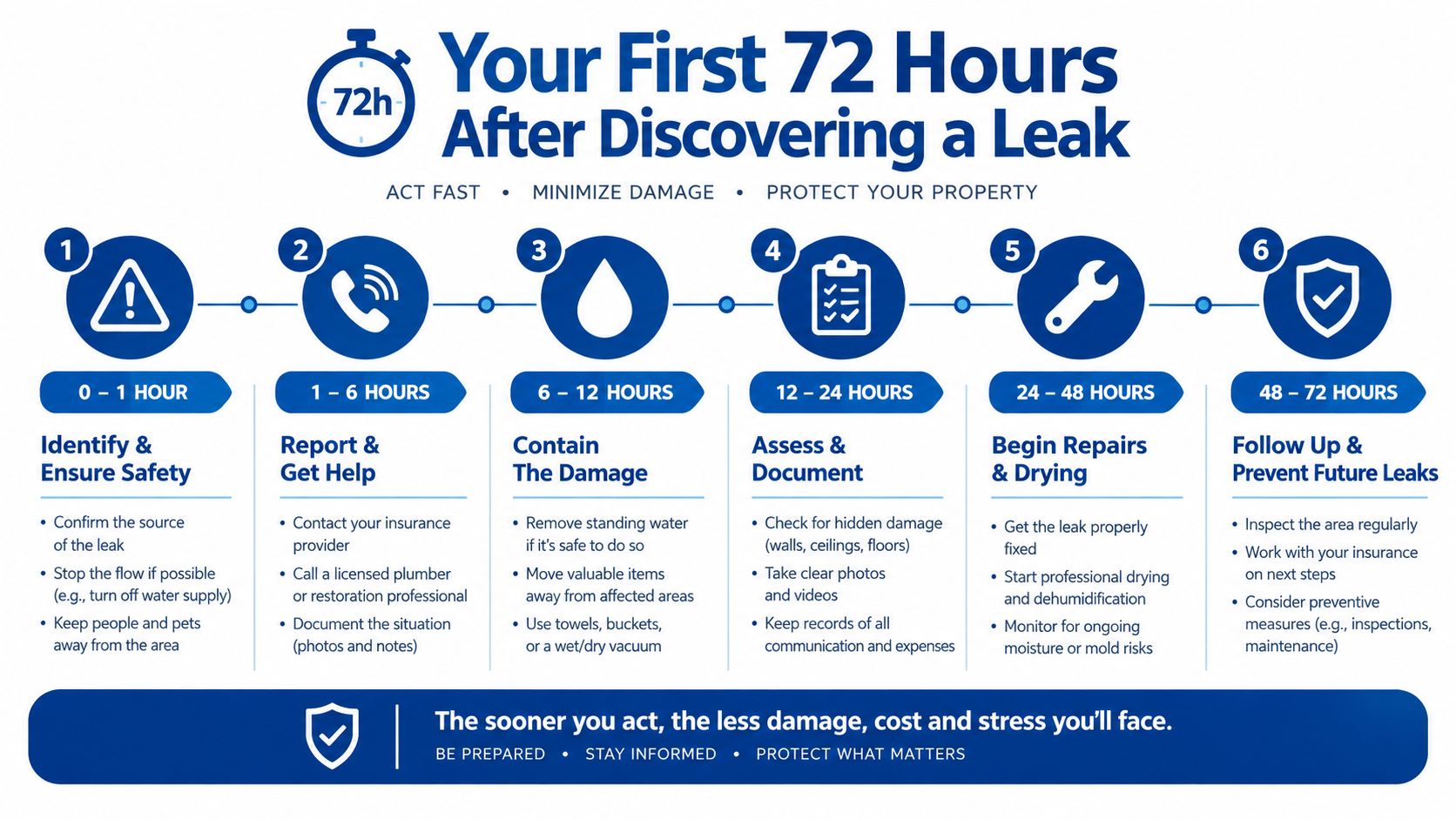
A washing-machine hose splits overnight in a Georgetown home. By breakfast, water has crossed the laundry room and reached the hallway flooring. The first three days determine how much additional damage occurs and how clearly the claim separates emergency mitigation from the failed part's repair.
- Shut off the water. Close the fixture valve, then the main shutoff if needed. If water is near outlets, appliances, or the electrical panel, stay clear and call a qualified professional.
- Photograph the scene before moving contents. Capture the source, waterlines, wet flooring, swollen cabinets, and damaged belongings. Take wide room views and close-ups.
- Open the claim promptly. Request the claim number, adjuster's name, preferred contact method, and instructions for emergency mitigation.
- Start a mitigation log immediately. Record when you found the leak, shut off the water, called for help, and approved work. Note equipment, readings, and major decisions.
- Save receipts. Keep invoices for emergency supplies, extraction, temporary protection, lodging, and other loss-related expenses.
- Protect the property while preserving evidence. Remove standing water and stop further spread. Leave permanent repairs and disposal of the failed pipe, hose, or fitting until inspection or documentation is complete.
Call the carrier before hiring a restoration contractor when conditions allow. Active water requires immediate stabilization. Tell the insurer what happened, explain that mitigation is needed, ask how they want the contractor authorized, and record the conversation. The source repair bill and the resulting water-damage work should remain separate in your notes and invoices.
Why the clock matters
Water trapped in drywall, flooring, or cabinets creates a larger drying and removal scope. In Austin's warm conditions, damp materials can also develop microbial growth, making delay harder to defend. An adjuster may question additional damage when the homeowner waited despite having a safe way to limit it.
Use this first-24-hours restoration guidance for Georgetown and Austin as an emergency reference, then follow your policy's reporting and mitigation instructions.
How Fast Professional Restoration Changes a Claim
A wet Georgetown living room can look manageable after towels and a wet-dry vacuum remove the surface water. The wall cavity, cabinet toe-kick, and flooring underneath may still be holding moisture. A professional restoration crew measures those areas, controls the drying process, and records what changed.
That record can shape the claim. An adjuster needs more than proof that a floor was wet. They need a clear account of where moisture traveled, which materials were affected, and whether the homeowner took reasonable steps to limit further damage.
A trained crew may use extraction equipment, air movers, and dehumidifiers while recording daily moisture readings. A moisture map identifies affected rooms and materials. A psychrometric log records temperature, humidity, and other environmental conditions that show whether the structure is drying. Those documents replace “we dried it” with a dated sequence of observations and actions.
The source repair and the resulting damage remain separate. Insurance may evaluate the failed supply line, valve, or fitting differently from damaged drywall, flooring, cabinets, and contents. A clean supply-line release addressed quickly may require limited drying. Water left in place, or water from a contaminated source, can require more removal, cleaning, antimicrobial work, and contents handling. Get an on-site assessment before assuming the scope.
| Response Time | Water Category | Scope of Work | Homeowner Cost Impact |
|---|---|---|---|
| Immediate response | Often cleaner source water | Extraction, monitoring, targeted drying | Lower risk of added demolition |
| Delayed response | Conditions may worsen | More material removal and contents handling | Greater chance of uncovered secondary damage |
| Prolonged moisture | Source and contamination must be evaluated | Demolition, cleaning, drying, and possible microbial treatment | More disruption and more expenses to document |
Central Texas heat and humidity make prompt drying more important. Daily readings from a Georgetown or Austin crew can show whether materials are returning to dry conditions. A fan running in the corner cannot prove that.
A dry-looking baseboard isn't proof that the wall cavity is dry.
Professional mitigation cannot create coverage or pay the source repair bill. It can limit additional damage and give the adjuster a defensible record of the conditions, work performed, and results after discovery.
Georgetown and Austin Conditions That Change the Math
A burst pipe in a Georgetown living room does not create the same claim as a sewer backup in an Austin bungalow. Central Texas conditions affect both the source of the water and the evidence an adjuster reviews.
Hard freezes can split exposed lines. Older Austin ranch homes may contain aging copper, slab plumbing, corroded connections, or lines affected by soil movement. Severe storms raise a different coverage question when water enters through flooding or a sewer backup instead of an interior plumbing failure.
A pipe rupturing inside a heated wall during a cold snap can look like a sudden, accidental discharge. The carrier may still ask whether reasonable precautions were taken and whether a freeze exclusion or endorsement applies. Review that wording before assuming the claim will follow the usual plumbing-leak rule.
Slab leaks require careful separation of costs. Finding and accessing a hidden line may involve substantial plumbing work, while damaged flooring, cabinets, and drywall may receive a different coverage analysis. The bill to locate or reach the pipe does not automatically receive the same treatment as the resulting water damage.
Three Central Texas claim paths
- Freeze burst: Shut off the water, photograph the break, protect the structure from further damage, and review freeze-related exclusions or endorsements.
- Slab leak: Determine whether the evidence shows a sudden break or prolonged seepage. Keep detection, access, source repair, and resulting damage as separate cost categories.
- Sewer or storm backup: Check for water-backup coverage or a separate flood policy. Standard homeowners coverage commonly treats these sources differently from an interior pipe release.
A Williamson County home with mature live oak roots affecting a sewer lateral follows a different claim path from a newer Round Rock home with a sudden appliance-hose failure. The source, endorsement, and physical evidence control the analysis.
Read Texas-specific endorsements before storm season. Ask your agent directly about freeze losses, sewer or drain backup, flood, service-line coverage, deductibles, and water-damage limits. That preparation gives you a clearer answer before water reaches the living room.
Putting It Together and Protecting Your Home
In a Georgetown living room, the claim often turns on two separate questions: what caused the leak, and what did the water damage afterward? Your policy generally covers resulting water damage from a sudden, accidental plumbing failure, but it usually excludes the failed pipe itself. A slow leak behind a cabinet, ignored corrosion, or delayed drying can give the adjuster grounds to challenge coverage.
Use this protection routine before the next freeze or pipe failure:
- Test the shutoff: Find the main and fixture valves, then confirm they work.
- Photograph plumbing: Take dated photos of visible supply lines, fittings, the water heater, and appliance connections each year.
- Install leak sensors: Place them under sinks, behind the washing machine, near the water heater, and beside vulnerable fixtures.
- Read the policy: Check water-damage sublimits, deductibles, exclusions, and endorsements, not just the summary page.
- Save a restoration contact: Store a qualified local mitigation provider's number before water reaches the floor.
- Document within 60 minutes: Photograph the source and damage, write down the timeline, and notify the carrier promptly.
- Keep the failed part: Preserve the broken pipe, hose, or fitting until the adjuster documents it.
That documentation separates the source-repair bill from the resulting damage. In an Austin home, replacing a failed supply line may receive different treatment from drying soaked drywall, removing damaged flooring, or restoring cabinets. Fast extraction and drying also show that you acted to limit additional damage. Call a restoration professional early, protect contents, and keep every invoice and photograph.
Homes built before 2000 deserve close attention to aging supply lines, corroded fittings, and older plumbing systems. A sensor can provide an early warning, but it cannot replace an inspection or a working shutoff plan.

Schedule a plumbing inspection this quarter. Waiting until the next freeze, storm, or wet cabinet base leaves maintenance evidence working against you.
RestoTek TX provides water-damage inspection, extraction, mitigation, structural drying, leak detection, microbial prevention, and reconstruction for Georgetown, Austin, and surrounding Central Texas properties. If a plumbing leak has already happened, visit RestoTek TX to request help documenting the loss, stopping further damage, and restoring affected areas.