
A typical emergency extraction cost for water damage in a residential job can start around $500 to $2,500 for the initial extraction work, depending on how much standing water is present, how much of the home is affected, and whether the crew is dealing with a small room or a larger spread. That number only covers the first part of the job. Once you factor in drying, monitoring, deodorizing, and repairs to flooring, baseboards, drywall, or cabinets, the total project cost can climb well beyond the extraction line item. In many Georgetown and Austin homes, the final out-of-pocket amount also depends on how the insurance claim is handled, because a clear scope and good documentation can reduce delays and prevent avoidable disputes. emergency extraction pricing model
You usually realize something is wrong at the worst possible time. A ceiling stain turns into active dripping, a laundry room floor feels soft underfoot, or a burst line sends water under cabinets, and now you are trying to figure out what needs to happen first, what it should cost, and how to keep the damage from spreading while the clock keeps running. In Central Texas, the smartest move is to slow the situation down, document what you can, and get a clear scope before equipment starts coming off a truck. What to do immediately after water damage in your Central Texas home
The number on the invoice is rarely just the number for extraction. Homeowners in Georgetown and Austin often end up paying for the full response, not only the pump-out itself, especially if the water has moved into framing, pad, insulation, or hidden cavities. Insurance communication matters here. If the loss is reported clearly and the photos, moisture readings, and drying plan line up, the claim is easier to support and the final bill is less likely to be inflated by confusion or repeat visits.
A quick response does not always mean a small bill, but waiting usually makes the bill harder to control. If the water is still present, the materials are already absorbing moisture, and the question becomes how far the job has spread before the next stage starts.
Your First Step When You Discover Water Damage
The first few minutes matter more than most homeowners expect. Water doesn't sit still, it moves into trim, under flooring, behind baseboards, and into anything porous, so the visible puddle is rarely the whole problem. That's why the cost conversation starts with stopping the source, not with comparing quotes.
A homeowner in Georgetown once described the problem as “just a little overflow” until the hallway carpet started lifting and the cabinet toe-kick swelled. That's the pattern I see most often, the visible water is obvious, but the hidden spread is what drives the bill. The longer the water sits, the more likely the job moves from simple extraction into drying, deodorizing, and repairs.
Practical rule: if you can safely shut off the source and keep people out of the wet area, do that before you worry about price.
If the leak is active, standing water is still spreading, or you can smell something off, the job has already moved past “wait and see.” In that moment, the useful question is not “What's the cheapest option?” It's “What needs to happen now so the damage stays contained and the final invoice doesn't balloon?”
What Exactly Is Emergency Water Extraction
Emergency extraction is the fast removal of standing water and saturation from a property before secondary damage takes over. It's the stabilization step, not the finish line. Think of it the way paramedics stabilize someone at an accident scene before the hospital team handles the deeper treatment.
A good extraction crew starts by identifying the source, the affected materials, and any immediate safety problems. Then they remove free water with pumps, wet vacuums, and truck-mounted extraction equipment, followed by drying support if the structure needs it. The point is to reduce the amount of time your floors, subfloor, drywall, and contents stay wet.
Water damage rarely stays limited to the surface. Carpet pad wicks moisture, hardwood cups, drywall softens, and trapped humidity lingers in wall cavities. Once that happens, the job gets more technical and more expensive because the crew has to verify moisture levels, treat affected surfaces, and protect the building from additional deterioration.
Emergency extraction also depends on access and timing. A small laundry overflow near the garage door is easier to handle than a second-story bathroom leak that runs through a ceiling cavity, because the crew can reach the water faster and move equipment in with less labor. The same basic service can look very different on the invoice depending on where the water went and what it touched.
Decoding the Bill and Common Pricing Models
Homeowners usually ask for one number, but restoration firms often bill in pieces. That's not because they're trying to be vague. It's because the final bill usually includes the response itself, the extraction labor, the equipment, and any specialized work needed after the water comes out. A practical home water damage repair cost guide is helpful here because it forces the estimate to separate the parts instead of hiding everything in one vague figure.
Water Extraction Pricing Models at a Glance
| Pricing Model | How It Works | Best For |
|---|---|---|
| Flat rate | One bundled price for a defined scope | Small, predictable losses |
| Per hour | Labor billed by time on site | Cases with unknown spread or access issues |
| Per square foot | Price tied to the affected area | Larger surface losses |
| Line-item estimate | Exam, extraction, drying, and repair priced separately | Insurance claims and complex projects |
A flat rate can feel simple, but only if the loss is simple. Per-hour pricing works when the amount of water and the structural impact are still being discovered on site. Per-square-foot pricing makes sense when the affected area is broad and visible, but it still won't capture everything if the crew has to pull up flooring or work through tight access points.
The line-item approach is usually the clearest for a stressed homeowner. It shows the exam, the extraction, the drying equipment, and any after-hours premium as separate parts, which makes it easier to compare quotes. That separation also helps when you're speaking with insurance because you can show exactly what was done and why.
Best practice: ask for the estimate in bundled categories, not just a single number. That's the only way to see whether the quote covers extraction alone or the whole stabilization phase.
Minimum service charges are common because dispatching a crew has real overhead, even for a smaller loss. After-hours response can cost more too, because urgent calls change labor scheduling and sometimes require higher staffing levels. In Central Texas, the cleanest estimates are the ones that spell out what happens if the scope grows after the crew opens the affected area.
Key Factors That Drive Your Final Cost
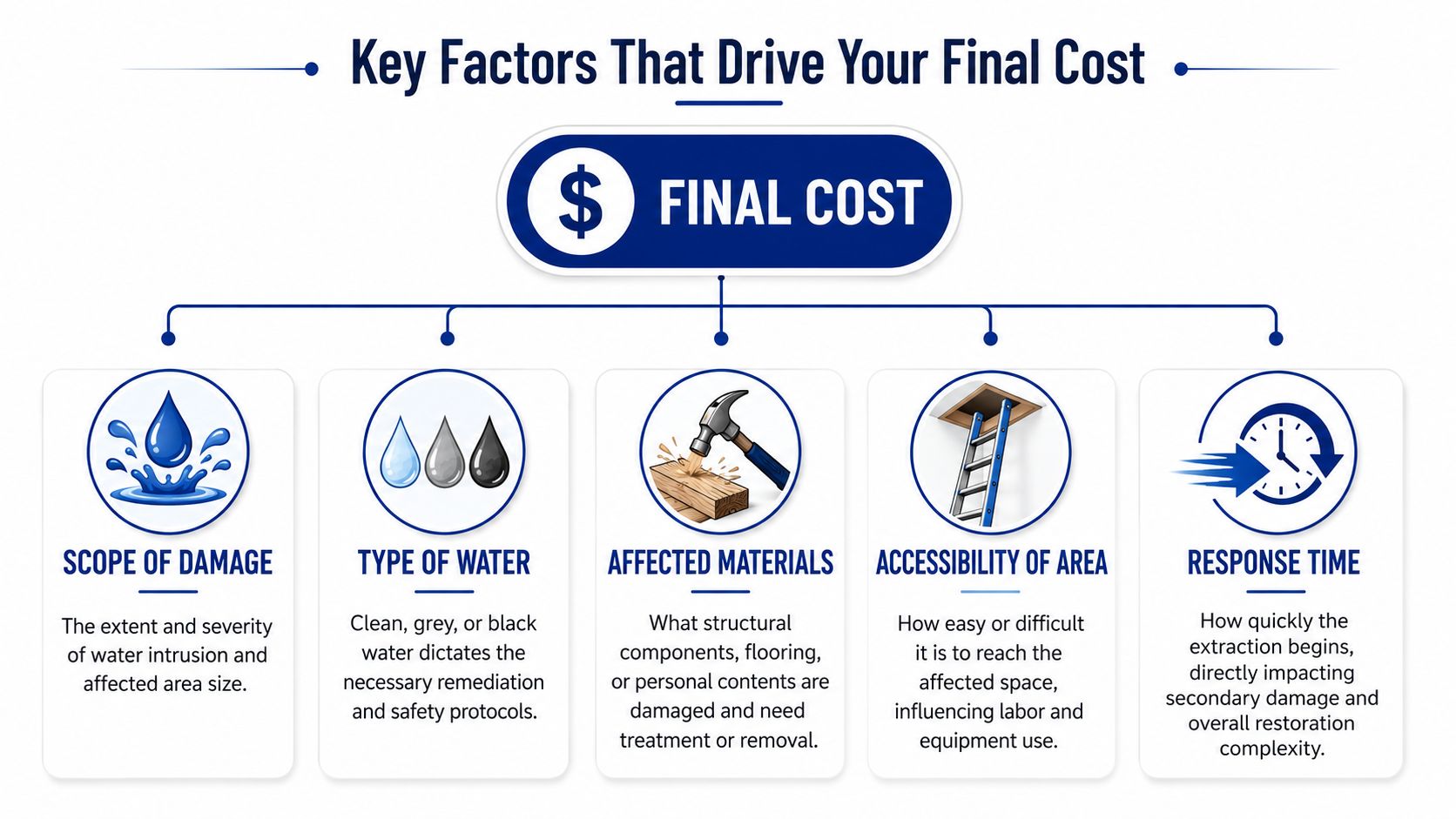
Scope of Damage and Water Type
The size of the wet area is the first thing that moves the price. A small kitchen spill that never left the room is one job, while a hallway, closet, and adjacent wall cavity are a different one entirely. If the water is contaminated, the crew also has to handle cleanup more cautiously, which adds labor and materials.
Materials and Access
Carpet, padding, hardwood, drywall, and cabinetry all react differently to moisture. Carpet can sometimes be lifted and dried, while hardwood may need more controlled treatment to avoid warping. Tight crawlspaces, upstairs bathrooms, and enclosed utility rooms also increase labor because the equipment and hoses have to be moved carefully through the property.
Equipment and Response Timing
More water means more extraction passes and often more drying equipment afterward. That's where the bill starts to shift from “remove the water” to “stabilize the building.” Faster response usually reduces the chance that hidden moisture turns into a larger structural problem.
The most expensive jobs are rarely expensive because one single thing went wrong. They're expensive because several small issues stack up at once, a wet subfloor, a hard-to-reach area, a material that doesn't like water, and a delay in response. When those factors line up, the estimate naturally grows.
Navigating Insurance and Reducing Out-of-Pocket Costs
Insurance communication affects the final out-of-pocket number more than many people realize. The smoother the documentation, the easier it is for an adjuster to understand what was damaged, what was necessary, and which parts of the job were emergency mitigation versus longer-term repair. That matters because the claim process usually pays better when the paper trail is clean.
A water loss works like a medical issue that needs prompt treatment, because delaying the first response usually lets the problem spread and raises the total bill. In home claims, that often means the extraction itself is only part of the expense. Drying, debris removal, antimicrobial treatment, and later repairs can all end up on the same file, so the way the claim is documented in Georgetown or Austin can change what you pay after the insurer reviews it. ADA emergency department referrals
What to have ready before you call
- Photos and video: capture standing water, stained ceilings, swollen trim, and any damaged contents before cleanup starts.
- Loss timeline: note when you first noticed the water, when the source was shut off, and whether the damage was still spreading.
- Policy details: have your declarations page, claim number if you already have one, and your insurer's emergency contact line ready.
- Questions for the adjuster: ask what documentation they want, whether emergency mitigation is covered, and whether you need pre-approval for equipment or follow-up work.
The biggest mistake is waiting until the area is dry before documenting it. Once the water is gone, adjusters have to rely on records, and records are always stronger when they were captured immediately. If you're unsure what your policy covers, call the insurer first, but don't let that call delay the mitigation work if the damage is actively spreading.
A second mistake is treating the first estimate like the final claim amount. Emergency extraction, drying, and repair are different phases, and each one can need separate approval. Clear communication keeps the invoice from turning into a surprise, especially when the loss involves hidden water or multiple affected rooms.
A good water damage restoration technician can also help document the loss in a way that matches how insurers review emergency mitigation, which often makes the claim easier to follow and less likely to stall.
The Extraction Process What to Expect from Professionals
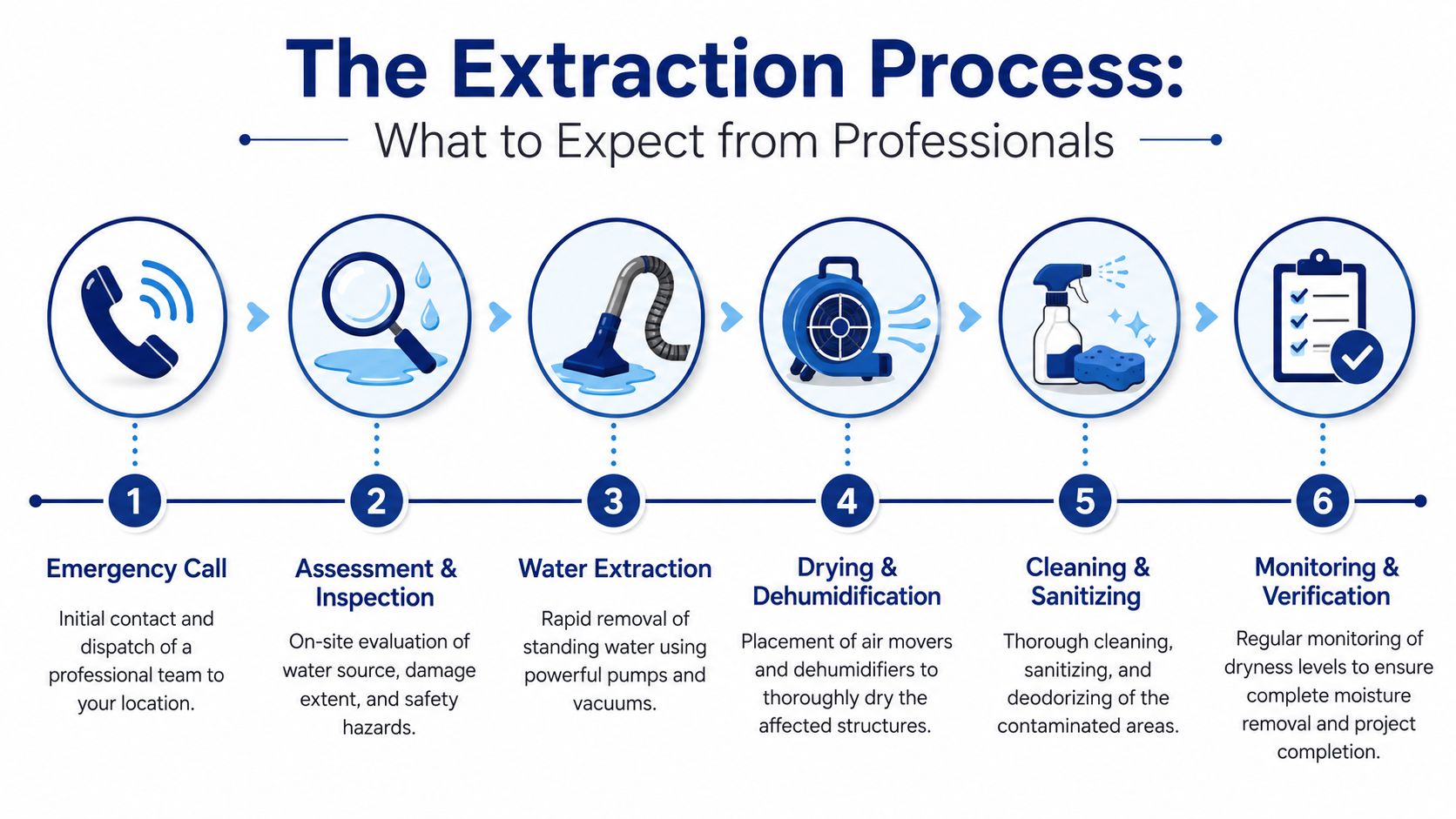
A professional crew usually starts with the phone call and dispatch, then moves straight into an on-site assessment. They look for the source of water, the visible spread, and anything unsafe, such as electrical risk, structural sagging, or contaminated material. That first visit determines whether the job is a straightforward extraction or a larger mitigation effort.
What happens after the crew arrives
- Assessment and inspection. The technician checks the affected spaces, measures moisture, and maps the damage.
- Extraction. Standing water gets removed with pumps and powerful vacuums.
- Drying setup. Air movers and dehumidifiers are positioned to pull moisture out of materials.
- Cleaning and sanitizing. Affected surfaces are cleaned and treated as needed.
- Monitoring. The crew checks dryness levels until the structure stabilizes.
The important thing to watch for is sequence. A reputable team doesn't just start blasting air into a wet room and hope for the best. They verify what's wet, remove free water first, then set drying equipment based on what the structure needs.
That is also where the right technician makes a difference. A qualified water damage restoration technician knows how to balance speed with control, which matters when a property has flooring, contents, and hidden moisture all competing for attention. A rushed job can leave water trapped where you can't see it.
A homeowner in Austin may never see the moisture meter or the thermal scan, but those tools tell the crew whether the building is properly drying or just feeling dry on the surface. That distinction is what protects you from repeat damage and surprise repairs later on.
Georgetown and Austin Emergency Extraction Cost Estimates

Local pricing usually tracks the same national factors, but the property type and access issues around Georgetown and Austin can change the final quote fast. Older homes, slab-foundation issues, upstairs laundry rooms, and storm-related intrusion all create different labor demands, even when the visible water looks similar from the hallway.
A newer Round Rock home with a second-story washing machine overflow may stay in the lower end of the range if the crew can reach the water quickly and the affected flooring is limited. A Georgetown living room with a slab leak can move higher because the moisture may spread under flooring and into adjacent rooms. An East Austin bungalow hit by storm intrusion can cost more again if the team has to deal with mixed materials, hidden wet areas, or a larger response window.
What matters most is not the neighborhood name, it's the project profile. Two homes a few miles apart can have completely different emergency extraction cost structures if one is a simple surface loss and the other involves multiple rooms, difficult access, or follow-up drying. In Central Texas, the fastest way to get a useful number is to ask for a scoped estimate that separates extraction, drying, and any repair work.
If you're comparing bids, don't just ask who's cheapest. Ask who documented the wet areas, what they included in the estimate, and whether the quote accounts for insurance paperwork. That's the difference between a number that looks low and a bill that holds up after the work starts.
Get a Clear Cost and a Fast Response in Central Texas
The smartest response is still the simplest one. Stop the water if you can, document the damage, and get a scoped estimate before the problem expands into hidden moisture and repair work. The final emergency extraction cost depends on the water source, access, materials, and timing, so a clear assessment matters more than chasing a generic price.
If you're in Georgetown or Austin and need help fast, RestoTek TX offers 24/7 response, local family-owned service, and free, no-obligation estimates. Visit RestoTek TX to get connected with a team that can explain the next steps, document the loss, and help you move from panic to a plan.