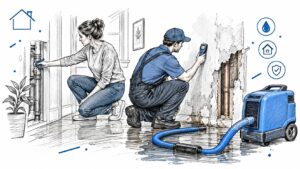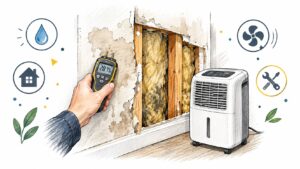
The most common advice about mold is also the most dangerous: if a surface looks bad, just seal it and move on. That sounds efficient after a water loss, but an encapsulant for mold only makes sense after the material has been cleaned, dried, and cleared for reuse. In Central Texas, where humidity hangs around and flash flooding can drive moisture deep into wall cavities and crawl spaces, the wrong timing turns a finish coat into a trap.
Why Encapsulant Is Not a Shortcut Around Remediation
A lot of homeowners hear “encapsulate” and think “cover it up.” That's the wrong frame. Encapsulation is a finishing step, not a substitute for source control, cleaning, or drying, and guidance from HUD makes the durability requirement clear, the coating has to be safely applicable, adhere to existing paint films, and stay intact under expected environmental conditions and use patterns. Independent remediation guidance also warns that encapsulation is not a replacement for removal, especially if active mold growth is still present.
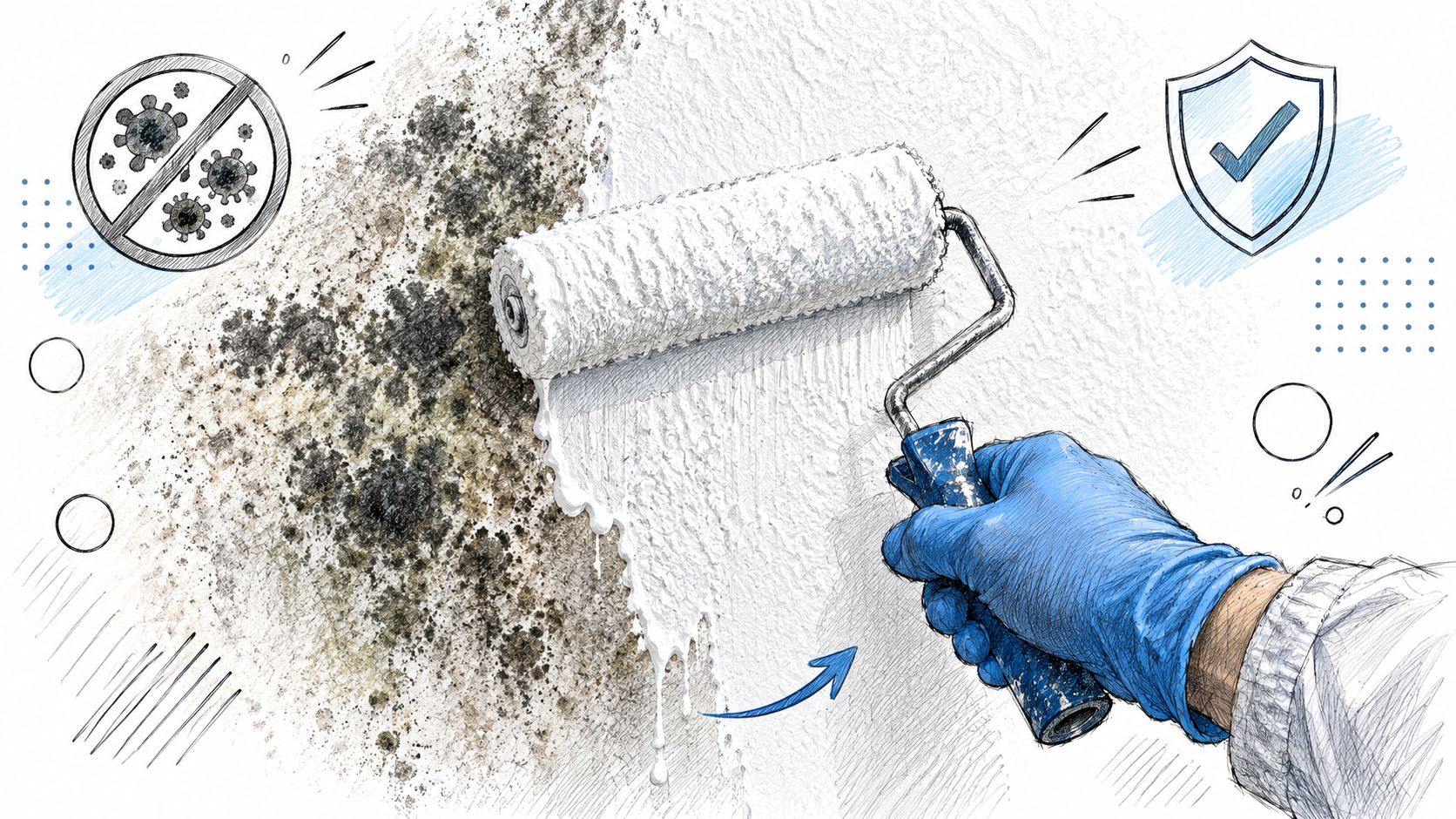
What the product can and can't do
Encapsulant can help reduce future spore release after contamination has already been addressed. It can also help stabilize a cleaned surface that still needs a protective finish, especially where full removal would be unnecessarily destructive. It does not remove the moisture source, and it does not disinfect a damp wall by itself.
That distinction matters after a storm or plumbing leak. If a wall board is still wet, or if framing is still damp behind the face layer, sealing it can hide the problem while the material keeps degrading inside the cavity. That's why the central question isn't whether encapsulant exists. It's whether the material has already been remediated enough to justify it.
Practical rule: if you can't confidently say the area is dry and cleaned, you're not ready to encapsulate.
Why Central Texas makes the decision harder
In Georgetown and Austin, a fast-moving storm can dump water into low areas, garages, and first-floor assemblies, then humidity lingers long after the visible water is gone. That creates a false sense of safety. A surface can look “dry enough” while hidden materials are still holding moisture, which is exactly how an encapsulated layer can fail later.
The safest way to think about mold encapsulation is simple. Use it only when the contaminated material has already been handled correctly, the moisture source is controlled, and the remaining surface is a stable candidate for a protective finish. If those three things aren't true, removal or rebuild is usually the more responsible path.
Types of Encapsulants and How Each One Works
The word “encapsulant” gets used loosely, but the products aren't all the same. In practice, the category breaks into three broad types, and each one behaves differently on a wall, joist, or slab. The wrong match can leave you with peeling coating, trapped moisture, or a finish that never bonds properly.
Barrier coatings work like a raincoat
Barrier or film-forming coatings create a visible membrane over the substrate. Think of them as a raincoat over a cleaned surface. Their job is to lock down residual fibers and reduce the chance that loosened debris becomes airborne again, which is why they're often considered after remediation on framing or other stable porous surfaces.
These products make the most sense where the surface is already sound and the goal is containment, not deep treatment. On wood framing, they can provide a cleanable finish if the moisture conditions are under control. On a still-active wet surface, they can fail because the coating can't overcome hidden moisture movement.
Antimicrobial sealers add a chemical component
Antimicrobial sealers are built to discourage regrowth on the surface by adding biocidal ingredients. They're useful where the cleaned material is still in a high-risk environment and where the rest of the assembly can stay dry. They're not magic, and they're not a substitute for source control.
The advantage is surface protection. The trade-off is that people sometimes rely on the chemistry and ignore the substrate. If the wall cavity keeps getting wet, the product may still be there while the material behind it keeps deteriorating.
Penetrating sealers soak in rather than sit on top
Penetrating surface sealers are the least visible category. They soak into porous material and help bind the surface from within, which can be helpful on concrete or other mineral materials that don't need a heavy surface film. In a basement or crawl space, that lower-profile approach can be useful where a thick coating would be hard to maintain.
The practical choice depends on the substrate. Wood framing, drywall, and masonry do not behave the same way, and neither do their moisture loads. A good contractor matches the product to the surface instead of choosing whatever is on the truck.
Conditions That Justify Encapsulation Over Removal
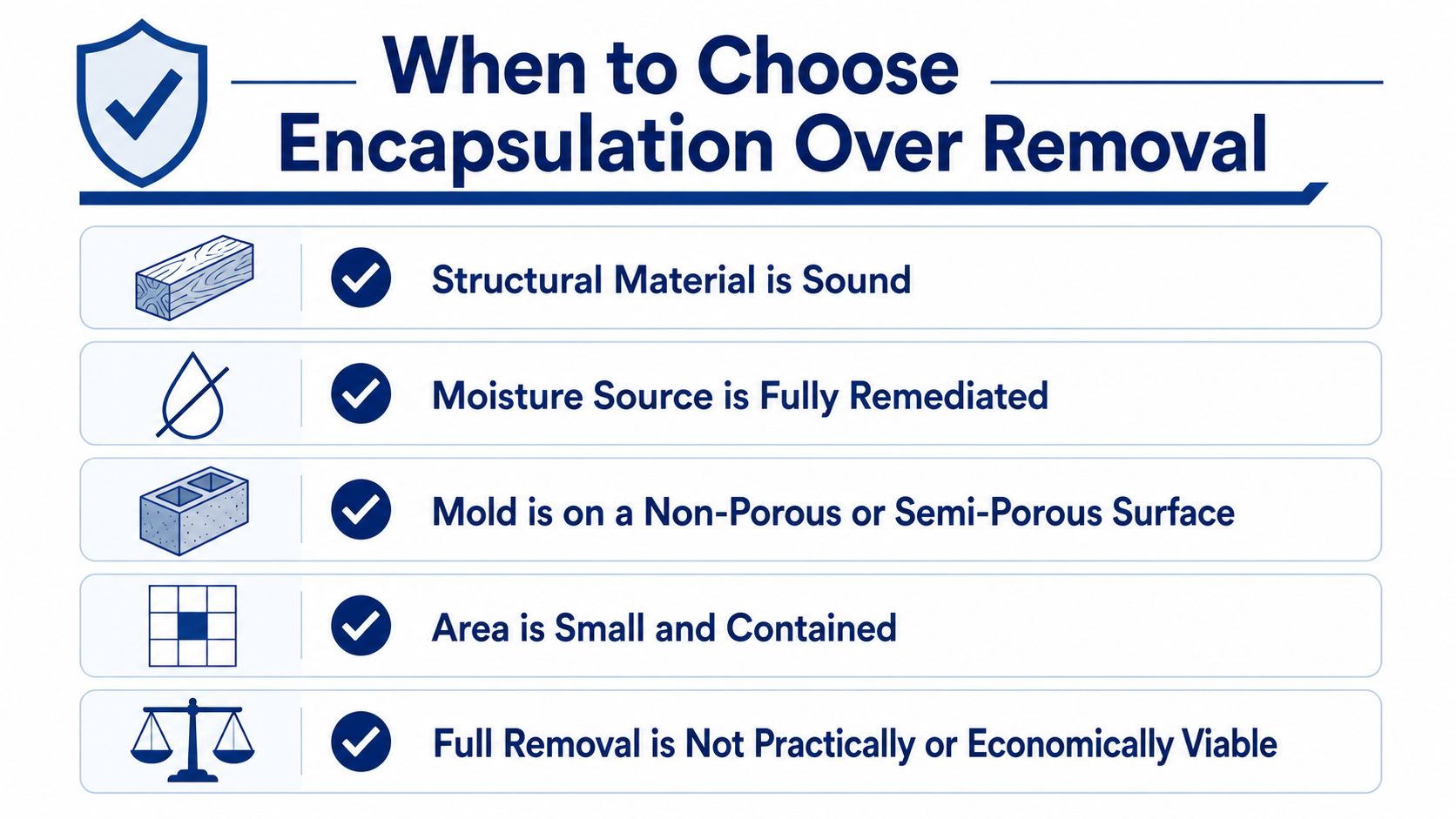
The cleanest decision framework is also the one most marketing pages skip. Encapsulation is justified only when the material is already dry enough, structurally sound enough, and unlikely to get re-wetted again. If one of those pillars is missing, the better answer is usually removal.
Drying verification comes first
A coating should follow drying verification, not replace it. That means the contractor has already addressed the moisture source, the assembly has had time to dry, and the affected material has been checked rather than guessed at. In a Texas home, that step matters more after roof leaks, storm intrusion, and plumbing failures because the visible surface often underrepresents the actual wet area.
If the material still shows signs of ongoing moisture, encapsulation is premature. A sealed layer can slow evaporation and make later drying harder, which is the exact opposite of what you want after a water loss.
The material has to be worth saving
Some materials can be cleaned and stabilized. Others can't. Structural framing that is still sound may be a candidate for encapsulation after proper remediation, but crumbling drywall, delaminated paneling, or badly compromised surfaces usually aren't.
A useful field test is whether the substrate can support the coating long term. If the surface is soft, friable, or coming apart at the edges, the coating becomes a cosmetic shell over a failing base. That's not remediation, it's postponement.
Re-wetting risk changes the answer
Central Texas humidity and post-storm moisture swings matter because they raise the chance that a “dry” assembly gets wet again. Crawl spaces, basements, and poorly ventilated wall cavities are the usual problem spots. In those conditions, sealing before the moisture pattern is understood can trap an issue that should have been removed.
If the area can't stay dry without heroic effort, encapsulation is a risk, not a solution.
The most defensible candidates are small, contained areas where the moisture source is fixed, the material is stable, and replacement would be unnecessarily invasive. When those conditions line up, encapsulation can be a rational finish. When they don't, removal protects the structure and your air quality better.
Encapsulation Versus Removal and Rebuild
Encapsulation and full removal solve different problems. Encapsulation keeps a stable material in place and locks it down after proper cleaning and drying. Removal and rebuild take the contaminated material out of service entirely. The right call depends on durability, risk tolerance, and how much hidden damage the assembly has already taken.
| Factor | Encapsulation | Removal and Rebuild |
|---|---|---|
| Short-term disruption | Less disruptive if the substrate is sound | More disruptive because materials are taken out |
| Upfront scope | Narrower if the area is already remediated | Broader because demolition and reconstruction are involved |
| Durability | Depends on adhesion and moisture control | Stronger when the damaged material is fully replaced |
| Ongoing monitoring | Needed because the surface can fail later | Less ongoing concern once the source is fixed |
| Health risk | Lower only after proper cleaning and drying | Lower when contaminated material is removed |
| Best use case | Stable material with controlled moisture | Active damage, soft materials, or uncertain drying |
Encapsulation tends to win on speed when the substrate is already in good shape. Removal and rebuild win when the damage is uncertain, the structure is compromised, or the area keeps getting wet. For homeowners comparing options after a water loss, the difference is less about price and more about whether the original material is still a reliable base.
That decision gets harder in Central Texas. Flash flooding, humid crawl spaces, and repeated moisture swings can make a surface look stable before the assembly behind it has settled. A sealed coating can hold a salvageable material in place, but it cannot fix soft drywall, delaminated paneling, or framing that has already lost integrity. In those cases, removal protects the structure and gives the area a better chance to dry out correctly.
If you want a practical look at how crews decide what to clean, seal, or remove, this overview on what professionals use for mold remediation is a useful local reference point.
The trade-off is straightforward. Encapsulation is a good finish for a properly remediated surface that still has a sound substrate. Removal is the better answer when the material itself is part of the problem, or when the moisture history is too uncertain to trust a coating alone.
What Proper Application Actually Looks Like
A good encapsulation job looks almost boring from the outside. The surface is clean, the coating is even, and there are no obvious ridges, bubbles, or missed edges. That simplicity hides a lot of preparation, and that prep is where most failures start.
Surface preparation decides the outcome
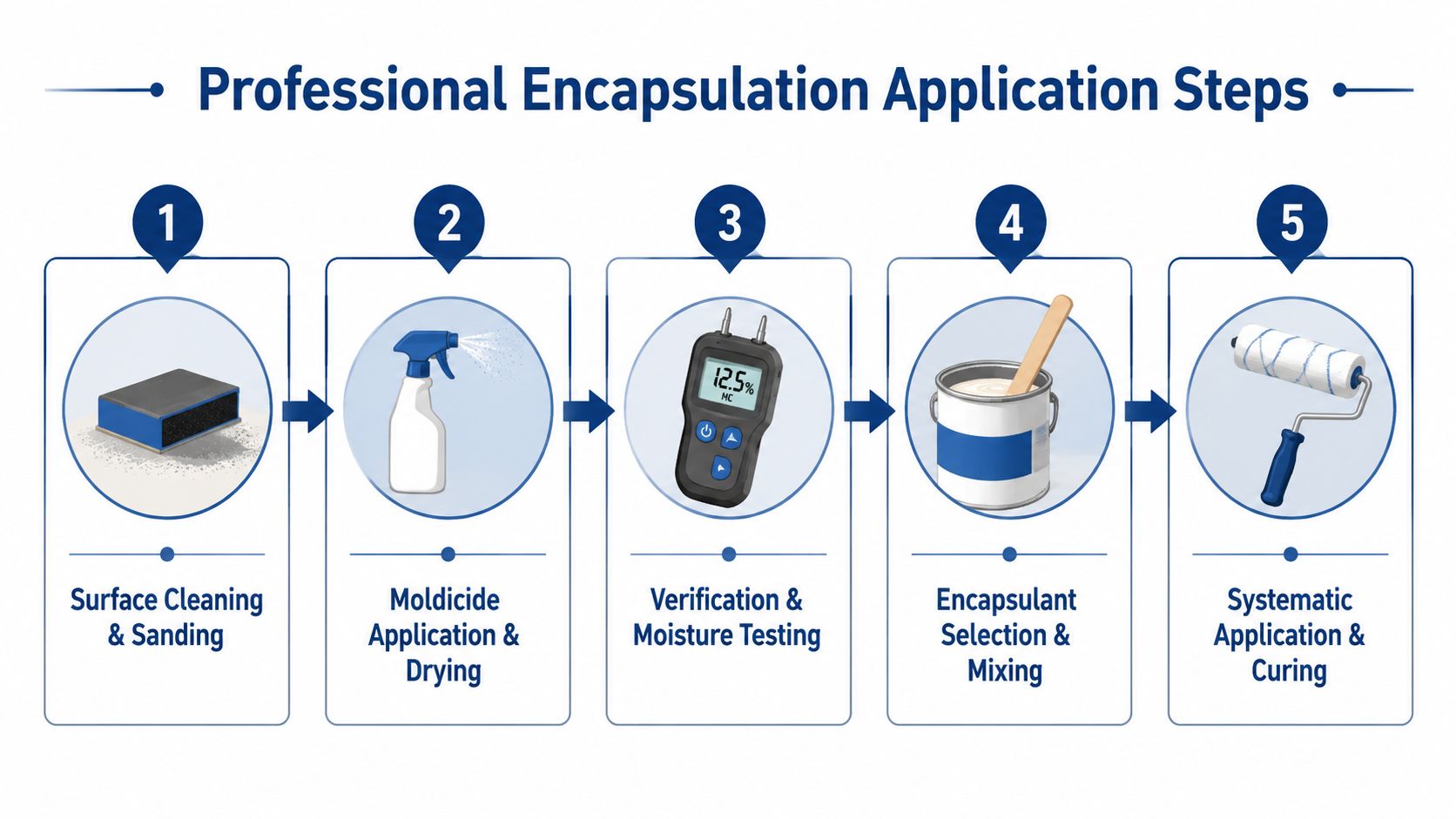
The first job is always cleaning. Dust, loose debris, and degraded surface material have to be removed before any coating goes on. If the encapsulant is asked to bond to powdery residue or failing paint, it can peel later even if the product itself is fine.
That's also where sanding or abrasion comes in when the substrate needs it. The point isn't to make the wall look pretty. It's to create a stable surface the coating can grip.
Product selection has to fit the environment
Not every encapsulant is right for every room. A product for a conditioned living space may behave differently than one used in a crawl space or utility room. The coating also has to work with the underlying finish if old paint is still present, since HUD's guidance calls for compatibility with existing paint films and long-term integrity under expected use.
Humidity and ventilation affect curing. If the air is too damp or the space isn't moving enough air, the coating may take longer to cure or may not set the way the manufacturer intended. That's why the application environment matters as much as the brand on the pail.
What a homeowner should expect to see
A legitimate job usually includes a logical sequence, not a rushed paint-out.
- Cleaning and drying first: the surface should be ready before the first coat.
- Verification next: moisture should be checked, not assumed.
- Controlled application: the coating should be applied evenly, with attention to edges and corners.
- Curing time respected: the space shouldn't be put back into service before the product has set.
- No shortcut finish: if a contractor skips prep to save time, the failure usually shows up later as peeling or hidden odor.
A homeowner doesn't need to do the work, but they do need to recognize the process. If the crew is painting over questionable material in one visit, that's a red flag. Proper encapsulant for mold work is slow enough to look methodical.
Inspection, Maintenance, and Insurance Considerations
A sealed surface isn't a set-it-and-forget-it repair. It still needs eyes on it, especially in homes that have already dealt with storm water or long humidity cycles. In Georgetown and Austin, I've seen encapsulated areas hold up well when the source was fixed, and I've also seen them fail when a hidden leak kept feeding the same wall from behind.
What to look for after the job
Discoloration, peeling, hairline cracking, and soft spots are the obvious warning signs. So is a return of musty odor near the treated area. If the encapsulant starts breaking away from the substrate, the system has lost the bond it needed to do its job.
That's why periodic inspection matters more in crawl spaces, basements, and below-grade rooms. Those spaces see the most moisture stress, and they're the most likely to hide a re-wetting event until the problem spreads.
Why documentation matters with claims
Insurers often want to see that the water source was handled and that the repair wasn't just cosmetic. Good documentation helps show why encapsulation was chosen, what condition the material was in, and whether the area had been dried and cleaned before coating. A contractor's moisture readings and inspection notes can make a big difference if a claim gets reviewed later.
For homeowners who are unsure what testing looks like, this local overview on how to test a house for mold is a practical starting point. It's especially relevant after a leak or flood because the decision to encapsulate should be based on what is present, not on what looks acceptable from the hallway.
Encapsulation works best as a documented, monitored repair. If nobody checks it after the fact, you're relying on hope instead of evidence.
When to Call a Professional in Georgetown and Austin
Central Texas homes ask a lot of any moisture repair. Flash flooding, wind-driven rain, hot weather, and sticky humidity all push materials harder than most homeowners expect. That's why a professional moisture assessment matters before anyone decides whether to remove, dry, or encapsulate.
A qualified restoration company brings instrumented moisture checks, mold inspection, and a full scope that can carry the work from mitigation through reconstruction. RestoTek TX handles water damage inspection, structural drying, mold testing, and rebuild work for Georgetown and Austin properties, which is exactly the range you want when a wall or floor assembly needs a real decision instead of a guess. You can see that broader service approach on their mold remediation page.
Why local conditions change the risk
A home that stays closed up in a humid stretch can behave differently than one that gets a one-time plumbing leak. Flash-flood losses can soak materials from below, while roof and siding failures can feed moisture from above. Those are not the same repairs, and they don't lead to the same encapsulation decision.
A homeowner can't see inside a cavity, and that's the problem. If the source isn't fully resolved, sealing the area can hide ongoing damage and delay the repair the structure needs.
What a good assessment should tell you
You're looking for three answers. Is the material dry enough, is the substrate sound enough, and is the re-wetting risk under control. If the answer to all three is yes, encapsulation may be appropriate. If not, removal is usually the safer route.
In Texas humidity, the right repair is the one that still makes sense after the next storm.
For homeowners in Georgetown and Austin who are dealing with water damage, the best move is to get the area inspected before deciding on a sealant. That keeps you from spending money on a finish that can't solve the underlying problem.
If you're dealing with a leak, flood, or hidden moisture issue in Georgetown or Austin, RestoTek TX can inspect the damage, test for mold, dry the affected materials, and recommend whether encapsulation or removal makes sense. Visit RestoTek TX to request help before a small wet area turns into a larger rebuild.