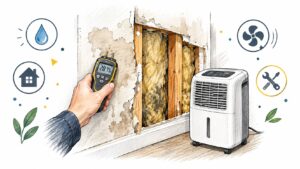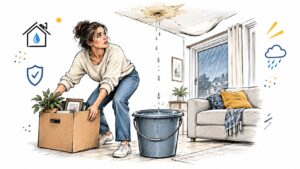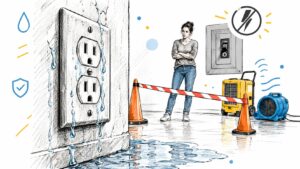
You can do everything else right, keep the thermostat steady, wrap the pipes, even remember the outdoor hose, and still get a mess when a Central Texas cold snap hits hard overnight. I've walked into Georgetown and Austin homes where the furnace was running, the family had done the usual winter prep, and a line in an attic or exterior wall still let go because the pipe was cold, stressed, or both. Burst-pipe prevention here isn't just a winter task, it's a year-round plumbing habit that has to account for freezing weather and household pressure.
Why Central Texas Homes Face Burst Pipe Risks
A hard freeze in Central Texas feels different from the long winters farther north. One evening in Austin, a home can be sitting at a comfortable indoor temperature, then before dawn the attic line above a hallway drops into the danger zone because the house was built to shed heat, not hold it. That's when the phone calls start, cabinets get ripped open, and people realize the plumbing they never see has been sitting in the cold all night.
The local problem is structural as much as it is climatic. Older homes, additions, and mixed-age plumbing often put pipes in attics, garages, crawl spaces, and exterior walls, all places that can lose heat quickly. The earlier section on ice-storm damage in Central Texas explains why that layout turns a short freeze into a pipe emergency, and why a home that works fine in August can fail fast in January when exposed plumbing gets little protection from the building envelope. See the local recovery context in this Central Texas ice-storm resource.
The other risk is always there
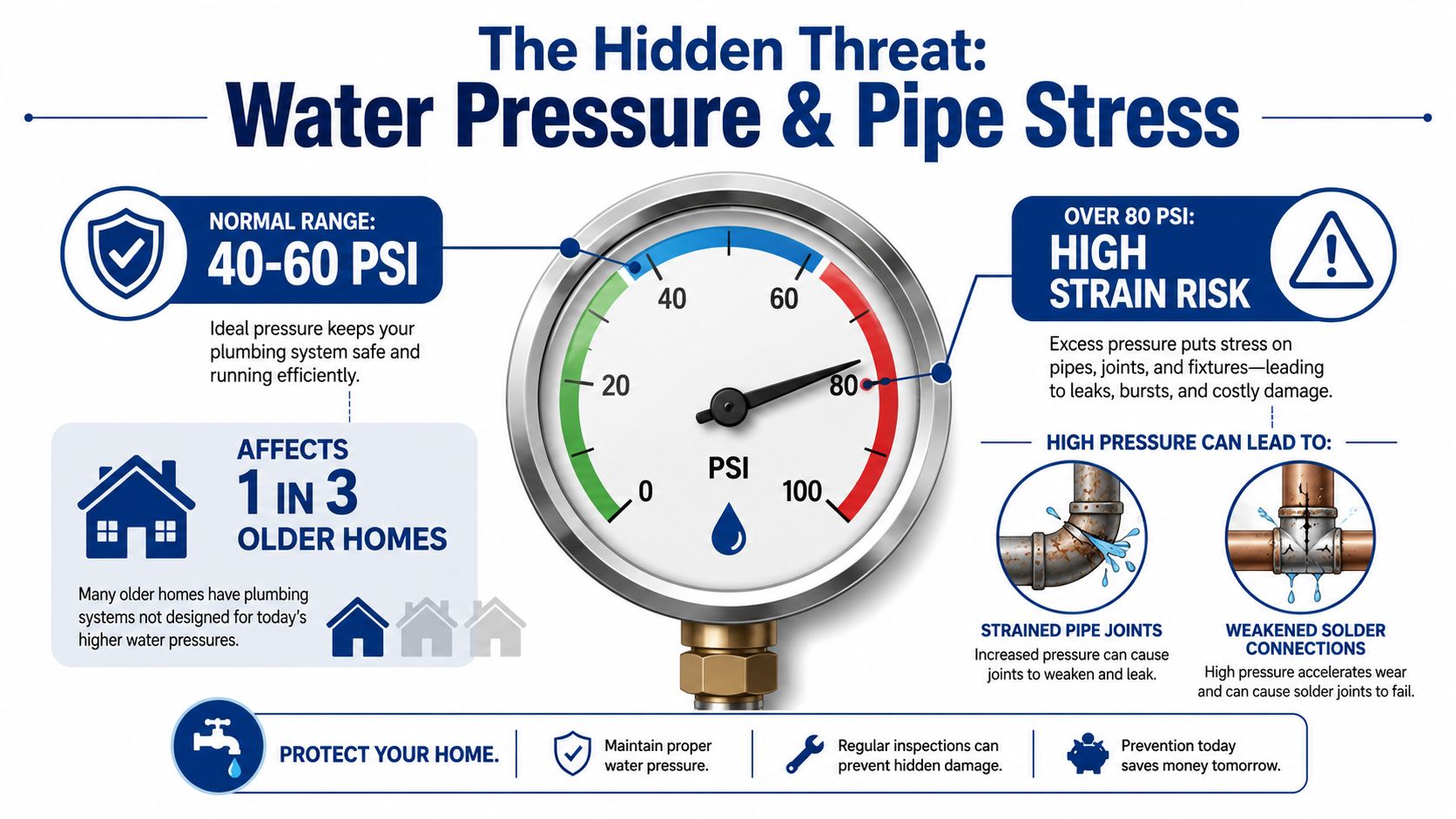
Freeze events get the headlines, but water pressure creates its own long-term stress. A 2021 study in Sustainable Cities and Society found that reducing mean pressure can lower pipe breaks by 18% to 30% for the pipe types analyzed, and that lowering pressure range can have an even larger effect on break frequency. The same research points to pressure range as especially important for cast-iron pipe breaks in winter, which is why a house with no freeze problem can still have a pressure problem waiting to show up later in a joint or soldered connection. That's the part many homeowners miss.
Practical rule: If a home has both freeze exposure and high pressure, the weaker one usually fails first. In Central Texas, that's often the pipe in the coldest location, but not always the oldest joint.
The broader infrastructure picture backs that up. A 2018 Water Research Foundation-based study reported that average water-main break rates rose 27%, from 11.0 to 14.0 breaks per 100 miles per year between 2012 and 2018, which shows that pipe failures are not rare events or freak accidents. They're what happens when stress, age, and weather line up. For homeowners, the lesson is simple, inspect early, monitor pressure, and don't assume a house is safe just because it made it through last winter.
Insulating and Sealing Vulnerable Plumbing
The best freeze protection starts where cold air gets into the building. In Central Texas homes, that usually means the attic, the garage, the crawl space, and any wall cavity on an exterior side of the house. If the pipe is exposed, it needs insulation, but if the air around it is leaking in, insulation alone won't save it.
Start with the coldest paths
Pipe insulation sleeves work well on straight, accessible runs. Foam covers help on exposed sections, and hose bib covers are worth using on exterior spigots that sit in the wind. In an encapsulated crawl space, the goal is to keep the space itself from becoming a cold reservoir that drags plumbing down with it, which is why the layout matters as much as the wrap on the pipe. If the crawl space is part of your home's vulnerable plumbing zone, the overview on encapsulated crawl spaces is useful for understanding why sealing and insulation have to work together.
Heat tape has a place on tricky sections, but it's not a cure-all. Use it on vulnerable lines only if it's made for plumbing and installed correctly, because the point is gentle heat, not turning the pipe into a toaster.
Don't stop at the pipe body
The common mistake is partial protection. A homeowner insulates the visible pipe, then leaves the hose bib, rim joist, or wall penetration open to air movement, and the freeze still happens because cold air reaches the line where it enters the house. That's why sealing matters as much as wrapping.
A tight checklist helps:
- Seal penetrations: Caulk or foam around pipe openings, rim joists, and gaps where utilities enter the house.
- Cover exterior fixtures: Protect hose bibs and drain outdoor faucets before the first hard freeze.
- Insulate exposed runs: Focus on attics, garages, and any plumbing against exterior walls.
- Keep airflow out: Cold air from a small crack can do more damage than a thick pipe wrap can undo.
Cold air doesn't need a big opening. A small draft around a line can freeze the section that sits closest to it, then the rest of the pipe follows.
One more thing. Insulation works best when it's part of a system, not a one-off purchase. If the space is leaky, the pipe is still at risk. If the pipe is insulated but the valve and penetration are bare, the system still fails.
Managing Water Pressure to Reduce Pipe Stress
Pressure problems don't wait for winter. They wear on pipes every day, which is why a house can survive a freeze and still spring a leak later at a joint, a fixture connection, or a weak section of pipe. In older Georgetown and Austin homes, mixed plumbing ages make this worse because newer repairs may be tied into older supply lines that haven't been balanced or checked in years.

Test the pressure before you guess
A simple hose-bib gauge gives you a fast reading at home. The practical target many service guides use is around 40 to 65 PSI, and if the reading stays above that range, a pressure-reducing valve deserves attention. That range isn't a magic number for every home, but it's a useful working zone for spotting systems that are putting unnecessary strain on joints and fixtures.
The reason this matters is straightforward. Higher pressure pushes harder on solder connections, fittings, and flexible supply lines, then every water-hammer event adds a jolt on top of that. If you hear banging when a washer, dishwasher, or faucet shuts off, that's not harmless noise. It's a sign the system is taking repeated hits.
Fix the spikes, not just the reading
Pipe supports help reduce movement, and arrestors can soften water hammer where sudden shutoff is common. If pressure tests come back high, a licensed plumber can inspect or replace the pressure-reducing valve before the stress shows up as a leak. In my experience, homeowners often wait until a pipe bursts to think about pressure, but pressure problems are usually visible long before the failure.
Good prevention question: Is this a freeze problem, a pressure problem, or both? If you don't test, you're guessing.
Year-round maintenance pays off. If the house has stable winter protection but still sees repeated spikes, the plumbing is never safe. The fix isn't more tape on the pipe. It's getting the system back into a healthy range.
Shutoff and Drainage Procedures for Absences and Outages
Leaving town for a few days changes the risk profile. So does a power outage during a hard freeze. A warm occupied home with moving water has more margin than a vacant house, and that's why the minimum safe plan depends on whether you're home, away, or stuck without heat.
Short trips and hard freezes are not the same thing
For a short absence in mild weather, a watchful neighbor and a steady thermostat may be enough. During a hard freeze, or if the power is out and the house can't stay warm, you need a more aggressive plan. Public guidance consistently points to keeping the indoor temperature at or above 55°F, insulating unheated spaces, disconnecting hoses, and letting vulnerable faucets drip slightly during extreme cold, but that advice assumes the heating system is working and the house is occupied enough to catch trouble early. When that assumption breaks, so should the casual approach.
The first thing people forget is the outdoor plumbing. Drain sprinkler systems before the first freeze, disconnect garden hoses, and shut off outdoor faucets from the inside if the setup allows it. If the home has a vacant wing, a rental unit, or a second property, every exposed line needs the same attention, because the weakest branch is the one that fails first.
Know when drip is enough
A slight drip can help in a lived-in home during a freeze, especially if the heat is on and the plumbing is otherwise protected. It is not a substitute for shutting down a vulnerable property that will sit cold for days. If the furnace fails, if the power goes out overnight, or if you're leaving a second home empty in a hard freeze, full shutoff and drainage are the safer call.
The exact procedure matters:
- Find the main shutoff valve before you need it.
- Turn off the water supply if the home will be unheated or unoccupied in freezing weather.
- Open faucets to drain the lines and relieve pressure.
- Handle outdoor systems separately, including hoses, sprinkler lines, and exterior spigots.
For a burst event after the fact, the recovery steps in this burst-pipe response guide are the right reference point. Preparation is cheaper than cleanup, but cleanup starts with knowing where the main valve is.
Safe Thawing and Emergency Response When Pipes Freeze
A frozen pipe is not the moment to improvise. The first job is to stop pressure from building against a cracked line, because the burst often happens when thawing starts and water pressure comes back against a weak spot. That's why the order matters more than the tool you grab.
Open the faucets first
Open the affected faucet so pressure has somewhere to go. If there's any sign of cracking, wet spots, or active leakage, shut off the main water supply before you start thawing. This is the point where people lose the most water, because they heat the line first and ask questions later.
Then thaw slowly. Safe options include an electric heating pad, a heat lamp, or a hair dryer moved gradually along the frozen section. Work from the faucet side toward the colder section, and keep the heat moving. Excessive heat can split solder joints or deform plastic pipe, and a torch can ignite nearby materials or damage the surrounding wall cavity.
Never use an open flame on plumbing. If a frozen line is close enough to burn, it's close enough to fail badly.
Check what you can't see
After the line thaws, inspect the nearby wall, ceiling, and cabinet areas. Hidden leaks don't always announce themselves right away, and water can keep moving through cavities after the visible flow stops. If the pipe froze inside a wall, the damage may be behind drywall or under insulation, where the moisture stays trapped long enough to create a second problem.
That's why I tell homeowners not to celebrate too early when water starts running again. A thawed pipe can still be a damaged pipe, and a dry floor can still have wet framing behind it. The emergency is over only after the system is shut, checked, and stable.
Seasonal Prevention Checklist and When to Call Professionals
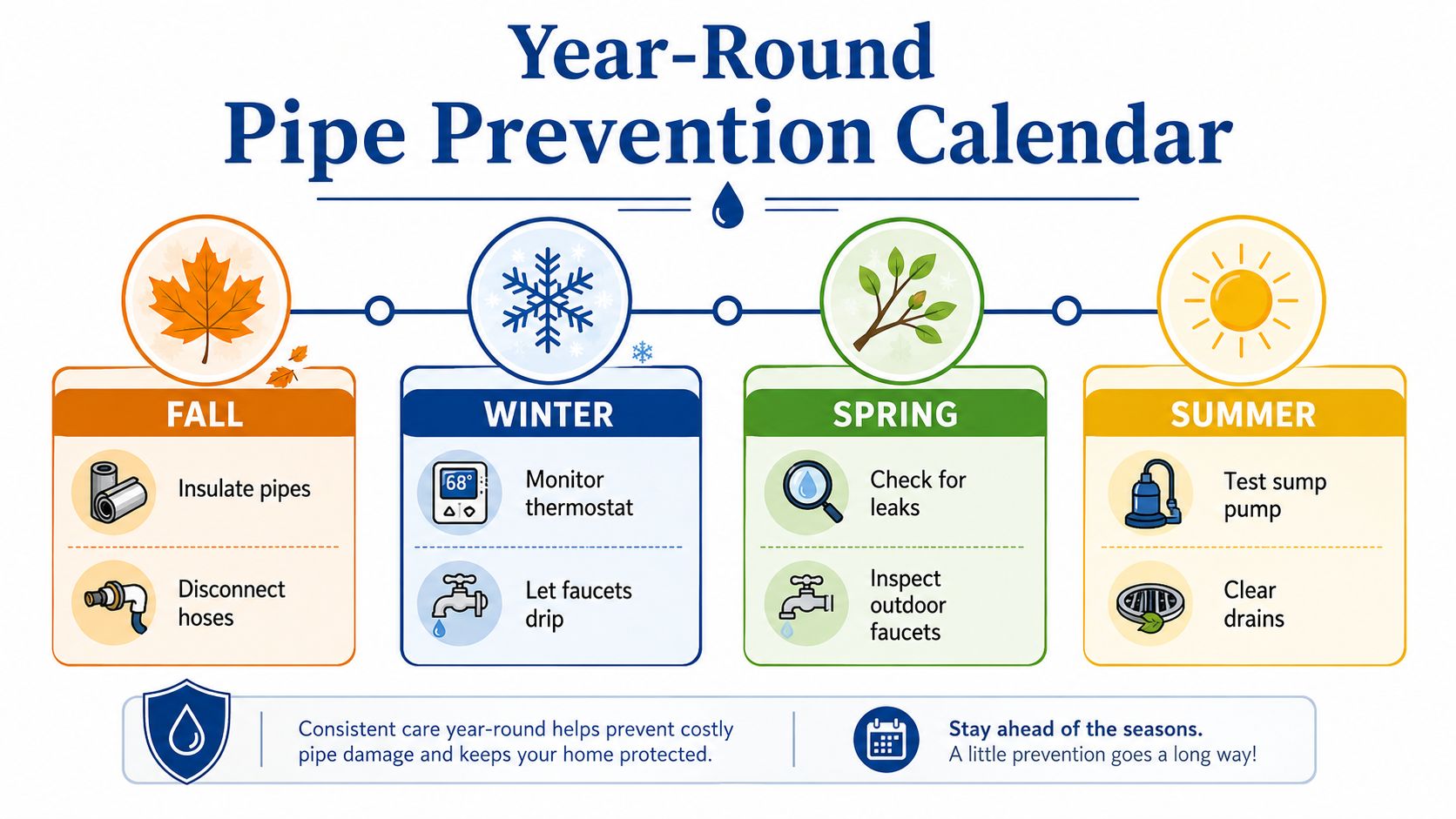
A burst pipe usually starts as a small seasonal miss, a hose left on in fall, a cold room that stays uninspected in winter, a slow leak that goes unnoticed in spring, or a pressure issue that never got checked in summer. In Central Texas, I see both freeze-related failures and pressure-related failures, and the homes that hold up best are the ones where owners stay ahead of both problems. Keep the routine simple and you are more likely to follow it.
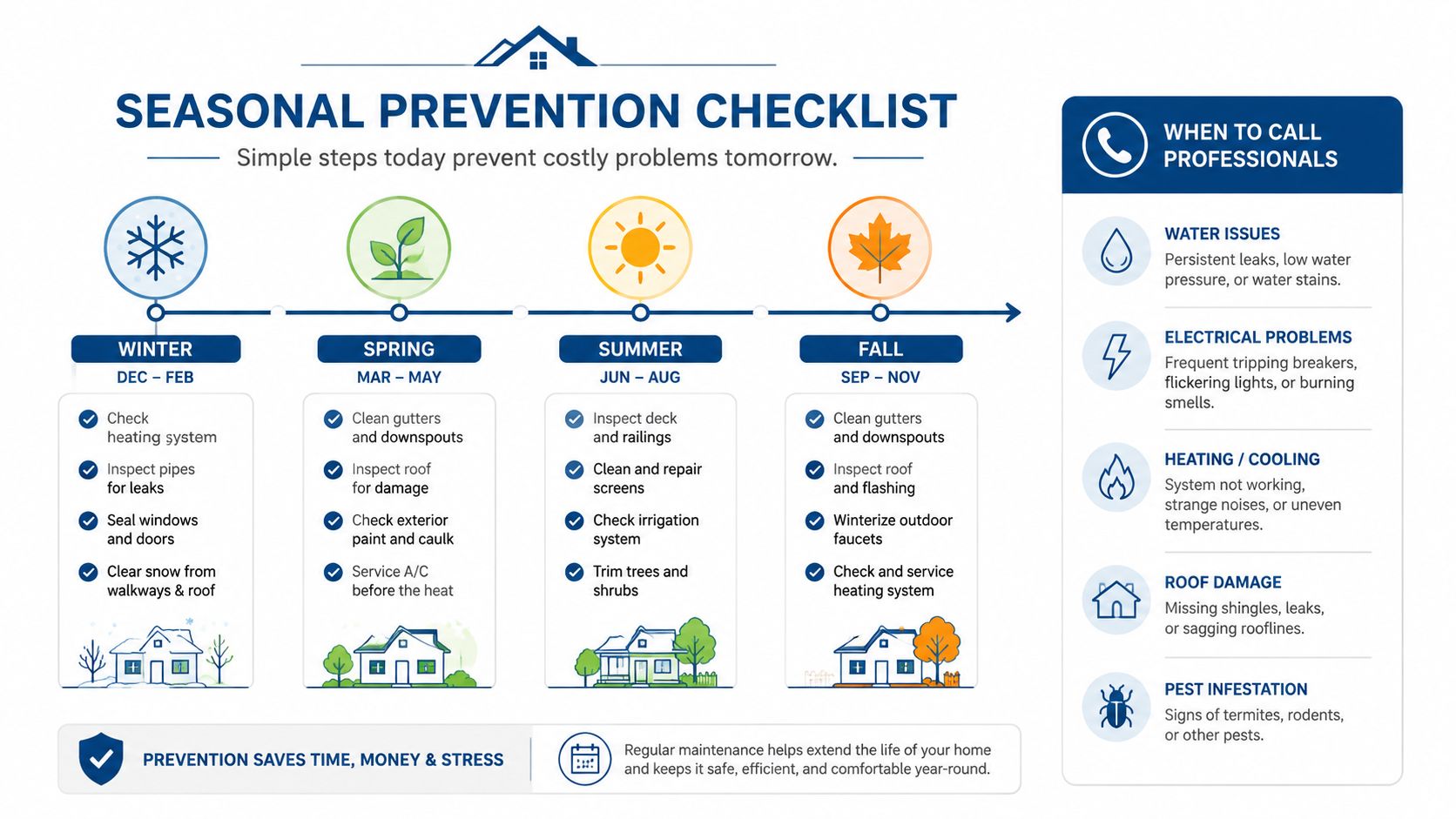
A practical year-round rhythm
Use the seasons as your check points:
- Fall: Insulate exposed pipes, disconnect hoses, and seal obvious air leaks.
- Winter: Keep indoor temperatures steady, watch rooms with exterior walls, and use a drip only when the house is occupied and the line is protected from freezing.
- Spring: Check for small leaks, inspect outdoor faucets, and look for signs of pressure stress after cold weather.
- Summer: Test access to the main shutoff, listen for water-hammer noises, and clear out areas where hidden plumbing is hard to reach.
Pressure matters all year, even in a mild winter. A system that rattles, bangs, or swings between strong and weak flow is telling you something, and repeated leaks at the same fixture usually point to more than bad luck. In those cases, a licensed plumber should inspect the system, because pressure regulator installation, pipe replacement, and water-line repairs are not good DIY work when the plumbing is mixed-age or buried in walls.
If a pipe has already burst, response time matters more than trying to clean every surface yourself. RestoTek TX handles water damage inspection, extraction, structural drying, leak detection, microbial prevention, and reconstruction for homes and properties in Georgetown and Austin.
Bottom line: Prevention costs less, but quick restoration keeps a bad day from turning into a long rebuild.