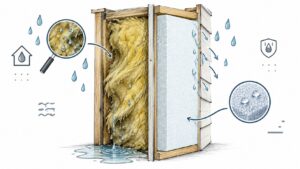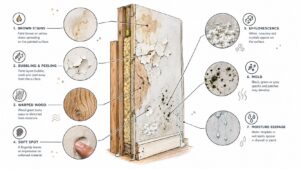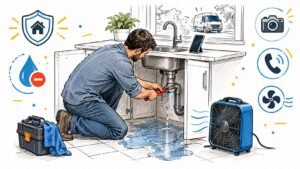
A lot of Central Texas homeowners meet the insurance claim process at the worst possible moment. It's late, the floor is wet, the baseboards are swelling, and you're trying to decide whether to call the plumber, the insurance company, or someone with extraction equipment first.
That first hour matters more than expected. On water losses, the claim usually doesn't go sideways because of one dramatic mistake. It drifts off course because the source wasn't stopped fast enough, the wet areas weren't documented before tear-out, or the adjuster walked into a house where the best evidence was already in a dumpster.
In Georgetown and Austin, I've seen the same pattern over and over. Homeowners who move quickly and document carefully usually have a cleaner path through the insurance claim process. Homeowners who rely on memory, verbal approvals, or partial paperwork usually spend the next several weeks arguing about scope, timing, or what was damaged.
The First Hour After Water Enters Your Home
At 2 a.m. in Georgetown, a homeowner wakes up to cold water running across tile and under the baseboards. It started with a burst supply line behind a vanity wall. By the time they hit the bathroom, the water has already reached the hallway and one bedroom threshold.
The first ten minutes decide whether this becomes a controlled water-loss claim or a much bigger restoration job.
What to do first
Start with the source. If a pressurized line is feeding the loss, shut off the main water supply at the meter or inside shutoff as fast as you can. After that, cut power to affected rooms at the breaker if water is moving near outlets, appliance connections, or low electrical runs.
Then identify the water as best you can. Clean water from a supply line is treated differently than gray water from an appliance discharge or black water from a sewage backup. That distinction affects safety, demolition decisions, and often the conversation about coverage and scope.
Before you start moving furniture all over the house, call a restoration contractor who can respond immediately. A crew that arrives during the first few hours usually has a much better shot at limiting spread, documenting wet materials in place, and setting up drying before secondary damage gets worse. Resto crews also know how to preserve evidence while they stabilize the structure, which is where many homeowners get stuck if they start cleanup alone.
For a more detailed first-response checklist, RestoTek TX has a practical guide on what to do immediately after water damage in your Central Texas home.
The tension nobody tells you about
You need to act fast, but you also need proof.
If you wait until the next day to start mitigation, the loss often gets worse. If you tear everything out before photos, moisture readings, and source evidence are captured, the claim can bog down because the adjuster can't verify what was wet before the scene changed.
Practical rule: Stop the source, make the area safe, document what you can, and get qualified mitigation moving. Fast action and solid evidence can happen on the same visit if the response is organized.
That's the rhythm homeowners need to understand. Water damage doesn't pause while you sort out paperwork, but the paperwork still matters.
How the Insurance Claim Process Actually Works
Most homeowners think a claim is one event. It isn't. In practice, the insurance claim process follows a staged workflow. Modern claim handling is commonly framed as notification, registration, audit, settlement, and closing, which is why a single water loss can move through several control points before money is released or the file is closed, as outlined in this claims workflow reference from the University of Lausanne.
The five stages in plain language
Notification and policy confirmation
You report the loss. The carrier opens the file, assigns a claim number, and starts checking whether the cause of loss appears covered under your policy.Inspection and scope setting
Someone evaluates the affected areas, the source, and visible damage. The claim starts taking shape on paper.Mitigation and documentation
Water extraction, drying, containment, and selective tear-out may begin while records are built around the loss.Estimate review and negotiation
The adjuster compares carrier scope to contractor scope. If hidden damage appears after drying or demolition, supplements may be needed.Repair, payment, and closing
Funds move, repairs finish, and the file gets closed once the insurer believes covered work is resolved.
Here's a visual that matches what many homeowners experience locally.
What you control at each handoff
Homeowners don't control adjuster staffing or carrier backlog. They do control the quality of the file entering each stage.
At notification, accuracy matters. Be clear about when the loss was discovered and what caused it if known. At inspection, make sure every affected room is seen. During mitigation, insist on daily records, equipment logs, and moisture data. During estimate review, compare line items instead of relying on broad summaries.
If you want a homeowner-focused overview of opening and managing a water-loss file, this page on home insurance water damage claims is a useful reference.
The fastest claims usually aren't the smallest claims. They're the claims where each handoff is documented well enough that the next person doesn't have to guess.
That's the operational side of the insurance claim process. Once you see it as a sequence of handoffs, delays make more sense and so do the fixes.
Building Your Claim File Before Mitigation Begins
The strongest water-loss files are built before demolition changes the scene. That isn't paperwork for paperwork's sake. It's how carriers and adjusters distinguish source, extent, and causation before wet drywall gets cut, baseboards get pulled, and equipment starts drying the structure.
Best-practice guidance for water-loss documentation calls for wide-angle room photos, close-ups of failure points, timestamped video, receipts, and moisture readings collected before drying begins, followed by daily logs during structural drying. That documentation standard is laid out in this water damage documentation guidance for restoration claims.
What belongs in the file before tear-out
Capture the loss in layers, not just a few phone photos.
- Whole-room photos that show where the water traveled, how far it spread, and which materials are affected.
- Close-ups of the source area such as a failed supply line, appliance connection, overflow point, or slab-leak access area.
- Video walkthroughs with a spoken description of when the loss was found and what rooms are involved.
- Moisture meter readings on flooring, drywall, trim, and adjacent materials.
- Visible waterline evidence on baseboards, cabinetry, furniture feet, and sheetrock.
- Contents photos before items are moved, boxed, or discarded.
- Emergency receipts for plumbing, hotel stays, tarps, fans, or immediate protective measures.
How experienced crews handle speed and evidence together
Homeowners often think they have to choose between preserving evidence and starting dry-out. They usually don't.
A disciplined mitigation crew can photograph the room, record moisture readings, identify affected material boundaries, and still get extraction and equipment placement moving on the same visit. The key is sequence. Document first, then disturb the structure only as much as needed to stabilize it safely.
Organized progress tracking helps. Homeowners should ask for a running record of readings, photos, and job notes instead of waiting until the end. RestoTek TX outlines that kind of running file in its page on progress documentation.
What weak documentation looks like
Weak files usually have one or more of these problems:
- After-the-fact photos only where the drywall is already cut and the adjuster can't see original conditions
- No moisture map showing wet and dry boundaries
- Missing source evidence because the failed part was tossed
- No daily drying notes to show the progression toward dry standards
If the file starts weak, the rest of the claim gets harder. The adjuster has less to verify, the contractor has more to explain, and the homeowner has fewer facts to rely on when scope questions come up.
Working With the Adjuster Without Losing Ground
When a water claim opens in Central Texas, the person who shows up may be a staff adjuster from the carrier, an independent adjuster handling overflow volume, or another representative working the file on the carrier's behalf. Homeowners often assume every adjuster has the same authority. They don't.
That matters because the insurance claim process can slow down when the person on site can inspect and document but can't finalize scope decisions without someone else's review.
What the adjuster is trying to verify
Most adjusters walk in with four priorities:
- Cause of loss. What failed, and is that event covered under the policy?
- Affected area. Which rooms and materials were directly impacted?
- Condition and extent. What's visibly damaged, what's wet, and what may require verification after drying?
- Support for line items. Does the contractor's estimate match what can be observed and defended?
Homeowners help themselves by preparing a one-page summary with the date discovered, suspected source, emergency steps taken, and a room-by-room list of visible damage. Keep it factual. Don't oversell anything. Exaggeration hurts credibility faster than expected.
Walk the property with the adjuster, but don't perform for them. Show the source, the readings, the damaged materials, and the areas you're concerned about. Then let the evidence do the work.
Adjuster types you may encounter on a Central Texas water claim
| Adjuster Type | Who They Work For | What They Decide | Typical Response Window |
|---|---|---|---|
| Staff adjuster | The insurance carrier | Often scopes the loss and advances the file inside the carrier system | Varies by carrier workload and storm volume |
| Independent adjuster | Contracted to handle claims for the carrier | Usually inspects, documents, and submits findings for carrier review | Often used when claim volume spikes |
| Desk adjuster | The carrier, usually remote | Reviews documents, estimates, supplements, and approvals from the office | May engage after the field visit rather than at the initial inspection |
How to keep the relationship productive
A collaborative tone works better than a combative one in most water claims.
Bring your documentation folder. Point out moisture readings, hidden wet areas already identified by the mitigation crew, and any material that was removed for safety or access. If part of the loss changed before the inspection, say exactly why and show the before photos.
Escalation should be deliberate, not emotional. If the field person says they need desk approval, ask who makes the final scope decision and what documents they need next. That question moves the file forward. Arguing in the driveway usually doesn't.
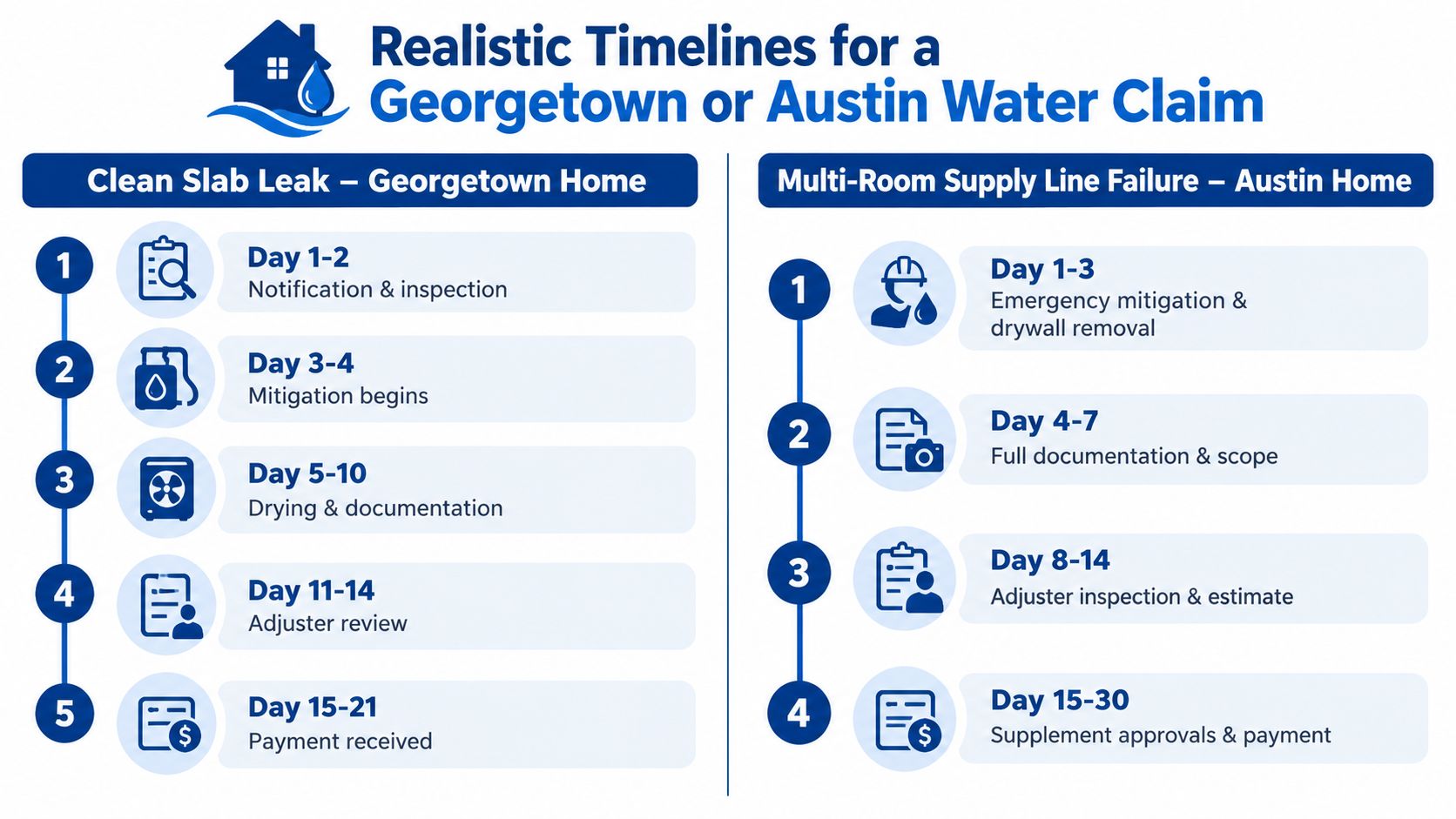
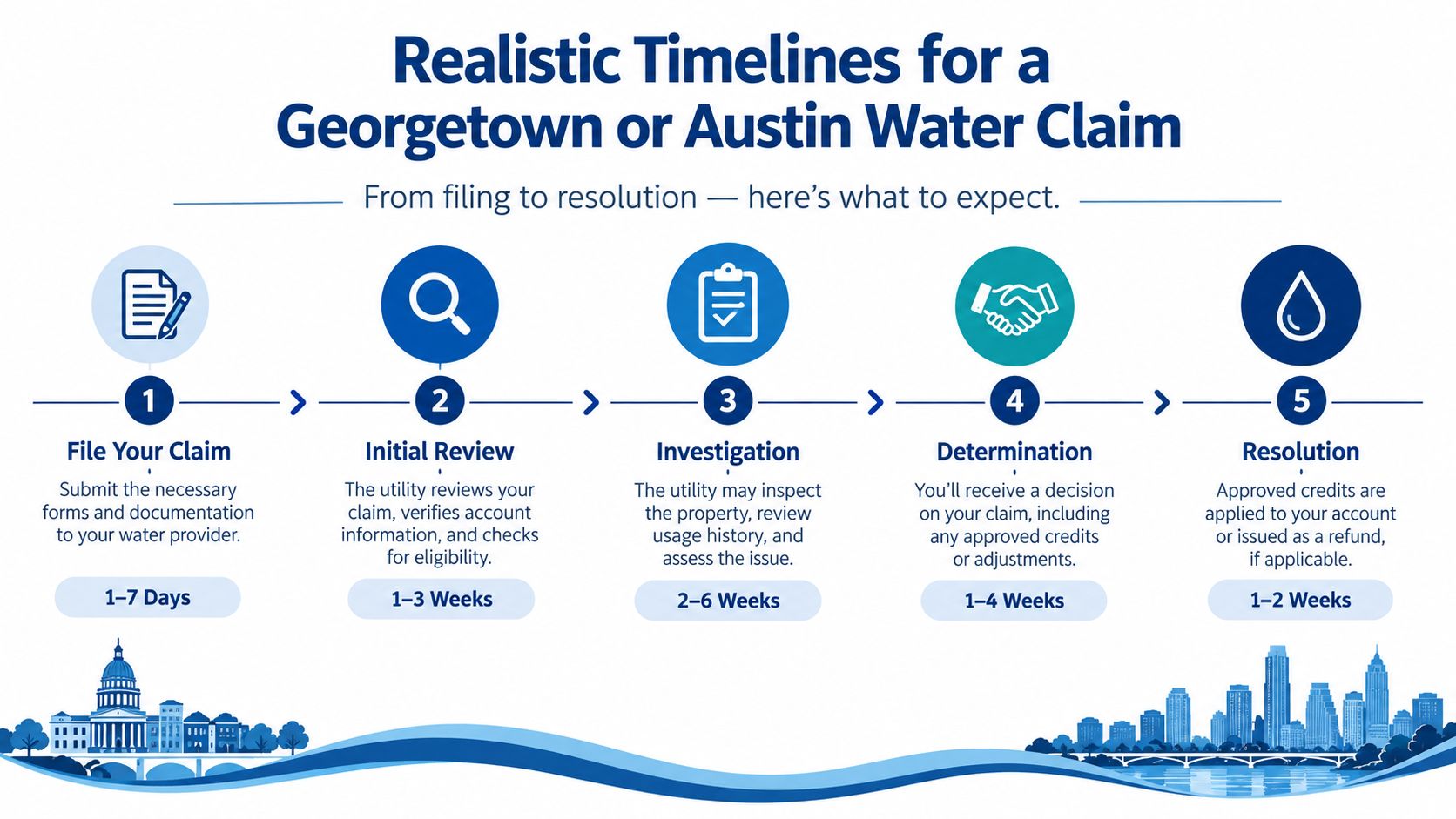
Realistic Timelines for a Georgetown or Austin Water Claim
Homeowners usually want one answer to one question: how long is this going to take?
The honest answer is that simple property claims are often resolved in roughly 15 to 45 days, while more complex water losses can stretch into weeks or months when drying, scope disputes, or repairs complicate the file, according to this water damage claim timeline overview. That range lines up with what many of us see in the field. Some files move cleanly. Others hit one bottleneck after another.
Two common Central Texas claim paths
A clean slab leak in a single-story Georgetown home often moves faster than a multi-room supply line failure in a two-story Austin house. The first may involve focused drying, limited material removal, and a tighter repair scope. The second often includes ceiling cavities, insulation loss, multiple flooring transitions, and hidden damage that only shows up after the structure is opened.
Here's the local timeline visually.
The bottlenecks that stretch a file
Four delays show up repeatedly on Central Texas water losses.
Adjuster backlog after regional storms
Even a non-storm interior leak can sit in a crowded queue if carriers are handling area-wide claim volume.Contents inventory delays
Structural scope may move ahead while the personal property side stalls because nobody has finalized what was damaged, cleaned, or discarded.Supplement negotiations
Hidden damage behind cabinets, under flooring, or above ceilings often appears after mitigation. That triggers estimate revisions and review cycles.Mortgage company endorsement holds
On larger checks, lenders may require endorsements or additional documentation before funds are released for repairs.
When homeowners should start pushing for updates
Silence is the signal.
If mitigation is done, the scope is in, and nobody can tell you who currently owns the next decision, the file is losing momentum. That's usually the moment to ask for status in writing, confirm whether a supplement is pending, and request the exact document or approval the carrier is waiting on.
In bigger losses, payment timing and repair timing separate from each other. The house may be dry while the claim is still unresolved. That mismatch frustrates homeowners, but it's common. The practical move is to treat each stage like its own checkpoint rather than expecting one smooth, uninterrupted path.
Common Pitfalls That Quietly Shrink Your Payout
A lot of underpaid water claims don't start with a denial. They start with small, avoidable errors that strip support away from the file.
In Williamson and Travis County, I see the same ones repeatedly. Homeowners wait too long to report the loss. They let someone tear out wet material before photos and readings are captured. They throw away damaged carpet, pad, or contents before anyone inventories them. None of those mistakes looks dramatic in the moment. All of them make the claim harder to prove.
Five quiet payout killers
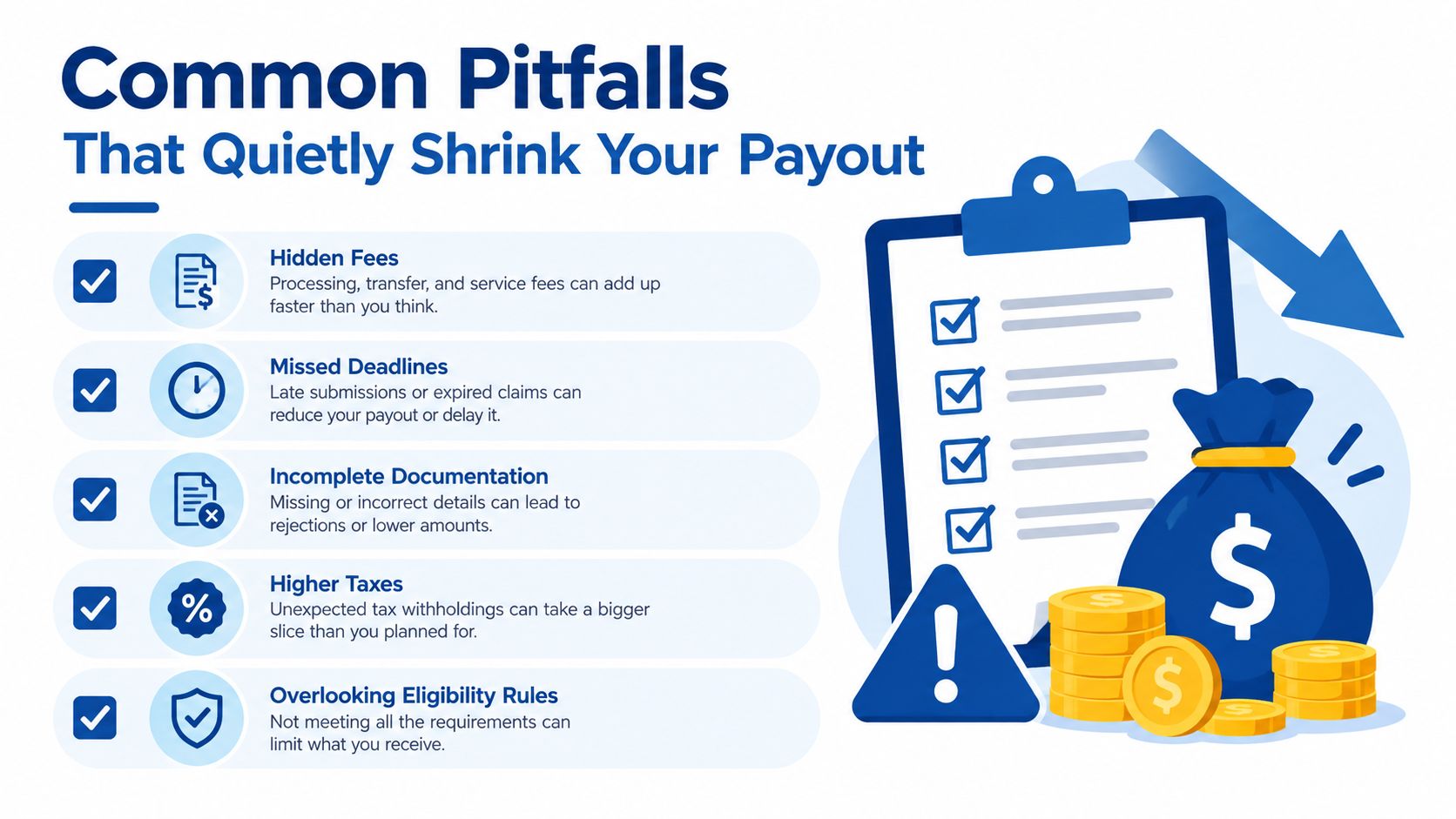
Late notice of loss
If too much time passes before first notice, coverage questions get louder. Report promptly once you discover a covered water event.Premature demolition
Once baseboards, drywall, and flooring are removed, the adjuster may lose the chance to verify original wet boundaries.Missing waterline photos
The height of water on walls, trim, cabinets, and contents can support scope decisions later. If it isn't photographed, it may not carry much weight.Discarded materials without inventory
Tossing carpet, pad, vanity toe-kicks, or damaged belongings before they're documented weakens the file and can complicate reimbursement.Split paperwork between mitigation and rebuild
When drying invoices, demolition notes, and reconstruction estimates live in separate systems with different room naming and scope language, comparison gets messy fast.
What to do instead
Property-loss claim guidance used by risk managers emphasizes prompt mitigation and detailed records, including proof of reasonable emergency actions, protection of undamaged property, and reconstruction support through estimates, change orders, invoices, and daily labor records, as shown in this property loss mitigation checklist.
That's the better model. Save labeled samples when needed. Photograph waterline height on every wall that shows it. Keep damaged contents until they're documented unless they create a safety issue. Route invoices and scope changes into one organized claim file.
Secondary damage is where homeowners lose ground quietly. If wet material sits too long or undocumented damage turns into a larger problem, the carrier may treat that later condition differently than the original event.
The hard part is that many of these mistakes happen while people are tired, stressed, and trying to get the house livable again. The fix is simple, but it takes discipline.
Practical Tips That Maximize Your Claim Outcome
The first three days shape the rest of the file. If you want a smoother insurance claim process, think in terms of actions that make the next handoff easier. Good claims aren't built with one big move. They're built with small habits that stack up.
Your first 72-hour checklist

Open the claim early
Call the insurer once emergency conditions are controlled and the source is addressed. Get the claim number, the assigned contact, and any instructions for emergency mitigation.Keep one evidence folder
Put all photos, videos, moisture readings, invoices, emails, and notes in one digital folder. Separate folders by room if the loss is spread across multiple areas.Save every receipt
Hold onto plumbing invoices, hotel bills, supplies, cleaning charges, and any emergency protection costs. If you paid it because of the loss, document it.Log communications
Write down the date, time, channel, and main point of each call or email with the carrier, adjuster, plumber, and mitigation contractor.Ask for estimate detail
Don't settle for broad summaries if scope is disputed. You need line-item clarity when materials, labor, or tear-out decisions are being compared.Verify policy sub-limits and categories
Water claims often touch several buckets at once, such as structure, contents, mold-related limits, and temporary living expenses. Know which one you're talking about before you assume an item is included.
Two temptations that derail good claims
The first is cleaning too early. Homeowners want the place to feel normal again, so they wipe, remove, toss, and rearrange before the file is stable. That instinct is understandable, but it can erase evidence.
The second is trusting verbal approval. If someone says, “That should be covered,” treat it as a conversation, not a decision. Real claim progress happens when scope, approvals, and supplements are documented.
What good habits produce
Strong habits don't guarantee a perfect outcome, but they usually lead to practical gains:
- fewer disputes about what was wet
- faster review of supplements
- cleaner reimbursement for emergency measures
- less confusion between mitigation scope and rebuild scope
One operational advantage of using a contractor that handles both drying and reconstruction, such as RestoTek TX, is that the same provider can carry inspection notes, moisture data, and repair scope through the life of the project instead of splitting the file across multiple companies.
If you remember one thing, remember this: written records beat memory every time.
Key Takeaways for Your Water Damage Claim
When water hits your home, the insurance claim process feels personal because it's your house, your schedule, and your money on the line. But the claim itself runs on documentation, handoffs, and decision points. Homeowners who understand that usually make better choices in the first week.
Keep these habits in front of you
- Stop the source first and make the area safe before anything else.
- Document before demolition whenever conditions allow.
- Treat the adjuster visit as a working inspection, not an argument.
- Expect delays when supplements enter the file or multiple approvals are needed.
- Use written records for every important step, especially scope, receipts, and approvals.
What matters most in practice
The single strongest lever in a water-loss claim is the file built before mitigation changes the scene. If the source is clear, the affected rooms are photographed, moisture readings are captured, and daily drying records are maintained, the rest of the claim has something solid to stand on.
Most frustrating claim outcomes I've seen didn't come from dramatic bad faith or some secret trick. They came from preventable gaps. Missing photos. No clear inventory. A torn-out room with no pre-mitigation evidence. A supplement nobody followed up on in writing.
A water claim is a process, not a one-time negotiation. The people who stay organized in the first week usually have a shorter path to final payment than the people who try to reconstruct the file later.
If you're in the middle of an active loss, don't try to solve the whole claim at once. Handle the next decision well. Stop the water. Preserve the evidence. Track the scope. Confirm the approvals. That's how homeowners in Georgetown and Austin keep a water claim from turning into a paperwork fight that drags on for months.
If you're dealing with a water loss in Georgetown or Austin, RestoTek TX handles the full cycle from inspection and mitigation through drying, documentation, and reconstruction. We help homeowners build the kind of claim file adjusters can work from, especially during the messy first days after a leak or overflow. Visit RestoTek TX to see how the process works and request help.