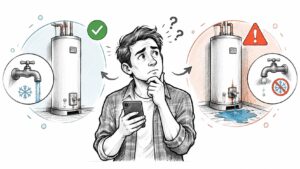
Usually not on its own, but no hot water becomes an emergency when there's active leaking or spreading water, a gas, smoke or electrical hazard, or a long outage affecting vulnerable people. Texas rentals also have a minimum hot-water requirement of 120°F, so a dry heater failure can still require urgent landlord action.
You've turned the shower toward hot, waited, and checked the bathroom sink. Still cold. Before you start resetting controls or calling every emergency number you can find, check what the heater is doing besides failing to heat. The outage is the symptom. The failure behind it determines the response.
Quick Answer on When No Hot Water Is an Emergency
A dry, contained heater fault usually needs a scheduled repair. A leaking heater or dangerous condition needs immediate action. For rental properties and vulnerable occupants, urgency can remain high even when the floor is dry.
Use this triage table to match the service to the problem. These are practical response recommendations, not universal legal deadlines.
| Situation | Verdict | Response time | Who to call |
|---|---|---|---|
| Water pooling, dripping or spreading from the heater | Emergency | Now, including after hours | Emergency plumber; restoration if water has spread |
| Gas smell, smoke, sparking or carbon monoxide alarm | Emergency | Leave the home first | Emergency services or gas utility from outside |
| Bulging, cracked or ruptured tank | Emergency | Now | Emergency plumber |
| Water near outlets, wiring or breaker panel | Emergency | Now, from outside the wet area | Electrician and emergency plumber |
| No hot water at any tap, cold water also weak or dropping | Urgent | Same day | Plumber |
| Lukewarm water at some taps, no leak | Scheduled repair with a temperature check | Next available appointment, subject to rental obligations | Water-heater technician |
| Cold only, no leak, no hazard, breaker tripped or pilot out | Scheduled repair | Check manufacturer instructions only if safe, then book service | Water-heater technician |
| Rental, tenant has given written notice, no leak | Urgent landlord repair | Prompt response; applicable repair duties govern | Landlord or property manager |
| Vulnerable occupant experiencing a prolonged outage | Urgent | Request same-day assessment | Plumber, with the vulnerability stated |
The distinction matters financially and practically. A restoration crew isn't usually the first call for an appliance that's stopped heating but hasn't released water. Conversely, waiting for a routine appointment while a tank continues dripping can allow water to reach floors, walls and contents.
Austin's code-compliance resources frame emergency repairs around preventing further property damage or danger to people or the building. That's a useful way to answer “Is no hot water an emergency repair?” without treating every cold shower as the same event.
Practical rule: Don't judge the emergency by how cold the shower feels. Judge it by the leak, the hazard and the occupants' needs.
Before troubleshooting, look and smell from a safe position: Is water spreading, dripping or pooling? Is there gas odor, burning, smoke or sparking? If yes, act now. If no, check rental obligations and occupant vulnerability before choosing a normal appointment.
Temperature Thresholds That Set the Urgency
For Texas rentals, lukewarm isn't necessarily adequate service. Texas Property Code §92.052 requires a diligent repair effort after proper notice when the landlord fails to provide and maintain a hot-water device supplying a minimum of 120°F, provided the tenant isn't rent-delinquent and the condition wasn't caused by the tenant.
That obligation doesn't establish one universal arrival deadline for every call. Notice, lease provisions and the circumstances matter. A documented temperature complaint deserves a repair response, not dismissal because some warm water still comes out.
Reference temperatures for hot-water urgency
Storage, circulation and outlet temperatures describe different parts of the system. Don't treat them as interchangeable thermostat instructions.
| Measurement | Reference value | Source | What it tells you |
|---|---|---|---|
| Rental hot-water minimum, Texas | 120°F | Texas Property Code, linked above | A qualifying failure after proper notice engages the landlord's repair duty |
| Rental minimum, New York City and New York State | 120°F normally; New York State guidance permits 110°F where an anti-scald valve limits temperature; continuous service expected | NYC hot-water and housing guidance and New York State guidance | Requirements depend on jurisdiction and equipment |
| Dwelling minimum, Washington, D.C. | 110°F, measured inside the dwelling | D.C. housing standards | Adequate hot water must reach the required facilities |
| Legionella growth band | 77°F to 113°F, or 25°C to 45°C | CDC building-water temperature guidance | Prolonged lukewarm conditions warrant attention |
| Heater storage target | Above 140°F, or 60°C | CDC guidance linked above | Storage control must be paired with scald protection |
| Circulating hot water | At or above 120°F, or 49°C | CDC guidance linked above | Recirculation performance matters, not just the tank setting |
| Scald concern for vulnerable users | Outlets above 44°C | UK Health and Safety Executive guidance | Vulnerable users need effective outlet-temperature protection |
Check the taps without adjusting the heater
If there's no leak or other hazard, run the hot tap until its temperature stabilizes. Collect water carefully in a suitable container and check it with a kitchen thermometer, avoiding direct skin contact. Repeat at a fixture nearer the heater and record the location, time and reading.
A single lukewarm fixture suggests a local mixing or fixture problem. Similar readings throughout the property point toward the heater, shared controls, circulation or supply. If cold-water flow is also poor after freezing weather, consider a supply problem and review what can happen when pipes freeze.
A low reading is a reason to document and escalate. It isn't, by itself, proof that the building needs emergency water extraction.
Immediate Safety Checks in the First Ten Minutes
Hazards come before heater troubleshooting. Don't stay beside a suspicious appliance to finish a checklist, photograph a label or work out which component failed.
Follow the safe order
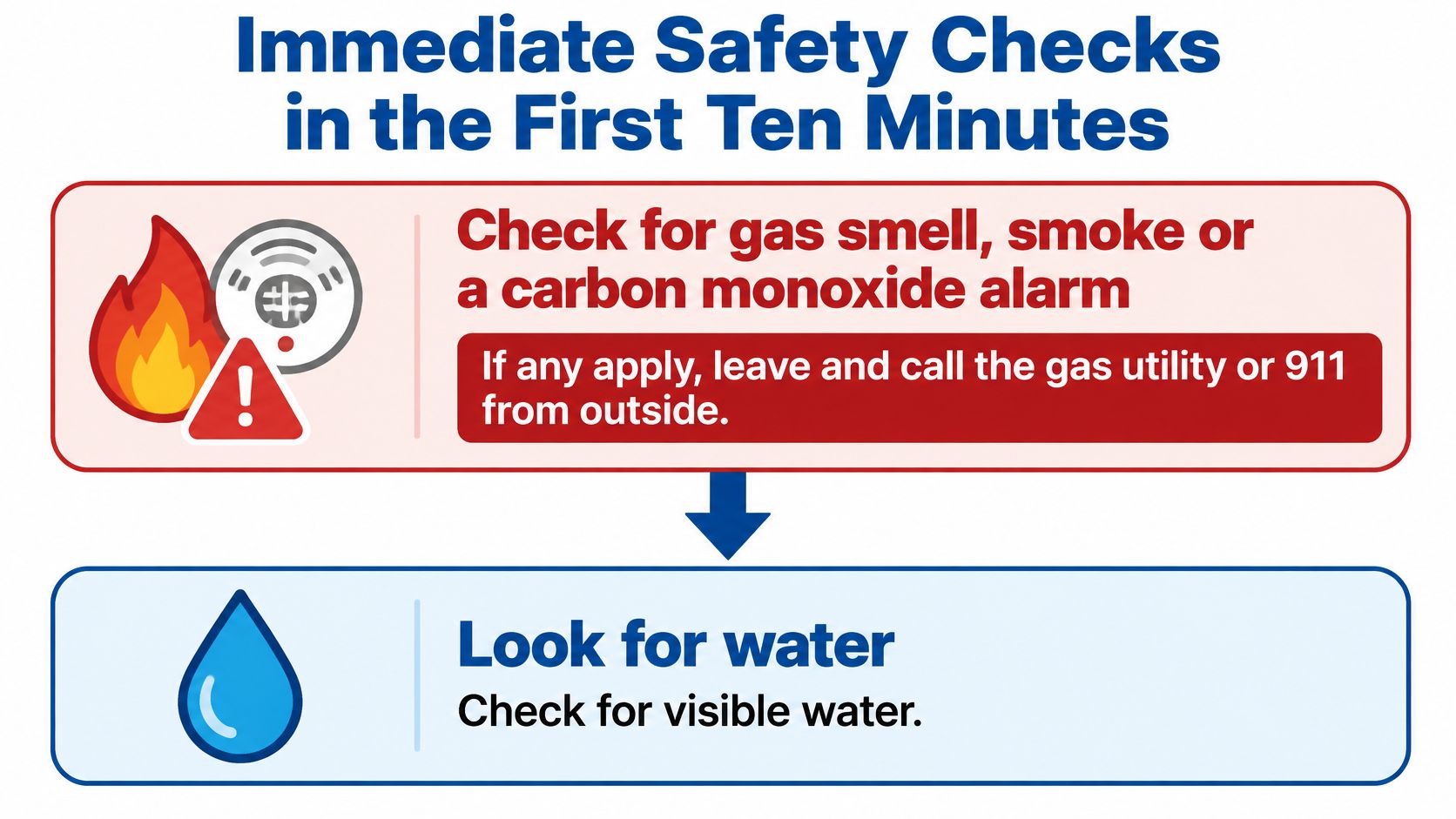
Check for gas, smoke or an alarm. If you smell gas, see smoke or hear a carbon monoxide alarm, leave and call emergency services or the gas utility from outside. Don't investigate the heater or operate its controls first.
Look for visible water from a dry position. Note whether it's dripping from the heater, pooling below it or coming through a ceiling. You don't need to identify the exact failed fitting before requesting help.
Isolate energy only when it's safe. For a water leak without a gas or fire concern, switch off an electric heater at an safely accessible, dry breaker location, or follow the gas heater's shutdown instructions. If access requires entering water or approaching damaged equipment, leave isolation to professionals.
Close the heater's cold-water supply if the tank is leaking. Only attempt this if you can reach and identify the valve safely. Don't force an unfamiliar or stuck valve.
Stay clear of wet electrical areas. Water near outlets, wiring or the panel changes the job from appliance troubleshooting to hazard management. Don't touch wet electrical equipment or cross the area to retrieve belongings.
Check cold-water flow if conditions are safe. Use a nearby sink to establish whether the problem affects only hot water or the broader supply. Tell the plumber if both are weak or absent.
Document without delaying help. From a safe location, photograph visible leakage, the equipment label and any temperature reading you've already taken. Call the appropriate licensed service and describe what you can see.
Don't turn isolation into a repair attempt
Closing a safe, accessible supply valve is different from opening the heater, removing electrical covers or reaching into gas controls. The immediate goal is to prevent injury and further water release, not to complete the diagnosis.
Use this water-heater leak repair guidance to understand the water-loss response, but don't delay an emergency call while researching replacement options. If water has entered a ceiling, wall or floor assembly, say so when booking service.
A useful emergency call starts with “water is reaching the hallway floor,” not just “the shower is cold.”
Once hazards are isolated, a technician can investigate the heating failure. Until then, repeated resets, pilot-light attempts and thermostat changes add activity without establishing that the equipment is safe.
Temporary Steps Until a Technician Arrives
Don't turn the thermostat up to force a failed heater to recover. That doesn't establish why the water stopped heating, and it can create a dangerous outlet temperature when the equipment resumes operating.
CDC guidance for potable-water systems addresses temperature control and stagnation together. The practical goal is controlled storage and delivery with functioning scald protection, not choosing between barely warm water and excessively hot taps.
Keep the interim plan simple
Arrange a safe washing alternative. For a dry outage, use another available bathroom or a suitable alternative location. If heating small amounts of water for washing or dishes, mix and check it before use, keep children away, and don't carry boiling containers into a bath or shower.
Leave temperature controls alone. Record existing settings if you can see them safely, but don't bypass a mixing valve or change controls to chase a hotter reading. A failed component needs diagnosis.
Treat prolonged stagnation differently. After an extended vacancy or outage, ask the technician whether the system needs a flushing or reopening procedure before normal use. A brief rinse at a tap isn't proof that the entire system is safe.
Keep a useful fault record. Note when hot water last worked, when you noticed the failure and whether the problem affects every fixture. Save temperature readings, appointment confirmations and landlord correspondence.
State occupant vulnerability immediately. Tell the service provider if infants, older adults or medically vulnerable people depend on the system. Request same-day assessment rather than letting that information emerge after a routine booking.
Avoid a false sense of recovery
Warm water returning doesn't automatically resolve a failed temperature-control device or a stagnation concern. Ask what failed, whether the technician checked delivered temperatures and whether the system needs further action before normal use.
A CDC-linked housing assessment documented excessive hot-water temperatures in both owner-occupied and rental housing. Scald prevention isn't just a concern for poorly maintained rental properties.
Restored heat and safe hot water aren't necessarily the same thing.
Don't work on gas or electrical components, short controls, repeatedly reset a tripping breaker or bypass thermostatic valves. If the outage follows flooding, prolonged vacancy, an unusual odor or a suspected control failure, give the technician that history before anyone assumes it's an ordinary cold-water call.
Three Real Outages and How Each Was Triaged
The following are illustrative scenarios, not documented customer cases. They show how the same complaint can lead to different service decisions without assuming a diagnosis from the caller's description.
A Georgetown homeowner finds a puddle
A homeowner walks into the utility room and sees water beside the heater. A drip appears near the drain valve, but the homeowner can't tell whether it comes from that fitting or runs down from somewhere above it.
The correct decision is immediate leak response, not a confident over-the-phone diagnosis of a failed tank. If safe, the homeowner isolates the heater's water supply, keeps clear of electrical equipment and calls an emergency plumber. They describe the visible water and its location rather than naming a component they haven't confirmed.
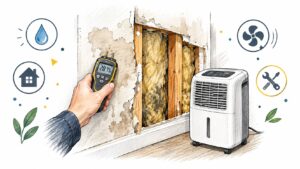
If water has reached adjacent flooring or drywall, structural assessment and drying become a separate task. Stopping the drip doesn't establish whether concealed materials are dry.
An Austin landlord receives a lukewarm-water complaint
A tenant sends written notice that the kitchen and bathroom taps no longer get properly hot. There's no visible leak, the tenant is current on rent, and the complaint concerns the whole dwelling rather than one shower.
The landlord acknowledges the notice, records measured temperatures and arranges prompt diagnosis under the rental obligations described earlier. A same-day assessment is a sensible target, especially where sanitation needs or vulnerable occupants increase urgency, but it shouldn't be presented as a universal statutory deadline.
The technician needs to distinguish inadequate heating from mixing, circulation or supply trouble. Dispatching a restoration crew to a dry property wouldn't answer that question.
A vacant rental has no hot water before guests arrive
A property manager returns after a prolonged vacancy and finds cold taps but no leakage. The manager's first concern is restoring service, but the system's inactivity also belongs in the service request.
Rather than turning the thermostat up and declaring the property ready, the manager books a qualified assessment before occupancy. The technician checks the heating fault, temperature controls and any recirculation equipment, then advises on appropriate flushing or reopening.
A casual tap flush isn't a substitute for that evaluation, particularly where the system has remained stagnant or occupants may be vulnerable.
The decision depends on leakage, hazards, occupants and duration, not the words “no hot water” alone.
Calling a 24/7 Service or Booking a Scheduled Repair
| Service | Call when | What they do | Cost basis |
|---|---|---|---|
| Emergency plumber | Heater leaking, tank visibly damaged, burst supply line | Isolate the source and diagnose, repair or replace failed plumbing equipment | Confirm after-hours charges and work authorization |
| Water-damage restoration | Flooding, overflow, backup, wet walls or floors | Extraction, moisture assessment, structural drying and reconstruction as needed | Request an assessment and written scope |
| Scheduled water-heater technician | Cold or lukewarm water without leakage or hazards | Diagnose heating, control, mixing or circulation faults | Confirm diagnostic charge, labor and parts |
| Landlord or property manager | Rental outage or inadequate hot-water complaint | Receive notice and arrange the required repair response | Responsibility depends on applicable law and circumstances |
Call an emergency service when water is escaping or a hazard exists. Otherwise, book the appropriate repair appointment, with faster assessment for vulnerable occupants and qualifying rental-service failures.
Give the dispatcher usable information
A clear call helps the provider decide what equipment and trade to send. You don't need a diagnosis, just accurate observations.
- Leakage: Say whether the floor is dry, water is contained beneath the heater or water has reached another room.
- Hazards: Report gas odor, smoke, sparking, alarms or water near electrical equipment before discussing appointment availability.
- Equipment: Give the fuel type and label information if safely available. Don't guess the age.
- Service pattern: Explain which taps are affected and whether cold-water flow is normal.
- Occupants: State any vulnerability and how long the household has been without usable hot water.
If repeated faults or supply concerns need broader investigation, ask whether a plumbing system inspection would help establish the scope rather than authorizing unrelated replacement work.
Separate plumbing from restoration
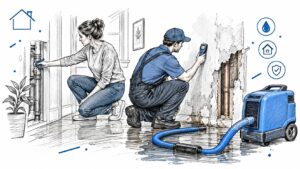
The plumber stops the source and repairs the equipment. A restoration contractor assesses affected materials, removes water and dries the structure. Depending on the loss, you may need both.
One local restoration option is RestoTek TX, which serves Georgetown and Austin with around-the-clock response to floods, overflows and backups, plus extraction, structural drying, microbial prevention and reconstruction. It offers no-cost estimates and is relevant when water has spread beyond the heater, rather than as the default response to a dry appliance fault.
Ask every provider for the after-hours rate, diagnostic charge and authorization terms in writing. Also ask what the initial visit includes and whether plumbing repair, drying and reconstruction will be quoted separately. There's no reliable universal price to apply to every no-hot-water call.
Confirm the Order Before You Make the Call
Gather information only if doing so won't delay evacuation or hazard isolation. A useful service request contains observations, not a guessed diagnosis.
- Photographs: Capture visible leakage and affected materials from a safe position.
- Temperature record: Include fixture locations, readings and the times taken.
- Rental notice: Save the written report and the landlord's acknowledgment.
- Outage history: Note when service last worked and whether the failure was sudden or gradual.
Choose the action that matches the condition
A hazard comes first. Gas odor, smoke, sparking or a carbon monoxide alarm means leaving and contacting emergency help from outside, not staying to arrange an appliance appointment.
Escaping water comes next. Call an emergency plumber for a dripping or ruptured heater. If water has reached walls or floors, request restoration assessment as well.
Occupant needs and rental obligations determine remaining urgency. Request accelerated service where vulnerable people lack usable hot water, and provide the notice and documentation required for a rental repair.
For a dry, contained fault with no hazard, book the next appropriate technician appointment and follow the interim precautions. Don't let a scheduled visit turn into indefinite delay if conditions change.
No hot water becomes an emergency when the underlying failure is spreading water, creating a hazard or leaving vulnerable people without essential service.
If a water-heater leak has reached floors or walls in Georgetown or Austin, RestoTek TX offers emergency water extraction, structural drying and reconstruction, with no-cost estimates. Visit RestoTek TX to request water-damage help and describe where the water has spread so the response matches the loss.