
A lot of Austin homeowners land on this topic the same way. The water bill jumps for no obvious reason, a baseboard starts to swell, or you hear what sounds like running water after the house has gone quiet. You hope it's nothing. Sometimes it is a loose toilet flapper or a dripping showerhead. Sometimes it's a hidden line leak under the slab, inside a wall, or at the point where the water line enters the home.
That uncertainty is the hard part. Hidden leaks don't always announce themselves with a burst pipe and standing water. In Central Texas, they often show up as small clues first, then turn into drywall damage, flooring issues, microbial growth, or foundation concerns if nobody catches them early.
A practical approach helps. Start with the signs. Confirm whether water is still moving through the system. Then bring in the right kind of help for detection, repair, drying, and restoration. That full cycle matters in Austin because local soil movement, hard water, and heavy rain patterns can make leak problems harder to diagnose and more disruptive to recover from.
Signs You Have a Hidden Water Leak
One of the most common first warnings is a bill that doesn't match your normal usage. Austin Water notes that a single leaky toilet can waste approximately 200 gallons of water per day, while a slow drip from a faucet or showerhead can waste up to 20 gallons daily. The same city page also references an Austin resident who reported a $1,000 water bill for one month, which is the kind of spike that usually points to a major leak rather than ordinary household use, according to Austin Water leak guidance.

What homeowners usually notice first
Most hidden leaks start with something that feels easy to dismiss:
- A water bill spike: You didn't change irrigation, fill a pool, or have guests, but the bill jumped anyway.
- A damp or stained area: Ceiling rings, bubbling paint, warped trim, or darkened drywall often mean moisture is traveling behind the finish.
- A quiet hissing or running-water sound: If every fixture is off and you still hear water, something may be leaking under pressure.
- A musty smell that won't leave: Moisture trapped in wall cavities, under flooring, or inside cabinets often creates an odor before visible growth appears.
- A soft spot underfoot: Laminate, wood, and even some tile assemblies can start to feel different when moisture works underneath them.
Think of these as the home's vital signs. One clue by itself may not tell you much. Two or three together usually mean it's time to stop guessing.
Austin clues that point toward slab or concealed line issues
In this market, I'd pay close attention to warm spots on flooring, cracks that seem to appear alongside moisture issues, and the sound of water movement when the home is otherwise still. Those are the kinds of symptoms that often line up with hidden supply-side leaks, especially under slab foundations.
Practical rule: If your bill rises and you can also hear water when nothing is running, treat it as an active problem until proven otherwise.
The trickiest leaks are the ones that stay out of sight. A pipe can release water under a slab or inside a wall cavity for days or weeks before stains show up. By the time the surface looks bad, the moisture may already be in insulation, framing, flooring adhesive, or submaterials that need drying and cleaning, not just a plumbing fix.
What doesn't work well
Homeowners often lose time by focusing only on the most visible symptom. Repainting a stain, caulking around a fixture, or running a fan in the room may hide evidence, but it won't identify the source. Another common mistake is assuming that no puddle means no serious leak. Pressurized line leaks can spread laterally and show up far from the actual failure point.
If you're searching for water leak detection in Austin TX, the right move is to treat these early signs seriously. Not panic. Just act before the damage spreads.
Your First Steps When You Suspect a Leak
When you think there's a leak, the goal is simple. Confirm whether water is still moving, limit additional damage, and create a clean record of what you found.
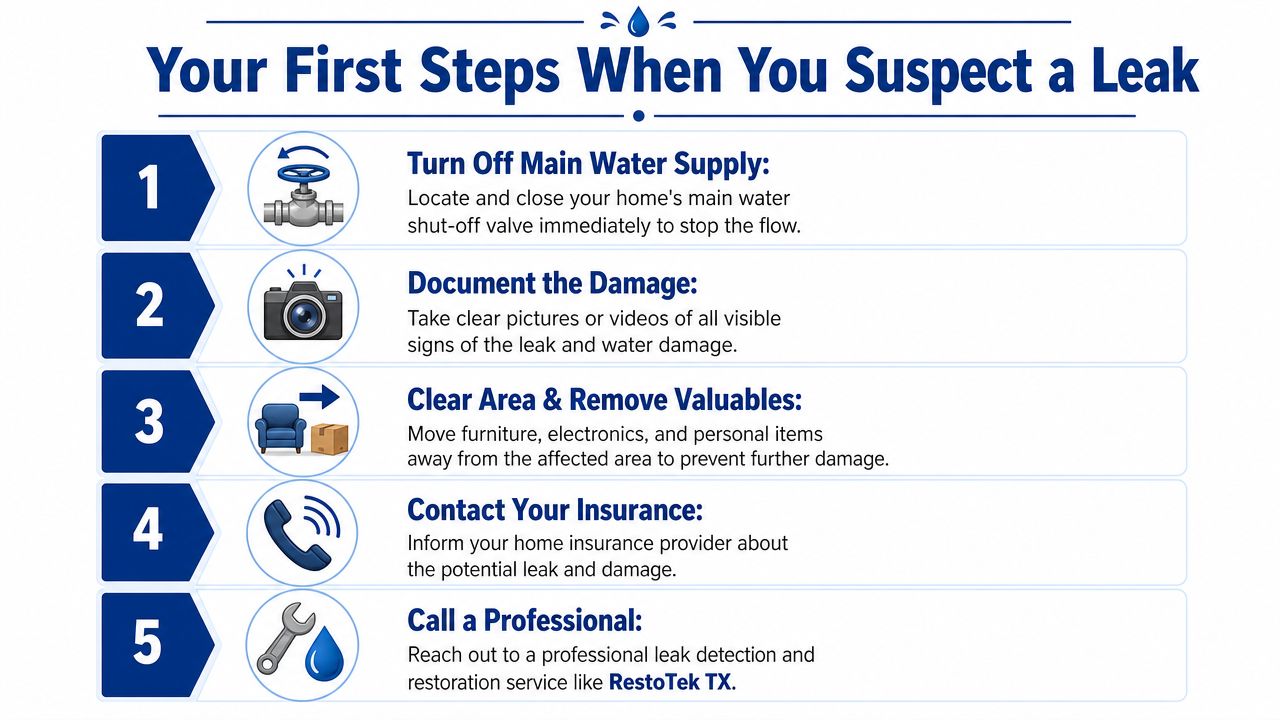
Start with control, not repair
Don't open walls yet. Don't cut flooring yet. First, check whether the leak appears active.
- Shut off fixtures inside the house. Make sure faucets, dishwasher, washing machine supply, and irrigation controls aren't calling for water.
- Watch the water meter. If the meter continues moving while everything is off, that's a strong sign water is going somewhere it shouldn't.
- Find the main shutoff. If you see active water damage or hear steady flow, turn the main water supply off to stop the loss.
- Move what you can safely move. Pull rugs, boxes, furniture legs, electronics, and paper items away from the affected area.
- Take photos and short videos. Capture stains, wet flooring, damaged contents, meter readings, and any visible plumbing conditions.
Why these steps matter
The meter check helps separate a real leak from a billing surprise or fixture issue. The shutoff protects the structure while you decide on next steps. Photos help if you need to explain the sequence of events to an insurance adjuster, a plumber, or a restoration company.
Shut the water off before the stain gets bigger. Every extra hour of flow increases drying time and often expands the repair area.
What to leave to a professional
Some homeowners are comfortable changing a toilet supply line or tightening a trap. That's different from hidden leak work. If the leak may be under the slab, behind tile, in a wall cavity, or around the main entry line, invasive trial-and-error usually creates more repair than necessary.
A good field visit goes smoother when you can tell the technician three things: when you first noticed the problem, whether the meter kept moving, and what changed after you shut the main off. That information narrows the search quickly and reduces wasted effort.
Professional Leak Detection Methods Explained
Professional leak detection works best when it stays targeted. The point isn't to tear the house apart until someone gets lucky. The point is to narrow the source with instruments, verify moisture patterns, and open only what needs to be opened.
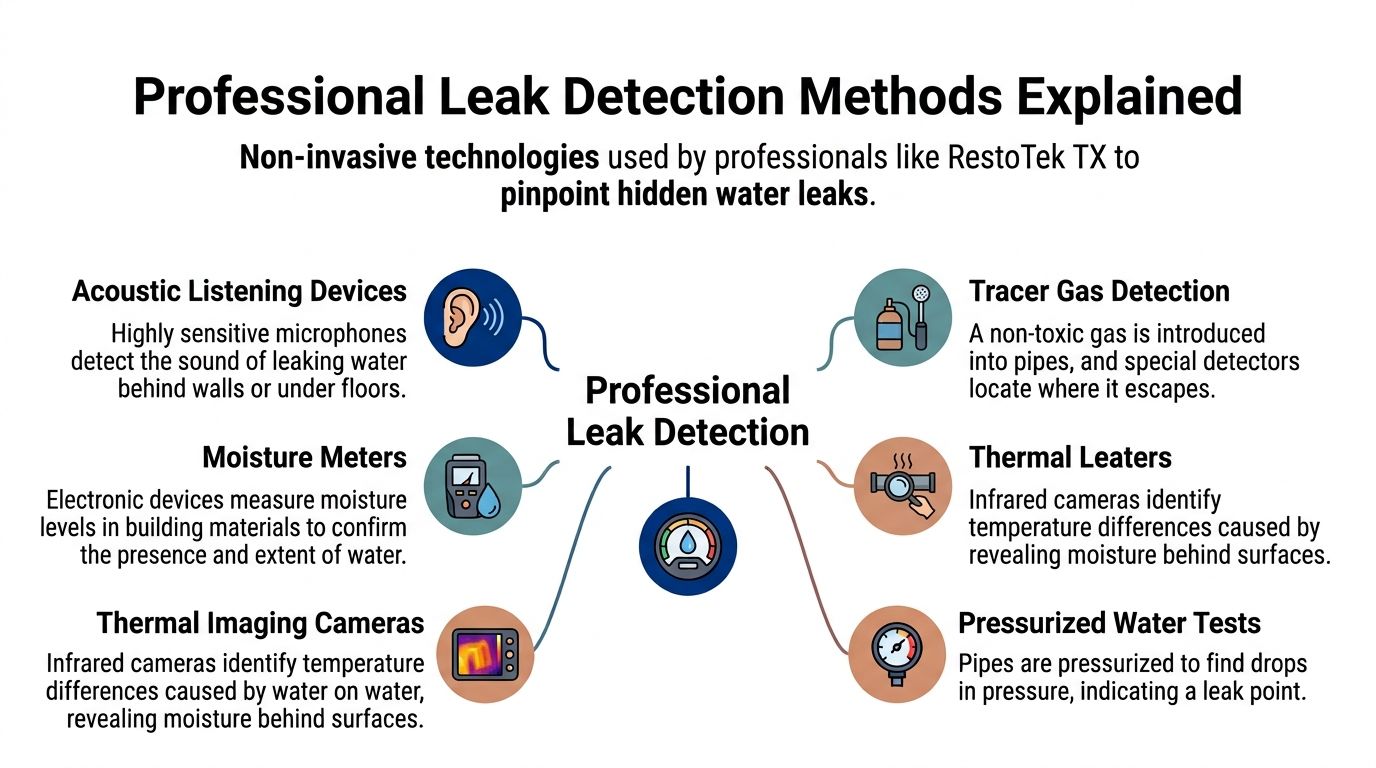
Acoustic and thermal tools
The two methods homeowners hear about most often are acoustic listening and thermal imaging.
Acoustic tools work like a highly sensitive stethoscope for the plumbing system. Pressurized water escaping from a line creates a distinctive sound signature. A trained technician listens at different points and compares what the equipment picks up through slab, wall, or floor materials.
Thermal imaging doesn't see water directly. It reads surface temperature differences. If moisture is cooling or warming an area differently than the surrounding material, the camera helps identify patterns worth testing further. This is especially useful when moisture has spread behind a finished surface without obvious staining.
Moisture meters, pressure checks, and confirmation
Detection gets more accurate when the technician combines the first pass with confirmation tools.
- Moisture meters: These help verify whether drywall, trim, flooring, or other materials are wet and how far the moisture extends.
- Pressure testing: If a line won't hold pressure, that points to a breach somewhere in the system.
- Tracer-gas style methods: In some cases, technicians use specialized detection processes to help isolate a hidden line failure without broad demolition.
What works is layering methods. What usually doesn't work is relying on a single gadget and calling it done.
A thermal image can suggest where to look. It doesn't replace pressure logic, moisture verification, and hands-on interpretation.
Why non-invasive detection matters
In Austin homes, especially slab-on-grade construction, random demolition gets expensive fast. Cutting the wrong section of flooring or trenching the wrong path in a yard adds repair work without solving the original problem. Non-invasive detection reduces that risk and helps everyone involved make better decisions before repairs begin.
For a plain-language overview of how this process works in the field, this guide on what leak detection involves is a useful reference.
One more trade-off to understand
Detection and repair are not always the same appointment. Sometimes they are. Sometimes the source is clear enough to move straight into plumbing repair. Other times the smartest move is to locate the leak precisely, document affected materials, and then decide whether the better fix is direct access, rerouting, or a broader restoration plan.
That separation can feel slow when you want the issue gone immediately. In practice, it often saves money and unnecessary reconstruction.
Austin-Specific Risks That Cause Water Leaks
Austin homes deal with leak conditions that are different from many other markets. The big one is the ground itself. In Austin, slab leaks are a dominant cause of hidden water damage, primarily driven by expansive clay soils that shift significantly during drought and heavy rain cycles, as noted by ABC Home and Commercial's Austin leak detection overview.
Why expansive clay matters
Expansive clay doesn't stay still. Dry periods cause shrinkage. Heavy rain causes swelling. That repeated movement puts stress on foundations and the pipes running beneath or through them. Over time, that stress can turn into small line failures, especially where pipes pass through rigid materials or where older sections have less tolerance for movement.
This is why an Austin leak call often isn't just a plumbing issue. It can also involve flooring, drywall, cabinetry, and foundation-related symptoms that seem disconnected until someone maps the whole pattern.
Hard water and concealed failures
Austin's hard water creates another wrinkle. Mineral buildup inside pipes can partially mask small leaks for a while. The leak is still there, but the signs may appear inconsistent. A homeowner may notice odor one week, a warm floor area the next, then nothing obvious for a few days. That stop-and-start pattern can delay the call.
The wider city context matters too. Austin Water has been reported as losing approximately 8.4 billion gallons annually, including 6.9 billion gallons of real losses from physical leaks and 1.5 billion gallons of apparent losses, according to reporting on Austin Water system losses. At the property level, the lesson is simple. Hidden leaks are easy to underestimate until you measure them.
Rain events and drainage pressure
Not every water problem starts with a pressurized supply line. In this region, sudden storms can push water against foundations, saturate soil, overwhelm drainage paths, and expose weak points around the building envelope. That doesn't create every leak, but it can worsen an existing vulnerability or complicate the moisture picture after a plumbing failure.
For that side of the problem, this article on how heavy rain and flash floods cause water damage in Georgetown and nearby areas gives a useful local frame.
What to Expect for Timelines and Costs
Most homeowners want two straight answers. How long will this take, and what is this going to cost? The honest answer is that detection, repair, and restoration are separate phases, and each one depends on access, severity, and how far the moisture traveled before the leak was stopped.
The phases usually look like this
A typical project moves through a sequence like the one below.
| Phase | What happens | What affects timing |
|---|---|---|
| Detection | Technician isolates the probable source and maps moisture | Leak location, access, construction type |
| Plumbing repair | Plumber fixes or reroutes the failed line or fixture connection | Slab access, wall access, part availability |
| Mitigation and drying | Wet materials are extracted, cleaned, and dried | How long materials stayed wet, material type, room conditions |
| Rebuild | Drywall, flooring, trim, paint, or cabinetry are restored | Scope of demolition and finish selection |
Detection itself is often the shortest portion because the tools are designed to narrow the problem quickly. Repair can be straightforward if the issue is exposed and accessible. It gets more involved when the source is under the slab, behind tile, or tied to a difficult entry point.
What drives cost
The price range isn't one number because homes aren't built the same way and leaks don't fail in the same places. What changes the cost most is usually one of these factors:
- Access difficulty: A leak under finished flooring is a different job than a leak inside an exposed utility area.
- Material impact: Wet drywall and baseboards are simpler to address than affected cabinetry or multi-layer flooring systems.
- Scope separation: Detection may be billed separately from plumbing repair and separately again from drying or reconstruction.
- Documentation needs: Insurance-related jobs often require more detailed moisture mapping, photos, and reporting.
For a practical breakdown of common billing variables, this page on leak detection service costs helps set expectations.
A useful mindset for planning
The cheapest first step isn't always the lowest total cost. Guessing wrong, opening the wrong area, or delaying drying can turn a manageable loss into a much bigger restoration project. It's usually better to pay for accurate location, then make decisions from a verified scope instead of assumptions.
The RestoTek TX End-to-End Response
The cleanest leak jobs are the ones where the handoff between trades doesn't break down. A homeowner shouldn't have to coordinate detection with one company, emergency drying with another, and reconstruction with a third while trying to document everything under stress.
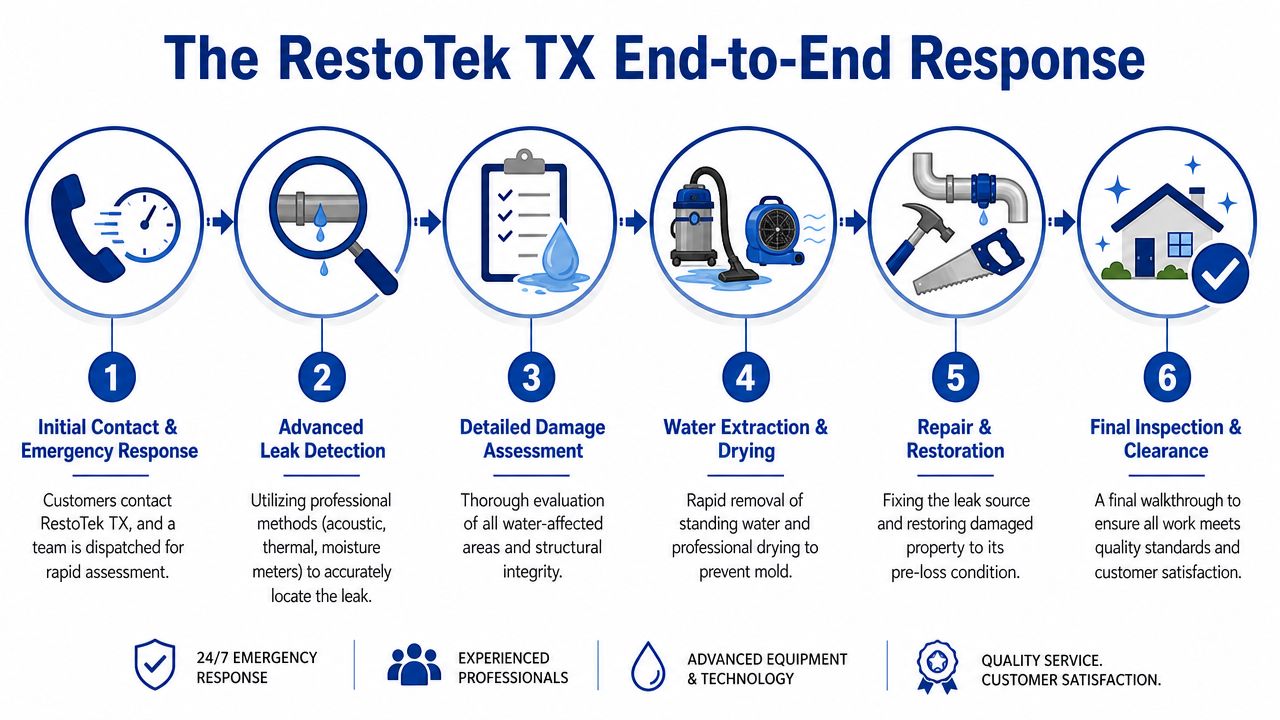
Why one continuous process helps
When one provider handles the full sequence, the work tends to move more logically:
- Detection is documented clearly so repair crews know what was found and where.
- Mitigation starts with the actual leak path in mind instead of only the visible damage.
- Drying targets the right materials because the team has already mapped affected areas.
- Reconstruction follows verified dry conditions rather than guesswork.
That continuity matters in occupied homes. It reduces repeat explanations, missed details, and the common problem of one contractor assuming another already handled something.
What that looks like in practice
RestoTek TX is one local option that handles leak detection, water extraction, drying, microbial prevention, and reconstruction under one roof, with family-operated leadership from Joan and Josh Garza and a 24/7 response model for urgent losses. For homeowners dealing with hidden water damage, that means the same team can track the problem from first inspection through final repair instead of stopping at the point where the leak is located.
The source of the leak and the scope of the damage are not the same thing. A complete response addresses both.
That approach is especially useful when the leak sat unnoticed long enough to affect more than plumbing. Once moisture gets into wall cavities, trim, insulation, or flooring assemblies, the actual work is not just finding the pipe. It's stabilizing the structure, drying to proper standards, preventing secondary issues, and rebuilding what had to come out.
Austin Water Leak Detection FAQs
Will homeowners insurance cover leak detection and water damage
It depends on the policy and on what caused the loss. Many policies treat sudden and accidental water damage differently from long-term maintenance issues. Coverage can also differ between the cost to access a pipe, the plumbing repair itself, and the resulting interior damage.
The practical move is to call your carrier early, describe what you observed, and ask specifically about detection, access, drying, and rebuild. Keep your photos, meter notes, and any service documentation. Clear records make these conversations easier.
What's the difference between a plumber and a restoration specialist
A plumber focuses on the pipe, valve, fixture, or line failure. A restoration specialist focuses on what the water did to the structure and contents after it escaped. Those are different scopes.
You often need both. If the leak soaked drywall, insulation, flooring, cabinetry, or framing, stopping the pipe isn't the end of the job. Wet materials still need to be assessed, removed when necessary, dried, and documented so the property doesn't keep deteriorating after the plumbing repair is complete.
Can hidden leaks be found without tearing up the whole house
Usually, yes. Modern leak detection relies on instruments and testing logic before any demolition starts. Acoustic equipment, thermal cameras, moisture meters, and pressure-based methods help narrow the source so access can be limited to the most likely failure area.
That said, non-invasive detection reduces unnecessary demolition. It doesn't eliminate the need for access once the leak is confirmed. If a pipe is behind tile or beneath part of a slab, someone may still need to open that area to repair it.
Are slab leaks common in Austin homes
They are a frequent concern in this region because of local soil movement and slab-on-grade construction. When a slab leak is active, homeowners often notice indirect signs first, such as floor warmth, a persistent water sound, or changes that seem unrelated until they're looked at together.
If those clues line up, it's smart to move quickly. Slab leaks can stay hidden while moisture travels into finishes and nearby building materials.
Can you stay in the house during leak detection and drying
Often, yes, but it depends on the location of the leak and the amount of affected material. A small, contained issue may only disrupt one area. A larger loss involving multiple rooms, removal of finishes, or sustained drying equipment can make parts of the home noisy, inconvenient, or temporarily unsuitable for normal use.
Ask two direct questions before work starts: which rooms will be affected, and what conditions would make temporary relocation the safer choice. That gives you a more realistic picture than a generic promise that everything will be easy.
What should I have ready before the technician arrives
Have access to the water meter, main shutoff, and the affected rooms. Pull stored items away from walls if you can do it safely. Keep pets secured. Gather your recent water bill if the issue involves unexplained usage. And write down a quick timeline of what you noticed first.
That small amount of prep saves time and helps the technician compare your observations against what the instruments show.
If you're dealing with unexplained moisture, a sudden bill increase, or signs of a slab or wall leak, RestoTek TX can help you move from suspicion to a clear action plan. The team handles inspection, leak detection, mitigation, drying, and rebuild work for Austin and Georgetown properties, which makes the process simpler when a leak has already affected more than just the pipe.