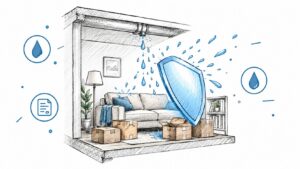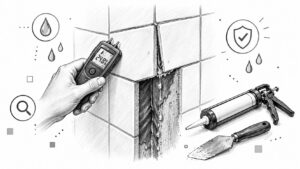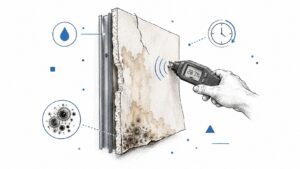
About one in 67 insured homes has a property-damage claim caused by water damage or freezing. Standard renters insurance generally covers sudden, accidental internal water damage, such as a burst pipe, but excludes flooding from external sources, so separate flood insurance may be necessary.
You come home to your Georgetown apartment and find water spreading from the kitchen toward the living room. A washing-machine hose has failed, a dishwasher has overflowed, or a pipe in the neighboring unit has broken. Your furniture, electronics, clothing, and flooring are wet, and the first question is immediate: does renters insurance cover water damage?
The practical answer depends on two details, where the water came from and how quickly the damage happened and was reported. A policy may cover belongings damaged by a broken appliance hose inside your unit, while excluding belongings damaged by groundwater, surface flooding, or rain entering from outside the building. That distinction is where many renters get burned.
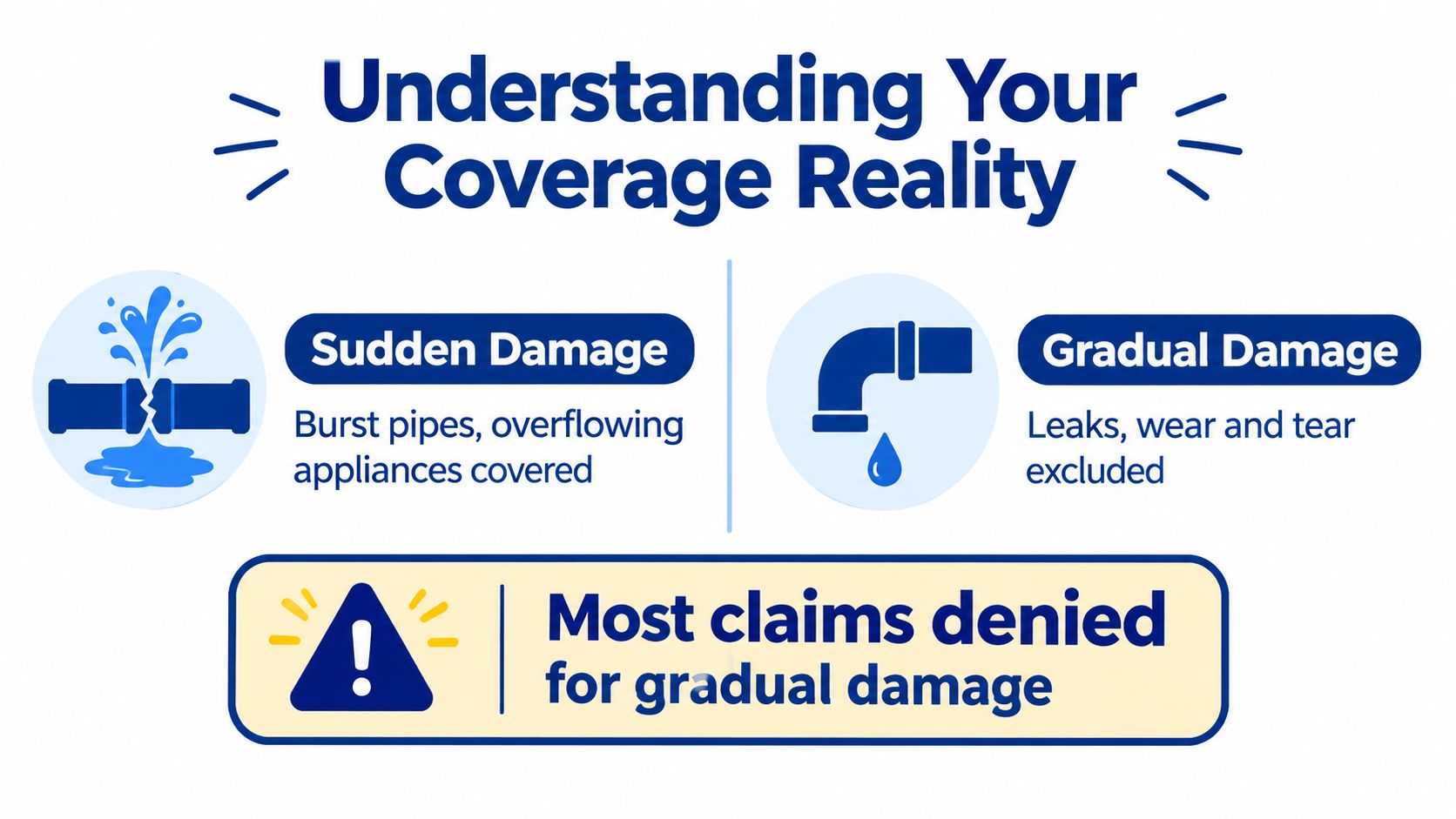
Understanding Your Coverage Reality
A renter in Georgetown may see the same visible result after two very different events. In one case, a supply line inside the apartment suddenly breaks and soaks a sofa, laptop, and clothing. In another, heavy rain causes water to rise outside the building and enter the unit. The apartment may look equally damaged, but the insurance analysis can be completely different.
Standard renters insurance generally covers sudden and accidental water damage to a tenant's personal property. Common examples include a burst pipe, plumbing overflow, or appliance leak. It typically excludes flood damage caused by rising external water, such as a river, storm surge, groundwater, or heavy rain entering from outside the building. The National Association of Insurance Commissioners and Allstate's renters insurance guidance describe this as a distinction between covered internal water events and excluded flood peril, not a simple yes-or-no rule.
What the policy is designed to protect
Your renters policy is primarily aimed at your belongings, not the apartment building. If a covered internal water loss damages your mattress, desk, electronics, rugs, or clothing, personal-property coverage may respond according to the policy terms, limits, exclusions, and deductible. The building's walls, floors, ceilings, plumbing, and other structural components generally fall under the property owner's insurance and maintenance obligations.
The source matters more than the appearance of the damage. A broken washing-machine hose inside the unit can be treated differently from floodwater entering through a doorway. A toilet overflow may be considered differently from long-term seepage beneath a bathroom floor. Even when both events leave standing water behind, the policy language focuses on cause, timing, and the part of the property that was damaged.
Practical rule: Describe the event precisely. “Water damaged my apartment” is not enough. Record which fixture, pipe, appliance, roof opening, drain, or outside source introduced the water.
Why a simple yes or no causes trouble
A broad answer gives renters false confidence. Someone may assume every water loss is covered because the policy includes water-related damage from property utilities. Someone else may assume the landlord's insurance will replace their belongings. Both assumptions can create a serious coverage gap.
For a second perspective on the structure and plumbing boundary, review this guide to homeowners insurance and plumbing leaks. The same basic discipline applies in a rental: identify the source, separate contents from structure, and report the event quickly.
Flood-prone renters in Central Texas should treat separate flood coverage as a distinct question. Standard renters insurance is not a substitute for protection against rising external water, even when that water enters the same room where an internal pipe leak might otherwise have been covered.
The Source and Timing Test That Determines Everything
Insurance companies usually examine a water claim through two connected questions. What caused the water to enter, and did the damage happen suddenly or develop over time? Those questions determine whether the loss resembles a covered accidental event or an excluded condition such as flooding, seepage, neglect, or gradual deterioration.
Consider a washing machine. If a hose suddenly disconnects while the appliance is operating, water may spread across the unit and damage personal belongings. If a small connection has been dripping behind the machine and the renter notices staining or a musty smell but leaves it unreported, the insurer may view the resulting damage as gradual. The visible wet carpet does not tell the whole claims story.
The source question
Internal water and external floodwater occupy different policy categories. Typical renters policies may cover water-related damage caused by property utilities, while flood peril is generally excluded from standard renters and homeowners insurance, as explained by the Insurance Information Institute's water-damage and freezing claim guidance.
| Water event | Likely coverage direction | What the adjuster needs to establish |
|---|---|---|
| Burst pipe inside the building | Often covered for damaged personal property | The pipe failed suddenly and the belongings were affected |
| Toilet, sink, or appliance overflow | Commonly covered when sudden and accidental | The event was unexpected and not the result of an excluded condition |
| Water rising from outside | Usually excluded under standard renters insurance | Whether the water came from surface flooding, groundwater, a river, or storm surge |
| Slow seepage or persistent dampness | Often excluded | How long the condition existed and whether it was reported |
| Damage to walls, floors, or fixed building components | Generally not the tenant policy's purpose | Which structural policy and maintenance responsibility applies |
The table is a screening tool, not a claim decision. Policy wording controls, and endorsements can change the result for particular water sources.
The timing question
Timing begins when the water appears, but it doesn't end when the tenant calls the insurer. A renter who documents the first visible damage, notifies the property manager, and reports the loss promptly creates a clearer record of the event. A renter who waits while wet materials remain in place creates uncertainty about whether later damage came from the original incident or from delayed action.
The industry figure of about one in 67 insured homes experiencing a property-damage claim caused by water damage or freezing illustrates why this category receives close scrutiny. Water losses are common enough that insurers distinguish sudden incidents from conditions that developed through seepage, poor maintenance, or delayed reporting.
Read the related explanation of whether home insurance covers plumbing leaks for a useful reminder: the physical leak is only one part of the analysis. The cause, discovery timeline, notice, and resulting damage all matter.
Landlord Versus Tenant Responsibilities Explained
A water loss in a rental often involves two separate properties at once. The tenant owns the furniture, clothing, electronics, and other personal belongings inside the apartment. The landlord owns the building components, including walls, flooring, ceilings, plumbing infrastructure, and other fixed elements.
That separation means one event can involve two insurance policies. A pipe failure inside a wall may damage a tenant's laptop and sofa while also damaging drywall and flooring. The tenant reports the belongings through the renters policy, while the landlord or property manager coordinates the building repairs through the owner's insurance and maintenance process.
A practical responsibility matrix
| Damage or task | Tenant's likely responsibility | Landlord or property owner's likely responsibility |
|---|---|---|
| Clothing, furniture, electronics, and other belongings | Review and report the loss under the renters policy | Usually not covered by the building policy for the tenant's benefit |
| Walls, ceilings, floors, pipes, and fixed fixtures | Notify management and allow access | Arrange inspection, repair, and structural restoration |
| A leak discovered inside the unit | Report it promptly and prevent further damage when safe | Investigate building systems and correct maintenance problems |
| Belongings damaged by a sudden internal water event | Document condition and submit a contents claim | Address the source and affected structure |
| Damage made worse after a known leak was ignored | May face a dispute about delayed notice or negligence | Assess the original maintenance obligation and resulting building damage |
The exact allocation can depend on the lease, the cause of the event, and the applicable policy language. A tenant shouldn't assume that the landlord's insurance will replace personal belongings, and a landlord shouldn't assume the renter's policy will pay for walls or flooring.
Where tenant conduct changes the picture
A renter usually isn't expected to repair a concealed pipe or rebuild a damaged wall. The renter is expected to report visible leaks, standing water, staining, unusual dampness, or other warning signs through the property manager's emergency process. Written notice matters because it records when the tenant discovered the problem and what information was provided.
Suppose an upstairs unit suddenly leaks into the apartment below. The downstairs tenant may have a claim for covered damage to personal property, while the property manager handles the ceiling, drywall, and other building repairs. If the downstairs tenant had already noticed a ceiling stain and waited to report it, the later condition may receive closer scrutiny because the insurer and landlord must separate the original event from delayed deterioration.
When water is active, notify both parties. The landlord needs to address the building and source. The tenant needs to protect personal property and report a possible contents claim.
Keep the communication factual. State when you discovered the water, where it was visible, what appeared to cause it, which belongings were affected, and what immediate steps you took. Avoid guessing about fault before the source has been inspected.
The Gradual Leak and Mold Gray Area
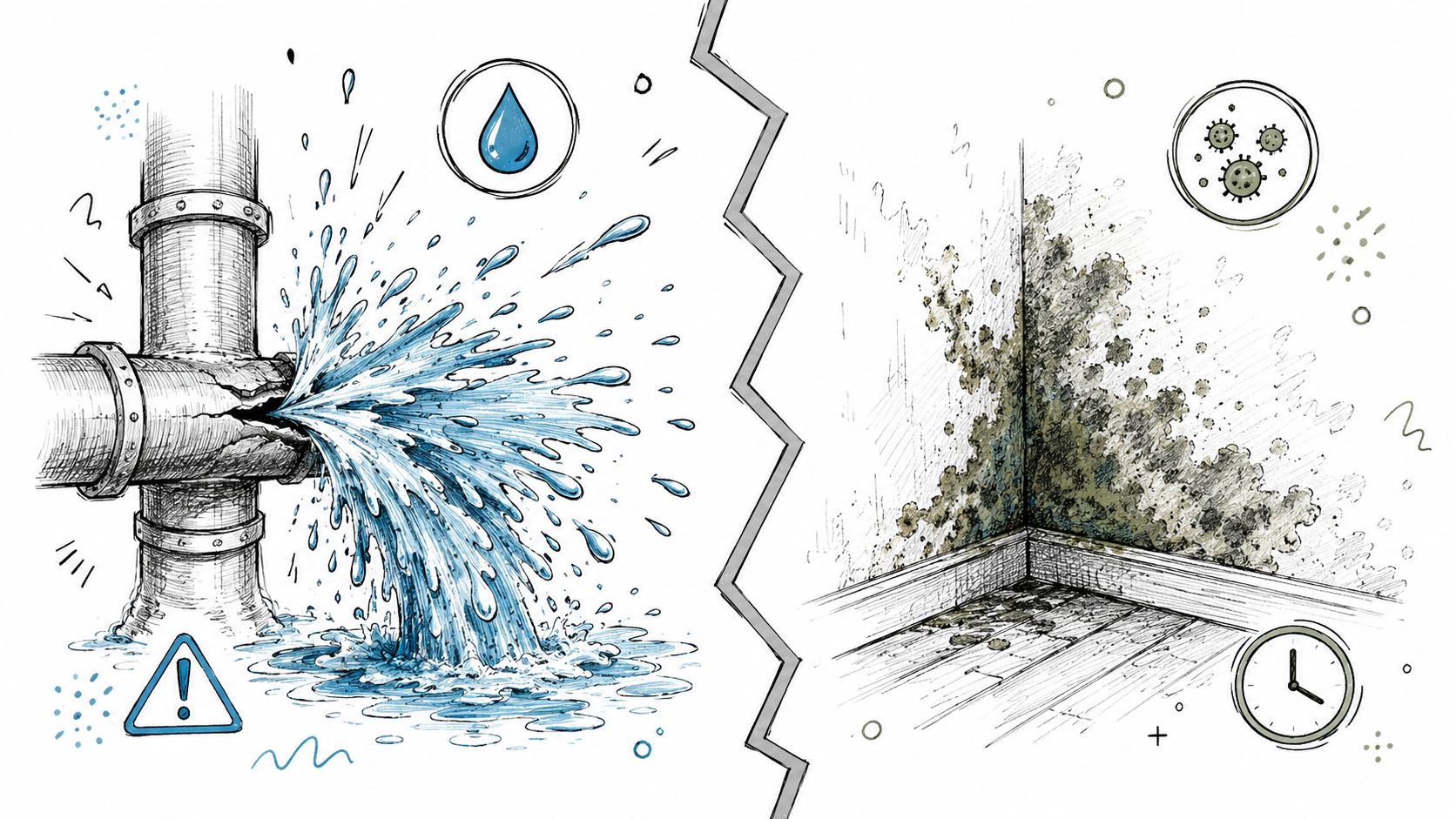
The most dangerous misconception is that water damage automatically means insurance coverage. Sudden and accidental is not interchangeable with any condition involving moisture. A burst pipe and a slow leak beneath a cabinet may eventually damage the same flooring, but the policy may treat them differently because one happened abruptly and the other developed through seepage or deterioration.
Gradual leaks create problems long before a tenant sees a puddle. A cabinet base may swell, paint may bubble, or a room may develop a persistent odor. Humidity can also keep materials damp without a single dramatic release of water. If a renter notices these signs and delays reporting them, the insurer may argue that the loss arose from a long-term condition, neglect, or failure to mitigate.
Mold depends on causation
Mold isn't automatically covered just because water was present. Standard renters policies commonly provide a path to limited mold coverage when mold results directly from a covered sudden event. They usually don't provide the same protection when mold grows from ongoing moisture, high humidity, long-term seepage, or an ignored maintenance problem, as outlined in GEICO's guidance on renters insurance and water damage.
That makes the timeline essential. A tenant who discovers a burst pipe, photographs the affected areas, reports it immediately, and follows reasonable drying instructions has a stronger factual record than a tenant who notices damp drywall and waits until the odor becomes severe. The second situation may involve a different cause and a different coverage analysis.
What renters should record
Don't throw away damaged property before the insurer or adjuster provides instructions. Photograph the source, surrounding materials, visible staining, affected belongings, and any measurements or labels that help identify the items. Save messages to the landlord, maintenance tickets, invoices, and receipts for reasonable emergency purchases.
For a practical explanation of the time it takes for water damage to become mold, focus on the operational lesson rather than waiting for a specific countdown. Wet materials need prompt assessment, drying, and monitoring. A delay can increase physical damage and make it harder to establish which condition caused the loss.
In humid Central Texas conditions, a small leak deserves the same reporting discipline as a dramatic overflow. The initial event may be manageable, but moisture hidden under flooring, inside cabinets, or behind walls can change the scope of the problem. Report first, document continuously, and let the insurer and qualified professionals evaluate causation.
Filing Your Water Damage Claim Successfully
A claim becomes easier to evaluate when the evidence follows the event in order. Start with safety and source control, then create a record before cleanup changes the scene. Don't enter areas with electrical hazards or contaminated water, and don't take risks to save belongings.
Follow a defensible order
Stop the water when it's safe. Close an accessible valve or shut off an appliance. If the source is inside a wall, ceiling, or neighboring unit, contact emergency maintenance rather than attempting an unsafe repair.
Notify the landlord or property manager immediately. Use the emergency number and send written notice through email, a resident portal, or text if that is the established channel. Include the discovery time, location, suspected source, and immediate hazards.
Photograph and record video before moving items. Capture wide views of each room and close views of damaged belongings, wet materials, stains, and the apparent source. Keep the original files and note when they were taken.
Protect unaffected property. Move dry belongings away from the water if doing so is safe. Separate damaged items without destroying evidence, and don't discard them until the carrier gives direction.
Build a contents inventory. List each affected item, its description, condition, approximate purchase context, and any available receipt, model number, photograph, or warranty record. A previous photo inventory can make this task far less stressful.
Report the claim to your insurer. Ask what the policy says about the deductible, personal-property limits, documentation, additional living expenses if applicable, and any water-source exclusions or endorsements. The insurer, not a restoration contractor, makes the coverage decision.
Arrange assessment and drying. A qualified restoration professional can inspect visible and concealed moisture, extract standing water, set drying equipment, and maintain records. Request copies of moisture readings, equipment logs, photographs, and the scope of work for your file.
Communicate with the adjuster
Use precise language and avoid assumptions about fault. Explain what you saw, when you saw it, who was notified, and what actions followed. If the adjuster asks for an inventory, submit a consistent version rather than changing descriptions casually from one conversation to the next.
A restoration assessment doesn't guarantee payment. It documents physical conditions and mitigation work, while the insurer interprets the policy. That distinction protects everyone from the common mistake of treating a contractor's opinion as a coverage promise.
If the rental is unsafe or inaccessible, ask the insurer how the policy handles eligible temporary living expenses before making expensive arrangements. Keep receipts and written instructions, because reimbursement rules vary by policy.
Protecting Your Rental in Central Texas Conditions
Georgetown and Austin renters deal with more than isolated appliance failures. Heavy rain, flash flooding, drainage problems, and older plumbing can expose the difference between internal water coverage and excluded external flooding. Prevention won't change a flood exclusion, but it can reduce avoidable losses and help you react before a small leak becomes a large claim.
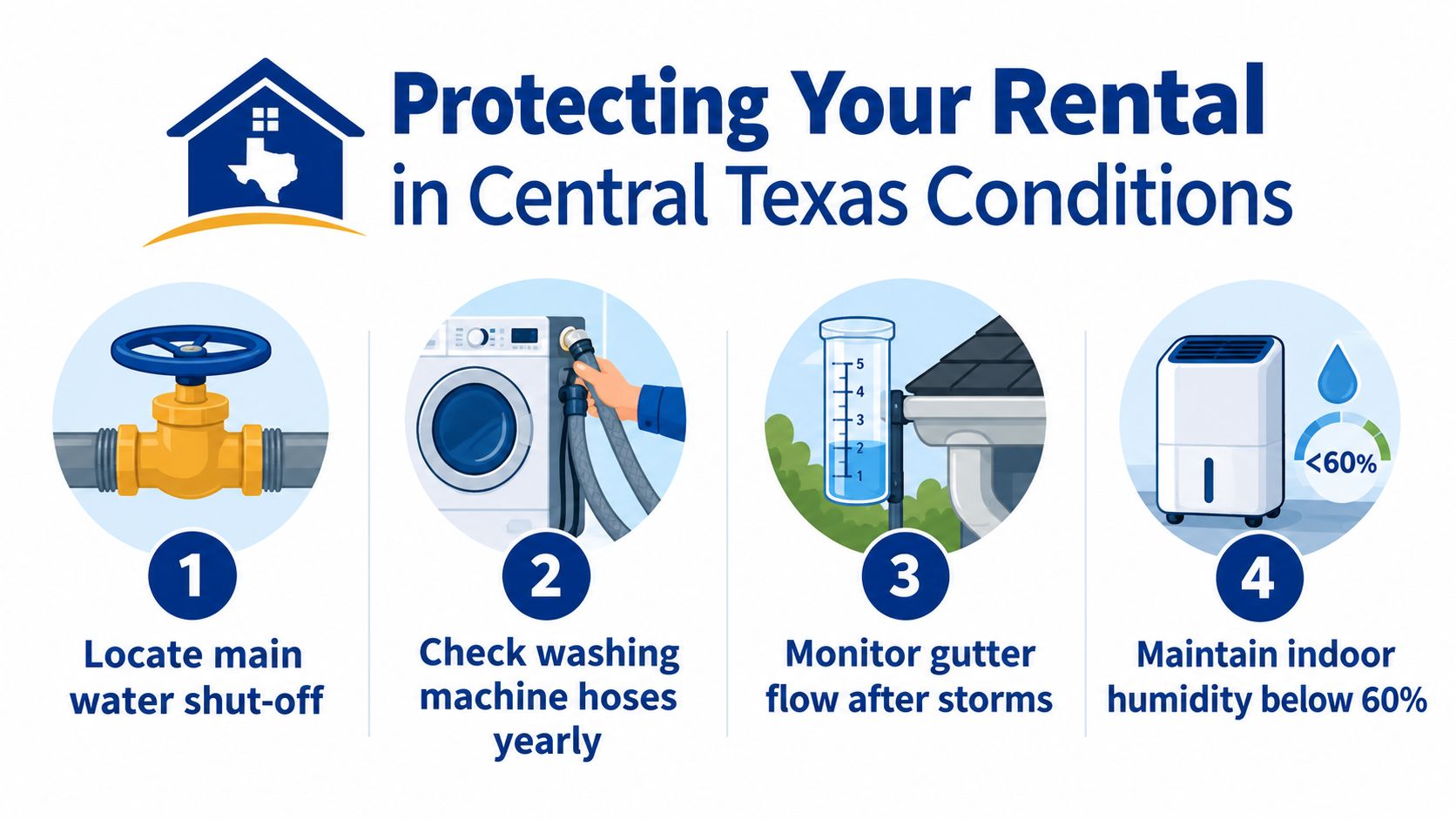
Start with access and information. Learn where the unit's shut-off valves are, save the property manager's emergency contact, and read the lease provisions that describe maintenance reporting. Ask the insurer whether the policy includes any available water-backup or flood options, particularly if the unit is on a lower level or in an area vulnerable to external water.
Make prevention part of the rental routine
- Use leak detection alarms: Place them near sinks, laundry connections, water heaters, and other accessible moisture sources if the lease permits.
- Inspect appliance connections: Look at washing-machine hoses, dishwasher connections, and supply lines for visible wear, dampness, or corrosion.
- Watch for early warning signs: Report soft drywall, staining, bubbling paint, musty odors, dripping fixtures, and slow drains instead of waiting for standing water.
- Keep belongings up where practical: Store electronics, important papers, and irreplaceable items away from floors that could collect water.
- Create a photo inventory: Photograph rooms, furniture, electronics, and identifying labels. Store the record somewhere separate from the rental.
- Review the policy before storm season: Confirm personal-property limits, deductibles, exclusions, and whether external flooding requires a separate policy.
Property managers can reduce confusion by giving tenants a written reporting protocol and a clearly identified after-hours contact. Tenants should use that protocol every time, even when the leak appears minor. A timestamped report helps establish that the renter acted promptly and gives the owner an opportunity to address the building source.
After a storm or indoor overflow, call for professional assessment when water has reached walls, flooring, cabinets, insulation, or concealed cavities. Surface drying alone may leave moisture behind, while prompt extraction and controlled drying can limit secondary damage.
Your Complete Water Damage Readiness Plan
Keep the plan simple. Review the policy, identify whether it covers sudden internal water damage to personal property, and investigate separate flood protection if external water is a realistic risk. Record your belongings before a loss, save emergency contacts, and learn the location of accessible shut-off valves.
When water appears, document the source and timeline, notify the landlord, contact the insurer, and protect unaffected property without creating a safety risk. Don't wait for staining, odor, or mold concerns to force the issue. Prompt notice and organized evidence can help distinguish a sudden covered event from a gradual condition that the policy excludes.
RestoTek TX provides water damage inspection, extraction, mitigation, structural drying, microbial prevention, and reconstruction support for rentals and properties in Georgetown, Austin, and surrounding Central Texas communities. If water has affected your rental, contact RestoTek TX for a prompt assessment and documentation that can support your next steps with the property manager and insurer.