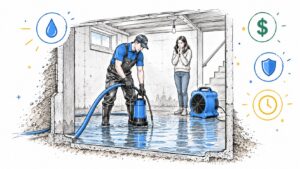
You're standing in the hallway at 2 a.m., staring at a wet ceiling and listening to drip, drip, drip hit the floor below. If you live in Georgetown or Austin, that's the moment when the question turns from abstract to urgent, does homeowners insurance cover water damage, or are you about to eat the whole repair bill yourself?
The honest answer is that the brochure version and the claims version are not the same thing. A standard policy may pay for one kind of water loss and deny the next one, even if the stains look similar. The fight usually comes down to where the water came from, how fast it happened, and whether the insurer can call it maintenance, seepage, flood, or a sudden accident.
Why Water Damage Coverage Is More Complicated Than It Sounds
A Georgetown homeowner can wake up after a Gulf-fed thunderstorm, walk into the hallway, and find a sagging ceiling with a brown ring spreading across the paint. The instinct is to assume the roof leak automatically belongs under homeowners insurance. That instinct gets people in trouble because insurers don't just ask whether water entered the house, they ask how it entered, where it started, and whether the loss was sudden, gradual, internal, or external.
That's the framework behind water claims. A burst supply line inside the wall is one thing. Rain driven through a damaged roof, storm surge, or seepage from the yard is another. A stain that developed over months is a different animal again, even if the final damage looks dramatic on move-in day.
Practical rule: the more the loss looks like a hidden, long-running maintenance problem, the harder it is to force it into a covered claim.
The biggest mistake homeowners make is cleaning too fast without documenting anything. If you start tearing out wet drywall, tossing cabinets, or hiring someone before you've photographed the source and the spread, you may make it harder to prove the event was sudden and accidental. Insurers love a thin record. Adjusters hate uncertainty less than they hate paying a claim they can't clearly categorize.
Texas homeowners also run into a second trap, the belief that “water damage” is one bucket. It isn't. Policy language usually splits the event into separate questions, and the answer changes depending on whether the water came from inside the structure or from outside it. Once you understand that, the rest of the claim process gets a lot less mysterious.
The Sudden Versus Gradual Rule That Decides Most Claims

The core rule in standard U.S. homeowners coverage is plain enough once you strip away the policy jargon. Insurers generally look for sudden and accidental water discharge from inside systems such as plumbing, HVAC, sprinklers, or household appliances, and they generally push back on continuous or repeated seepage that has been happening for weeks, months, or years, as described in the ISO HO-3-style trigger explained by Property Claims Authority's summary of water-damage claim rules.
What sudden usually looks like
A washing-machine hose bursts on Saturday morning. A supply line pops under a bathroom sink. A water heater fails and floods the utility room upstairs. Those are the kinds of facts that support a covered water loss because they point to a specific event with a clear start time.
If you can show the room was dry before the event, that helps. Date-stamped photos, repair receipts, and a clean timeline matter because they support the argument that this was an accident, not a neglected condition. Adjusters are trained to ask, “When did it start, and what changed right then?”
What gradual usually looks like
A slow slab leak under a tile floor. A toilet wax ring that's been leaking for months. A shower pan that's been failing so long that the subfloor is soft and stained. Those cases usually give the insurer a path to denial because the problem looks like wear, corrosion, or deferred maintenance rather than a sudden loss.
Staining, rust, rot, and prior patch jobs are the kind of evidence adjusters use against homeowners. If a contractor's old invoice shows the same line was repaired before, expect questions. If the damage spread quietly behind a wall, the insurer may argue the water was never sudden at all.
What to save right away
- Photos and video: take wide shots first, then close-ups of the source and all damaged surfaces.
- Time markers: save texts, call logs, and receipts that show when the problem was first noticed.
- Repair history: keep prior plumbing, roof, or appliance invoices, because they can cut both ways.
- Humidity and moisture records: if a contractor measures the area, keep the readings.
If the story is “it happened all at once,” build the record around that story immediately. If the story is fuzzy, the insurer will write the ending for you.
What Standard Policies Typically Cover and Exclude
The cleanest way to think about standard HO-3 water coverage is by source, not by emotion. The policy may be generous when the water comes from inside the house, much stricter when the water comes from outside, and flatly hostile when the damage smells like old age, neglect, or groundwater.
| Water Damage Categories and Typical Coverage Outcomes | Standard HO-3 Status | Typical Action |
|---|---|---|
| Burst pipe, failed supply line, appliance discharge | Usually covered if sudden and accidental | File claim, document source, start mitigation |
| Water heater rupture or HVAC-related discharge | Usually covered if sudden and accidental | Notify insurer, preserve damaged equipment, record model and age |
| Sewer or drain backup | Usually excluded unless an endorsement was purchased | Check for backup coverage and document source carefully |
| Flood, surface runoff, storm surge, rising outside water | Usually excluded | Separate flood policy or NFIP claim route |
Internal water events are the best-covered category
A plumbing failure inside the structure is the closest thing to a straightforward homeowners claim. That includes many slab leaks, fixture failures, and appliance-related discharges, as long as the insurer accepts the event as sudden. The key issue is still timing, not just location.
In older Central Texas houses, especially ranch homes with aging plumbing, the fight often starts with the source. If the line failed all at once, you have an argument. If the area has a long repair history or prior staining, the insurer will lean hard toward maintenance.
Backup claims need special attention
Sewer and drain backup losses sit in a gray area for many homeowners because they feel internal, but they're often excluded unless a rider was bought. A toilet overflow caused by a clogged drain is not the same as a burst pipe, even if the result is the same wet floor and ruined baseboards.
The difference matters because backup water can spread fast into flooring, cabinets, and contents. If you don't know whether backup coverage exists, check the declarations page and the endorsements before you assume the loss is covered.
Outside water is the usual denial trigger
Stormwater entering through a garage door during flash flooding, water pushing through a slab from outside, or runoff moving into the home after a heavy rain event usually belongs in the excluded bucket. That's true even when the damage begins indoors, if the cause is outside water pressure or surface flow.
For Georgetown and Austin homeowners, that distinction is brutal but real. Adjusters don't care that the carpet is soaked. They care whether the water came from a failed internal system or from outside ingress. That source decision controls the rest of the claim.
Endorsements and Flood Insurance That Fill the Gaps
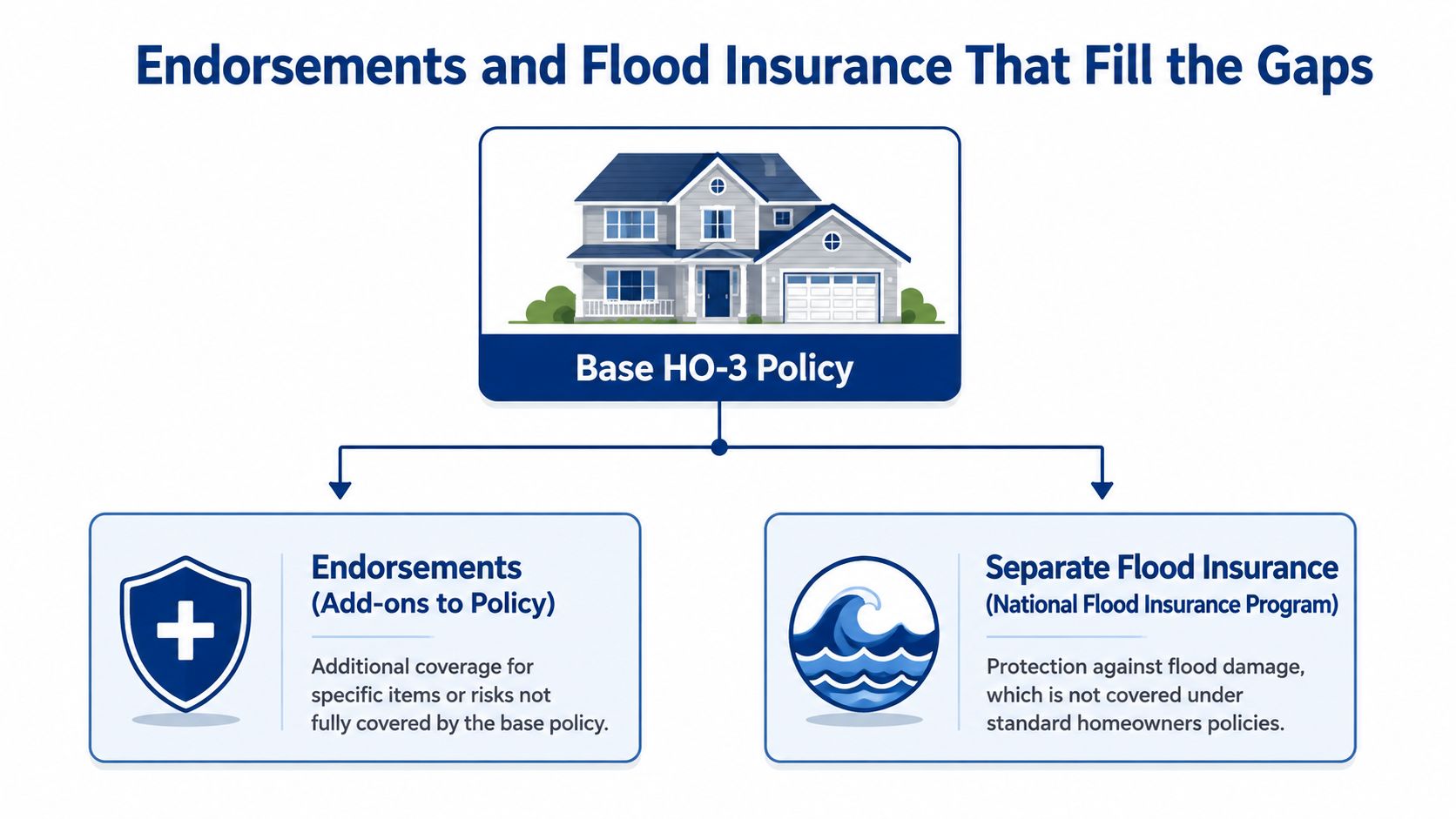
Once the base policy draws its lines, the only smart move is to close the gaps before the next storm, not after. For many Texas homes, the two tools are a water-backup endorsement and a separate flood policy. They solve different problems, and people get burned when they treat them like interchangeable add-ons.
What an endorsement is for
A backup endorsement is usually there for sewer, drain, or sump-related failures. It's the rider you want if you're worried about waste backup, a clogged line, or an overflow that the base policy excludes. It won't magically turn floodwater into covered loss, and it won't rescue a long-term leak hidden under a cabinet.
That's why the agent conversation needs to be specific. Ask what source is covered, what the deductible is, and whether the rider applies to both structure and contents. If they answer vaguely, push harder. Vague answers become denial letters later.
What flood insurance is for
Flood coverage is a separate animal, and it exists because standard homeowners insurance generally does not cover rising water, surface runoff, or storm surge. If your property sits near creeks, drainage channels, or other low-lying areas around Austin or Georgetown, that distinction isn't academic. It's the difference between a claim and a headache.
The National Flood Insurance Program's consumer guidance makes that separation clear, and the same basic split shows up in independent insurance guidance about water coverage. Don't wait for the next storm season to learn that your policy says no. If you need flood protection, add it before water is in the forecast.
Bottom line: if the water came from outside the home, the base policy is usually the wrong place to look.
How to choose between the two
If your worry is a backed-up drain or a failed sump-style system, start with a backup endorsement. If your worry is rising water, creek overflow, or storm surge, you need flood coverage. If you want both risks addressed, you need both tools.
A plain homeowners policy alone leaves too many Central Texas homes exposed. That's not a theory. It's how the exclusions are written.
How to Document and File a Strong Water Damage Claim
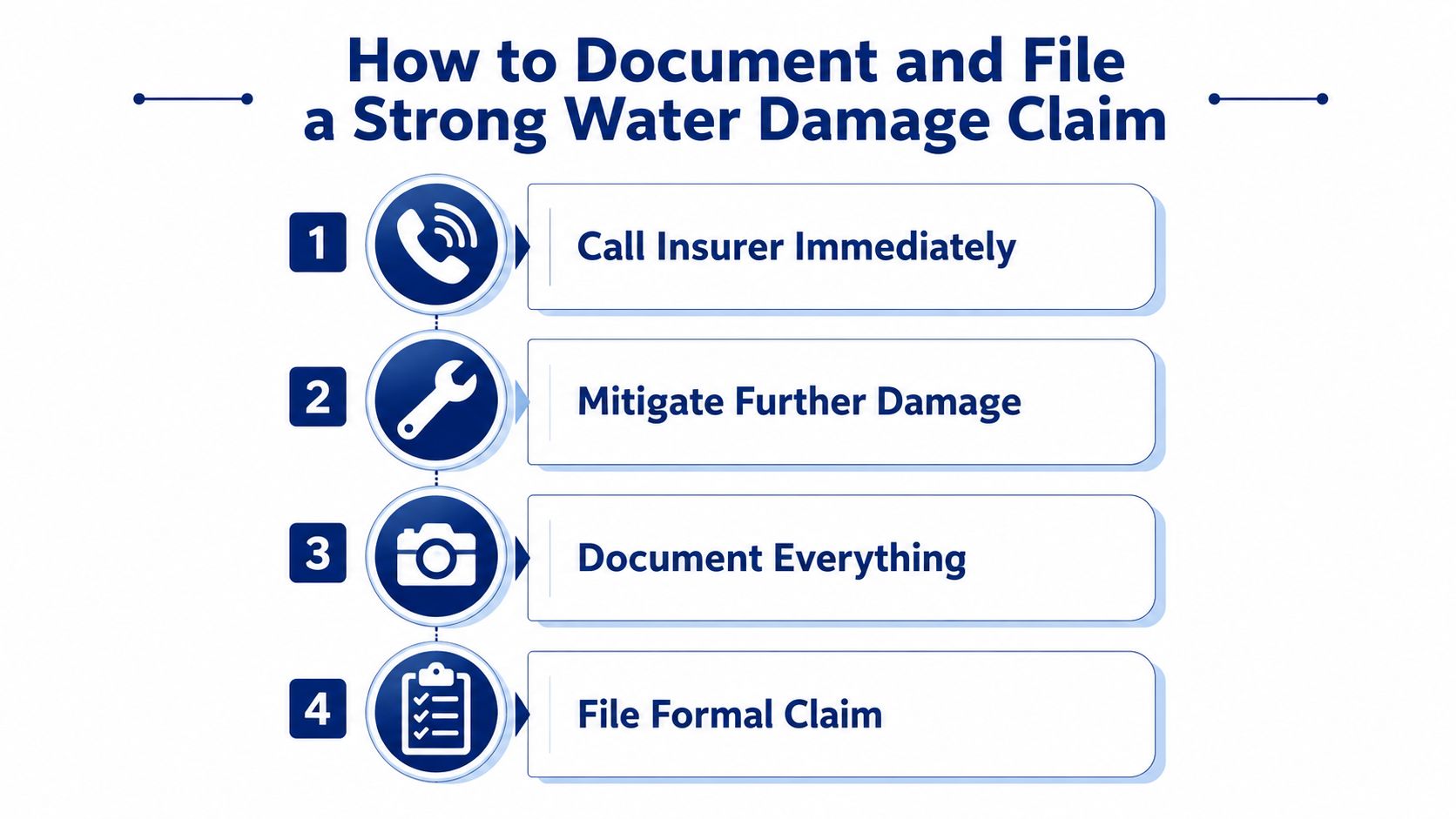
The claim starts the minute you find the water, not when the adjuster finally calls back. If you want the file to move, you need a clean timeline, clear photos, and proof that you acted fast. The claims process gets easier when your paperwork already shows what happened, what you did, and what the damage looked like before anyone touched it.
Start with the phone call, then stop the damage
Call the insurer right away and report the loss. Then shut off the water if you can, protect the area from more damage, and keep the utilities safe. If the leak is active, the priority is to stop the source and keep the loss from expanding.
Photograph before you clean
Take wide shots of the room, then close-ups of the source, the staining, and the affected materials. Save video if the water is still moving or if floors are flexing, bubbling, or cracking. If contents are damaged, photograph them in place before you move them.
Keep the receipts and the chain of action
Emergency extraction, tarping, dehumidifiers, temporary patching, and materials you buy to stop further damage should all be tracked. The insurer may want to see that you acted reasonably, not lazily. Receipts and contractor invoices help show that the work was mitigation, not a cosmetic upgrade.
For a deeper walkthrough of the filing process, keep this guide handy, RestoTek TX's water damage claim resource.
Prepare for the adjuster's inspection
Adjusters care about source, timing, extent, and whether the damage keeps spreading. Moisture mapping, written readings, and a clear photo log make your claim easier to defend because they show where wet material was found and what had to be removed. That's one reason contractors who document well often improve claim outcomes.
What belongs in the file
- Notice of loss: date and time you first saw the problem.
- Photos and video: before cleanup, during mitigation, and after demolition.
- Mitigation invoices: extraction, drying, and emergency repairs.
- Communication log: names, dates, claim numbers, and follow-up notes.
If you can hand the adjuster a tidy file, you're already ahead of most homeowners. Sloppy records invite delay.
Mitigation Obligations and Why Delay Costs You Money
You don't get to sit on a wet house and wait for the insurer to decide what happens next. Standard policies expect the homeowner to mitigate further damage, which means taking reasonable steps to stop the loss from growing. If you don't, the bill gets bigger and the coverage fight gets uglier.
What reasonable mitigation looks like
Shut off the water. Pull standing water. Move furniture and contents out of the wet zone if you can do it safely. Dry the area with air movement and dehumidification. If a roof opening is involved, temporary cover matters too.
Those steps are not optional decoration. They show the insurer that you acted like a person trying to preserve the property, not like someone watching the damage spread while waiting on hold. That matters on a slow leak especially, because the longer moisture sits, the easier it is for an adjuster to argue the loss got worse because of delay.
Why mold changes everything
Texas regulators make the same basic point from different angles, mold is covered only when it results from a covered water event, and gradual leaks, wear and tear, neglect, rust, or rot usually fall outside coverage according to the Texas Department of Insurance's guidance on water damage and mold. That means every hour you delay drying can turn a water claim into a mold problem that the policy may treat very differently.
Mold is not just a gross finish issue. It can change the scope, the schedule, and the insurer's attitude toward the whole file. If the water event was already borderline, microbial growth can push the claim deeper into disputed territory.
Don't wait for paperwork before you dry the structure. Dry first, argue coverage second.
For homeowners comparing likely repair exposure with actual damage control, this is also where a practical estimate helps, and RestoTek TX's repair-cost guidance is useful for understanding how mitigation and reconstruction costs can stack up.
The mistake that hurts the most
Homeowners often think waiting is safer because they don't want to “do too much” before the adjuster arrives. That hesitation usually backfires. Drying a house is not the same as fixing the cause, and insurers expect you to stop the loss from spreading while the claim is being reviewed.
If you do nothing, the damage grows, the scope gets disputed, and the insurer gets a cleaner argument for denying the secondary problems.
Working With a Georgetown and Austin Restoration Company on Your Claim
A good restoration crew does more than suck water out of carpet. The first visit should identify the source, map the moisture, document the affected materials, and leave you with a record the adjuster can use. That's where a local company becomes part of the claim, not just part of the cleanup.
What the first visit should include
The technician should inspect the source area, take photographs, record moisture readings, and separate salvageable material from material that has to come out. They should also tell you whether the source looks internal, external, sudden, or gradual, because that fact pattern drives coverage.
If a company can't explain what it found in plain language, that's a warning sign. You want a crew that understands both the drying job and the insurance file.
Why local response matters in Central Texas
Flash floods, after-hours line breaks, and sudden backups don't happen on a polite schedule. A team with 24/7 emergency response can start extraction before the damage migrates into framing, cabinets, or flooring. That fast response matters in Georgetown and Austin because the building materials and storm patterns here punish delay.
RestoTek TX is one local option that handles inspection, water extraction, structural drying, microbial prevention, and reconstruction under one roof, and it serves Georgetown and Austin homeowners dealing with storm water, backups, and line failures. That kind of end-to-end setup helps when you need one company to document the loss and finish the rebuild.
What to look for in a partner
- Documentation habits: ask whether they provide moisture logs, photos, and written scope notes.
- Insurance awareness: they should know how to describe source and extent without inflating the claim.
- Rebuild capability: one provider is easier to coordinate than three different trades.
- Communication: you need someone who will explain the next step without disappearing.
A restoration company should make the claim cleaner, not noisier. If they can't support the file, they're just another vendor.
For Georgetown homeowners who want a local starting point, RestoTek TX's water damage restoration page shows the kind of response and service range that matters after a loss.
Your Water Damage Coverage Action Checklist
Pull your declarations page tonight and confirm your dwelling coverage, deductible, and any water-related endorsements. Call your agent and ask directly about sewer backup and flood coverage. Find your shut-off valves, photograph them, and save a restoration contact before the next storm hits. Build a small go-bag with chargers, bins, a notebook, and printed policy info so you're not hunting for basics while the ceiling is dripping.
RestoTek TX handles water extraction, structural drying, mitigation, and reconstruction for Georgetown and Austin homes, so the cleanup and the insurance documentation can move together instead of working against each other. If you're dealing with a leak, overflow, or backup right now, visit RestoTek TX and get a local team on the job before the damage spreads.