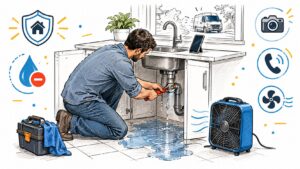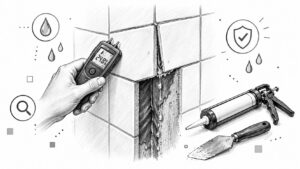
A pipe bursts overnight, a washing machine overflows while you're away, or stormwater pushes through a low doorway. By the time you notice, water has reached flooring, cabinets, belongings, and possibly electrical equipment. The first instinct is often to grab a mop or switch on a fan, but emergency response works best in a safe sequence.
Protect people first. Stop the water only if you can reach the shutoff without entering a hazardous area. Keep occupants and pets away from contaminated water, exposed wiring, unstable surfaces, and damaged structures. Then document the scene, contact your insurer, and call qualified restoration help.
A flooded room near an electrical panel, a sewage backup, or active stormwater intrusion isn't a routine cleanup project. Leave the area and contact emergency services, the utility provider, a licensed professional, or a restoration contractor as appropriate. The CDC homeowners and renters guide advises waiting for authorities to confirm that reentry is safe, checking for loose power lines and gas leaks, and ensuring electricity and gas are shut off before mold cleanup.
The following emergency response tips turn a water loss into a time-ordered field checklist. Homeowners can use it to make safer decisions, while property managers can adapt it for tenants, vendors, staff, and multiple affected units.
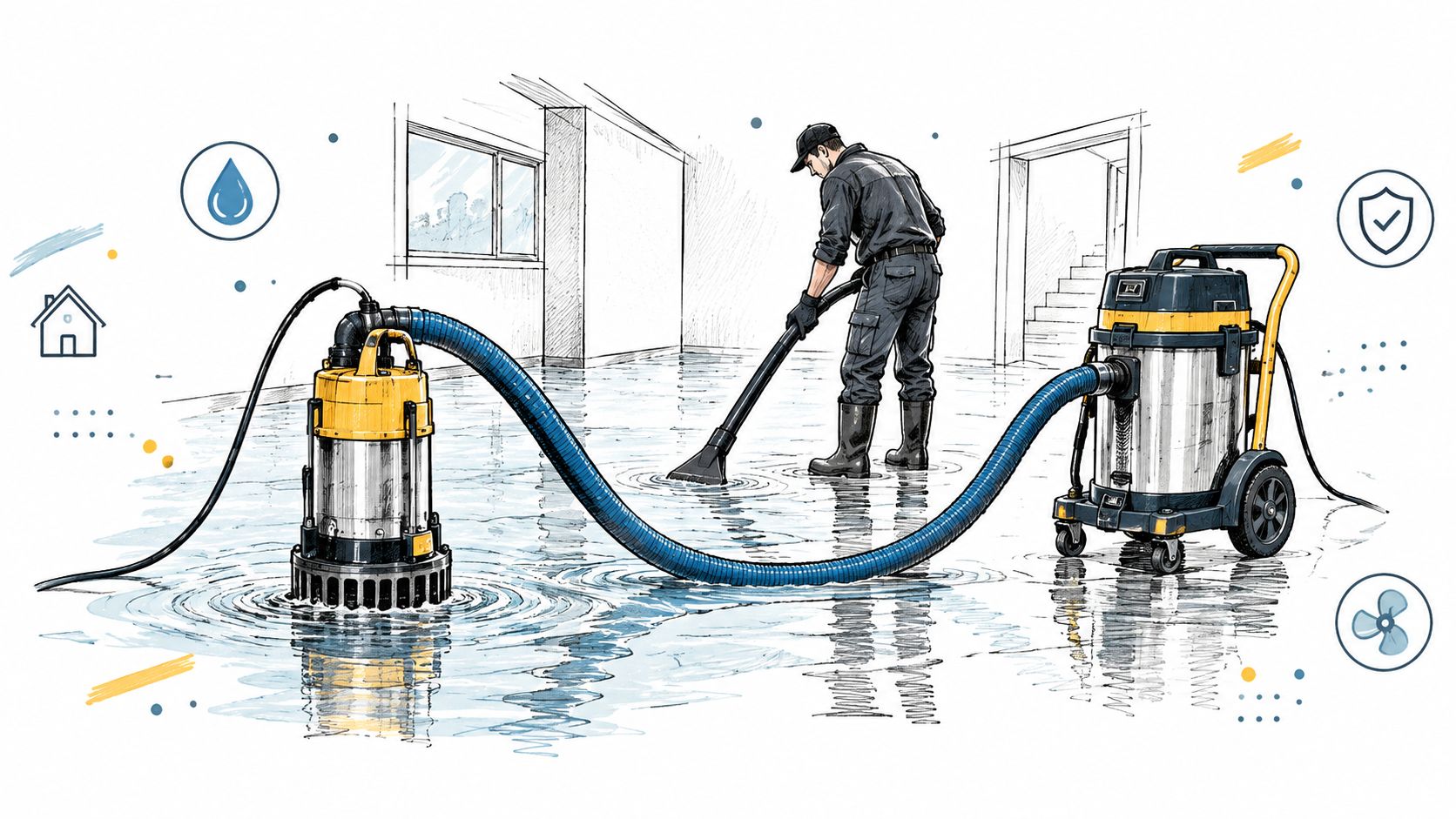
1. Start Immediate Water Extraction and Removal
Standing water should be addressed quickly, but extraction must follow a safety assessment. If the water may be energized, contaminated, or connected to structural damage, don't enter just because the visible level looks manageable. A restoration professional can determine whether pumps, wet vacuums, or containment equipment can be used safely.
For a clean-water overflow in a safe area, move people and valuable belongings away from the wet zone. Photograph the room, water line, damaged contents, and the apparent source before moving items or beginning mitigation. If the water source is still active and the shutoff is reachable from a dry location, stop it. Otherwise, call the appropriate emergency or utility service.
Remove water, then expose hidden moisture
Extraction is only the first phase. Water can remain beneath flooring, behind baseboards, inside cabinets, and below furniture even after the visible surface looks dry. Ask the restoration company to map moisture and explain which materials can be dried in place and which require removal.
The EPA guidance on mold and moisture recommends removing standing water and drying affected materials within 24 to 48 hours where possible. It also identifies extraction, air movement, and dehumidification as practical controls, while warning that this window isn't a guarantee that mold won't develop.
Practical rule: Don't confuse a clean-looking floor with a dry building assembly. Request moisture readings in concealed areas before approving reconstruction.
For a documented handoff, use RestoTek TX water extraction services in Austin to coordinate extraction, moisture mapping, equipment records, and the next drying phase.
2. Arrange a Professional Water Damage Inspection
Once immediate hazards are controlled, establish what happened and how far the water traveled. A professional inspection should identify the water source, whether it remains active, the affected materials, the likely contamination level, and hazards that aren't visible from the doorway.
That assessment matters because a supply-line leak and a sewage backup require different handling. Floodwater, wastewater, and water near electrical systems may require protective equipment, containment, specialized cleaning, and restricted access. A property manager should also identify affected units, common areas, elevators, mechanical rooms, tenant belongings, and any business operations that need to be relocated.
Ask for evidence, not a quick visual opinion
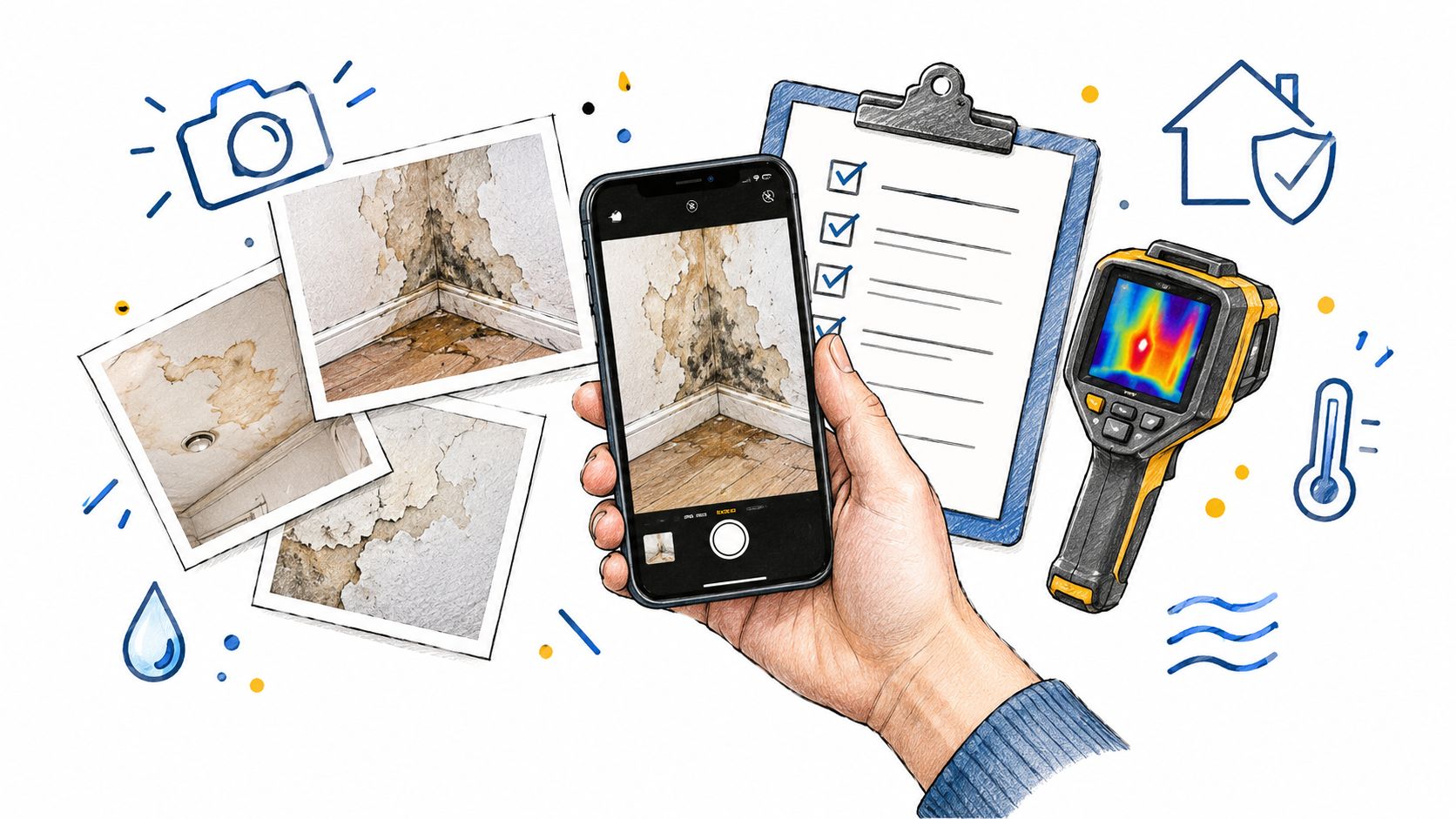
A good assessment should include moisture mapping, photographs, affected-area notes, and a proposed monitoring plan. Thermal imaging can help locate temperature differences associated with hidden moisture, but it doesn't replace moisture-meter readings or direct inspection where materials are accessible.
Ask the inspector to explain:
- The source: Is the leak stopped, intermittent, or still active?
- The water category: Is the water clean, questionable, or contaminated?
- The affected assembly: Could moisture be inside walls, flooring, insulation, or cabinets?
- The safety boundary: Which rooms, outlets, appliances, or structural areas must remain off limits?
- The next decision: What needs extraction, drying, removal, cleaning, or specialist review?
A written assessment gives homeowners and managers a shared baseline for the insurer, plumber, electrician, and restoration team. It also prevents a common failure: starting cosmetic repairs before anyone has verified that the source is corrected and concealed moisture is under control.
If the property may be unsafe, don't conduct your own inspection for the sake of documentation. Photograph from a safe location, record what you can see, and wait for qualified personnel to determine whether entry is appropriate.
3. Deploy Dehumidification and Air Movement Carefully
Extraction removes bulk water. Mechanical drying addresses the moisture that remains in porous materials and indoor air. Dehumidifiers and air movers should be positioned according to the building layout, the materials involved, the water type, and measured moisture conditions, not placed randomly in the middle of a room.
In a humid climate such as Central Texas, opening windows isn't automatically the fastest solution. Outdoor air can introduce additional moisture, especially during or after a storm. A professional team should explain whether the affected area needs controlled dehumidification, limited ventilation, containment, or a combination of methods.
Treat equipment as part of a monitored system
The drying plan should include regular readings from floors, walls, cabinets, and other affected materials. Ask why a particular dehumidification capacity was selected, where air movers will discharge, and whether occupants need to leave because of noise, heat, airflow, or restricted access.
The EPA recommends keeping indoor relative humidity below 60%, with 30% to 50% identified as the preferred range in its moisture guidance. Those benchmarks support humidity control, but they don't prove that a wall cavity or subfloor is dry. The contractor still needs to verify materials directly.
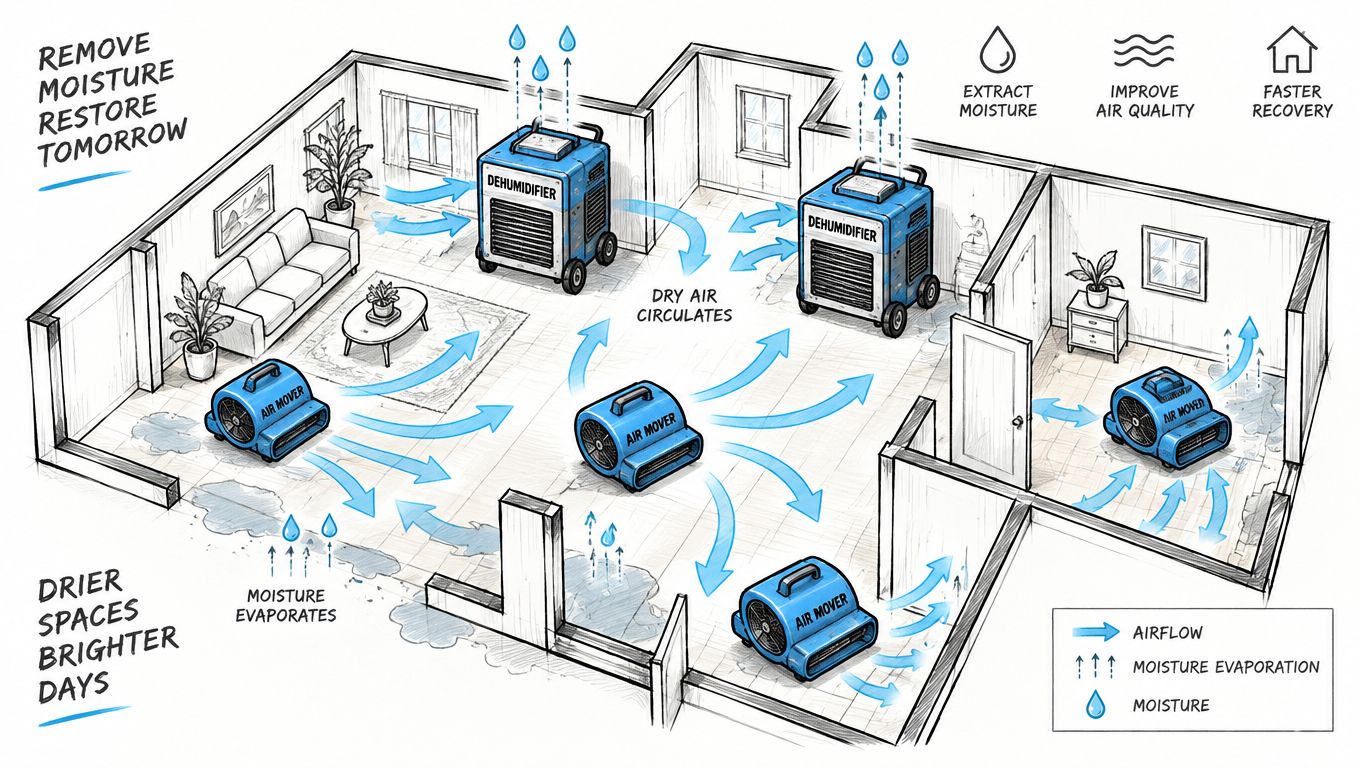
Use RestoTek TX flood-damage dehumidification guidance as a starting point for questions about equipment and drying. Keep doors, windows, and affected areas managed according to the contractor's plan rather than moving equipment or switching it off without agreement.
Air movement is useful only when the water source and contamination risks have been evaluated. Faster airflow isn't always safer airflow.
4. Build a Complete Photographic Record
A burst pipe, roof leak, or overflowing appliance can change quickly once extraction begins. Photograph the scene before cleanup alters it. Start with wide images of each affected room, then capture water lines, damaged finishes, furniture, appliances, contents, staining, and the suspected source. Add video when it shows the water path or a failed fixture operating.
Safety comes first. Do not enter an electrically unsafe or contaminated room for a better angle. Photograph from outside the boundary instead. Property managers should also record the unit number, common-area location, discovery time, people notified, and temporary measures taken to protect occupants.
Build the file so another person can follow the response without guessing. Organize images by room and date, and preserve restoration reports, moisture readings, equipment logs, invoices, estimates, plumber or electrician reports, and insurer communications. Request progress photographs and an itemized work record from the restoration contractor.
Use these labels to keep the record focused:
- What was affected: Identify rooms, assemblies, contents, and visible damage boundaries.
- What changed: Record when the water was stopped, extracted, contained, or removed.
- What was measured: Save moisture readings and drying updates alongside photographs.
- Who acted: Note calls to emergency services, utilities, contractors, owners, and insurers.
- What remains unresolved: Flag suspected hidden moisture, source repairs, access limits, and reconstruction decisions.
The RestoTek TX progress documentation service can support a structured restoration record. Clear documentation helps an adjuster assess causation, scope, mitigation, and remaining repairs, although policy terms determine coverage.
Before discarding damaged materials or contents, ask the insurer how they should be handled. If removal is required for safety, photograph the items first, preserve samples or materials when appropriate, and document why disposal was necessary. This preserves evidence while allowing unsafe conditions to be addressed without delay.
5. Prevent Microbial Growth and Escalate Mold Safely
Drying is the foundation of microbial control. Antimicrobial treatment can be useful in an appropriate restoration plan, but it doesn't replace extraction, source correction, removal of unsalvageable materials, or moisture verification. Spraying a product over a wet wall may hide an odor temporarily while moisture remains inside.
Separate the response by condition. A clean-water loss discovered quickly may be suitable for controlled drying after a safety assessment. Sewage, floodwater, visibly moldy materials, recurring dampness, and strong odors require a more cautious approach and may exceed safe homeowner work.
Know when fans stop being the right tool
The CDC and NIOSH mold cleanup guidance emphasizes rapid drying and moisture control, but advises against using fans once mold has begun growing because airflow can spread spores. It also recommends NIOSH-approved N95 respirators, protective gloves, and goggles for appropriate cleanup tasks, while warning that children and people with asthma or weakened immune systems shouldn't perform cleanup.
Stop work and seek professional guidance when you see established growth, porous materials saturated with contaminated water, recurring moisture, or conditions that require containment. Don't rely on odor alone to determine whether remediation is complete. Ask how affected materials will be cleaned or removed, how the work area will be isolated, and what verification will show that the moisture problem has been resolved.
For property managers, communicate restrictions in writing. Tell tenants which areas are closed, where they should avoid tracking water, and whom to contact if odor, discoloration, or new dampness appears.
6. Identify and Repair the Water Source
Drying a property without correcting the source creates a repeat loss. The source may be obvious, such as a failed supply hose, but it can also be concealed in a wall, roof assembly, drain line, foundation edge, or mechanical space. Water staining often shows where water traveled, not where it entered.
Start with the simplest safe questions. Is a fixture running? Is a shutoff valve closed? Does water appear only during rain? Is a drain backing up? Has a sump pump, appliance, roof, or plumbing connection failed? Don't open walls, climb onto a roof, or enter a wet mechanical area without the right professional assessment.
Coordinate source repair with mitigation
A licensed plumber, roofer, or other qualified trade may need to correct the failure while the restoration team manages drying. Give both parties the same information, including photographs, inspection notes, and the location of visible moisture. Ask for a written description of the source and the completed repair.
Thermal imaging and moisture mapping can help locate concealed wet areas, but results still need interpretation. A warm or cool image isn't, by itself, proof of a leak. The restoration contractor should connect instrument readings with visible conditions, plumbing information, building details, and the timing of the event.
For insurance coordination, document whether the damage resulted from a sudden event, a long-term condition, weather intrusion, or another cause. Coverage depends on the policy and circumstances. Ask the adjuster what source-related work is covered, what work requires separate authorization, and what evidence is needed.
Don't postpone the source repair until after reconstruction. New drywall, flooring, or paint can conceal an unresolved leak and make the next investigation more disruptive.
7. Remove, Clean, and Restore Contents Properly
Once water has reached furniture, records, electronics, or personal belongings, pause before moving anything. Contents require triage based on safety, material, and water type. Contaminated water can make handling unsafe, while prolonged moisture can worsen damage. Keep occupants away until the restoration team confirms the handling requirements.
Start the record at the property. Photograph each item in place when conditions allow, assign its room or storage location, and describe its visible condition. Separate urgent, valuable, sentimental, and potentially hazardous belongings. Property managers should also identify the tenant or owner connected to each item and maintain a chain of custody if contents leave the building.
Use the material to guide the next decision. Wood furniture, paper records, photographs, electronics, textiles, and artwork need different cleaning and drying methods. Do not power on wet electronics to test them. Documents and photographs may need specialized stabilization, and swollen composite materials may not justify recovery.
Before work begins, ask RestoTek TX or the selected restoration provider to document:
- What can be salvaged: Record the reasoning behind cleaning, drying, storage, or disposal.
- How items will be handled: Confirm packaging, transport, inventory control, and storage conditions.
- What cleaning is appropriate: Contaminated contents may require procedures different from clean-water items.
- How costs will be documented: Request photographs, descriptions, work records, and condition notes.
- What needs specialist review: Flag electronics, art, records, heirlooms, and other high-value contents early.
Do not move wet belongings into a garage and assume the problem is contained. Enclosed areas can retain moisture, and stacked items block airflow. Keep contents separated as directed, and avoid household chemicals that may damage finishes or interfere with professional cleaning. A documented, material-specific process gives homeowners and property managers a better chance of preserving useful property while keeping safety and contamination control ahead of convenience.
8. Verify Structural Drying Before Reconstruction
A room can look ready while moisture remains under flooring, behind trim, inside wall cavities, or around penetrations. Carpet that feels dry and a clean wall surface do not confirm that the structure is ready for reconstruction.
Before approving repairs, compare readings from affected and unaffected areas. Ask RestoTek TX or the restoration provider to identify the instrument used, the materials tested, each measurement location, and the basis for declaring the drying complete. Readings vary by material and building conditions, so one universal target cannot replace a documented assessment.
Request a written closeout that records:
- Measurement locations: Include rooms, wall sections, floors, cabinets, and concealed areas.
- Material context: State whether each reading concerns wood, drywall, flooring, or another assembly.
- Equipment history: Record what operated, where it was placed, and when it was removed.
- Exceptions: Identify spaces that could not be accessed, tested, or dried in place.
- Next actions: State whether cleaning, demolition, repairs, monitoring, or reconstruction remains.
The EPA's drying guidance treats the 24 to 48 hour period as a prevention guideline, not a guarantee that microbial growth will not develop. Continued drying or further investigation may still be required, even after a prompt response.
If readings stop improving, increase after equipment is removed, or differ sharply between nearby locations, pause reconstruction and ask for an investigation. Extending the same equipment setup may not address a hidden moisture source. Homeowners should keep the closeout record with their claim documents; property managers should attach it to the building's incident file and release reconstruction only after unresolved exceptions have an owner and a next action.
9. Activate a 24/7 Emergency Response Plan
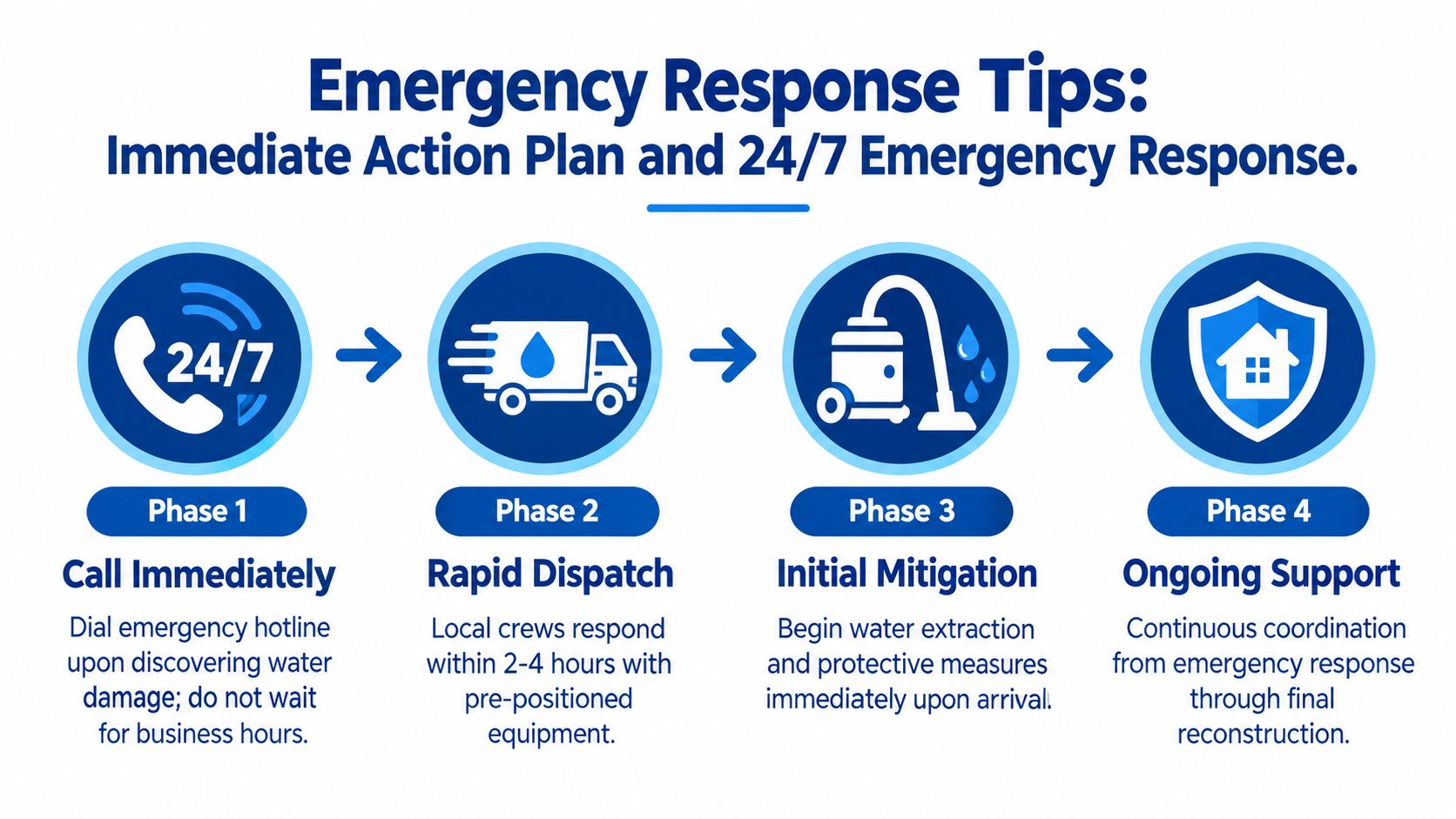
At 2 a.m., a burst pipe, weekend backup, or storm-related leak can leave a property without normal access to staff, vendors, roads, or utilities. A response plan should identify the first call, the person authorized to make it, and the safe actions to take before help arrives.
Homeowners should store emergency contacts, insurance details, shutoff locations, building access information, and medical considerations somewhere reachable during a power outage. Property managers need a staff and vendor version covering tenant communication, master shutoffs, access credentials, elevator procedures, utility contacts, and escalation rules.
When calling a restoration provider, give the property address, access instructions, water source, affected areas, suspected contamination, electrical concerns, occupants present, and active hazards. Report whether water is still flowing or the property has been evacuated. Staff should not enter an unsafe area to gather extra details.
Ask the provider to confirm this order of work: safety assessment before entry or equipment use, source control through a safe shutoff or trade partner, documentation before conditions change, then extraction and containment to remove water and limit spread. The team should also explain its drying plan, including equipment placement and monitoring, and the expected restoration path for cleaning, repairs, and reconstruction.
The FEMA 2024 National Household Survey findings reported that 69% of respondents had assembled emergency supplies, while 58% reported having an emergency plan. Supplies help, but assigned responsibilities and practiced decisions guide action under pressure.
RestoTek TX can take over the response from the initial call through drying, documentation, and end-to-end restoration, with the homeowner or property manager retaining approval over access, scope, and next steps.
10. Coordinate With the Insurer and Adjuster
Notify the insurer promptly using the contact method in your policy. Ask what information is needed, whether an adjuster will inspect the property, and what emergency mitigation you can authorize while waiting. Don't delay life-safety work or necessary steps to prevent further damage solely because an adjuster hasn't arrived.
Give the restoration company the claim number and adjuster details when available. A coordinated team can provide photographs, moisture records, source information, itemized estimates, equipment logs, and drying documentation. The insurer still determines coverage, so the contractor shouldn't promise approval or tell you that every repair will be paid.
Keep causation and scope separate
The cause of a loss, the damage caused by that event, the mitigation needed to prevent further damage, and the reconstruction required to restore the property may be evaluated differently. Ask the adjuster to distinguish covered work from excluded or separately authorized work. Request written explanations for disputed scope or payment decisions.
Maintain a communication log with the date, person, topic, and agreed next step. Save emails, letters, estimates, photographs, reports, receipts, and temporary-repair records in one claim file. Property managers should provide owners and tenants with appropriate updates while protecting private information.
Use these questions during the adjuster conversation:
- What is the claim reference: Confirm the number and the assigned contact.
- What can proceed now: Identify urgent mitigation and any required authorization.
- What evidence is needed: Ask for preferred photographs, reports, and invoices.
- What remains under review: Separate accepted, disputed, and pending items.
- What happens next: Record inspection, drying, repair, and payment milestones.
10-Point Emergency Response Comparison
| Service | Implementation complexity | Resource requirements | Expected outcomes | Ideal use cases | Key advantages |
|---|---|---|---|---|---|
| Immediate Water Extraction and Removal | High, requires trained operators and rapid mobilization | Industrial pumps, wet/dry vacs, multiple crews, 24/7 readiness | Rapid removal of standing water; reduced structural/mold risk | Fresh floods, basements, large standing water within 24–48 hrs | Prevents secondary damage, shortens restoration timeline, improves safety |
| Professional Water Damage Inspection and Assessment | Moderate, certified inspectors and analysis required | Moisture meters, thermal imaging, trained assessors, reporting tools | Accurate scope, hidden moisture ID, mitigation plan and documentation | Unclear extent/source, pre-restoration decisions, insurance documentation | Prevents overtreatment, identifies hidden issues, supports claims |
| Rapid Deployment of Dehumidification and Air Movement Equipment | High, requires technical placement and monitoring | Industrial dehumidifiers, air movers, continuous power, monitoring devices | Certified drying to acceptable moisture levels; mold prevention | Post-extraction drying in humid climates or large affected areas | Faster drying to standards, measurable progress, protects materials |
| Documentation and Photographic Evidence for Insurance Claims | Low–Moderate, systematic and detailed record-keeping | Cameras, thermal images, logs, reporting personnel | Defensible records, quicker claims, accurate settlements | All loss events, disputed claims, high-value content losses | Supports faster claims, prevents disputes, legally defensible records |
| Microbial Prevention and Mold Remediation Protocols | High, containment, testing, and specialized treatments | Antimicrobials, HEPA air scrubbers, testing labs, containment supplies | Reduced mold growth, protected indoor air quality, possible avoidance of major demolition | Warm/humid climates, >24–48 hrs moisture exposure, visible mold risk | Prevents costly remediation later, protects occupant health |
| Professional Leak Detection and Source Identification | Moderate–High, diagnostic tools and possible invasive checks | Thermal imaging, moisture mapping, pressure testing, inspection crews | Pinpointed leak source, prevents recurrence, clear repair path | Unknown or recurrent leaks, roof/plumbing failures, insurance causation | Saves repair time/cost, enables targeted fixes, documents causation |
| Proper Content Removal, Cleaning, and Restoration | Moderate, item-specific processes and inventory management | Packing materials, cleaning labs, climate-controlled storage, specialists | Maximized salvage, reduced replacement costs, documented inventory | Wet valuables, sentimental items, large content exposure | Preserves irreplaceables, lowers replacement expense, supports claims |
| Structural Drying Verification and Moisture Monitoring | Moderate, ongoing measurements and data interpretation | Calibrated moisture meters, daily monitoring, reporting systems | Verified dryness before reconstruction; prevents mold rebound | Reconstruction scheduling, humid regions, extended drying projects | Objective drying data, reduces remediation risk, insurance compliance |
| Immediate Action Plan and 24/7 Emergency Response | High, rapid coordination and readiness required | On-call crews, pre-positioned equipment, 24/7 dispatch systems | Initial mitigation within hours; minimized immediate damage | After-hours pipe bursts, storm flooding, sewage backups | Minimizes initial loss, faster local response, continuity of service |
| Coordination with Insurance Adjusters and Claims Documentation | Moderate, administrative and technical liaison work | Detailed reports, cost estimates, adjuster communication, documentation | Smoother claims process, improved settlement accuracy | Complex claims, high-value losses, disputed adjuster estimates | Increases approval likelihood, higher settlements, reduces owner burden |
From First Call to Full Recovery
The safest emergency response is a sequence, not a race. Make the area safe before entering. If electrical systems, gas, sewage, floodwater, or structural damage may be involved, keep people out and contact the appropriate emergency or qualified professional service. Stop the water source only when the shutoff is reachable without exposure to electrical or structural hazards.
Once the immediate risk is controlled, document the original condition. Take photographs from safe locations, record the time of discovery, note who was contacted, and preserve damaged contents or materials when doing so won't endanger anyone. This record helps the insurer, restoration contractor, plumber, electrician, property owner, and tenant work from the same facts.
Then move into mitigation. Extract standing water, contain spread, and begin controlled drying based on the water type and measured conditions. Don't use fans around visible mold without professional guidance, don't switch off drying equipment just because surfaces look better, and don't approve reconstruction before the contractor verifies affected assemblies.
A household plan should include supplies, medications, important documents, communications equipment, and accessible emergency contacts. Ready.gov's family emergency kit guidance recommends maintaining enough basic supplies to remain self-sufficient for at least three days, including one gallon of water per person per day for drinking and sanitation. For a household of four, that baseline equals 12 gallons for three days. Remote or hard-to-reach locations may need more. This preparation supports the first response period, but it doesn't replace professional intervention during a hazardous water loss.
Property managers need a more detailed operating plan. Assign responsibility for safe shutoffs, tenant notifications, emergency access, insurer contact, vendor coordination, contents documentation, and moisture-record review. Make sure staff know which actions require a licensed trade or restoration professional. A written plan is especially valuable when the building owner, manager, tenant, insurer, and contractor are all making decisions under pressure.
For homeowners and property operators in Georgetown, Austin, and surrounding Central Texas communities, RestoTek TX provides a connected path from inspection and extraction through mitigation, structural drying, microbial prevention, leak detection, contents handling, and reconstruction support. The company is family-operated by Joan and Josh Garza and offers 24/7 emergency response for floods, overflows, backups, and storm-related incidents.
Before restoration is considered complete, request the records that prove the work was performed properly. That includes moisture readings, equipment logs, drying verification, source-repair documentation, contents inventories, photographs, itemized estimates, and a clear next-step plan. Ask what remains open, who owns each action, and how the team will address any moisture rebound or newly discovered damage.
The best emergency response tips are practical because they reduce uncertainty at each decision point. Protect people, control the source safely, document before conditions change, remove water, dry the structure, coordinate the claim, and hand the property back only after the evidence supports a complete recovery.
RestoTek TX provides 24/7 water damage inspection, extraction, mitigation, structural drying, microbial prevention, and reconstruction support for Georgetown, Austin, and nearby Central Texas properties. When water is spreading, visit RestoTek TX to request help and establish the next safe step.