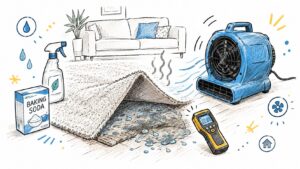
A hard Central Texas downpour can turn a basement into a slow-moving moisture problem. The rain stops, the puddle gets wiped up, and the room still smells musty days later. That lingering odor often means water has moved into porous materials, wall edges, stored contents, or cold surfaces where ordinary cleaning and a nearby fan can't reach it.
The practical answer to how to prevent mold in basement spaces isn't just buying a larger dehumidifier. You need to identify how water enters, dry affected materials quickly, control indoor humidity, and avoid finishes and storage habits that conceal moisture. The right strategy treats the foundation, drainage, mechanical systems, and contents as one connected system.
Why Basements Trap Moisture and Mold
Below-grade rooms have a moisture disadvantage from the start. Concrete may look solid and dry, but groundwater can press against the foundation and move through tiny pores, joints, and cracks. During sustained rain, saturated soil increases the pressure around basement walls. A small opening at a wall-floor joint or a neglected window well can then become the visible part of a much larger moisture path.
Air movement creates another problem. Warm, humid outdoor air can enter through doors, cracks, and poorly sealed openings. When that air meets cooler basement floors, walls, pipes, or stored materials, moisture can condense on those surfaces. Opening basement windows during a humid afternoon may feel like ventilation, but it can add moisture to a cool room rather than remove it.
Building-science rule: A dehumidifier controls moisture in the air. It doesn't repair a leaking foundation, a failed window well, or a sweating pipe.
That distinction explains why generic advice often disappoints. A machine may lower the humidity beside its intake while water continues entering behind a finished wall. The room can feel more comfortable while insulation, drywall, cardboard, and wood remain damp in hidden zones. Mold prevention starts with source control, then uses mechanical drying and humidity management to keep the space stable.
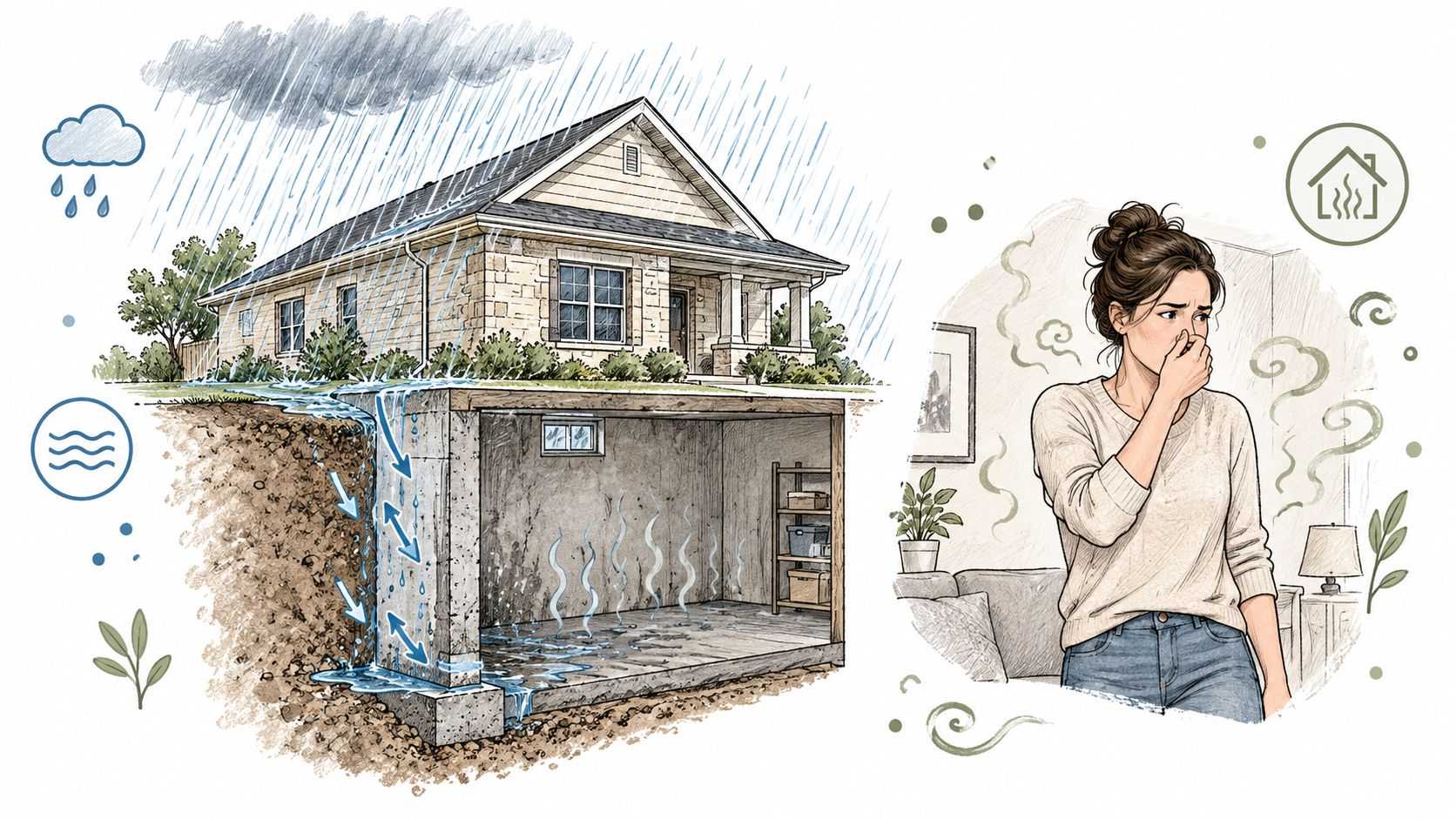
Why a musty smell matters
A basement doesn't need standing water to support mold growth. Damp concrete edges, wet framing, and cellulose materials can retain moisture after the floor appears clear. The EPA recommends keeping indoor relative humidity below 60%, ideally between 30% and 50%, to reduce mold risk. EPA guidance on mold, moisture, and humidity provides the baseline, but a humidity reading alone won't identify an active leak.
Look for patterns rather than isolated stains. A mark that returns after rain suggests exterior intrusion. Moisture around a supply line may point to condensation or a plumbing leak. A smell concentrated near one finished wall can indicate trapped moisture inside the assembly. Those clues tell you whether to correct drainage, repair plumbing, open an assembly for inspection, or improve atmospheric control.
Diagnosing Hidden Moisture Sources
Start with the event, not the mold. After a flood, backup, overflow, or plumbing failure, remove standing water and wet contents immediately. The EPA says wet or damp materials should be dried within 24 to 48 hours to reduce the potential for mold growth, and the CDC also recommends fully drying a flooded home within that period. EPA's mold house tour guidance explains why speed matters.
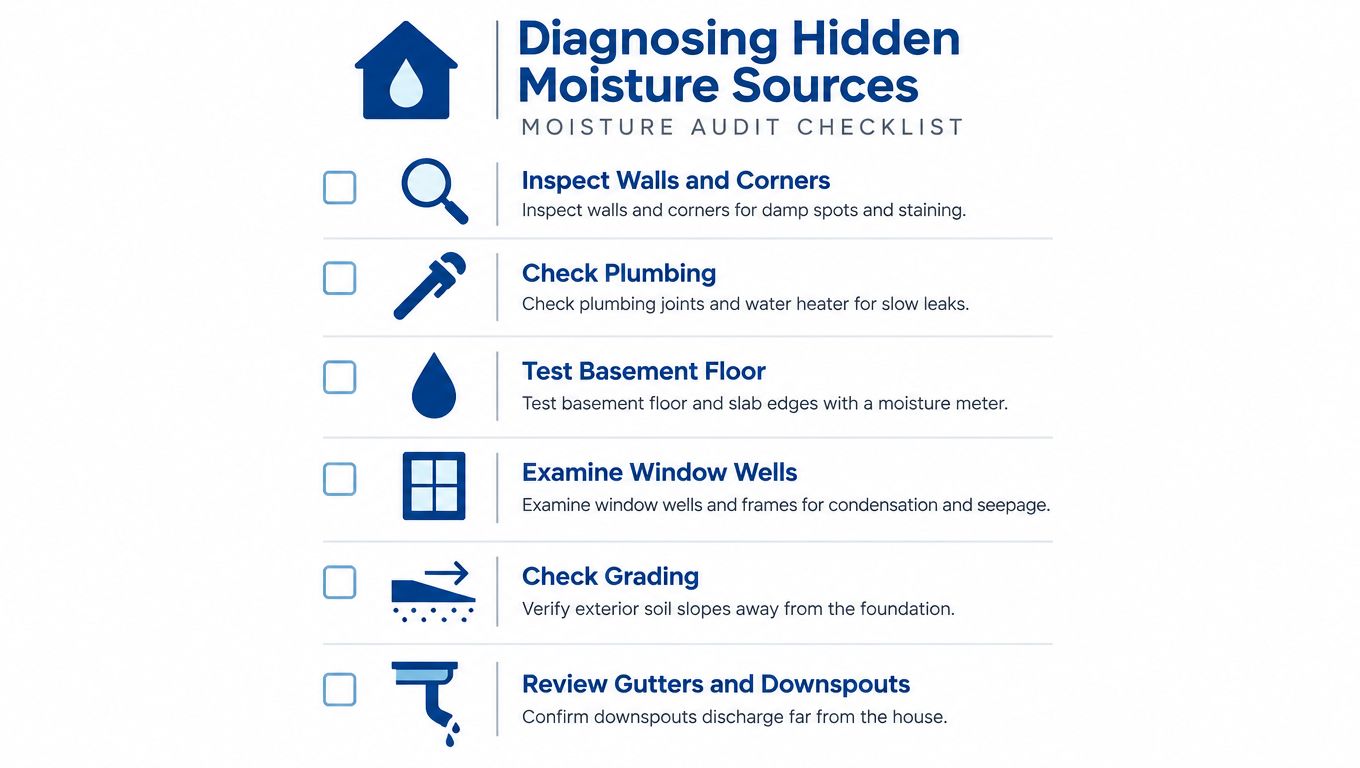
A useful audit follows the water's likely route:
- Map visible evidence. Photograph staining, peeling paint, swollen trim, damp corners, and efflorescence before cleaning. Compare the locations with exterior walls, window wells, plumbing runs, and floor drains.
- Measure several zones. Put hygrometers in the room, near the coldest foundation wall, and away from the dehumidifier. One reading beside the machine can make the rest of the basement look safer than it is.
- Test materials, not just air. A moisture meter can help check baseboards, slab edges, flooring, and accessible framing. High readings behind trim or near a wall-floor joint deserve more attention than a comfortable room reading.
- Inspect concealed routes carefully. Look behind removable baseboards, under stored materials, around pipe penetrations, and inside accessible utility cavities. Don't cut into a wall containing electrical wiring or plumbing without knowing what's behind it.
- Trace exterior causes. Examine window wells, downspouts, grading, drainage swales, and foundation penetrations. Rain-related staining that follows the same path repeatedly is rarely solved by surface cleaning.
- Check plumbing and condensation. Cold-water pipes can sweat in humid conditions, especially where insulation is missing. Inspect joints, valves, water heaters, condensate lines, and appliances for slow leaks or recurring droplets.
Separate the likely causes
A one-time spill usually has a clear origin and a drying response. Chronic intrusion leaves repeating stains, damp masonry, or seasonal odor, particularly after rain. A plumbing failure may produce localized damage that doesn't correspond to exterior weather.
Hidden moisture is the dangerous middle ground. Concrete-adjacent cavities, finished wall bases, and stored paper products can stay wet after the exposed floor dries. The EPA's technical guidance on mold and moisture control emphasizes stopping water entry, drying wetted materials, circulating air, and venting moisture-producing equipment outdoors.
For a structured approach to wall cavities and building materials, use this guide to detecting moisture in walls. If you find saturated insulation, recurring water, or a musty odor with no visible source, stop treating the symptom and arrange a professional assessment.
Controlling Humidity and Airflow
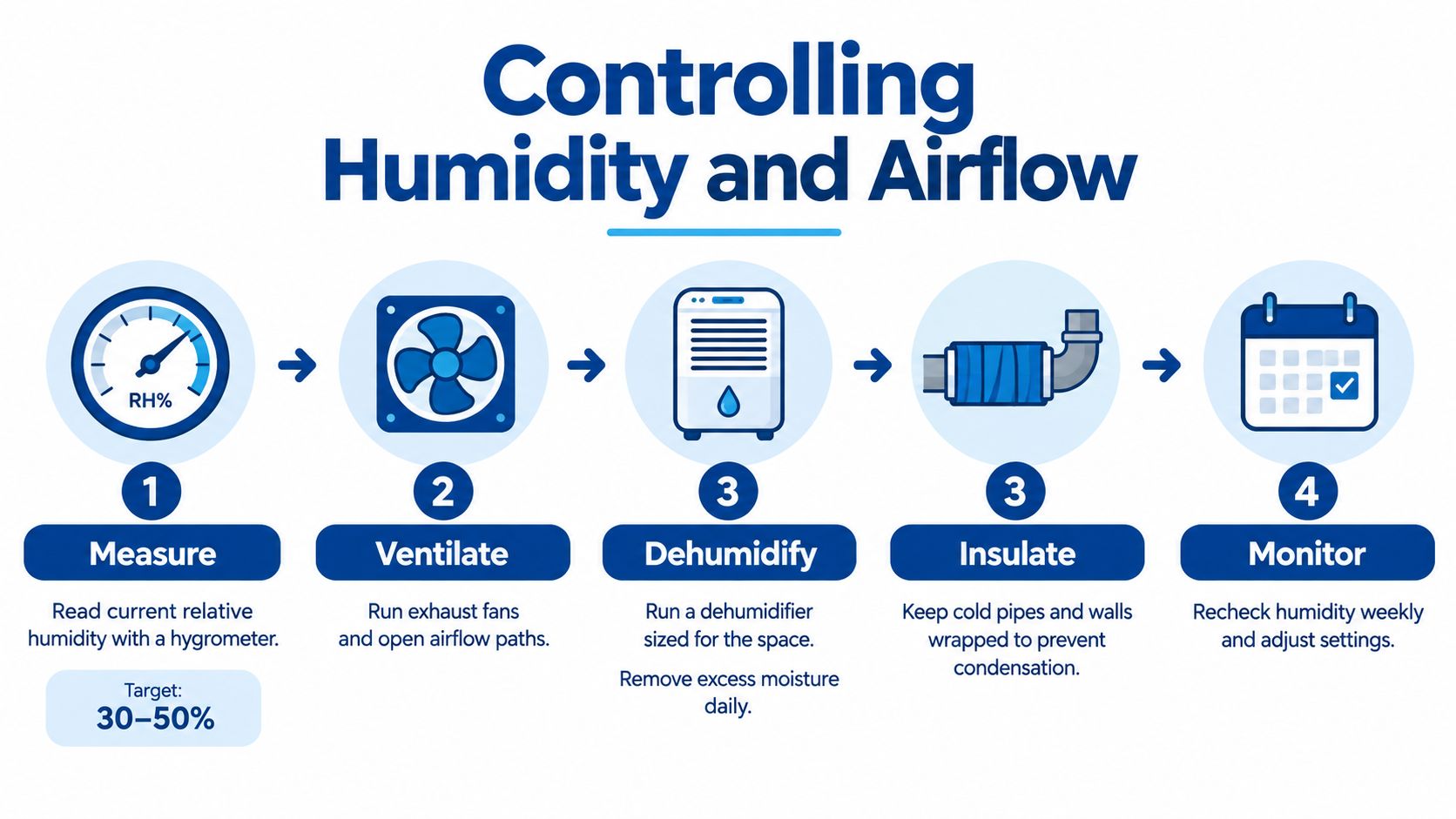
With entry points closed, the remaining variable is atmospheric. A basement reading of 45% RH in the room can still hide a condensation risk if the cold north wall or an enclosed corner reaches a higher level. Set the dehumidifier near 45% RH when its humidistat is reliable. EPA's technical guidance on mold and moisture control supports keeping occupied spaces well below the 60% ceiling.
Use hygrometers in several locations, especially near exterior walls, corners, and storage areas. The dehumidifier's built-in sensor measures its immediate surroundings, not the coldest or least ventilated part of the basement. If those remote readings stay higher, improve circulation or investigate why moisture is concentrating there.
Use airflow without importing moisture
Air movers help distribute dry air across damp surfaces, but they cannot dry materials that remain wet inside. Aim them across walls, floors, and contents. Keep interior doors open where safe, leave the dehumidifier intake and discharge clear, and empty or drain the unit consistently.
Ventilation depends on outdoor conditions. Dry outdoor air can help, while warm, humid Central Texas air entering a cool basement adds moisture and may increase condensation. During muggy afternoons or after a flash flood, closed windows with mechanical dehumidification often provide better control.
Dryers, combustion appliances, and other moisture-producing equipment must exhaust outdoors. Basement discharge adds humidity and may introduce combustion byproducts. Insulate cold pipes and correct leaks or humidity sources rather than relying on additional fan power.
After flood damage, drying speed matters. Follow this guidance on using a dehumidifier after flood damage, and keep equipment operating through humid periods. Verify conditions in the farthest, coolest zones. If readings remain high or materials are saturated, DIY equipment is no longer enough. Arrange a professional drying assessment before concealed growth develops.
Rethinking Finished Walls and Storage
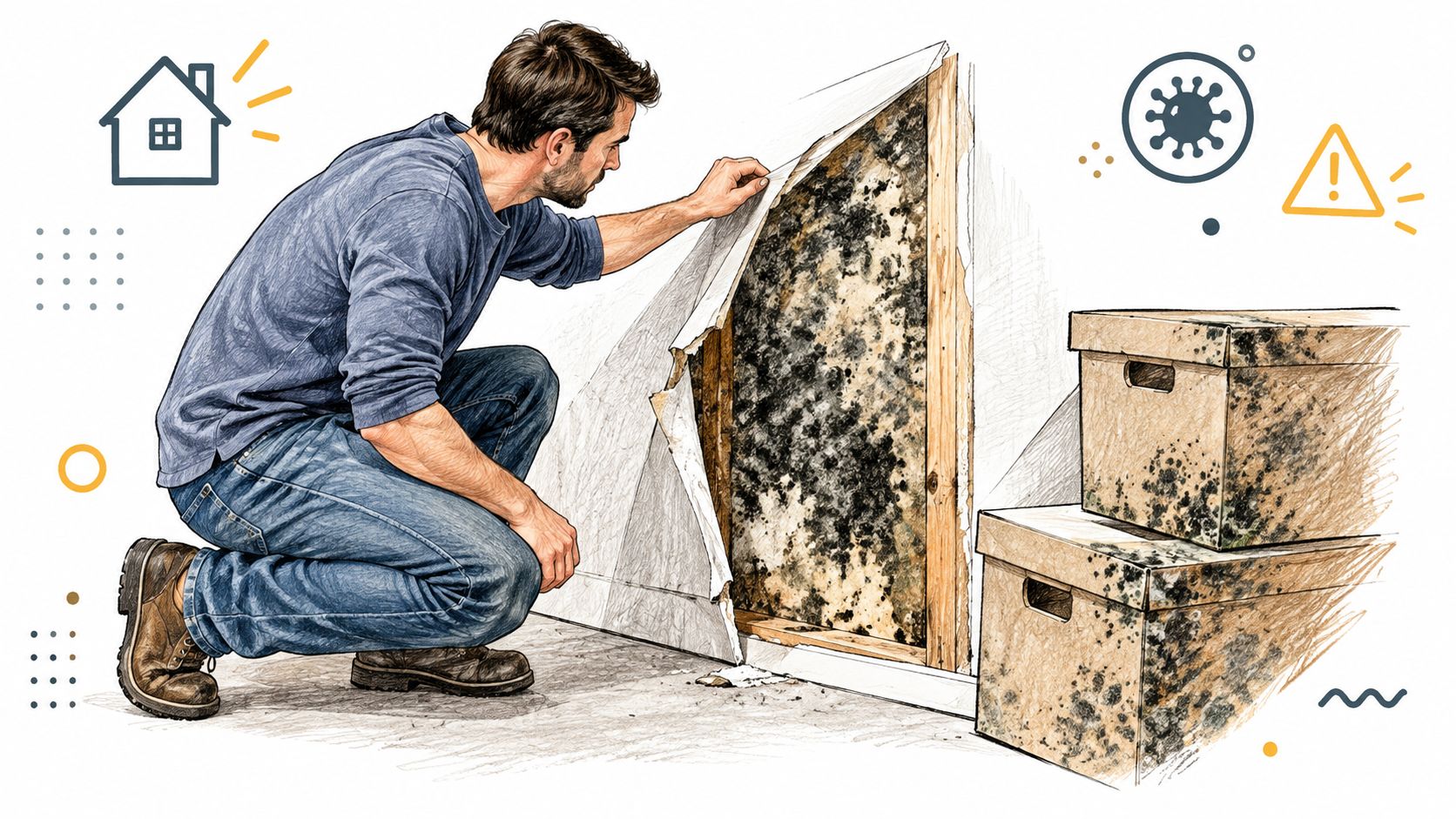
A finished basement can hide a moisture problem more effectively than an unfinished one. Drywall and fiberglass insulation installed against or near below-grade concrete may absorb moisture from leaks, vapor movement, or condensation. The finished surface can remain visually acceptable while the wall cavity develops odor and microbial growth.
That makes “the air feels dry” an incomplete test. A dehumidifier measures ambient conditions, not the moisture inside a wall. Window well leakage, foundation seepage, plumbing condensation, and poorly detailed penetrations can all feed a concealed assembly. Government material on finished basements has linked mold concerns to chronic moisture sources such as window well leakage, which means better ventilation alone won't solve every finished-wall failure.
Choose assemblies that can tolerate the location
Below-grade finishing requires materials selected for the moisture exposure, not merely for appearance. Rigid foam can provide a more moisture-tolerant layer against foundation walls when correctly detailed, while metal studs avoid some of the moisture sensitivity associated with wood framing. The exact assembly still depends on local conditions, code requirements, drainage, and the existing wall.
Don't cover active staining with new paint or paneling. First identify whether the wall is receiving water from outside, collecting condensation, or leaking from plumbing. If the source remains active, a new finish can make inspection and drying harder.
Treat stored contents as part of the building
Cardboard boxes on a basement floor create small enclosed zones that hold moisture against paper and concrete. They also conceal staining and prevent air from reaching the floor beneath them. The finished-basement and storage guidance highlights the connection between chronic moisture, poor material choices, and cardboard storage.
Use lidded plastic bins for seasonal items and place them on wire shelving or another raised platform. Leave space between stored contents and exterior walls so you can inspect behind them. Reduce clutter around mechanical equipment, floor drains, and window wells. This isn't cosmetic housekeeping. It gives air a path, exposes warning signs, and removes absorbent material from the places where condensation and seepage collect.
Central Texas Flash Flood Readiness
A basement protection plan for Georgetown or Austin has to account for sudden, high-volume rain. During a flash-flood event, the exterior drainage system may receive more water than it handles during ordinary storms, while saturated or shifting soil increases pressure around foundation walls. The practical response is to reduce the amount of water reaching the foundation before the storm arrives.
Treat spring and fall maintenance as an inspection cycle rather than a single weekend chore. Walk the lot during or immediately after heavy rain when possible. Water marks in a window well, soil pressed against the foundation, or a downspout discharging beside the house can reveal a failure that looks harmless on a dry day.
Prepare the exterior envelope
Use this sequence before periods of severe weather:
- Clear roof drainage paths. Remove leaves and sediment from gutters, then confirm water exits through downspouts rather than spilling beside the foundation.
- Check discharge locations. Downspouts should move water away from the house and away from window wells. Repair crushed extensions and disconnected elbows.
- Read the grading. Soil and hardscape should direct runoff away from the foundation. Low spots beside basement walls deserve correction, not just extra interior drying.
- Inspect window wells. Remove leaves and debris, check the well drains, and look for gaps around frames. A clean basement can still flood through a neglected well.
- Review drainage swales. Make sure drainage channels remain open and don't terminate against the house or a blocked area.
- Test emergency equipment. Check sump pumps, discharge lines, alarms, and battery backups before a storm. A power outage during heavy rain can turn a working pump into a dormant one.
Storm rule: Interior cleanup starts after water enters. Exterior drainage is what reduces the volume that enters in the first place.
When a storm overwhelms the property, document conditions with photographs if it is safe, keep people away from electrical hazards, and avoid entering contaminated water. This Central Texas flash-flood recovery guide outlines the immediate concerns after heavy rain and flooding.
When to Call Professional Remediation
DIY cleanup has a place when the source is clear, materials are accessible, and drying is progressing quickly. It becomes a poor choice when water has entered wall cavities, affected extensive porous contents, returned after repeated storms, or left a persistent musty odor. Widespread discoloration, recurring staining, soft drywall, swollen flooring, and uncertain electrical conditions all justify a professional assessment.
Don't rely on a household fan to prove a structure is dry. Professionals can combine moisture mapping, extraction, air movement, dehumidification, and targeted inspection to find wet areas that surface cleaning misses. They can also determine whether finishes need removal, whether contents require specialized handling, and whether microbial prevention should follow structural drying.
Know what a full response includes
A competent restoration process should address the whole loss:
- Inspection and source identification. The technician determines whether the cause is a plumbing failure, exterior intrusion, condensation, backup, or a combination.
- Water removal and stabilization. Standing water and saturated contents are removed, while unsafe electrical or structural conditions are isolated.
- Structural drying. Air movement and dehumidification are directed at the affected assemblies, with moisture readings used to verify progress.
- Microbial prevention and odor treatment. Affected materials are evaluated before cleaning or removal. Deodorization follows source correction and drying, not instead of them.
- Reconstruction. Damaged drywall, trim, flooring, insulation, and fixtures are repaired or rebuilt after the structure is ready.
- Documentation. Photos, readings, scope notes, and work records help property owners and claims coordinators understand what happened.
RestoTek TX is one local option for inspection, water extraction, structural drying, microbial prevention, mold-related assessment, and reconstruction, with emergency response for time-sensitive water losses. Call professionals promptly when the water source is active, hidden moisture is suspected, the affected area is extensive, or you can't verify that materials have dried.
If your Georgetown or Austin basement smells musty after rain, a backup, or a leak, contact RestoTek TX for inspection, water removal, structural drying, microbial prevention, and reconstruction support. Their team can help identify the source before you seal in moisture behind finished walls or replace contents unnecessarily.