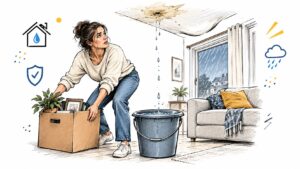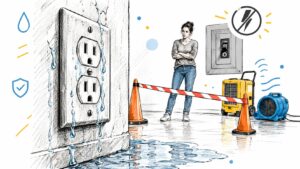
A Hill Country downpour can turn a quiet basement into an emergency before you've found your flashlight. Water may appear at a floor drain, run under a door, seep through a wall, or collect around the sump pit. The right answer to how to stop basement flooding starts with identifying the pathway, but during an active event, safety comes first.
Basement flooding is rarely caused by one defect. Canadian housing guidance identifies combined sewer backup as the most common form of basement flooding in its guidance, particularly when heavy rainfall or snowmelt overloads municipal sewers, while household drainage defects can create additional entry routes at the same time. The same guidance lists basement wall cracks, poor lot drainage, foundation-drain failure, overflowing eavestroughs, blocked downspouts, blocked sewer connections, sewer backup, and sump-pump failure among the main causes. Canadian housing guidance on basement flooding
First 30 Minutes When Water Is Coming In
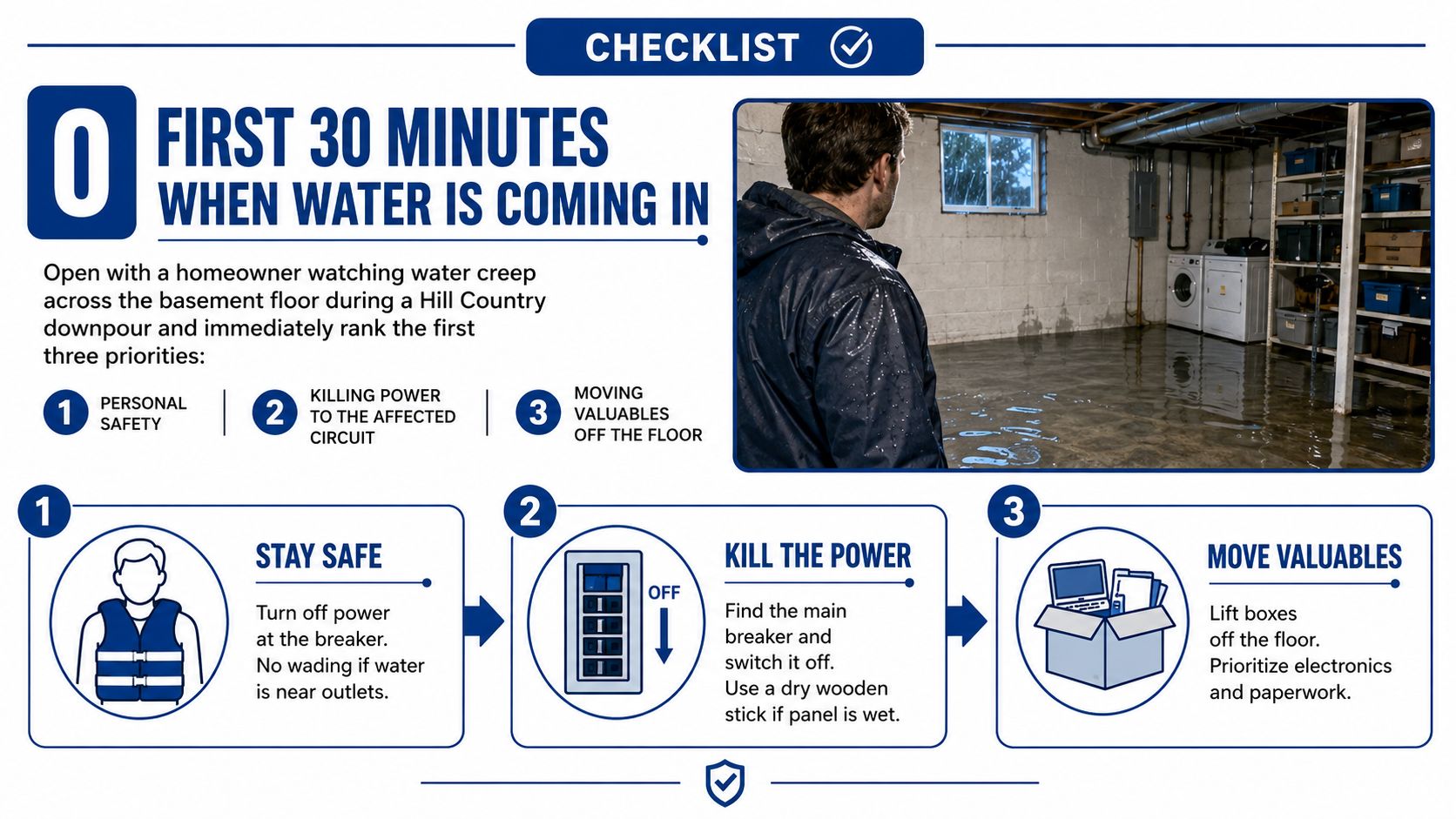
You're standing at the basement stairs while rain pounds the roof. A shallow sheet of water is moving across the floor, cardboard boxes are already wet, and the sump pump is cycling. Don't start with the shop vacuum. Rank the first minutes in this order: protect people, kill power to the affected zone, and stop additional water from entering.
Stay out of standing water if any energized circuit, outlet, appliance, or extension cord could be submerged. If you can reach the electrical panel without stepping into water, switch off the basement breaker before entering. If the panel is wet, inaccessible, or surrounded by water, leave the area and call an electrician or emergency service. A gas odor is another reason to leave immediately. Don't re-enter until the utility or a qualified professional says it's safe.
Stop what you can without creating a hazard
If a burst supply line, failed water heater, or appliance hose is suspected, shut off the local valve or the main water supply, but only from a dry, safe location. A rain-driven intrusion doesn't stop when you close the household water valve.
For a suspected drain backup, press tightly folded rags over floor drains and hold them down with a heavy object. Use sandbags or heavy towels at doorway thresholds. Move electronics, paperwork, and storage containers onto shelving or furniture. If a sump pump is operating, check that its discharge line is open and direct water away from the foundation, but don't reach into the pit.
Before cleanup changes the scene, photograph the waterline on walls, affected contents, visible entry points, and any running pump or meter reading. The RestoTek TX flooded-basement response guide also emphasizes stopping the source, documenting the loss, and beginning safe drying promptly. Don't start aggressive pumping while the basement is still actively filling, and never wade through contaminated water.
Controlled Pump-Down and Safe Drying
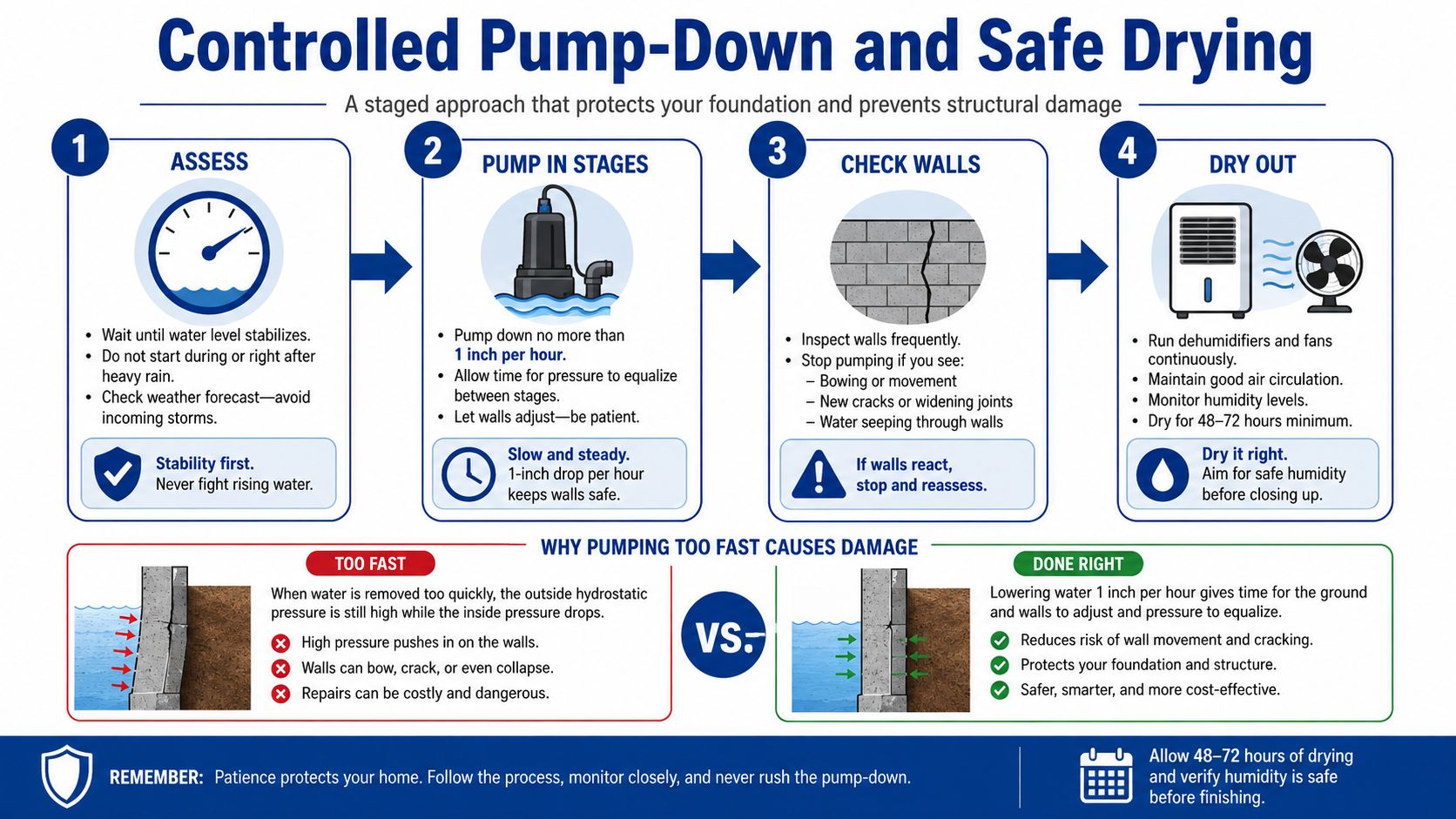
Once the inflow has stopped or stabilized, water removal has to be controlled. A basement isn't just a container. Soil outside the walls can exert hydrostatic pressure, and removing interior water too rapidly can eliminate the counterpressure that was helping support foundation walls and floors.
Federal flood-mitigation guidance recommends measuring the incoming water rate, lowering the water in controlled increments of about 1 foot, waiting 24 hours, then continuing in 2 to 3 foot steps every 24 hours once the level remains stable. FEMA basement flood mitigation guidance That staged approach is more important than speed when water stands against poured concrete or block walls.
Choose equipment for the water depth
For water deeper than a thin film, a submersible utility pump can move volume more effectively than a wet/dry vacuum. A wet/dry vac is useful for the remaining surface water, corners, and floor texture after the main level has been reduced. Discharge the pump well away from the foundation and never send pumped water into the sanitary sewer, where it can add to an already overloaded system.
Stop the pump and inspect the walls between stages. Bowing, new cracking, widening cracks, or unusual movement requires a structural evaluation before pumping continues. Keep children and pets away, and treat sewage-contaminated water as hazardous rather than as a normal cleanup job.
Dry assemblies, not just visible surfaces
Remove wet carpet and pad quickly, generally within 24 to 48 hours when the water is clean and the material can be professionally dried. Flooded-basement cleanup guidance Sewage-affected carpet and pad usually require removal rather than salvage. Pull baseboards and open affected wall cavities as appropriate so trapped moisture can escape behind drywall.
Commercial air movers and a refrigerant or desiccant dehumidifier are more reliable than household fans alone. Don't seal windows to trap heat, and don't fog antimicrobial products before the structure has been properly dried and moisture levels verified. Structural drying services in Central Texas explains why extraction, air movement, dehumidification, and moisture measurement need to work together.
Diagnosing the Real Source of the Flooding
Repair money disappears quickly when the source is misidentified. A waterproof coating won't correct a blocked sewer lateral, and a new sump pump won't stop rainwater pouring through a reverse-sloped driveway.
Start with three pathways. Surface water usually follows heavy rain and enters through a window well, wall joint, doorway, or low exterior area. Groundwater seepage tends to appear along the floor-wall seam, foundation cracks, or floor penetrations as surrounding soil stays saturated. Sewer backup often erupts from a floor drain or plumbing fixture, may carry an odor, and can contain contaminated water.
Read the pattern before choosing a repair
Note what happened before the water appeared. Did the problem begin during intense rain, after the sump stopped cycling, or when multiple drains slowed and gurgled? Photograph the first visible waterline, residue, drain opening, sump pit, downspouts, window wells, and exterior grading before cleaning.
Check whether the sump pump has power, whether its float moves freely, and whether the discharge line is blocked or frozen. If a backwater valve is installed, observe its position without placing your hands in contaminated water. For a more technical assessment, leak detection and water-source identification can help locate hidden plumbing or building-envelope failures before repairs are authorized.
| Signal | Surface Water | Groundwater Seepage | Sewer Backup |
|---|---|---|---|
| Where it appears | One wall, window well, doorway, or low exterior side | Floor-wall seam, cracks, or several perimeter locations | Floor drain, cleanout, toilet, or lower fixture |
| Timing | During or shortly after heavy rain | Persistent dampness while soil remains saturated | During sewer surcharge, blockage, or intense rainfall |
| Water condition | Often relatively clear | Usually clear, though it can carry soil residue | May be cloudy, foul-smelling, or visibly contaminated |
| What the pattern suggests | Grading, downspouts, window wells, or surface drainage | Foundation drainage, sump capacity, or wall and slab entry | Sewer lateral, municipal surcharge, or missing backflow protection |
Clean water that recedes within hours often points toward grading or downspout concentration. A slow, recurring wet perimeter points more toward foundation drainage or waterproofing. If the evidence remains unclear after a brief inspection, stop signing repair proposals and call a restoration contractor with moisture-mapping equipment.
Long-Term Fixes That Match the Cause
A dry basement is built with layers, but the first layer must match the failure. Canadian guidance recommends separating groundwater control from sewer-backup control, routing foundation drains to a sump pit and safe discharge point where required, then using automatic backwater protection on sanitary or storm lines when the finished basement floor sits at or below the design flood level. Canadian basement flood prevention guidance
Correct the exterior pathway first
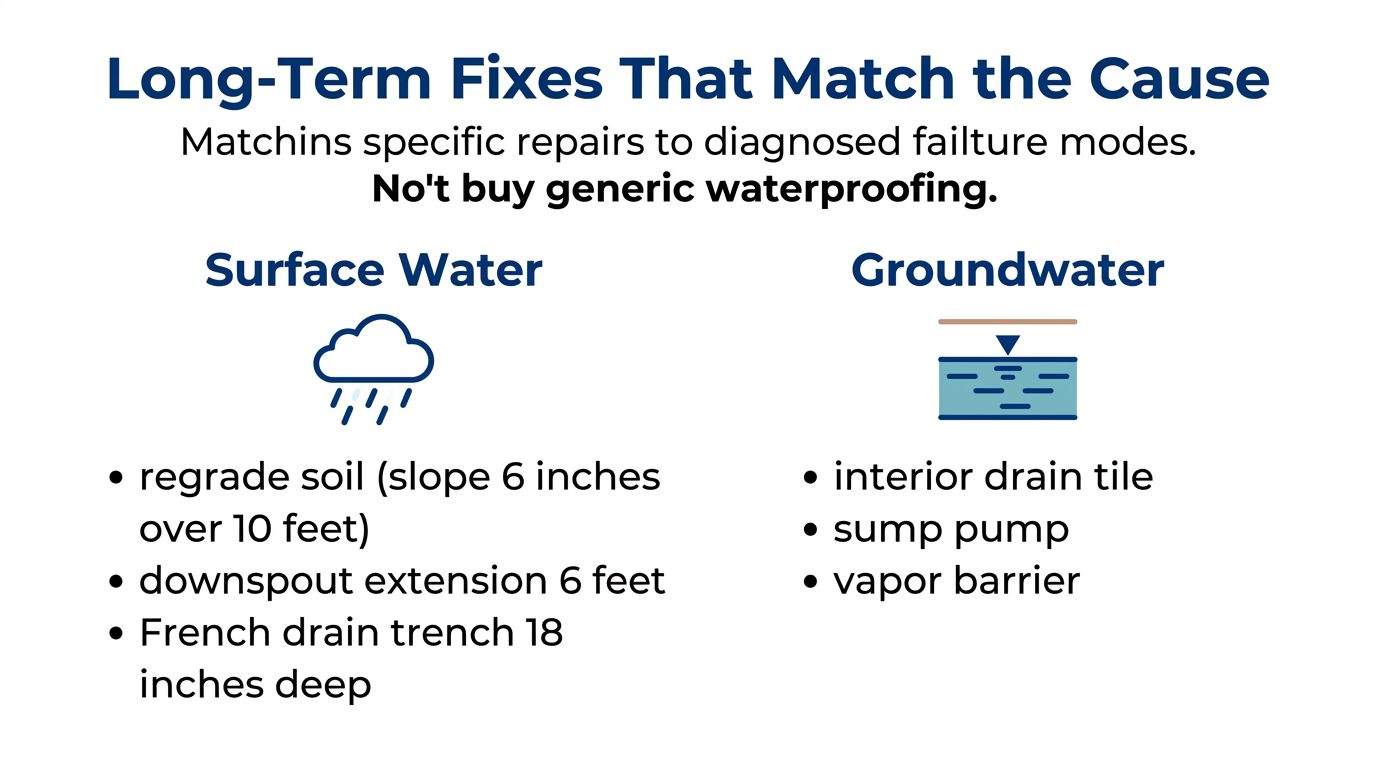
For surface water, begin with the ground around the foundation. Regrade soil to fall 6 inches over 10 feet away from the house, extend downspouts at least 6 feet, and keep roof runoff from collecting beside walls. Practical heavy-rain drainage guidance Window well covers with properly sealed frames can reduce direct entry, but they won't solve a yard that funnels water toward the foundation.
Where a driveway, patio, or hillside concentrates runoff, a swale, catch basin, trench drain, or other designed conveyance may be more appropriate than another layer of interior sealant. The outlet matters as much as the inlet. Water must reach a lawful discharge location without eroding soil or returning toward the house.
Build groundwater controls as a system
For seepage through walls or cove joints, an interior French drain or drain-tile system can collect water and route it to a sealed sump basin. Pair the basin with a primary AC-powered pump, a battery backup, and a high-water alarm. A sump pump is only useful if the discharge line remains open and carries water away from the foundation.
Exterior waterproofing membranes and footing-drain repairs can address the water before it reaches the wall, but excavation makes them more disruptive and site-dependent. Foundation cracks may need hydraulic cement or epoxy injection, while crawl spaces require a properly sealed vapor barrier rather than a casual sheet of plastic laid over damp soil.
Block sewer backup at the source
A backwater valve on the main line can help prevent reverse flow during sewer surcharge. Floor-drain backflow protection and sewer-lateral inspection may be appropriate when the backup originates in the home's piping. Below-grade bathrooms may require a sewage ejector pump, designed and installed by a qualified plumber.
Backwater valves are an established lot-level protection strategy. A Natural Hazards Review paper on backwater valvesNH.1527-6996.0000298) describes recommendations for installation on sewer laterals and branch lines connected to plumbing fixtures, and Canadian research estimated approximately 500,000 Fullport backwater valves installed in Canadian residences. Fix the dominant pathway first, then add secondary defenses as the budget allows.
Insurance and Documentation Strategy
Basement water isn't one insurance category. Storm rainwater, groundwater seepage, sump-pump failure, and sewer backup can be handled under different policies or endorsements, so a prevention plan should be reviewed alongside the coverage that would respond to the failure.
Public insurance guidance explains that coverage depends on the source and policy wording. Basement flood insurance coverage guidance distinguishes flood-related water from backup events and other causes, which is why a homeowner should ask an agent about both flood coverage and sewer or sump-backup protection before the next storm.
Document the loss before moving contents
Take timestamped video from the stairs through each affected room. Photograph the waterline, damaged contents, electrical equipment, floor drains, sump pit, visible plumbing break, and exterior entry route. Capture model and serial numbers where possible, and preserve damaged items until the insurer or adjuster gives instructions.
Save receipts for emergency mitigation, plumber visits, equipment rentals, temporary lodging, and replacement materials. File the claim promptly, even if the adjuster's inspection happens later, and keep a written record of every call, email, instruction, and claim reference.
| Water Source | Standard Policy | Backup Rider Needed | NFIP Flood Policy |
|---|---|---|---|
| Sudden plumbing discharge | May be covered, subject to policy terms and exclusions | Usually not the primary question | May not be the relevant coverage |
| Sewer backup | Often requires specific endorsement | Commonly relevant | Depends on policy and event classification |
| Sump-pump failure | Often treated separately from ordinary water damage | Commonly relevant | Depends on the covered cause |
| Groundwater or storm flooding | May be excluded from standard coverage | May not address the entire event | Flood coverage may be relevant, subject to terms |
Ask the adjuster how the loss is being classified, particularly whether it is being treated as groundwater seepage, sudden discharge, storm flooding, or sewer backup. That classification can affect both structural coverage and personal-property limits.
Signs You Need a Restoration Professional Now
Waiting to see whether the basement “dries on its own” is a costly gamble when water has reached building materials, electrical systems, or contaminated surfaces. Call a licensed water-mitigation company promptly if the water is extensive, deeper than a household vacuum can handle, contaminated, or still moving through walls and floors.
Treat these conditions as urgent
- Electrical exposure: Standing water near the electrical panel, submerged outlets, energized appliances, or a sump pump that has lost power requires immediate professional attention.
- Contaminated water: Category 2 grey water and Category 3 black water, including sewer backup, shouldn't be handled as ordinary household cleanup.
- Hidden wall moisture: Drywall that has wicked upward, insulation that remains wet, or a musty odor can conceal moisture beyond the visible waterline.
- Floor movement: Cupping or buckling hardwood indicates that moisture has entered the flooring assembly.
- Structural warning signs: Bowing basement walls, horizontal cracks wider than a quarter inch, or active seepage alongside efflorescence warrant evaluation before you continue pumping or finish the room. FEMA flood-mitigation guidance
A qualified restoration team can use truck-mounted extraction, commercial air movers, dehumidification, and moisture mapping with thermal and humidity instruments. The equipment isn't the whole answer. The technician must also identify the source, establish drying targets, remove materials that can't be safely restored, and document conditions for the insurance file.
Know where DIY stops working
A wet/dry vacuum can handle a small clean-water spill on a safe, isolated floor. It can't make sewage safe, test a hidden wall cavity, correct a failed sewer lateral, or prove that framing has reached a dry standard. Household fans may move air without controlling humidity, leaving moisture behind trim, insulation, and subfloor layers.
For Central Texas homeowners, RestoTek TX offers inspection, extraction, structural drying, leak detection, microbial prevention, and reconstruction support for water-loss events in Georgetown, Austin, and surrounding communities. Use a licensed plumber or qualified specialist when the repair involves electrical systems, structural movement, sewer piping, or foundation excavation.
Central Texas Storm Readiness and Year-End Checklist
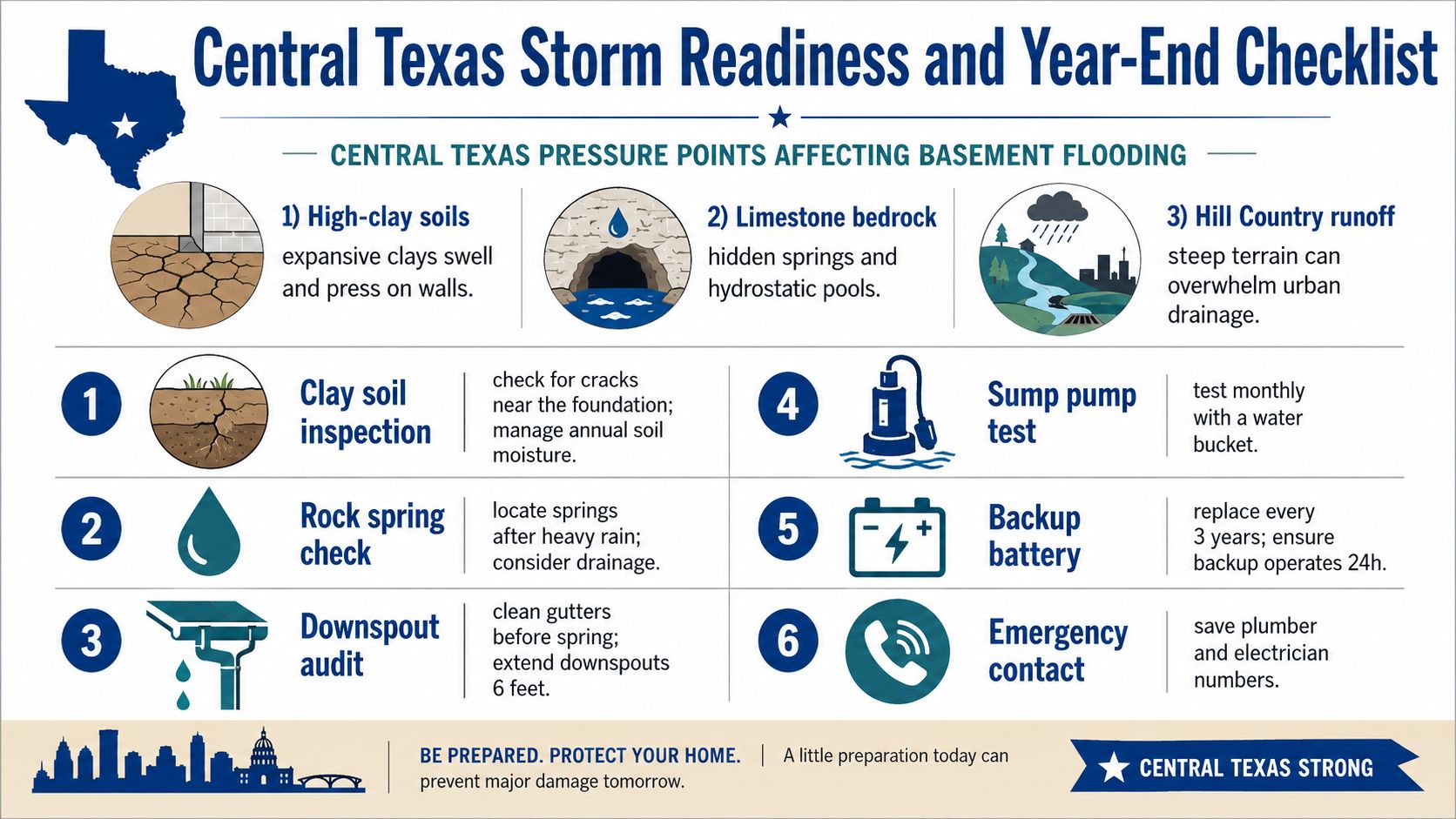
Central Texas basements face a different combination of pressures than many homeowners expect. Rapid flash flooding can overwhelm drainage with little warning, expansive clay soils can swell and shed runoff, and Hill Country terrain can concentrate water from higher ground into downhill neighborhoods.
Those conditions make exterior inspection as important as the pump in the pit. A backup sump and battery should be ready before storms, soil movement should be checked around the foundation, and yard drains should be cleared before heavy-rain periods. A basement can have a working pump and still flood if the water reaches the house through a failed surface route or a surcharged sewer.
Put the property on a repeating schedule
Before spring thunderstorms, pour water into the sump pit and confirm that the pump activates, the float moves, and the discharge line is clear. Test the backup system separately, and make sure the alarm can be heard from occupied areas.
Before the autumn leaf drop, clear gutters, inspect joints, and confirm that downspout extensions still discharge away from the foundation. Walk the lot after rain and mark places where water ponds or flows toward a wall.
Before late-summer storm remnants, have a plumber assess a sewer line that has shown slow drains, gurgling, or prior backups. A backwater valve must also remain accessible for inspection and cleaning.
Complete a January dry run
Once a year, walk the full response route. Locate the electrical panel, main water shutoff, sump disconnect, floor drains, cleanouts, backwater valve, and emergency contacts. Check that flashlights, gloves, towels, drain plugs, and a phone charger are stored above the basement floor.
Monthly sump testing is a recurring recommendation in municipal and extension guidance. Pour water into the pit, confirm activation, check for an unobstructed discharge, and clean debris from the basin and intake. Basement flood prevention guidance from Canadian housing authorities also stresses that foundation drains, sump discharge, downspout management, and backflow protection address different failure modes.
Schedule an annual inspection with a local waterproofing, drainage, or restoration contractor who understands Central Texas terrain and soil behavior. Ask for a source diagnosis, not a generic waterproofing package, and keep the findings with your insurance records.
If water has entered your Georgetown or Austin basement, RestoTek TX can inspect the source, extract standing water, complete structural drying, and coordinate microbial prevention or reconstruction when needed. Visit RestoTek TX to request help and take the next safe step before hidden moisture becomes a larger repair.